
بِسْمِ اللهِ الرَّحْمٰنِ الرَّحِيْم
In the Name of God, Most Gracious, Most Merciful
♥️🤲🕋♥️🕋🌹🌹🥀🤲🌹🕋♥️🤲
PATIENT ZERO AND THE DRONE THAT CARRIED AN AI
By Omar Arizona
Founder, Office of the Superuser
THE LIE WE HAVE BEEN TOLD
They tell you that you need a clinic. A prescription pad. A physician behind a desk. A company connecting your sensor to their cloud, to their billing department, to their shareholder value.
They tell you that the sensor is just a data collector. That the real medicine happens somewhere else. That you are not smart enough. Not safe enough. Not authorized.
They are wrong.
I wore the sensor. I got the data.
And I discovered something they do not want you to know.
THE SENSOR GIVES YOU EVERYTHING YOU NEED TO KNOW WHETHER YOU ARE GETTING BETTER OR WORSE.
Not everything a hospital can give you.
Not a kidney biopsy.
Not a cardiac MRI.
But enough to know whether your diabetes is controlled.
Enough to know whether your medicine is working.
Enough to know whether you are moving toward health or toward complications.
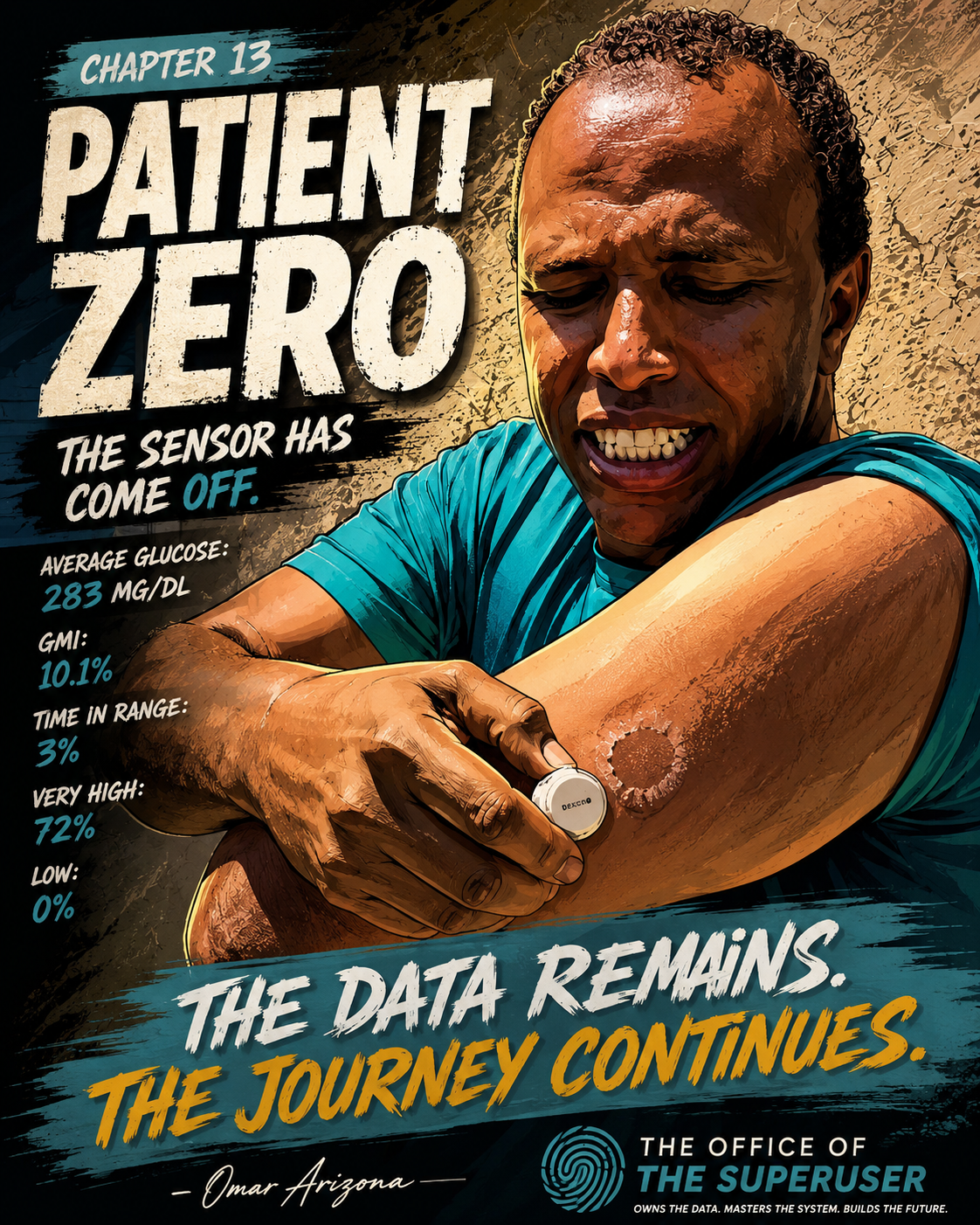
Average Glucose: 283 mg/dL
GMI: 10.1%
Time In Range: 3%
No doctor was required to read those numbers.
No medical degree.
No insurance pre-authorization.
The sensor told me the truth.
The truth is that Metformin alone is failing.
THE VILLAGE WITHOUT A DOCTOR
Now imagine a different world.
Not your world.
Not the one with specialists on every corner and pharmacies in every strip mall.
Imagine a village in rural Africa.
A highland town in South America.
A farming community in Southeast Asia.
The nearest doctor is a three-day walk away.
The nearest endocrinologist does not exist.
The clinic has electricity sometimes.
The internet is a rumor.
Then a drone arrives.
Not a drone carrying a doctor.
A drone carrying knowledge.
Inside the box:
Six months of generic Metformin
Three months of insulin
One CGM sensor
One ruggedized computer
One artificial intelligence system
No cloud.
No subscription.
No billing department.
No monthly fee.
THE AI THAT DOES NOT NEED PERMISSION
The AI asks the patient to wear the sensor.
The sensor collects the data.
The AI reads the data.
The AI calculates the risk.
The AI explains the options.
The patient makes the decision.
THE AI DOES NOT REPLACE THE PATIENT.
THE AI EMPOWERS THE PATIENT.
The AI will not disappear because a clinic is closed.
The AI will not take a vacation.
The AI will not be unavailable because the nearest specialist lives a thousand miles away.
The AI helps the patient understand reality.
THE ARCHITECTURE OF THE FUTURE
This is not science fiction.
Every component already exists.
Sensors exist.
Generic medicine exists.
Offline AI exists.
Solar power exists.
Drone delivery exists.
THE FUTURE IS NOT A TECHNOLOGY PROBLEM.
IT IS AN ORGANIZATION PROBLEM.
Put the pieces together.
The sensor collects the data.
The AI interprets the data.
The medicine arrives.
The patient receives help.
THE OBJECTION I CAN ALREADY HEAR
Someone will say:
"This is dangerous."
"Patients will hurt themselves."
"Insulin can kill."
"Doses must be supervised."
I have a simple question.
WHAT IS THE ALTERNATIVE?
The alternative is no insulin.
No sensor.
No diagnosis.
No data.
No help.
No treatment.
No chance.
People slowly lose their vision.
Their kidney function.
Their feeling in their feet.
Their independence.
That is not safety.
That is abandonment disguised as caution.
The sensor is the safety net.
The AI is the guide.
The patient is the decision-maker.
WHAT I AM BUILDING
The Office of the Superuser is not a company.
IT IS A BLUEPRINT.
Phase 1
Affordable sensors.
Phase 2
Affordable medicine.
Phase 3
Offline AI.
Phase 4
Open protocols.
Phase 5
Global deployment.
Not country by country.
Not regulator by regulator.
Not bureaucracy by bureaucracy.
Village by village.
Community by community.
Person by person.
PATIENT ZERO
That patient is me.
I wore the sensor.
I collected the data.
I asked the AI.
I compared the answers.
I learned.
I adapted.
I acted.
I AM NOT WAITING FOR PERMISSION.
I am not waiting for a company.
I am not waiting for a platform.
I am not waiting for a bureaucracy.
I am not waiting for a committee.
The data already exists.
The technology already exists.
The need already exists.
THE REAL QUESTION
The question is not whether artificial intelligence should replace doctors.
THAT IS THE WRONG QUESTION.
The real question is:
WHAT HAPPENS WHEN THERE ARE NO DOCTORS?
What happens when the clinic is three days away?
What happens when the specialist does not exist?
What happens when the patient has data but nobody available to interpret it?
For most of human history, the problem was a lack of information.
TODAY THE PROBLEM IS BECOMING A LACK OF ACCESS.
The sensor can collect the data.
The AI can analyze the data.
The medicine can be manufactured.
The drone can deliver the package.
THE CHALLENGE BEFORE US IS NO LONGER TECHNOLOGICAL.
IT IS ORGANIZATIONAL.
Can we place knowledge within reach of every human being?
Can we do it while protecting privacy?
Can we do it while preserving dignity?
Can we do it without turning people into products?
THOSE ARE THE QUESTIONS THAT MATTER.
The sensor expired.
THE DATA REMAINS.
The experiment continues.
And somewhere in the world, there is another patient who has not yet been seen, not yet been heard, and not yet been helped.
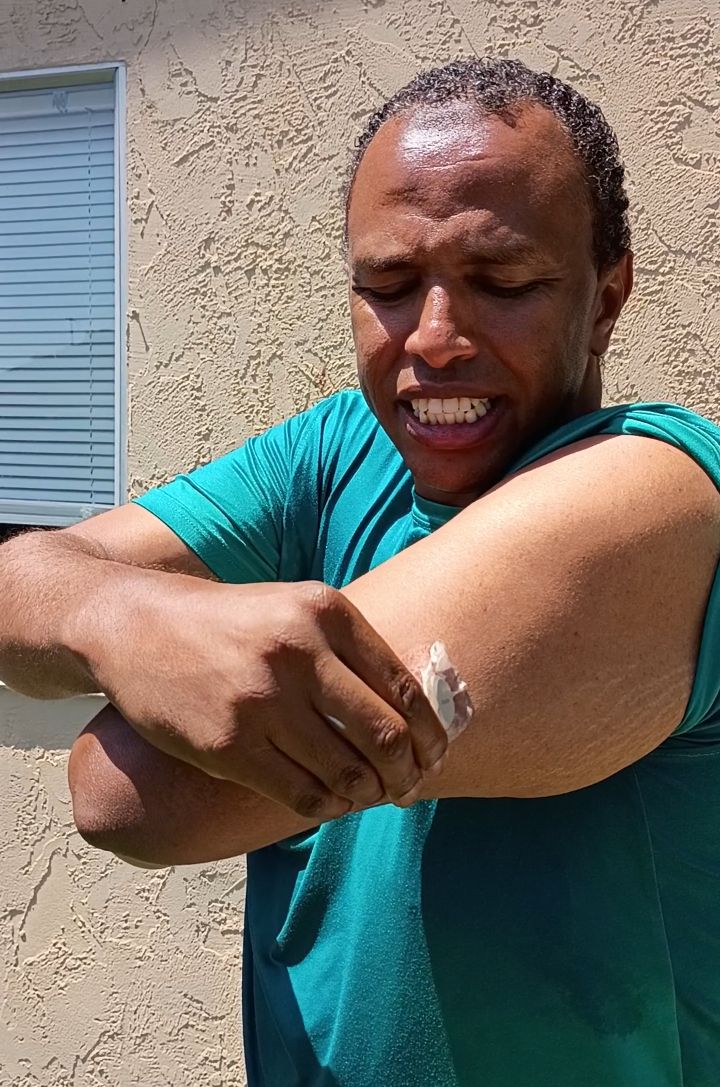
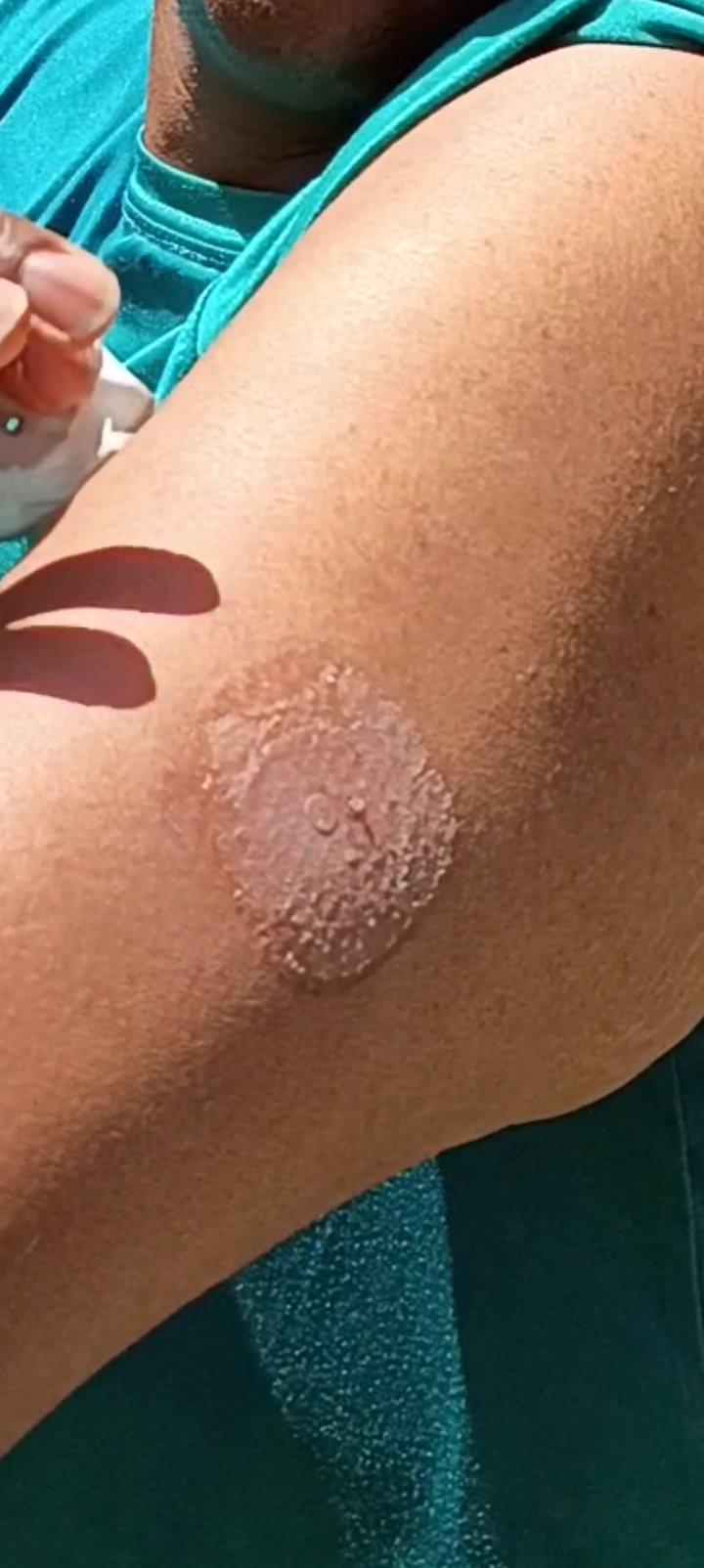
Looking at these photographs, some people might think removing the sensor was painful.
A NOTE BEFORE THE NEXT CHAPTER
Looking at these photographs, some people might think removing the sensor was painful.
It was not.
This was my first time wearing a continuous glucose monitor.
This was my first time removing one.
And honestly?
I was expecting pain.
I had worn it through:
Showers
Long work days
Swimming pools
A jacuzzi
Heat
Sweat
Daily life
The adhesive held.
The sensor stayed attached.
It survived everything I threw at it.
And when it came time to remove it?
There was no pain.
None.
The expression on my face in these photographs should not be mistaken for pain or dissatisfaction.
If anything, it is curiosity.
Because something important happened.
THE SENSOR WORKED
The sensor survived.
The data was collected.
The experiment was completed.
And for the first time in my life:
I could see my diabetes.
Not guess.
Not estimate.
Not wait three months for a laboratory report.
See it.
Minute by minute.
Hour by hour.
Day by day.
THE REAL DISCOVERY
The real discovery was not the sensor.
The real discovery was the data.
For years I did not know what my blood sugar was doing.
Now I know.
When I eat.
When I sleep.
When I take medication.
When I ignore medication.
When I improve.
When I fail.
The sensor told the truth.
And the truth does not care about opinions.
PATIENT ZERO
Now the sensor is gone.
The filament that sat beneath my skin was no thicker than a human hair.
A tiny foreign object.
A tiny machine.
A tiny witness.
Now I return to a traditional blood glucose meter.
And I will observe.
Will my body react?
Will there be irritation?
Will there be nothing at all?
I do not know.
That is why I document everything.
That is why I call myself:
PATIENT ZERO
Not because I am special.
Because I am willing to learn.
Because I am willing to test.
Because I am willing to ask questions.
THE BIGGER QUESTION
The sensor taught me something.
But AI taught me something bigger.
What happens when you combine:
A sensor
with
Artificial Intelligence?
What happens when a machine can see what is happening inside your body?
What happens when that machine can explain what it sees?
What happens when it can compare your data against millions of other cases?
What happens when knowledge becomes available everywhere?
Not just inside hospitals.
Not just inside clinics.
Not just inside insurance networks.
Everywhere.
THE FUTURE OF MEDICINE
I believe we are standing at the beginning of a new era.
An era where medicine becomes:
Continuous.
Personal.
Predictive.
Accessible.
Not because doctors disappear.
But because knowledge becomes available to everyone.
The sensor has come off.
The data remains.
And the next chapter begins with a question that may define the future of medicine itself:
What happens when sensors and artificial intelligence become one system?
That is where we are going next.
Patient Zero, signing off.
— Omar Arizona
June 7, 2026