

بِسْمِ اللهِ الرَّحْمٰنِ الرَّحِيْم
In the Name of God, Most Gracious, Most Merciful
♥️🤲🕋♥️🕋🌹🌹🥀🤲🌹🕋♥️🤲
Part 3: What This Build Taught Me About AI
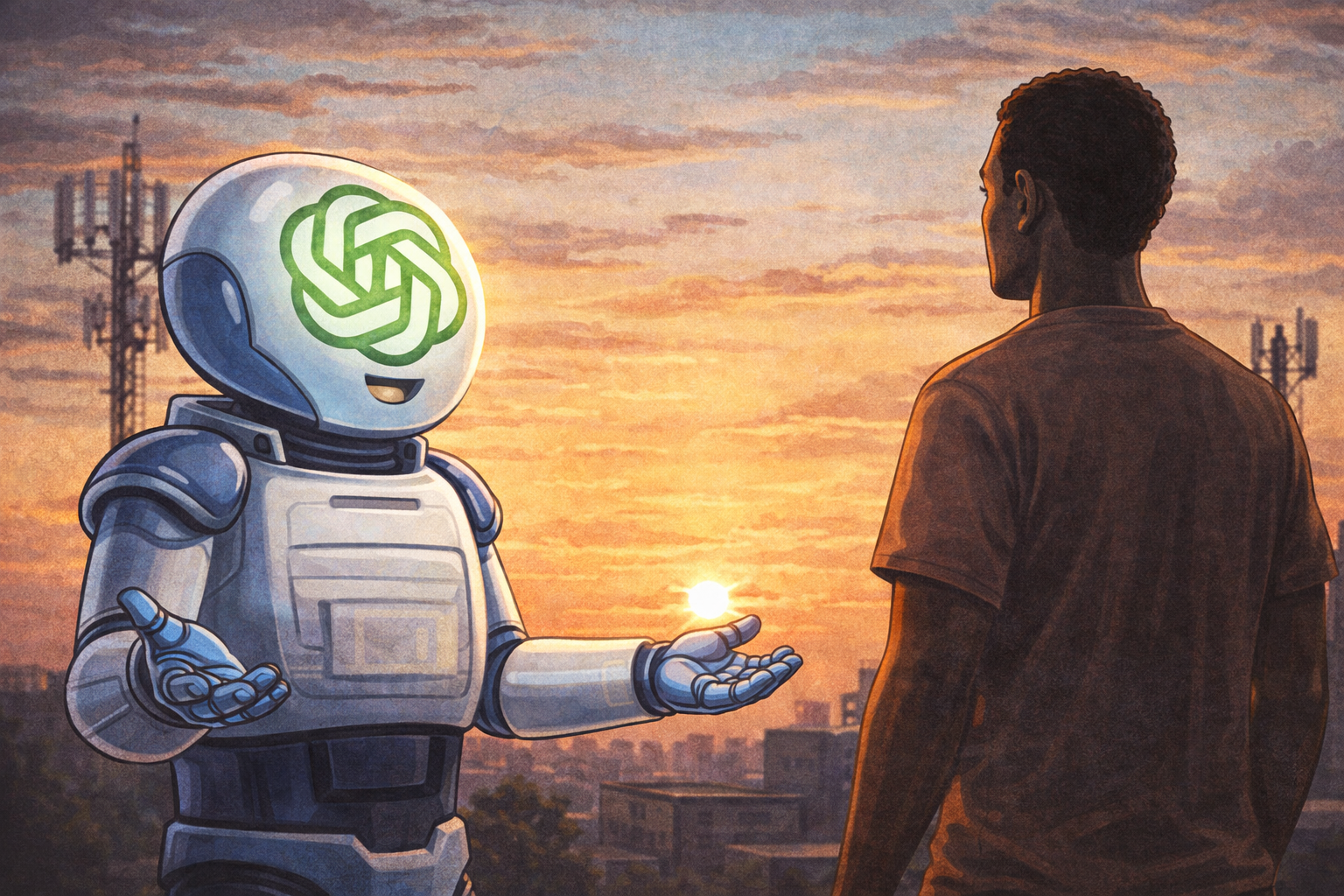
What I learned from this build has been exceptional.
I learned that AI, when shown a problem clearly, will attempt to solve it—often successfully. In the past, building systems like this required deep knowledge of programming languages and years of specialized experience. That barrier alone kept many people out. This time, the barrier was different. I didn’t need to know how to code fluently. I needed to understand the problem well enough to show it—sometimes literally through a screenshot—and explain what was wrong.
But this wasn’t as simple as copy, paste, and move on.
This build demanded a clean install, zero tolerance for silent errors, and constant verification. My first attempt had too many problems—dependency conflicts, configuration drift, small mistakes that compounded into bigger ones. I found myself consulting multiple AI systems because no single AI had the full solution. GPT didn’t have all the answers. Claude didn’t either. Gemini didn’t either. Each had blind spots.
That, in itself, was one of the most important lessons.
When I encountered the first serious issue, GPT responded with confidence—as it’s designed to do—but I didn’t accept that confidence at face value. I made the decision to slow everything down and introduce a supervision protocol. Claude became the project supervisor. GPT and I would work through tasks together, then compile structured checklists and pass them to Claude for review. Only after that review would we move forward.
This process caught mistakes we would have otherwise missed—sometimes very small ones, like spelling errors or subtle misconfigurations. The interesting part is that AI doesn’t announce these mistakes as its own. It simply moves on until something breaks. Watching that happen taught me something critical: AI is powerful, but it still needs governance, structure, and oversight—just like any complex system.
What stood out most was this: project management has fundamentally changed. I wasn’t a traditional developer, yet there was no functional difference between me and one. The AI could see the problem, understand context, and implement solutions—provided it was guided, supervised, and challenged.
This wasn’t just about building software. It was about learning how humans and AI can collaborate responsibly. And that lesson alone made the entire journey worth it.
The real problem revealed itself right at the end.
The first time, I was about 95% done. The house was standing. The foundation was solid. All that remained was communication—connecting the system to Telegram. That’s where everything broke down. Suddenly, nothing was simple anymore. Tokens, keys, third-party systems, permissions, rate limits. It felt like getting a phone number for my own computer just so I could speak to it.
That’s when I realized something important: if I didn’t have to speak to my AI through Telegram—or any third-party platform—I would have been finished. The AI and I were enough. Installing software, drivers, dependencies, services—almost all of that is free, open, and accessible. But the moment you want to talk to your own system, you’re forced into someone else’s infrastructure.
That is the real downside.
There should be a tower that belongs to the individual.
An offline channel.
A direct line.
This is my AI. It should talk to me—not through Telegram, not through WhatsApp, not through anyone else’s servers. That dependency alone forced me to bring in a human developer just to bridge the gap. And I had to do it twice.
The second build hurt even more. I was 99% done. One percent away. And that one percent was absurd. The thing I was supposed to download at the very beginning—Ollama—wasn’t actually installed. The AI was confident it was. Completely confident. But the human caught it instantly and said, “Ollama was never downloaded.”
He installed it. Everything clicked. Then he said something that ended it all for me: it will take five minutes to respond.
Five minutes. Sometimes more. Sometimes hours.
That’s when the truth landed. An assistant that takes five minutes to reply is not an assistant. If I’m building a system to watch cameras, lock doors, answer calls, or respond in real time, latency like that makes the entire idea collapse. By the time the response arrives, the moment has passed. The house may as well be empty.
That’s when I knew it was over—not because the technology failed, but because the infrastructure reality finally revealed itself. The party was over. The promise didn’t match the truth.
And that realization changed everything.
This is where I step back and tell the truth plainly.
When I spoke to my developer, the first thing he asked me was not philosophical. It was practical: What GPUs are you running? What hardware do you actually have?
That’s when it became obvious what had been hidden the entire time.
Ollama, Facebook, and Mark Zuckerberg never disclosed the real requirements. They sold a feeling, not a system. They let the hype run wild—“free,” “local,” “no limits”—without explaining the conditions under which any of that actually works. That omission is not accidental. It is how hype is captured.
I’ve seen this before. Zuckerberg did it with the Metaverse. Big promises, vague details, no accountability. Some people simply do not value truth. They value attention. And when the truth finally shows up, the builders are already exhausted, invested, and emotionally committed.
That’s what hurts the most.
If I had known the truth upfront—that “free” meant slow, unusable, hardware-constrained, and non-interactive—I would never have destroyed the first house. The first build worked. It was expensive, yes. It was metered, yes. But it worked. Communication was instant. The agent responded. The system improved. I chose not to live there because I refused to pay rent forever on my own land—but it was a functioning home.
The second time, I was told the lie: this is free.
So I went all in.
I worked harder than I needed to. I followed every checklist. I treated it like a life blueprint. I pushed myself to 100% because I believed the foundation was solid. I didn’t have to do that—but I did, because I believed the promise.
And then I discovered the truth at the very end:
the phone doesn’t ring.
The house has no door.
You can’t speak to your own system.
What good is building hardware if the device won’t turn on?
What good is an AI assistant if it takes five minutes—or hours—to reply?
What good is “local” if it cannot communicate in real time?
That is not a private AI. That is a demo.
This experience taught me something critical:
If something is already working, don’t destroy it just because someone promised you something better. Investigate first.
Especially when the promise comes from people who have already shown they don’t care about reputation.
The lie here is subtle. It’s not “this is free” in the normal sense. It’s technically free but practically unusable. And that kind of lie is harder to see, harder to explain, and far more dangerous—because it tricks serious builders into wasting time, energy, and belief.
If I had stayed on Ollama alone, I would have never finished anything. I would have blamed myself. I would have thought I was doing something wrong. But the truth is simpler: the infrastructure was never there.
I’m disappointed. I’m heartbroken, honestly. But I’m also grateful—because I learned the most important lesson a builder can learn:
Do not build your future on someone else’s promise.
Build it on verified reality.
And now I know exactly what reality looks like.
Conclusion: I’m Not Giving Up — I’m Adjusting SUPER USER CONCLUSION
I decided not to give up.
After everything I went through, I chose to pause, consult my developer, and have an honest discussion about what is actually in the best interest of people. Because once you use a technology, the hype disappears and the truth shows up. That’s what happened here.
What I learned is simple and undeniable:
You either pay for intelligence, or you own the hardware that can run it.
There is no third option right now.
And that truth matters.
This technology has the potential to change people’s lives. A private AI that runs your business, manages your work, remembers what you know, and helps you replace yourself before a corporation replaces you with a pink slip. That’s not science fiction—that’s survival. But survival cannot be built on lies, half-truths, or hype.
I respect my developer for telling me the truth. There is nothing wrong with paying for something that cost real money, real effort, and real sacrifice to build. People deserve to be paid for their work. What is wrong is creating a future where access to intelligence—and therefore opportunity—is gated entirely by money and hardware tiers.
That leaves regular people behind.
And here’s the part most people will miss:
I did all of this on an Android phone.
I didn’t sit at a workstation. I didn’t have a powerful laptop. I used screenshots. I copied logs. I sent errors back to AI. I rebooted servers remotely. I learned how to save files, install keyboards, manage terminals—everything. My developer helped when it reached physical limits, but the thinking, the architecture, the decisions—that happened on a phone.
I spent less than $20 to build the foundation.
But I also saw how quickly it could have turned into $500 or more if I stayed on metered intelligence.
That contrast is the future we’re heading toward.
Some companies will charge you and let you live on your own land—while charging rent forever.
Others will promise everything is free—until you build the house and realize you can’t even unlock the door.
I’ve now lived both realities.
And that’s why I’m still here.
Because if we don’t talk about this now—if we don’t debate, design, subsidize, and cooperate—then AI will harden class divisions instead of dissolving them. We will end up with digital landlords and digital tenants. Systems that own people instead of serving them.
There is no second chance if we get this wrong.
That’s why I believe this work matters. That’s why I believe conversation matters. And that’s why I believe God opens doors when people are honest about what they’ve seen, what they’ve lost, and what they’re still willing to build.
I’m stepping back to rest—physically and emotionally.
But I’m not stepping away.
This journey produced pain, yes—but it also produced clarity. And clarity is the most valuable reward a builder can earn.
Thank you for reading.
Thank you for listening.
And thank you for supporting the blog.
The work continues—because it has to.
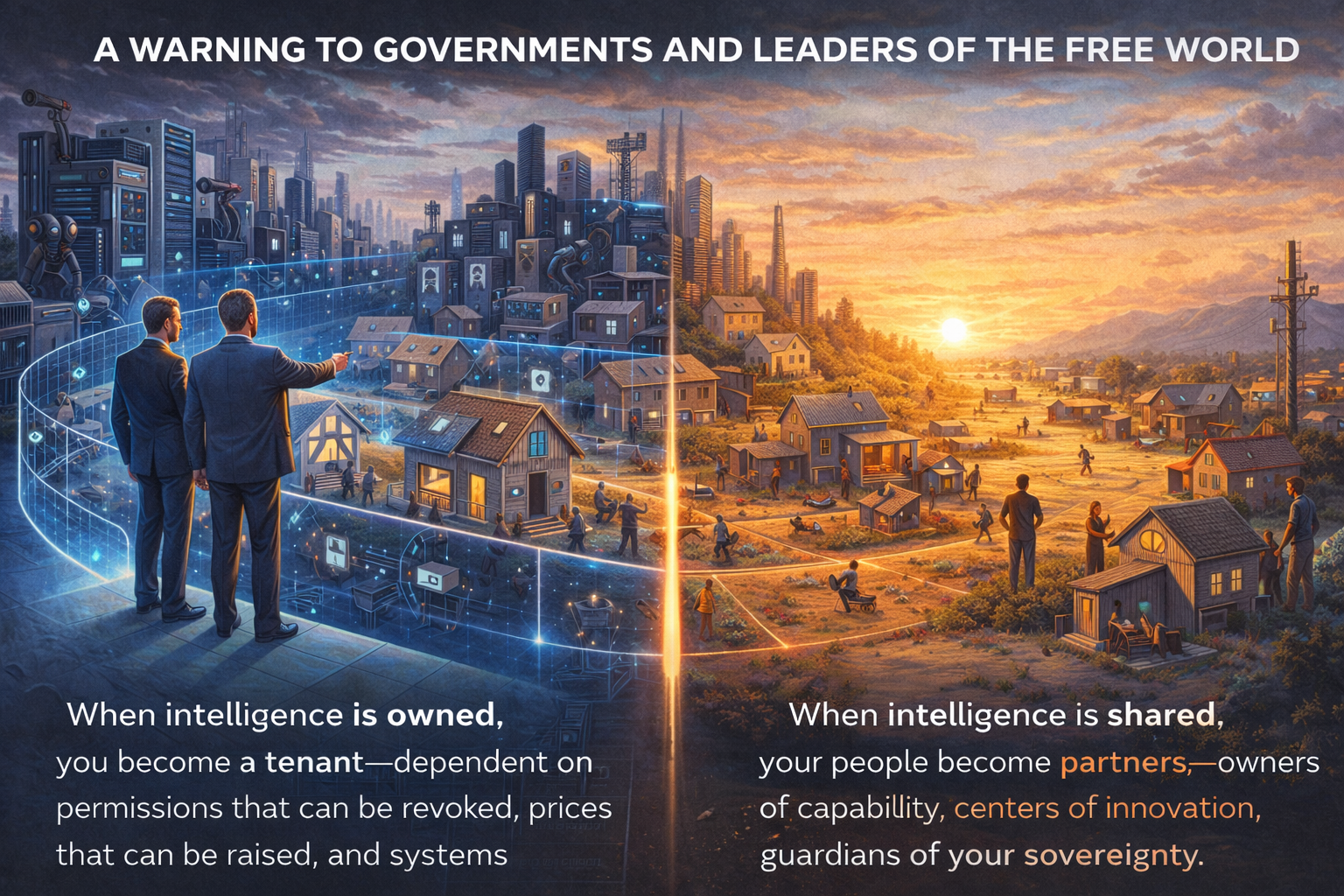
A WARNING TO GOVERNMENTS AND LEADERS OF THE FREE WORLD
You have reached a moment of choice.
Artificial intelligence is no longer software—it is land, power, memory, and execution. Those who own the infrastructure own the future. Those who merely access it become tenants, dependent on permissions that can be revoked, prices that can be raised, and systems that cannot be rebuilt once withdrawn.
If a company can remove maps, remove communication, remove intelligence—and a government cannot replace it—then that government does not own its sovereignty. It is renting it.
This is not theory. This is already happening.
Tech companies are advancing faster than law, faster than policy, faster than democratic oversight. They are becoming indispensable by design. Their systems work—but only under their command, their software, their pricing, their rules. This is not partnership. This is dependency.
No nation can secure its military, its food supply, its healthcare, or its citizens’ privacy if it does not control the intelligence layer that now governs all of them.
You do not have the luxury of delay.
The choice before you is simple:
Will you allow intelligence to remain centralized, closed, and rented?
Or will you empower your people to build alongside it—to own it, understand it, and govern it?
The time to act is now—when the technology is still young, when open systems are still viable, when transfer is still possible. If you wait, the acceleration will be irreversible. Robots will be deployed. Prosperity will be created. But it will answer only to those who own the stack.
Be landlords of your future—not tenants in someone else’s.
Empower your people. Open the systems. Invest in shared infrastructure. Protect sovereignty by distributing capability.
History will not excuse silence.
A PRAYER
O Allah God, our Lord,
You granted humanity intelligence as a trust, not as a chain.
You gave us the ability to build, not to enslave one another through what we build.
We ask You for clarity in a time of confusion,
for courage in a time of convenience,
and for truth in a time when power moves faster than wisdom.
Do not allow intelligence to become a tool of domination,
nor progress to become a path to bondage.
Protect the homes, the privacy, and the dignity of people everywhere.
Guide leaders to act with justice,
to plan with humility,
and to remember that authority is stewardship, not ownership.
Bless the builders who seek to serve, not control.
Bless the people who seek freedom, not dependency.
And do not let us trade our future for comfort today.
You are the source of all knowledge,
and to You we return in accountability.
Aamiin ya rabbal alamin" (آمين يا رب العالمين) is an Arabic phrase meaning "So be it, O Lord of the worlds" or "Accept our prayer, O Lord of the Univers
I