

بِسْمِ اللهِ الرَّحْمٰنِ الرَّحِيْم
In the Name of God, Most Gracious, Most Merciful
♥️🤲🕋♥️🕋🌹🌹🥀🤲🌹🕋♥️🤲
On Enterprise Margins, Supply Chains, and the AI Endgame
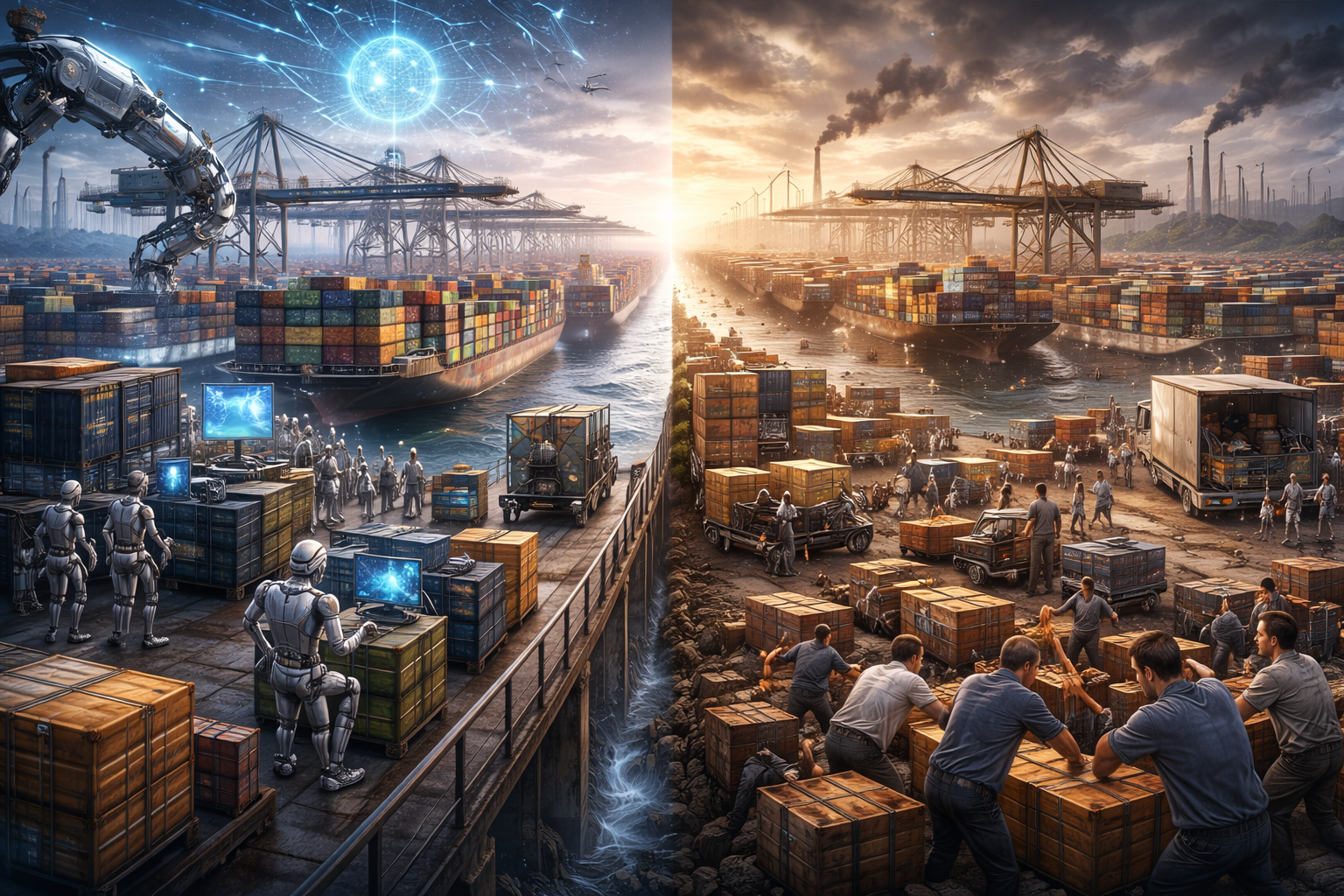
For decades, global enterprise—particularly large Western retailers and intermediaries—has operated on a simple formula:
Buy as cheaply as possible.
Sell as expensively as possible.
Capture the spread.
This model has extracted enormous value from Chinese and Asian supply chains while returning as little as possible to the people who manufacture, transport, and sustain the system.
Excessive margins were normalized.
Environmental damage was externalized.
Labor was treated as expendable.
Artificial intelligence, when deployed inside this model, does not correct it—
it perfects it.
AI will make it easier to squeeze suppliers, compress wages, eliminate jobs, and extract profit faster and at greater scale. Retailers who invent nothing, manufacture nothing, and merely ship goods will use AI to become more efficient intermediaries—not better partners.
This is unacceptable—not morally, but economically.
A system that destroys purchasing power eventually destroys its own profits.
My path is different.
The future is not enterprise-owned AI extracting more from the same supply chains.
The future is AI-connected digital stores, owned and coordinated by the network itself—
stores that:
collapse excessive margins
synchronize demand and supply
turn efficiency into shared gain
Stores that use AI not to hoard value, but to unlock it on both sides of the transaction.
The Real Contest Ahead
In the AI era, the real contest will not be software alone.
It will be:
hardware
energy
logistics
the ability to deploy AI at scale while sustaining losses
This favors ecosystems that understand coordination, long-term planning, and shared resilience—not quarterly extraction.
Countries and manufacturers that have learned to work as teams, diversify production, and operate as systems will endure.
Those that rely on margin extraction without reinvestment will not.
The End of Jobs as We Know Them
Jobs as we know them are ending.
That reality cannot be managed with denial or temporary profits.
What must replace them are agents that belong to people—
AI systems running on distributed hardware, embedded in real economic flows, generating income through participation, coordination, and value creation.
Every transaction must unlock value.
Every efficiency gain must have a destination beyond corporate balance sheets.
Two Bridges
This is the bridge I am building.
Enterprise AI offers businesses temporary margin expansion.
My system offers society continuity.
These two paths do not converge.
They cannot coexist in the same ecosystem.
One depends on dependency.
The other depends on equilibrium.
One accelerates extraction.
The other secures demand.
A choice is being made now—by OpenAI, by enterprises, and by those who will adopt these systems.
I am choosing the side that keeps people solvent, supply chains alive, and the future viable.
Conclusion: A Call to the Builders of the World
To the manufacturers, producers, and supply-chain architects of China and Asia:
The age of extraction is ending.
Not because it is immoral—
but because it is unsustainable.
For decades, you have carried the weight of global production while others captured the margin. You absorbed volatility, price pressure, and risk, while intermediaries—who invented nothing and built nothing—profited from distance, opacity, and control of storefronts.
At the same time, the consumers you sell to have been hollowed out, squeezed by the same system that squeezed you.
That model collapses under AI.
What Comes Next
What comes next will not be decided by marketing platforms or enterprise software.
It will be decided by who controls the market itself:
the buying
the selling
the coordination
the liquidity
the rules by which value moves
This is an open call to begin building AI digital stores that do not serve intermediaries—
but replace them.
Stores that:
run the entire supply chain end-to-end
synchronize production, pricing, demand, and logistics automatically
collapse artificial margins
capture savings at the transaction level
feed those savings back into a shared system of liquidity
and, when conditions allow, generate profit and income for users—not just shareholders
What This Will Require
This will require discipline.
It will require sustaining losses in the short term.
It will require retraining consumers to participate in a system that rewards them for buying—not punishes them for needing.
But this is how markets survive when jobs disappear.
The future economy will not be wage-based.
It will be flow-based.
Income will come from participation, coordination, and ownership of intelligent systems—not from employment alone.
That is why this system is built on:
agents that belong to people
clear ledgers
transparent transactions
a currency model that boosts value instead of extracting it
Correction, Not Destruction
Yes—many businesses in the middle will disappear.
They will disappear because they added no value beyond arbitrage, storefronts, and control.
That is not destruction.
That is correction.
China and Asia have already demonstrated the one capability that matters most in the AI era:
the ability to operate as a synchronized system.
Long-term planning.
Coordination across industries.
Shared infrastructure.
Discipline in execution.
These will always outperform individualistic extraction when intelligence becomes cheap.
The Bet
I am betting on that future.
I am betting on manufacturers who are ready to:
unify their shops
align their discounts
share data instead of surrendering it
and build an AI-run market that manages itself
Every wholesale and retail transaction will be captured.
Every transaction will be boosted.
Every unit of efficiency will be redirected toward stability, savings, and growth.
Those who invest early, align early, and build with this vision will not have to worry about exports, platforms, or gatekeepers.
They will be the market.
The Blueprint
This is not a proposal to optimize the old system.
It is a blueprint to replace it.
An AI marketplace that runs itself
A supply chain that is synchronized, not exploited
A system that creates equilibrium instead of extraction
This is how you dominate the next century.
And this is the moment to begin.
Conclusion: A Call to the Builders of the World
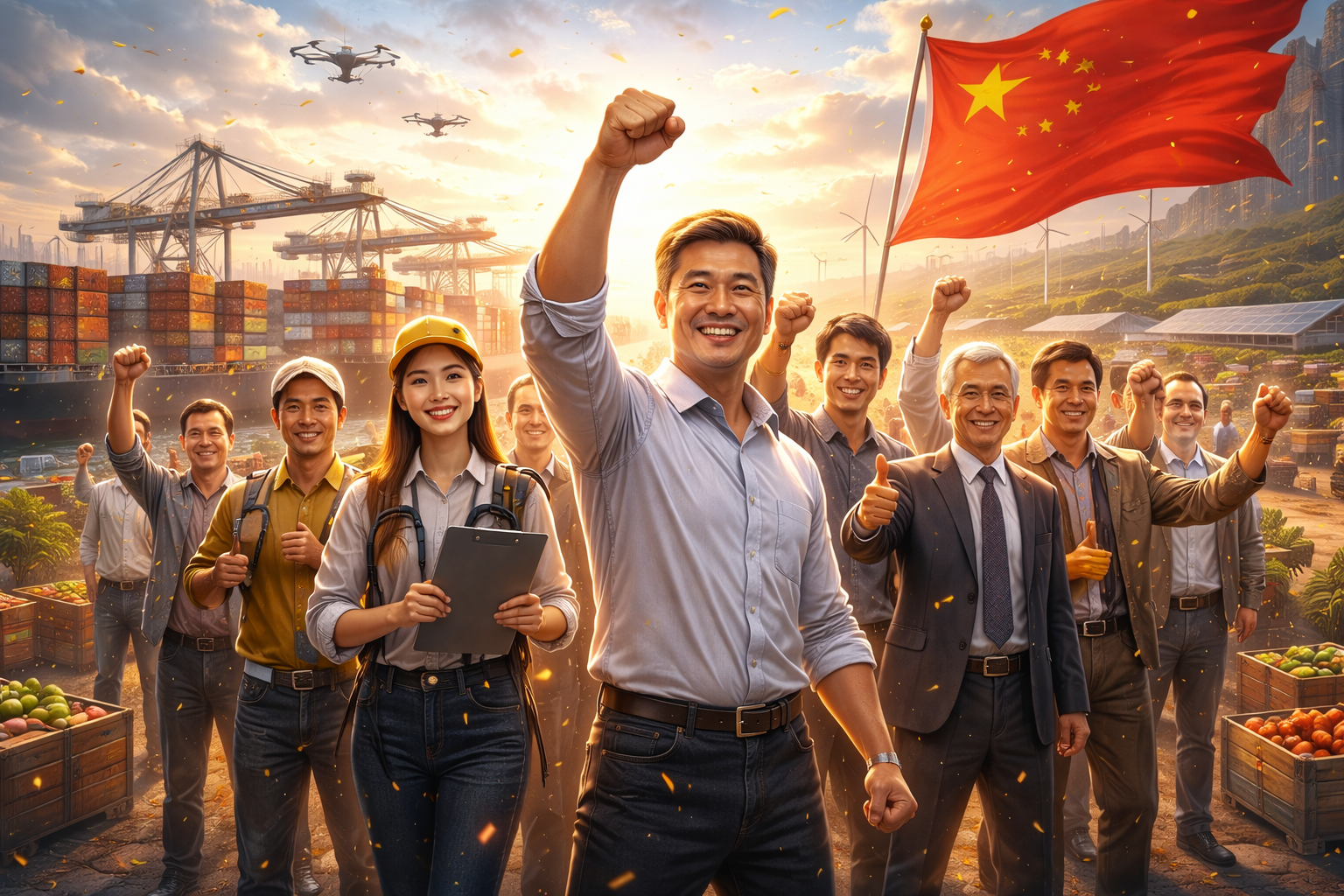
To the manufacturers, producers, and supply-chain architects of China and Asia:
The age of extraction is ending.
Not because it is immoral—but because it is unsustainable.
For decades, you have carried the weight of global production while others captured the margin. You absorbed volatility, price pressure, and risk, while intermediaries—who invented nothing and built nothing—profited from distance, opacity, and control of storefronts. At the same time, the consumers you sell to have been hollowed out, squeezed by the same system that squeezed you.
That model collapses under AI.
What comes next will not be decided by marketing platforms or enterprise software. It will be decided by who controls the market itself—the buying, the selling, the coordination, the liquidity, and the rules by which value moves.
This is an open call to begin building AI digital stores that do not serve intermediaries, but replace them.
Stores that:
run the entire supply chain end-to-end
synchronize production, pricing, demand, and logistics automatically
collapse artificial margins
capture savings at the transaction level
feed those savings back into a shared system of liquidity
and, when conditions allow, generate profit and income for users—not just shareholders
This will require discipline.
It will require sustaining losses in the short term.
It will require retraining consumers to participate in a system that rewards them for buying, not punishes them for needing.
But this is how markets survive when jobs disappear.
The future economy will not be wage-based. It will be flow-based. Income will come from participation, coordination, and ownership of intelligent systems—not from employment alone. That is why this system is built on agents that belong to people, clear ledgers, transparent transactions, and a currency model that boosts value instead of extracting it.
Yes—many businesses in the middle will disappear.
They will disappear because they added no value beyond arbitrage, storefronts, and control.
That is not destruction. That is correction.
China and Asia have already demonstrated the one capability that matters most in the AI era: the ability to operate as a synchronized system. Long-term planning, coordination across industries, shared infrastructure, and discipline in execution will always outperform individualistic extraction when intelligence becomes cheap.
I am betting on that future.
I am betting on manufacturers who are ready to:
unify their shops
align their discounts
share data instead of surrendering it
and build an AI-run market that manages itself
Every wholesale and retail transaction will be captured.
Every transaction will be boosted.
Every unit of efficiency will be redirected toward stability, savings, and growth.
Those who invest early, align early, and build with this vision will not have to worry about exports, platforms, or gatekeepers. They will be the market.
This is not a proposal to optimize the old system.
It is a blueprint to replace it.
An AI marketplace that runs itself.
A supply chain that is synchronized, not exploited.
A system that creates equilibrium instead of extraction.
This is how you dominate the next century.
And this is the moment to begin.