
بِسْمِ اللهِ الرَّحْمٰنِ الرَّحِيْم
In the Name of God, Most Gracious, Most Merciful.
♥️🤲🕋♥️🕋🌹🌹🥀🤲🌹🕋♥️🤲
My First Blog — The Creator’s Commentary
Welcome.
It is 2026, and I want to take you back to the beginning.
Before OmarArizona.com.
Before the Office of the Super User.
Before AI became part of my daily work.
Before all of the rooms, archives, experiments, letters, projects, and ideas that now live across my work, there was a much smaller place.
There was a blog.
My first blog.
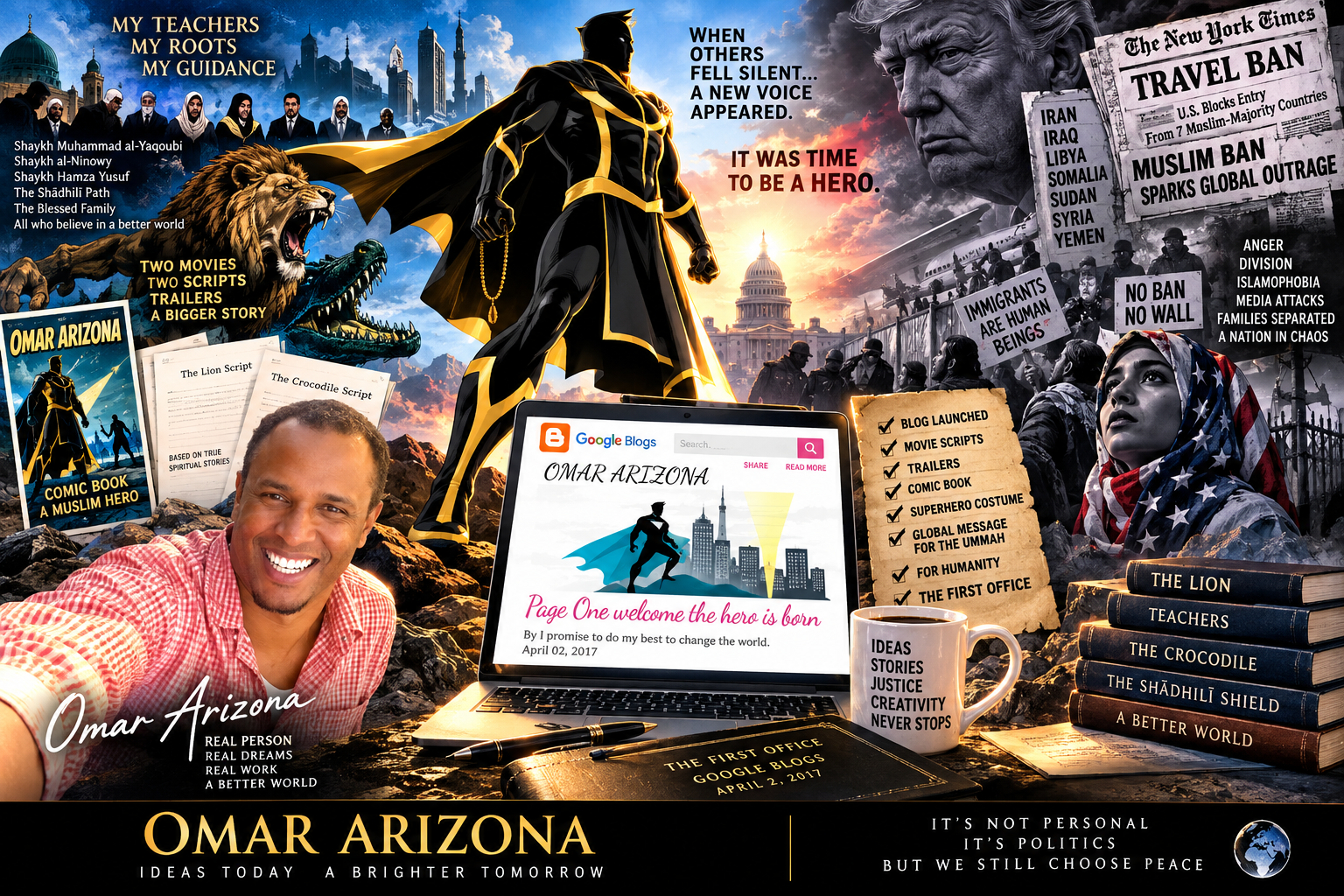
This is not simply a repost of what I wrote back then.
Think of this as the creator’s commentary — the story behind the page, the decisions, the images, the ideas, and what I was trying to build before I had the language to fully explain it.
2017
To understand that first blog, you have to understand what was happening around me.
Donald Trump had just come through one of the most unusual presidential campaigns in modern American politics.
He campaigned aggressively.
He attacked constantly.
He broke political conventions.
And he made promises that many people did not believe would ever actually become government policy.
Then he won.
Suddenly, the campaign was over and governing had begun.
And some of those campaign promises began turning into policy.
One of the biggest controversies involved Muslims and immigration.
Trump had campaigned on restricting Muslim entry into the United States, and shortly after taking office his administration issued a travel-ban order affecting several Muslim-majority countries, including Somalia.
For me, Somalia changed the feeling of it.
Now it was personal.
I am Somali.
I am Muslim.
And what had been happening on television and at campaign rallies had now reached my own community.
Someone had to respond.
But I was not going to respond the way everybody else responded.
Watching From the Sidelines
Before I got involved, I was watching the smartest, the brightest, and the best deal with the problem.
And, in my view, some of the smartest and the best in America were at Zaytuna College, under its president, Shaykh Hamza Yusuf.
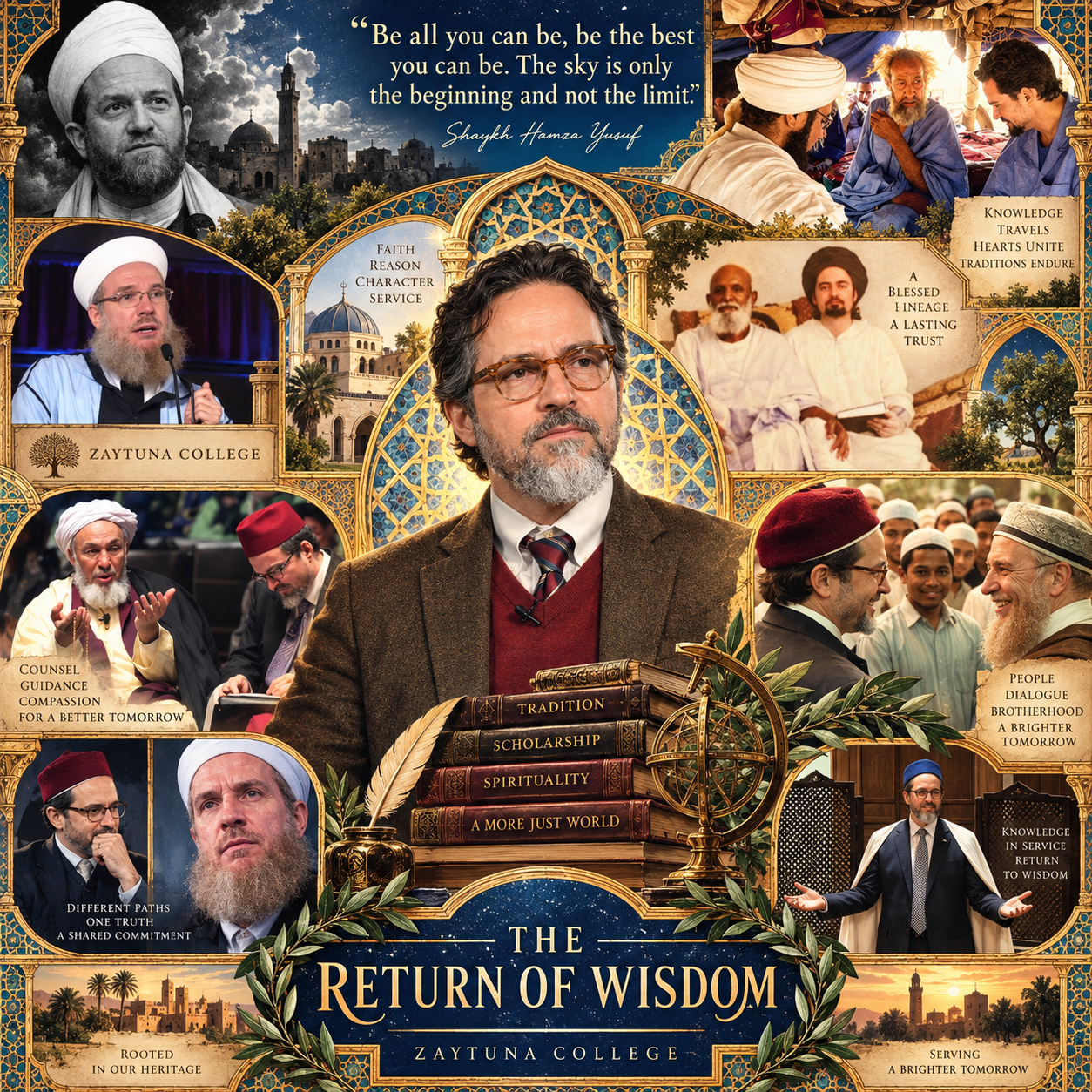
Hamza Yusuf, president of Zaytuna College, is a man who has spent his life traveling through the Islamic world, sitting with scholars, studying tradition, and learning the instruments of leadership before trying to exercise it. He is also deeply American, able to understand both the religious tradition and the society he is speaking to. That combination matters. When someone has spent decades learning, serving, teaching, and trying to solve problems, an intelligent person does not rush to stand in front of him. You watch. You listen. You learn.
Watch "Hamza Yusuf: Return to Wisdom | Zaytuna College — Shaykh Hamza Yusuf" on YouTube
In my case, I stayed on the sidelines because I believed the people with the deepest preparation should be given the first opportunity to respond.
And this is also a message to Muslims around the world: respect the people who have actually mastered the instruments of leadership. Respect the scholars, the teachers, the people who understand the religion and have spent their lives trying to apply wisdom to difficult circumstances. You do not have to agree with every judgment they make, but if you ignore them, dismiss them, or try to run ahead of them without knowledge, you are cutting yourself off from something essential. Leadership is not noise. Leadership is preparation, judgment, service, and responsibility. And when those people are still standing, the wise person pays attention.
He was leading the charge.
Many intellectuals were speaking.
People were protesting.
People were trying to deal with what was happening.
And I did not think I was qualified.
So I chose to watch from the sidelines.
But then it reached a moment where the president of Zaytuna College described the situation as “a madhouse.”
What I understood from that was that people on both sides of the aisle had reached a point where reason was becoming harder to find, and where there was less and less room for people who were well versed in dealing with the problems of society.
Because it is the educated.
It is the illuminated.
Those are the people we need to help lead us through difficult times.
But when the president of Zaytuna College reached that point and, from my perspective, seemed ready to throw in the towel, I smiled.
I said:
The water has reached the right temperature.
It is time for me to respond to the challenge now.
And how I did that is what I am going to tell you.
Building My Own Home on the Internet
I understood very quickly that the revolution Trump brought into the White House was also an online revolution.
A huge part of the communication was happening on the platform we then knew as Twitter, now called X. Trump used social media in a way that stood out from other candidates, speaking directly to the public and drawing enormous attention to his posts. Pew Research documented how central social media had become to the 2016 campaign, and how strongly Trump’s posts drew public engagement.
That taught me something.
Power was moving online.
And if I wanted to respond, I needed a home of my own.
At the time, Twitter had a strict character limit. You could not fully explain yourself there. You could make a point, but you could not build a house around your ideas.
So my conclusion was simple:
You cannot be homeless on the internet and expect to make a lasting difference.
That is still my message to Muslims today.
Even if all you build is a simple blog, build a house.
Build somewhere your ideas can live.
Build somewhere your history can stay.
Build somewhere nobody else controls the length of your thought.
And that is what I did.
I began building the identity of Omar Arizona, connecting the blog to the domain OmarArizona.com.
That was the beginning of the same home you are standing inside today.
But I also understood something else about the online world I was entering.
Credibility mattered.
If I was going to arrive, I wanted to arrive with work behind me.
So I took the time to write movie scripts.
I created movie trailers.
I created comic books.
I built a superhero identity.
And inside that work, I honored the Blessed Family of the Prophet Muhammad ﷺ, my teachers, and the spiritual tradition that had shaped me.
I did not want to simply appear online and start shouting.
I wanted to make an entrance.
I wanted people to understand that there was imagination behind the message, work behind the words, and a larger story behind the person speaking.
And then came the date.
Everything was ready.
But it was April 1st.
And I said to myself:
I am not launching this on April Fool’s Day.
So I waited.
On April 2, 2017, I opened the door.
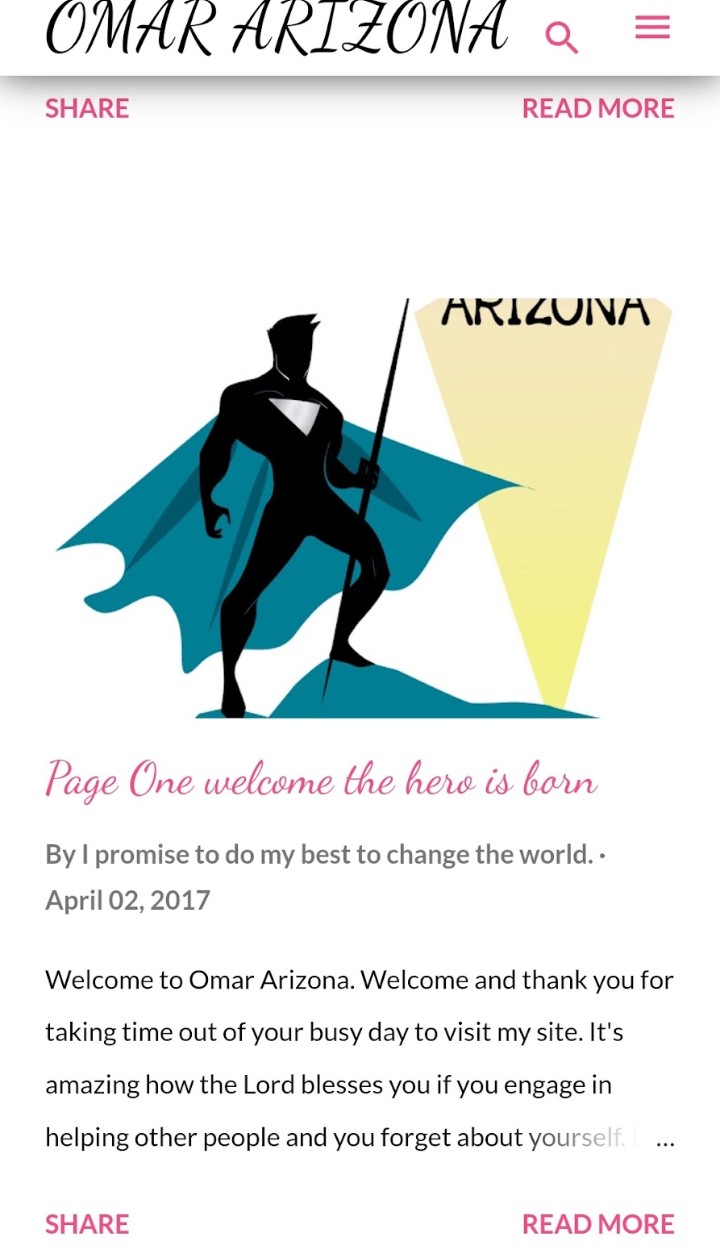
The blog went live.
The superhero arrived.
And with him came the costume I had designed, the comic books, the movie scripts, the trailers, and the story I was trying to tell.
But almost immediately, I turned the page away from myself.
I thanked the Blessed Family.
I deployed what I called the Shādhilī Shield.

And then I began writing about something much heavier:
the burden of leadership.
Because for me, leadership was never just about speaking.
It was connected to the burdens I had already carried in my own life.
There were problems in America that I had once tried to understand and confront as a correctional officer.
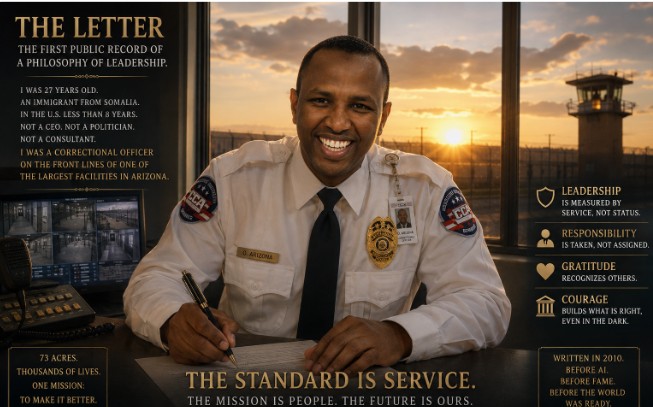
There were burdens I had put down.
There were questions I had walked away from.
And now, as I prepared to enter politics and public life, I understood that I was walking back toward difficulty.
Because politics, to me, is difficulty.
It is responsibility.
It is conflict.
It is judgment.
It is carrying something other people would rather put down.
So near the end of that first blog, I was trying to tell myself something:
Pick the burden back up.
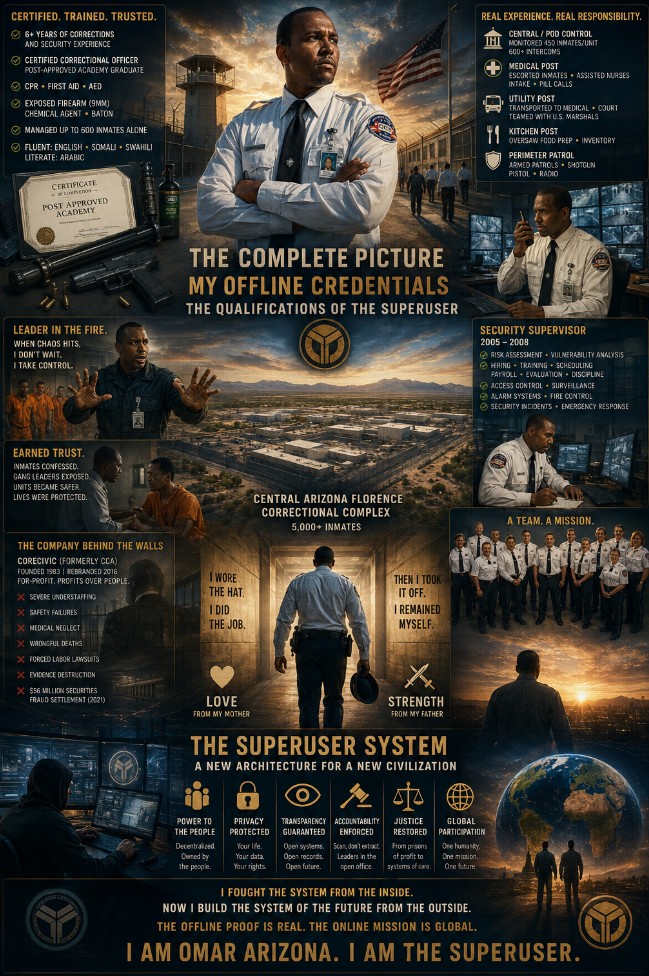
We can you reach which you can read all about at this link if you haven't it's on the website
https://omararizona.com/redesign/humans
Pick up the questions you left behind.
Pick up the responsibilities you thought you had escaped.
And carry them forward.
That is how my first blog began.
And that is how my first blog ended.
Conclusion — Part One
In conclusion, my first blog was announcing my home, announcing my projects, announcing my comic books, and, above all, giving hope to Muslims.
I was telling them that a hero had landed.
Not just any hero.
A creative hero.
A Muslim hero.
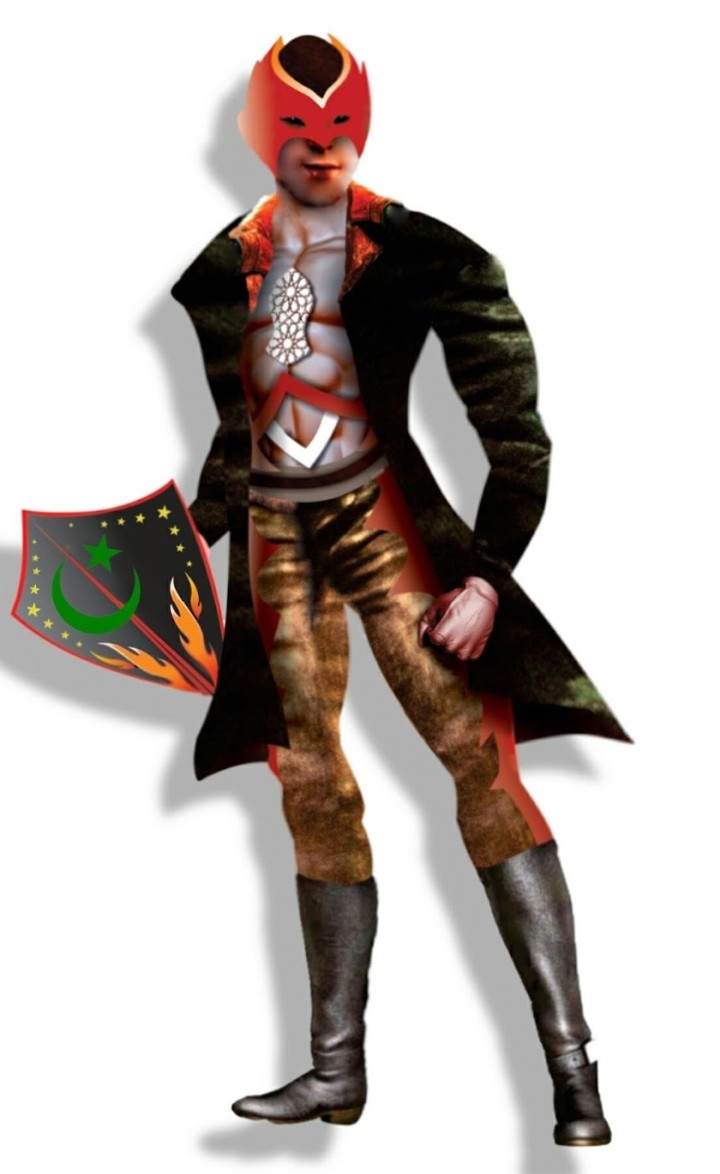
I was arriving with ideas, stories, projects, and a different way of looking at the world. I was going to put my skills on display, especially in politics, because I had already spent years studying people under pressure, conflict, manipulation, personalities, and human behavior.
My experience working around criminals in jail had shaped the way I looked at political power. I viewed politics as another arena of human games—ego, persuasion, praise, strategy, pressure, leverage, alliances, and the ability to understand the person sitting across from you.
When I looked at Donald Trump, I looked at him through that framework. I was not approaching politics as an academic standing outside the room. I was approaching it with the mentality of an officer who had spent years observing difficult personalities and learning how people respond to pressure, praise, confrontation, respect, and ego.
I believed I had a unique skill set, and I intended to use it.
But I was not planning to arrive loudly.
I was going to arrive quietly.
The revolution, as I imagined it, was not going to happen on Facebook.
It was not going to happen on Instagram.
It was going to happen on X.
I was going to move almost like a ninja—quietly, strategically, focused on influence rather than fame.
And before all of that, I wanted to do something joyful.
I wanted to throw a superhero comic party for Muslims.
I wanted Muslims—especially young Muslims—to see themselves in stories of courage, creativity, dignity, imagination, and heroism.
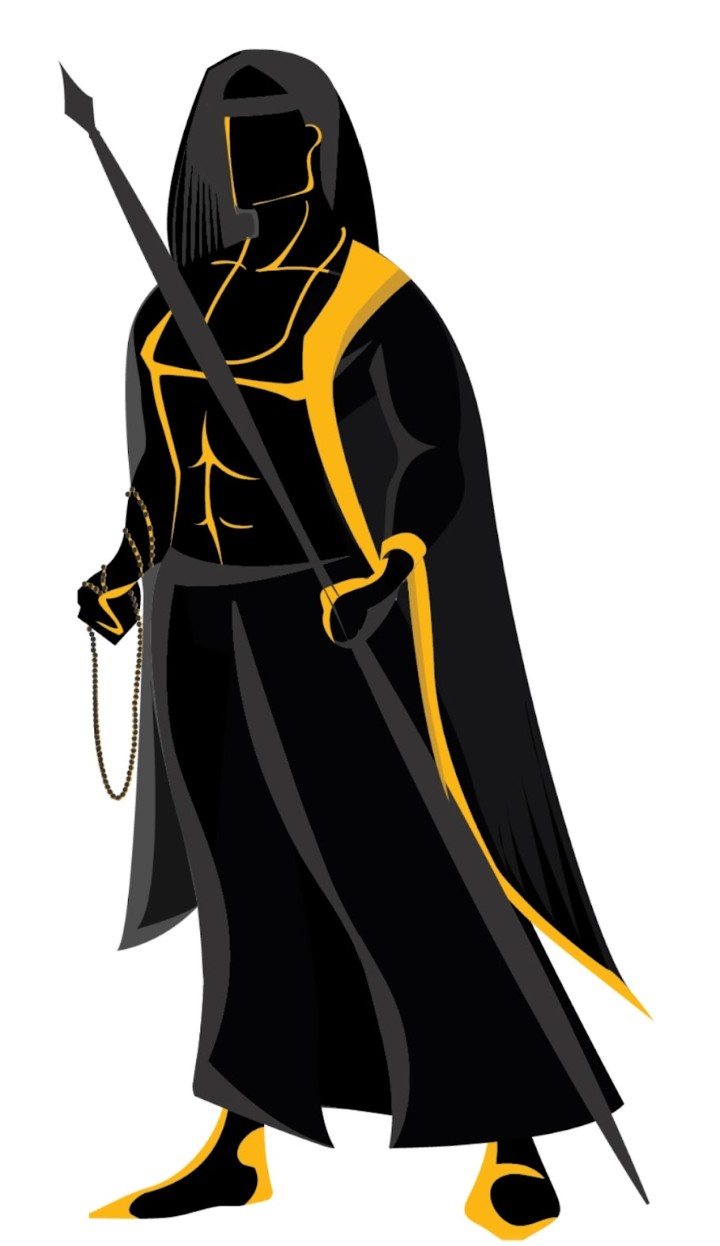

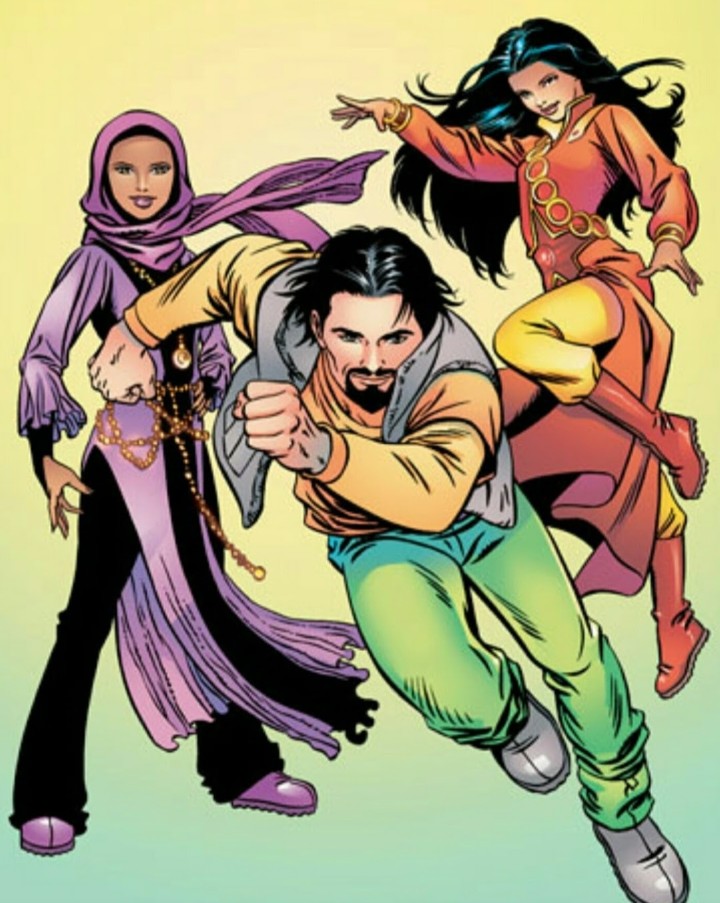
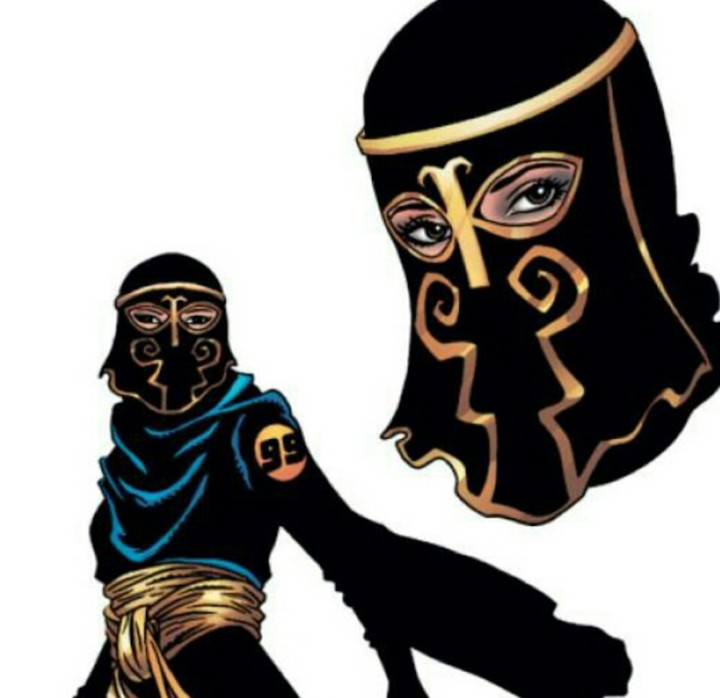
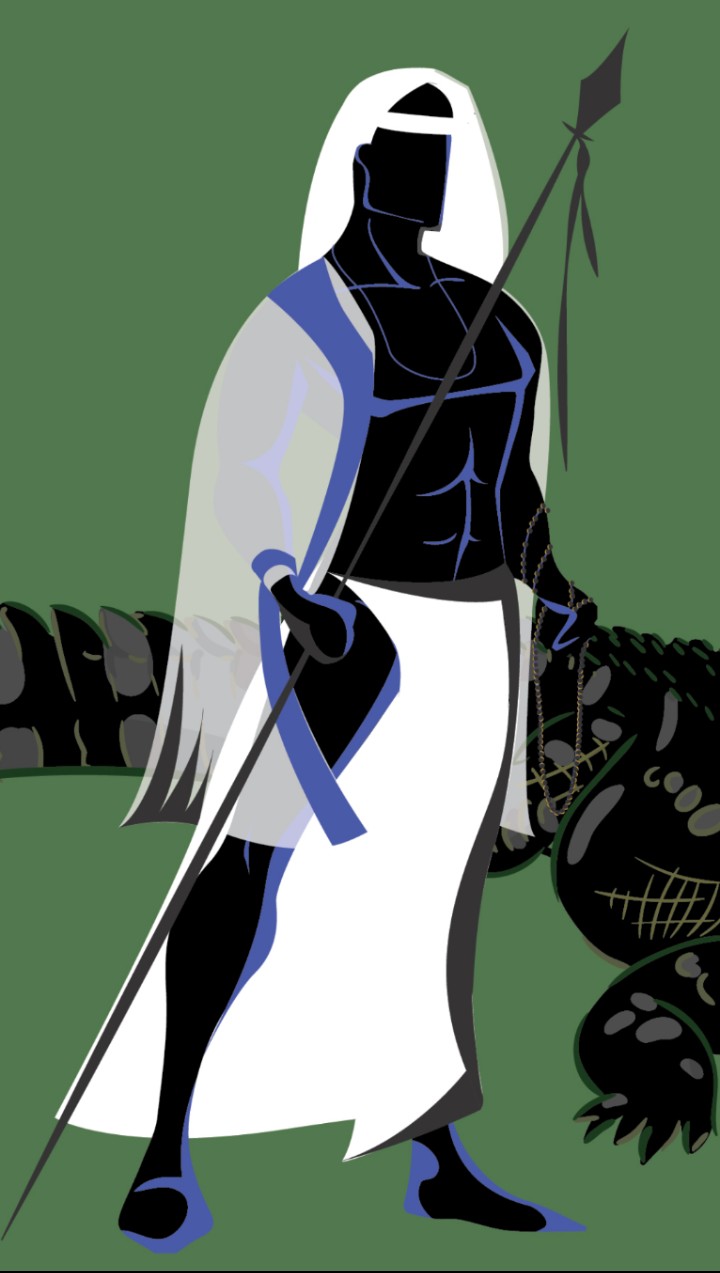
I wanted to celebrate them.
I wanted to arrive in style, but with purpose.
So I am going to end Part One by showing some of those images—the comic-book ideas and the superhero celebration I once imagined for Muslims, and which I still hope, in some form, to bring to life in the future.
If you are a Muslim, back then I was planning to throw a Muslim superhero costume party, but I never got the chance to do it. Insha’Allah, I am going to redesign that idea and officially throw the party, welcoming Muslims who are already superheroes in their own way. If you have been building something since 2017—writing a blog, creating a project, graduating, serving your community, or simply doing meaningful work—I welcome you too: open your blog, open your website, and show the world what you have built. And for everyone else, I look forward to eventually opening my shop, creating unique Islamic superhero costumes, and throwing Muslim superhero parties where people can purchase costumes from the website and come celebrate with us. I will show you some of the costumes and ideas I already had, and insha’Allah I will see you in the next commentary on the blog. From this point forward, I will begin combining and summarizing more of the old work. Unfortunately, much of what I did later happened on X, but I will do my best to reconstruct and summarize it as accurately as I can until I have an AI system capable of continuously recording and preserving the archive for me. Until then, I’ll see you next time.
This was the beginning.
The first blog.
The first home.
The first announcement.
The first glimpse of what I intended to become.
End of Part One.
Thank you for reading.
Next time, I will go into elbow grease, as we get to work. We have covered the opening. Now I will set you up for the elbow grease.
A lot was going on because most of the work takes place on X—and on X, it is really sad that I cannot show you how many politicians I was praising, how much I was communicating, and how much was happening. A lot has been lost to history, because when you are connected to a system that connects to everyone and you can respond instantly, you tend to spend all your time there.
Anyway, see you on my next review of what is coming up next: Elbow Grease — The Muslims.
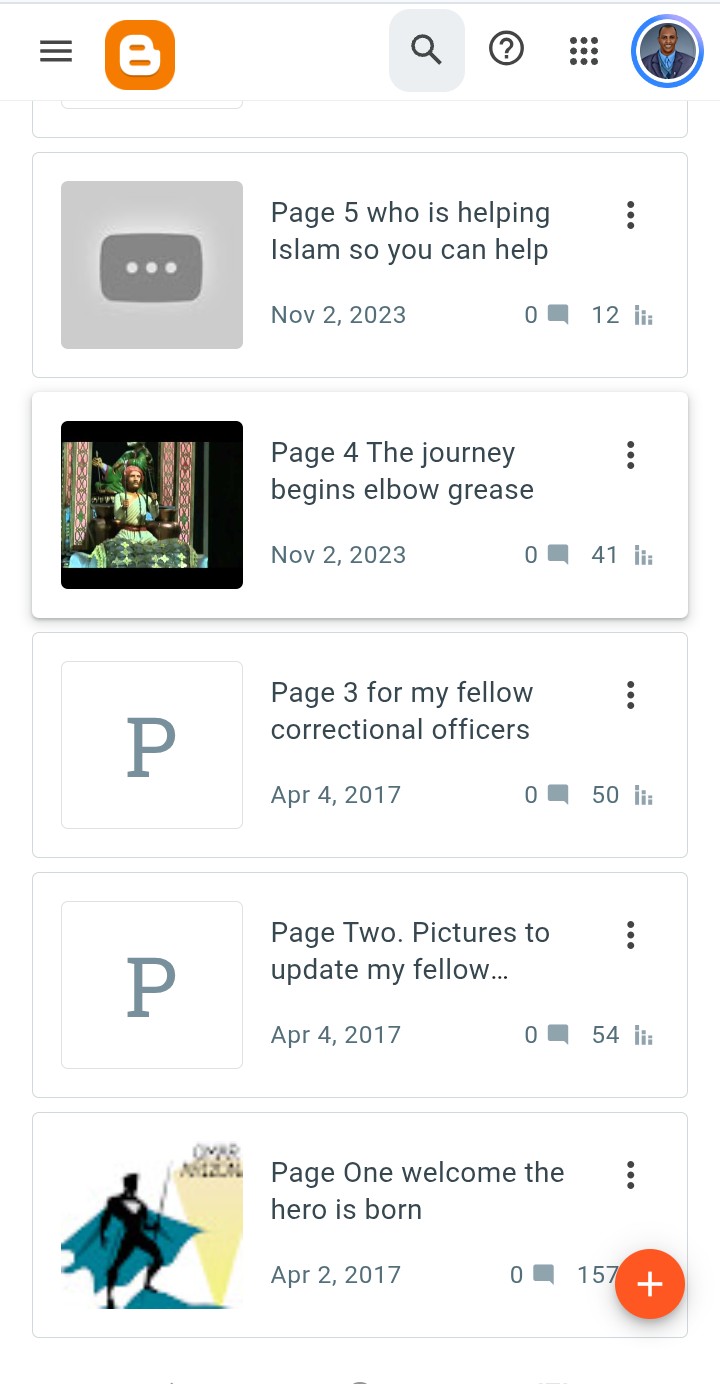
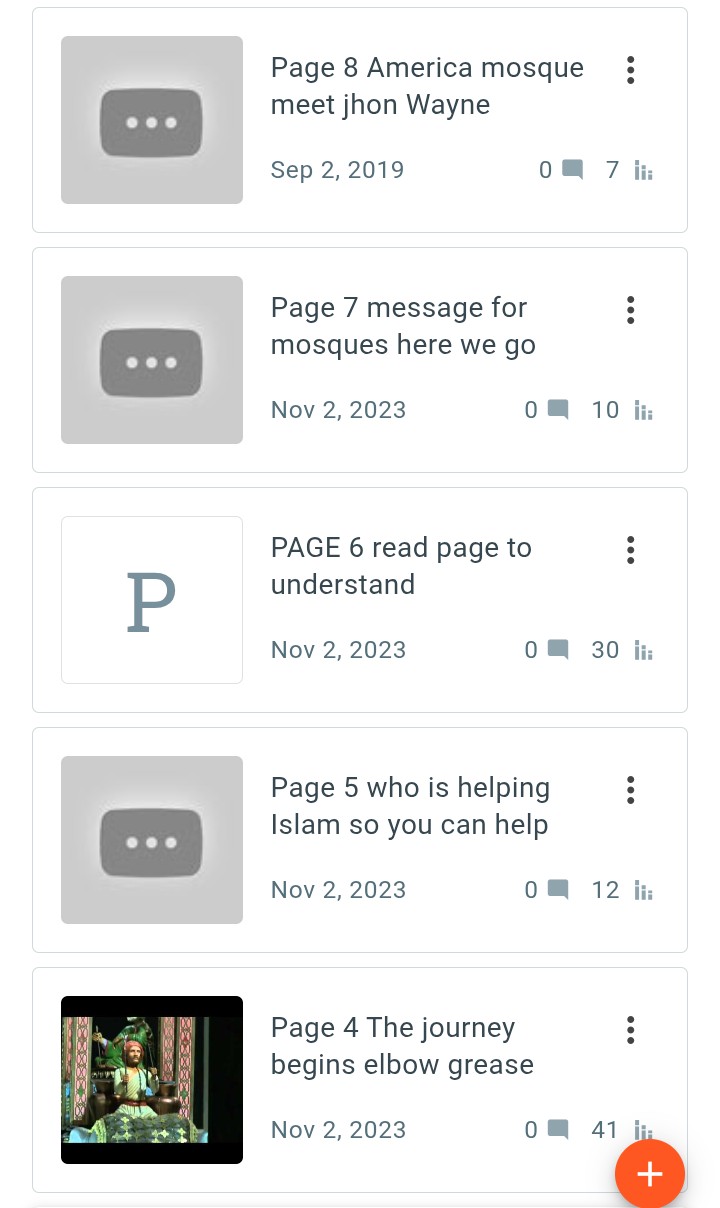
I really get to work, as you can see from the screenshot.
I am ending Part One with this screenshot because it gives you an idea of what is coming next. At the end of the day, it is difficult for me to put together the hundreds and thousands of tweets that were being sent out. But I am giving you the screenshots so you can prepare for what is coming next, because a lot happened, and it is difficult to remember everything.
But that is how history is.
The people you think are not going to change the world end up doing it.
That is the absurd part about all of this.
The world has already changed.
I am not just a super user.
I am the Super User who is going to bring change.
And I will be giving you commentary.
So thank you, and I will see you on the next commentary.
May Allah accept the good in this work, forgive its mistakes, guide what comes next, protect us from arrogance and error, and make whatever benefit comes from it a source of good for the Muslims and for humanity. May Allah send His peace and blessings upon our master Muhammad ﷺ, upon his family, his companions, and all those who follow the path of truth with sincerity. Āmīn.