
بِسْمِ اللهِ الرَّحْمٰنِ الرَّحِيمِ
Chapter 3
Muhammad ﷺ Under Power: Humility at the Height of Victory
Orientation
This is the chapter where most leaders fail.
History is full of people who spoke beautifully when they were weak and became brutal when they were strong. Words are easy when power is absent. Character is tested only when power arrives—and stays.
For the Prophet Muhammad ﷺ, power did arrive. Fully. Publicly. Unmistakably. And when it did, the world witnessed something it had never seen before and has rarely seen since: victory without vanity, authority without arrogance, dominance without dehumanization.
This chapter examines the most dangerous moment in politics—the moment when you finally can do whatever you want.
1) When Power Finally Arrived
After years of persecution, exile, war, and negotiation, the balance of power shifted decisively. The Muslims were no longer a fragile minority. Madinah was established. Alliances were secured. The Prophet ﷺ commanded loyalty, resources, and force.
This was not symbolic authority.
This was real power.
He could:
enforce laws,
command armies,
punish enemies,
rewrite social hierarchies,
and reshape the future of Arabia.
Nothing stood in his way.
And then came the ultimate test.
2) The Conquest of Mecca: A Political Moment Without Precedent
Mecca was not just a city.
It was:
the place of his birth,
the center of tribal power,
the site of humiliation,
the home of those who mocked him,
the city that forced him into exile,
the place where companions were tortured and killed.
Every human instinct would have justified revenge.
Every historical precedent would have normalized cruelty.
Every political manual would have advised:
a grand display of dominance,
public humiliation of former enemies,
a speech cementing supremacy,
a rewriting of history centered on the conqueror.
That is what conquerors do.
That is not what the Prophet ﷺ did.
3) The Posture of the Victor
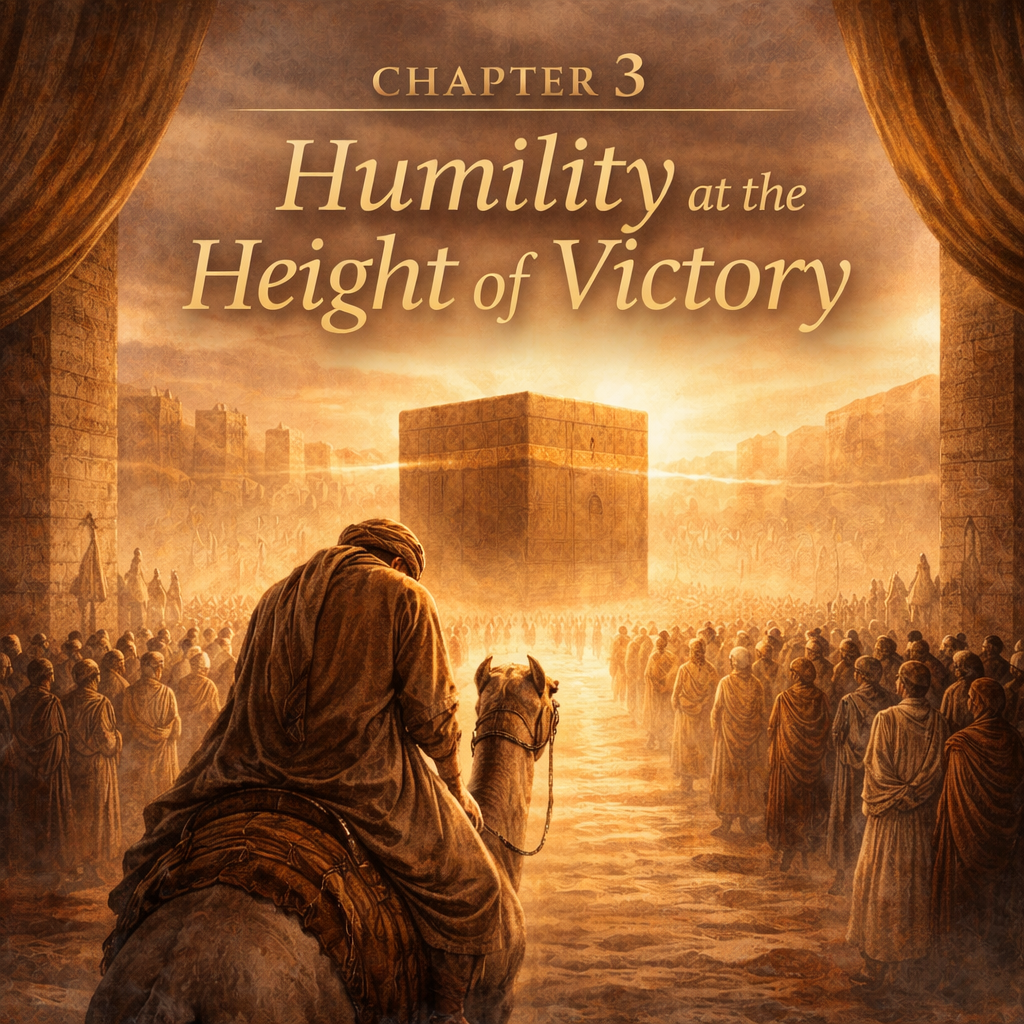
As he entered Mecca, the Prophet ﷺ did not raise his head.
He lowered it.
So low that his beard nearly touched the saddle of his mount.
No chest forward.
No chin raised.
No declaration of personal greatness.
Instead:
humility,
remembrance,
Qur’anic recitation,
gratitude.
This single physical posture dismantles centuries of political arrogance.
Because posture reveals truth before words do.
He showed the world:
Power does not elevate the self—it humbles it.
4) Victory Without Humiliation
When leaders conquer, they usually need enemies to kneel—so they can feel tall.
The Prophet ﷺ did the opposite.
He asked the people of Mecca:
“What do you think I will do with you?”
They answered:
“You are a noble brother, son of a noble brother.”
He said:
“Go. You are free.”
No mass punishment.
No collective guilt.
No forced displays of submission.
This was not weakness.
This was confidence without ego.
Because only someone secure in truth can afford mercy at scale.
5) Justice Without Vengeance
Some individuals were held accountable—not out of anger, but out of justice. The Prophet ﷺ distinguished between:
systemic harm,
personal wrongdoing,
public danger,
and private error.
This separation matters politically.
Revenge blurs distinctions.
Justice preserves them.
Modern politics collapses these categories.
Prophetic politics insists on clarity.
Punishment was:
limited,
specific,
purposeful,
and restrained.
Never theatrical.
Never personal.
6) No Rewriting of History Around the Self
After the conquest, the Prophet ﷺ did not:
rename Mecca after himself,
erect monuments to his victory,
demand personal loyalty,
centralize worship around his image.
Instead, he:
restored the Ka‘bah to monotheism,
erased symbols of falsehood,
and returned attention to God.
This is a political act of the highest order.
He refused to let history orbit him.
Modern leaders fear irrelevance.
Prophetic leadership fears misplacement.
7) Power Did Not Change His Lifestyle
After total victory, nothing materially changed about the Prophet ﷺ.
He did not:
move into luxury,
expand personal wealth,
isolate himself from people,
surround himself with elite barriers.
He remained accessible.
This consistency is rare.
Because power usually demands distance to protect ego.
The Prophet ﷺ did not need distance to feel secure.
8) Managing Followers Under Victory
Victory intoxicates followers faster than leaders.
The Prophet ﷺ:
restrained triumphalism,
discouraged arrogance among companions,
reminded them of accountability,
emphasized gratitude, not entitlement.
This is critical.
Movements often rot after victory—not before it.
He protected the moral health of the community by refusing to let power corrupt their hearts.
9) The Inner Victory Before the Outer Victory
The Prophet ﷺ conquered Mecca only after conquering:
anger,
resentment,
ego,
desire for revenge.
This order matters.
Outer victory without inner victory produces tyranny.
The Prophet ﷺ reversed that sequence.
10) Why This Moment Still Terrifies Power
The conquest of Mecca exposes the lie at the heart of authoritarianism:
That dominance requires cruelty.
It proves:
strength does not require arrogance,
leadership does not require humiliation,
authority does not require ego.
This is why prophetic politics remains threatening to unjust systems.
Because it offers an alternative that cannot be controlled.
Closing of Chapter 3
This chapter leaves us with an unavoidable truth:
Power does not make a person dangerous.
Ego does.
The Prophet Muhammad ﷺ reached the peak of political authority and demonstrated that greatness belongs only to God—and that human beings are safest when they remember this at the moment they could forget it.
He did not become larger than life.
He became smaller before God.
That is why his legacy grew.
Next Chapter
Managing Hypocrisy, Betrayal, and Internal Enemies
Because the hardest politics is not defeating enemies outside—but restraining injustice within.