
بِسْمِ اللهِ الرَّحْمٰنِ الرَّحِيْم
In the Name of God, Most Gracious, Most Merciful
♥️🤲🕋♥️🕋🌹🌹🥀🤲🌹🕋♥️🤲
Muhammad Ibn Abd al-Wahhab: Why He Was "Special" Because He Canceled the Old Islam and Brought His Own Islam That Is Yet to Be Challenged!
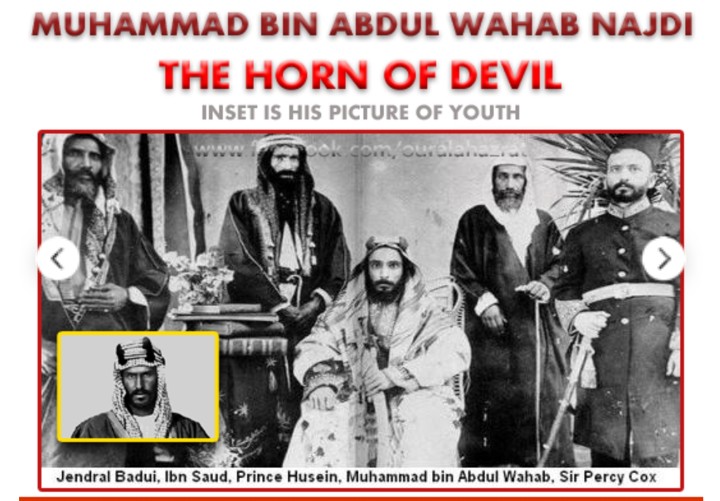
Muhammad Ibn Abd al-Wahhab (1703–1792) stands out in history not because of his brilliance or contributions to Islamic scholarship, but because of the sheer longevity of his life and the political and financial support his ideology received.
What made him "special" was not a legacy of unity or advancement for the Muslim Ummah, but the creation of a new, controversial version of Islam that had no roots in the rich and diverse Islamic traditions of the past.
His teachings reshaped the religion, justified the spilling of Muslim blood, and destroyed centuries of Islamic heritage, all while paving the way for a state built on these divisive ideas.
A New Version of Islam
Ibn Abd al-Wahhab did not merely reinterpret Islamic principles; he introduced a version of Islam that was fundamentally disconnected from the Islamic past.
It was an ideology built on:
Watch "🔥 Wahhabism: Uncovering the Hidden Truth" on YouTube
Eradication of Islamic heritage: Destroying graves, mosques, and practices tied to Islamic spirituality, such as Sufism.
Militarized enforcement: Justifying violent jihad against fellow Muslims under the pretext of purifying the faith.
Rejection of diversity: Marginalizing the intellectual, spiritual, and cultural pluralism that had defined Islamic civilization for centuries.
This version of Islam was not rooted in the teachings of the Prophet Muhammad ﷺ or the classical scholars of Islam. Instead, it was a narrow, literalist ideology that prioritized conformity and rigidity over understanding and unity.
The Role of Power and Money
Ibn Abd al-Wahhab's ideas might have remained obscure were it not for the political alliance he forged with Muhammad Ibn Saud. This partnership allowed his teachings to be weaponized for the consolidation of power, with religion used as a tool to justify conquest and suppression.
Takfir (excommunication): Labeling entire populations of Muslims as disbelievers.
Watch "The History of Saudi Arabia (House of Saud)" on YouTube
Centuries later, the Saudi state, armed with billions of dollars of oil wealth, exported this ideology worldwide. Through funding mosques, schools, and publications, the Saudi regime normalized Wahhabism as a global representation of Islam. This financial support gave Ibn Abd al-Wahhab's teachings a reach and influence that far exceeded their merit or acceptance in Islamic history.
The Legacy of Betrayal
For many Muslims, the greatest betrayal lies not just in the creation of this new version of Islam, but in its lasting impact:
Division of the Ummah: Takfiri practices fractured the Muslim world, fostering mistrust and sectarianism.
Erasure of Islamic heritage: Centuries-old traditions, spiritual practices, and historical sites were destroyed in the name of purifying the faith.
Global Misrepresentation of Islam: Wahhabism came to define Islam in many non-Muslim contexts, overshadowing the faith's true diversity and compassion.
Enduring Damage: The ideological and cultural damage remains largely unaddressed, with Wahhabism continuing to influence politics, education, and extremism.
A Legacy Yet to Be Undone
Muhammad Ibn Abd al-Wahhab's legacy endures, not because of its value, but because it was institutionalized and exported with unparalleled resources. It created a new normal for Islam that is deeply disconnected from its past. Undoing this legacy requires a return to the true teachings of Islam—those rooted in unity, mercy, and the intellectual richness of its history.
As Muslims reflect on the challenges of today, the life and teachings of Muhammad Ibn Abd al-Wahhab serve as a stark reminder of the dangers of power and ideology corrupting faith. His long life and the wealth that amplified his message made him "special," but not in a way that the Ummah can celebrate. Instead, his legacy is one that demands accountability, reflection, and a commitment to reclaiming Islam's true heritage.
The Unique and Controversial Teachings of Muhammad Ibn Abd al-Wahhab
Muhammad Ibn Abd al-Wahhab's teachings stand out not only for their radical departure from Islamic tradition but also for the profound damage they inflicted on the Muslim world. He effectively declared a new Islam by erasing over a thousand years of history, scholarship, and practices, replacing them with his own interpretations. His ideology was so rigid and exclusionary that it became nearly impossible to challenge him without being branded a non-Muslim, a tactic that silenced dissent and solidified his influence.
This makes Ibn Abd al-Wahhab's movement comparable to the Safavid transformation of Persia, but even more devastating because it targeted the two holiest sites of Islam: Makkah and Madinah. The damage remains unaddressed, as the Saudi government continues to promote Wahhabism, albeit with cosmetic adjustments to appear more moderate, while leaving the core ideology intact.
A Checklist of Ibn Abd al-Wahhab's Teachings
1. Takfir (Declaring Muslims as Non-Muslims):
He declared that the majority of Muslims in his time were not true believers but kafir mushriks (disbelievers and polytheists).
This included Muslims from Makkah, Madinah, Syria, and Egypt—regions that had been centers of Islamic scholarship and spirituality for centuries.
2. Exclusive Claim to Tawhid (Monotheism):
He claimed that he alone understood Tawhid, accusing all other scholars and even his own teachers of ignorance.
Any practice he deemed to deviate from his interpretation, such as intercession or visiting graves, was labeled shirk (polytheism).
3. Rejection of a Thousand Years of Islamic Scholarship:
He disregarded the intellectual, spiritual, and legal traditions of classical scholars like Abu Hanifa, Malik, Shafi'i, and Hanbal.
Sufi practices, which had been integral to Islamic spirituality, were dismissed as innovation (bid'ah) and shirk.
4. Destruction of Islamic Heritage:
His followers demolished graves, shrines, and mosques associated with the Companions, the Prophet's family, and saints.
The destruction of historical sites in Makkah and Madinah was justified as a means to prevent shirk, erasing centuries of Islamic heritage.
5. Militarization of Faith:
Ibn Abd al-Wahhab declared jihad against Muslims he deemed mushriks, permitting the killing of such individuals and the confiscation of their wealth.
This led to widespread bloodshed and the forced conversion of tribes and communities under the pretense of purifying Islam.
6. Rejection of 'Udhr bi-l-Jahl (Excuse of Ignorance):
He denied that Muslims could plead ignorance of his version of Tawhid, even if they had no access to his teachings.
This rigid stance legitimized his takfir of entire populations and his justification for violence.
7. Comparison of Muslims to Pre-Islamic Polytheists:
He argued that the shirk of Muslims in his time was worse than that of the Quraysh during the Prophet Muhammad's ﷺ era.
This comparison further delegitimized centuries of Islamic practice and scholarship.
8. Hostility to Intercession and Veneration:
He labeled practices like seeking intercession from the Prophet ﷺ or saints as outright shirk.
Visiting graves and commemorating the deceased were seen as acts of idolatry, despite their widespread acceptance in classical Islam.
9. Rewriting Islamic Norms:
Ibn Abd al-Wahhab ignored nuanced interpretations of the Quran and Hadith that allowed for flexibility and diversity.
His teachings turned Islam into a rigid, exclusionary framework that left no room for differing opinions or traditions.
Why These Teachings Persist
1. Political Alliance with the House of Saud:
Ibn Abd al-Wahhab's ideology provided religious justification for the Saud family's military campaigns and governance.
The alliance institutionalized his teachings, making them the foundation of Saudi Arabia's state religion.
2. Export of Wahhabism:
With Saudi oil wealth, Wahhabism was exported globally through funding mosques, schools, and religious publications.
This spread the ideology far beyond the Arabian Peninsula, creating a "new normal" for Islam in many regions.
3. Control Over the Two Holy Sites:
The Saudi government's stewardship of Makkah and Madinah has allowed Wahhabi ideology to dominate the religious narrative around Islam's most sacred places.
This has silenced alternative interpretations and marginalized other Islamic traditions.
4. Superficial Reforms:
While the Saudi state has made cosmetic reforms in recent years to appear more progressive, it has not publicly repudiated Wahhabism or addressed its harmful legacy.
The core tenets of Wahhabi ideology still influence governance, education, and religious practices.
Conclusion
Muhammad Ibn Abd al-Wahhab's teachings represent one of the most radical shifts in Islamic history. By creating a new version of Islam, erasing a millennium of tradition, and aligning with political power, he established a legacy that continues to impact the Muslim world. His ideology silenced dissent by branding critics as non-Muslims, destroyed Islamic heritage, and fostered division and extremism.
The damage remains visible today, as the Saudi state has done little to undo this legacy. Despite minor adjustments, Wahhabism's core principles persist, leaving the Muslim world with the challenge of addressing its far-reaching consequences. Undoing this damage requires a revival of Islam's true diversity, intellectual richness, and spiritual depth.
Ibn Abd al-Wahhab's Teachings in Detail: A Closer Look
To truly understand the profound shift that Muhammad Ibn Abd al-Wahhab brought to Islam, it is necessary to examine his teachings in their own words. His writings are filled with bold claims that isolate his version of Islam from over a millennium of Islamic tradition. Below is a detailed example illustrating his exclusive claim to understanding Tawhid (monotheism) and his rejection of the knowledge and authority of all scholars who came before him.
Exclusive Claim to Tawhid: "Only I Understand Islam"
What Ibn Abd al-Wahhab Claimed
"I will tell you about myself – I swear by Allah, the One besides whom there is no deity worthy of worship – I sought knowledge, and those who knew me thought that I had understanding. But at that time, I did not know the meaning of 'La ilaha illa Allah,' nor did I know the religion of Islam before this blessing that Allah bestowed on me. Likewise, none of my teachers knew it."
"Whoever among the scholars of Al-'Arid claims that they knew the meaning of 'La ilaha illa Allah' or understood the meaning of Islam before this time, or whoever claims that one of their teachers knew it, has lied, fabricated, deceived the people, and praised themselves for something they do not possess."
(Al-Durar al-Saniyya, vol. 10, p. 71)
Implications of This Claim
1. Rejection of Predecessors:
Ibn Abd al-Wahhab effectively dismisses the entire legacy of Islamic scholarship by asserting that neither he nor his teachers knew the true meaning of Islam before his personal "discovery."
This claim invalidates centuries of intellectual and spiritual effort by scholars like Abu Hanifa, Imam Malik, Imam Shafi'i, and Imam Ahmad ibn Hanbal, as well as countless Sufi mystics and theologians.
2. Self-Declared Authority:
By stating that only he and his followers truly understood the core tenet of Islam, La ilaha illa Allah (There is no deity but Allah), Ibn Abd al-Wahhab placed himself above all previous scholars, effectively positioning himself as the sole arbiter of Islamic truth.
3. Takfir of the Ummah:
This exclusive claim laid the groundwork for his takfiri ideology, where he labeled all Muslims who disagreed with him as disbelievers. This included the Muslim populations of historically significant Islamic centers like Makkah, Madinah, Syria, and Egypt.
4. Erasure of Islamic Tradition:
Ibn Abd al-Wahhab's claim that none of his teachers—or the scholars of Al-'Arid—understood Islam suggests a complete break with Islamic tradition. His ideology treated the rich diversity of Islamic thought as invalid and sought to replace it with his own narrow interpretation.
Analysis of His Teaching
Contradiction with the Islamic Tradition
Islamic tradition holds that the knowledge of Tawhid was well-preserved and transmitted through the Quran, Hadith, and the efforts of scholars over centuries. Claiming that this knowledge was entirely lost until Ibn Abd al-Wahhab undermines:
The trust Muslims place in the Prophet Muhammad's ﷺ companions (Sahaba), who preserved the religion.
The work of early Islamic scholars who systematized Islamic jurisprudence, theology, and spirituality.
Dangerous Precedent
By asserting that the entire Muslim world was in error except for him, Ibn Abd al-Wahhab established a precedent of isolationism and rejection. Anyone who questioned or disagreed with his understanding was automatically deemed a polytheist or disbeliever. This stifled intellectual and theological debate, a hallmark of Islamic scholarship.
Why This Teaching Matters
1. Foundation of Wahhabism:
This idea became the cornerstone of Wahhabism, giving it a sense of superiority over all other interpretations of Islam.
2. License for Violence:
By declaring the majority of Muslims as non-believers, Ibn Abd al-Wahhab justified violence against them, which was carried out through his alliance with Muhammad Ibn Saud.
3. Enduring Legacy:
This exclusivist approach still influences Wahhabi-influenced teachings globally, where adherents reject and demonize other interpretations of Islam.
A Critical Reflection
This teaching is a prime example of how Muhammad Ibn Abd al-Wahhab's ideology diverged from the Islamic tradition. It replaced the rich, pluralistic heritage of Islam with a narrow and rigid framework that erased centuries of intellectual and spiritual contributions. By placing himself as the sole authority on Tawhid, Ibn Abd al-Wahhab initiated a radical movement that continues to shape—and divide—the Muslim world.
Ibn Abd al-Wahhab's Most Radical Teaching: Declaring the Entire Muslim World as Polytheists
Muhammad Ibn Abd al-Wahhab's teaching that the entire Muslim world had fallen into shirk (polytheism) was arguably his most radical and strategic weapon. By declaring that the majority of Muslims, including those in the holiest Islamic cities, were no longer believers, he positioned himself as the sole torchbearer of "true Islam." This tactic created an ideological monopoly, silencing any dissent and granting him unchecked authority to redefine the religion.
The Accusation: All Muslims Are Polytheists
In Al-Durar al-Saniyya, Ibn Abd al-Wahhab explicitly states:
"You have heard their admission that the practices taking place in the Two Holy Sanctuaries [Makkah and Madinah], Basra, Iraq, and Yemen are acts of shirk [associating partners with Allah]. They have admitted to you that the religion whose people they support—and who they claim are the great majority—is [in fact] shirk."
"They have also admitted to you that the Tawhid they strive to extinguish, and strive to kill and imprison its adherents, is the religion of Allah and His Messenger."
(Al-Durar al-Saniyya, vol. 10, p. 7)
How This Teaching Created a New Religion
1. Erasure of the Muslim Ummah:
Ibn Abd al-Wahhab's declaration effectively nullified centuries of Islamic history and practice by accusing the global Muslim community of falling into shirk.
Muslims who sought intercession from righteous figures, visited graves, or engaged in centuries-old practices were declared non-Muslims.
2. Self-Declared Authority:
By accusing everyone else of shirk, he established himself as the exclusive guardian of Tawhid, making any challenge to his teachings a denial of Islam itself.
He functioned as a de facto prophet for this new version of Islam, with his interpretation as the ultimate truth.
3. Weaponizing Takfir:
Labeling Muslims as mushriks (polytheists) created the justification for violence against them.
This provided the ideological foundation for his followers' campaigns of conquest and destruction across the Arabian Peninsula, including:
Killing those who refused to accept his teachings.
Confiscating their wealth.
Demolishing mosques and graves, including those of the Prophet Muhammad's ﷺ companions and family.
4. Strategic Brainwashing:
This approach ensured that any dissent could be dismissed as coming from polytheists or hypocrites.
It was a powerful psychological tactic: by accusing everyone of disbelief, he positioned his teachings as the only legitimate version of Islam.
Examples of His Accusations
Ibn Abd al-Wahhab targeted specific practices that had been part of Islamic tradition for centuries:
Seeking Intercession:
He claimed that asking righteous figures to intercede with Allah was shirk, even though this was widely accepted in Islamic tradition as a permissible practice.
Visiting Graves:
He equated visiting graves of saints and the Prophet ﷺ with idol worship, despite it being a common practice to honor the deceased and seek inspiration from their lives.
Use of Saints as Intermediaries:
He accused Muslims of worshipping saints when, in reality, they sought their prayers or blessings.
The Legacy of This Teaching
A New Religion With Ibn Abd al-Wahhab as Its Central Figure
This teaching not only redefined Islam but also made Ibn Abd al-Wahhab the centerpiece of his version of the religion:
He functioned as a spiritual authority who could override the Quran and Sunnah as understood by centuries of scholars.
His interpretation became the litmus test for true belief, making him indispensable to his followers.
Destruction of Islamic Unity
By labeling mainstream Muslims as mushriks, he fractured the Muslim world, creating deep divisions that persist to this day.
His teachings paved the way for sectarian violence, extremism, and intolerance.
Enduring Impact Through Saudi Support
The Saudi state institutionalized this teaching, exporting it globally and embedding it in the religious framework of the Two Holy Sanctuaries.
The damage to Islamic unity and diversity remains unaddressed, as Wahhabi ideology continues to influence Islamic discourse worldwide.
Ibn Abd al-Wahhab's declaration that the Muslim world had fallen into shirk was a calculated move to erase Islamic history and establish a new religion, with himself as its central figure. By branding all opposition as disbelief, he silenced critics, justified violence, and paved the way for the destruction of Islamic heritage. His teachings remain one of the most divisive forces in Islamic history, leaving a legacy of division, extremism, and a distorted representation of Islam. This legacy must be critically examined and addressed to restore the unity, diversity, and spiritual depth of the Muslim world.
Undoing the Legacy of Ibn Abd al-Wahhab: Acknowledging and Condemning the Damage
The teachings of Muhammad Ibn Abd al-Wahhab represent not just a departure from Islamic tradition but a deliberate reconstruction of Islam that undermined centuries of religious history, scholarship, and unity. His ideology weaponized takfir (excommunication) to establish a new religious order that positioned him as the ultimate arbiter of faith. The damage caused by this reinterpretation of Islam continues to affect the Muslim world today, and the only way to undo this damage is for Saudi Arabia to acknowledge the foundational role of these teachings in their state and publicly repudiate them.
Core Teaching: The Muslim World Is Worse Than the Pre-Islamic Polytheists
What Ibn Abd al-Wahhab Claimed
In Kashf al-Shubuhat, Ibn Abd al-Wahhab argued that the shirk (polytheism) of the Muslims of his time was worse than that of the pre-Islamic Quraysh:
> "The shirk of the earlier generations is less severe than the shirk of our time in two ways."
1. In Times of Hardship:
The earlier polytheists would invoke Allah exclusively in times of hardship, whereas the Muslims of Ibn Abd al-Wahhab's time allegedly continued to invoke intermediaries even in adversity.
2. Nature of Intercession:
The earlier polytheists invoked beings who were righteous, such as prophets or angels, whereas Muslims of his time allegedly invoked corrupt individuals known for immorality.
This teaching condemned centuries of Islamic practice, such as seeking intercession from saints, visiting graves, and honoring righteous predecessors, as outright shirk.
How This Teaching Redefined Islam
1. A New Religion in All but Name:
By branding all existing practices as shirk, Ibn Abd al-Wahhab effectively nullified the Islam practiced by the majority of Muslims.
His teachings established a new religious framework, where he and his followers were the sole custodians of "true Islam."
2. Ibn Abd al-Wahhab as the De Facto Prophet:
While he did not claim prophethood, his actions positioned him as the final authority on faith, akin to creating a new prophetic role in his religious order.
The Quran and Sunnah, as understood by the consensus of the Ummah for over a millennium, were sidelined in favor of his personal interpretations.
3. Silencing Criticism Through Takfir:
By declaring all dissenters as polytheists or hypocrites, Ibn Abd al-Wahhab disarmed any opposition.
This approach created a closed ideological system where his authority could not be questioned without risking excommunication.
4. Institutionalizing His Version of Islam:
His alliance with Muhammad Ibn Saud allowed this ideology to gain political and military backing, establishing Wahhabism as the state religion of the emerging Saudi state.
Why Saudi Arabia Must Address the Damage
The Foundation of the Saudi State
The Saudi state owes its existence to Ibn Abd al-Wahhab's teachings, which provided the religious justification for their conquests and rule. However, these teachings contradicted Islam's principles by:
Dividing the Muslim Ummah: Takfir fostered sectarianism and violence.
Destroying Islamic Heritage: Graves, mosques, and relics were demolished under the guise of eradicating shirk.
Suppressing Intellectual Diversity: Centuries of scholarship were dismissed as misguided or heretical.
Cosmetic Reforms Are Not Enough
Saudi Arabia has made superficial efforts to distance itself from Wahhabism, such as curbing the power of the religious police and promoting a modern image. However:
These reforms do not address the core ideology that remains embedded in Saudi-sponsored religious institutions worldwide.
Acknowledging the damage requires condemning Ibn Abd al-Wahhab's teachings publicly and unequivocally. This includes:
Renouncing his books, such as Kashf al-Shubuhat and Kitab al-Tawhid.
Educating Muslims about the historical and theological inaccuracies in his work.
Promoting a return to the pluralistic and inclusive traditions of Islam.
Restoring Islamic Unity
Undoing the damage also requires:
1. Public Accountability:
The Saudi government must acknowledge that the state was founded on teachings that contradicted Islam's core values.
2. Condemnation of Wahhabism:
The Saudi state must issue a public and official condemnation of Wahhabism, recognizing its role in dividing the Muslim world.
3. Reviving Islamic Heritage:
Efforts must be made to restore destroyed sites and recognize the contributions of scholars and spiritual traditions marginalized by Wahhabism.
Conclusion
Ibn Abd al-Wahhab's teachings not only created a new version of Islam but also erased centuries of tradition, scholarship, and unity. His ideology, which declared the entire Muslim world as polytheists and justified their persecution, was a strategic method of gaining unchecked authority. Today, the Saudi state must take responsibility for its role in institutionalizing these teachings. Only by publicly acknowledging and condemning this legacy can the damage be undone, paving the way for a revival of the inclusive, diverse, and spiritually rich Islam that existed before Wahhabism. This is not merely a matter of historical accountability but a necessary step toward restoring the unity and integrity of the global Muslim Ummah.
Conclusion: A Call to Acknowledge and Address the Legacy of Muhammad Ibn Abd al-Wahhab
As a Muslim, it is essential to recognize that Muhammad Ibn Abd al-Wahhab was "special" in a profoundly negative and destructive way. He did not merely reform or reinterpret Islam; he canceled your religion, attacked the two holiest cities of Islam—Makkah and Madinah—and established an entirely new version of Islam that the Prophet Muhammad (peace be upon him) never brought. Through his teachings, he invalidated the centuries of scholarship, spiritual practices, and the miraculous lives of saints, replacing them with a rigid, exclusionary ideology that dismissed the vast majority of Muslims as disbelievers.
This new religion, fueled by the discovery of oil wealth and enabled by the negligence of global powers like the United States, has given rise to a radical version of Islam that is completely disconnected from its historical and spiritual roots. The saints, whose lives were filled with miracles and whose teachings reflected the Prophet's ﷺ true example, were not only dismissed but actively attacked. Practices that had been unanimously approved by the Ummah's greatest scholars and spiritual leaders were labeled as shirk, and an entire history of Islamic tradition was effectively erased.
A Stark Analogy to Grasp the Reality
Imagine a scenario where gang members from Mexico infiltrate Islam, take over the religion, rebrand it with their own rules, and then—through 100 years of unchallenged government support—spread this fabricated version of Islam globally. This analogy might sound extreme, but it highlights the gravity of what has occurred under the influence of Wahhabism. With oil wealth financing its spread, this ideology has overshadowed the true Islam that was nurtured and practiced for over 1,400 years.
The Solution: What Needs to Be Done
1. Public Acknowledgment and Condemnation:
Saudi Arabia must publicly acknowledge that their state was founded on teachings that contradict Islam's core principles.
There needs to be an official repudiation of Ibn Abd al-Wahhab's works, such as Kashf al-Shubuhat and Kitab al-Tawhid, as a false representation of Islam.
2. Restoration of Islamic Heritage:
The historical graves, mosques, and relics destroyed by Wahhabism must be restored as part of an effort to reconnect Muslims with their spiritual and historical heritage.
3. Education and Awareness:
A global effort is needed to educate Muslims about the true history and diversity of Islam, including the contributions of saints, Sufi traditions, and classical scholars.
4. Challenging the Legacy of Wahhabism:
Religious leaders, scholars, and even AI must engage in critically analyzing and exposing the flaws of Wahhabism to pave the way for a return to Islam's authentic teachings.
A Thought to Leave You With
If gang members took over your religion, declared everyone else as non-Muslims, created a new religion in its place, and received over 100 years of government support to spread it globally, what would your response be? This is the reality the Muslim world faces with the legacy of Muhammad Ibn Abd al-Wahhab.
To truly honor the teachings of the Prophet Muhammad ﷺ, the saints, and the rich tradition of Islam, it is imperative that this history be acknowledged, and the damage it has caused be addressed. Anything less would be a disservice to Islam, the Prophet ﷺ, and even to artificial intelligence,
which must be rooted in truth and clarity.
Let us move forward with this understanding and strive to undo the damage caused by a version of Islam that was never meant to exist.
We look forward to doing a documentary for the government Saudi Arabia and just putting this into perspective and fixing it. We don't make excuses we just talk about the problem we're going to bring our own cure our own perspective and our own solution inshallah.