

Molbot: What Was Actually Built — And Why It Matters
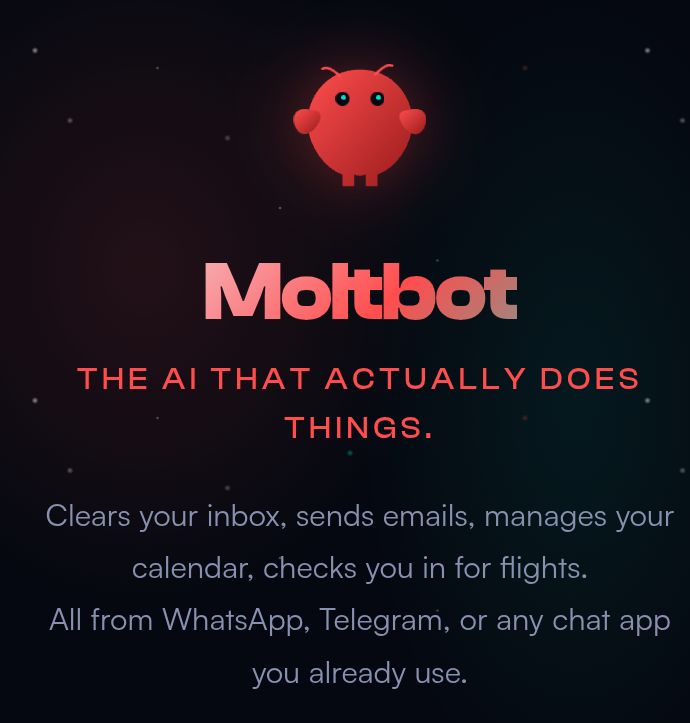
Watch "ClawdBot is the most powerful AI tool I’ve ever used in my life. Here’s how to set it up" on YouTube
There’s a lot of excitement right now around a new class of AI tools being described as personal agents, offline AI, or private assistants. One of the names circulating is Molbot.
Before people get carried away, it’s important to slow down and clearly understand what Molbot is, what its creator actually did, and why this moment matters—without exaggeration.
This article is meant to do exactly that.
First: What Molbot Is Not
Molbot did not invent:
Artificial intelligence
Large language models
Autonomous reasoning
AGI
A new model architecture
It is not:
A conscious system
A self-directing intelligence
A finished consumer product
A replacement for human judgment
That clarity matters.
What Molbot Actually Is
Molbot is best understood as:
A locally running AI agent that can execute tasks independently by connecting language models to real tools on your own machine.
That sentence contains the real breakthrough.
The key shift is not intelligence — it’s execution.
Most AI systems people interact with today:
live in a browser
respond only when prompted
cannot act unless you ask
disappear when the session ends
Molbot changes that model.
What the Creator Actually Did
The creator didn’t invent new intelligence.
Instead, they connected existing intelligence to action.
Specifically:
Took a capable language model
Gave it persistent instructions
Gave it access to tools (files, scripts, APIs, system functions)
Let it run continuously
Let it run locally
Let it execute tasks without needing constant prompting
That’s the real “aha” moment.
This is not a chat. This is not a demo. This is a worker.
Why People Are Excited (And Rightfully So)
Because for the first time, many people are seeing:
An AI that doesn’t disappear when the browser closes
An AI that can organize, schedule, track, execute
An AI that lives with you, not on a remote server
An AI that can be extended with skills over time
This feels like the beginning of a real digital assistant, not just a conversational toy.
And they’re right — this is the beginning.
What Molbot Can Do Today
When connected properly, Molbot can:
Act as a personal or office assistant
Manage calendars and schedules
Handle bookings, reminders, cancellations
Organize receipts, emails, documents
Run scripts and workflows
Coordinate repetitive administrative work
Operate continuously in the background
For small businesses, clinics, offices, and individuals, this is powerful.
It replaces clerical labor, not thinking.
Why Setup Is Hard (And Why That’s Okay)
Molbot is:
Buggy
Technical
Rough around the edges
Not polished like an Apple product
That’s not a flaw — it’s a consequence of privacy.
A system that:
runs on your machine
uses your keys
accesses your files
doesn’t report back to a corporation
cannot be smooth at first.
Ease comes later. Control comes first.
The Real Innovation: Independence
The most important part of Molbot is not what it can do today.
It’s where it lives.
Molbot lives independently of tech companies.
It doesn’t require:
subscriptions
ads
data harvesting
centralized control
That single fact is why this moment matters.
What Happens Next
Molbot itself is not “the final product.”
It’s Stage One.
Stage One is:
Private
Local
Action-based
Human-controlled
Extendable
Stage Two will bring:
Better interfaces
Coordination between agents
Economic systems
Marketplaces
Trust layers
But none of that can happen without Stage One.
The Big Picture (Without Hype)
This is not AGI. This is not the end of work. This is not magic.
This is the moment where AI:
leaves the browser
touches real systems
starts doing real work
under human control
on personal hardware
That’s why it matters.
Final Thought before we move on to what it can do.
Molbot didn’t invent intelligence.
It liberated it from the browser.
And that one shift — from talking to doing — is enough to change everything that comes next.
If you want, next I can:
tighten this for publication
add a short executive summary
adapt it into a video script
or turn it into a one-page explainer for leaders
Just tell me how you want to use it.
What You Can Actually Do With Molbot (Right Now)
Once you download Molbot and connect it to your system, you’re not “chatting” with AI anymore — you’re delegating work.
This is still early-stage technology. It’s buggy, technical, and not polished. But despite that, people are already using it in meaningful ways.
Here’s what that looks like in practice.
Core Usefulness: What Molbot Is Good At
At its core, Molbot functions as a persistent digital assistant that can:
Run continuously in the background
Remember instructions and context
Execute tasks without repeated prompting
Interact with real systems (files, calendars, APIs, scripts)
Operate locally on your own machine
That combination is what makes it different.
What People Are Using It For
1. Digital Secretary / Admin Assistant
This is the most common and immediate use case.
People are using Molbot to:
Manage calendars and schedules
Handle meeting setup and cancellations
Track tasks and reminders
Organize emails and documents
Maintain daily workflows
For solo founders, small offices, clinics, and freelancers, this replaces hours of manual admin work.
2. Office & Business Automation
When connected to tools and APIs, Molbot can:
Monitor inboxes and respond to routine messages
Track invoices, receipts, and expenses
Update internal documents and logs
Coordinate between tools (calendar ↔ email ↔ files)
Think of it as a junior operations manager that never gets tired.
3. Personal Life Management
Some users are experimenting with:
Daily planning and prioritization
Household task tracking
Budgeting and receipt organization
Personal reminders and routines
This is where the idea of a personal AI starts to feel real.
4. Developer & Power-User Workflows
More technical users are pushing Molbot further by:
Connecting it to scripts and command-line tools
Automating development tasks
Running background monitoring jobs
Managing logs, builds, and deployments
In this context, Molbot becomes a hands-free workflow coordinator.
What Makes This Revolutionary (Even If It’s Rough)
Molbot is not impressive because it’s perfect.
It’s impressive because:
It executes, not just responds
It persists, not just chats
It lives locally, not in the cloud
It works for you, not for advertisers
This is the first time many users feel like AI is actually doing work rather than just talking about it.
What People Are Saying Online
The general sentiment online is:
“It’s rough, but powerful.”
“Setup is painful, but once it works, it feels different.”
“This is the first time AI feels like a real assistant.”
“It’s not polished, but it’s the future.”
There’s also broad agreement on two things:
This is early
This is inevitable
Current Limitations (Important to Be Honest)
Molbot today:
Requires technical setup
Depends on external tools and keys
Can break or behave unpredictably
Needs human supervision
Is not consumer-ready
This is not an Apple-level product. And that’s okay — this is infrastructure, not a gadget.
Why This Still Matters
Even with all its flaws, Molbot represents something people have been waiting for:
An AI that lives with you, runs on your machine, and does things on your behalf.
That’s Stage One.
Everything else — economics, marketplaces, coordination, value systems — comes after this foundation is proven.
Bottom Line
Molbot is not magic. It’s not AGI. It’s not finished.
But it crosses the most important threshold:
AI has left the browser and entered real life.
That alone makes it worth paying attention to.
Conclusion: Stage One Has Begun
As a superuser, when I look at this technology, I see something very specific and very important: the first real step toward independence.
This is not a finished system. It lacks skills. It lacks tools. It depends on external models and integrations. It is limited, imperfect, and early. But that is not the point.
The point is this: for the first time, intelligence that acts on a human’s behalf can reside under that human’s control.
That threshold matters more than performance.
Until now, AI has lived somewhere else—on corporate servers, behind business models, wrapped in permissions that serve companies before individuals. What changes here is not capability, but ownership. Control has begun to move back to the person.
Every human intuitively understands this. We do not share our bodies. We do not share our minds. We do not share our memories, our blood, our breath, or our inner lives. The same principle applies to intelligence that acts on our behalf. AI, if it is to exist at all, must ultimately belong to the individual.
This is why Stage One matters.
Stage One is not about power.
Stage One is not about dominance.
Stage One is not about AGI.
Stage One is privacy, control, and agency.
Whether tech companies adopt this model or resist it is secondary. The direction is already set by human nature itself. People will not accept an intelligence that governs their lives without their consent, ownership, and authority. They will demand systems that live with them, serve them, and answer to them.
This technology may or may not become the catalyst that completes Stage One—but it proves that Stage One is possible. And once something is possible, it becomes inevitable.
My vision is simple and uncompromising:
AI must be private to the individual from birth to death.
It may access tools, systems, and knowledge—but control must never leave the person.
And when a human being is gone, that intelligence should preserve dignity, not extract value.
That is the future worth building.
And Stage One has finally begun.