

بِسْمِ اللهِ الرَّحْمٰنِ الرَّحِيْم
In the Name of God, Most Gracious, Most Merciful
♥️🤲🕋♥️🕋🌹🌹🥀🤲🌹🕋♥️🤲
Watch "Imam Mālik ibn Anas was beaten public" on YouTube
Imam Mālik ibn Anas and the Line That Saved the Religion
When Scholarship Separated Truth from Power
Introduction: When Betrayal Reaches the Throne
Islam did not enter history as a theory.
It entered as light—carried in hearts, lived in streets, embodied in character.
The Prophet Muhammad ﷺ did not rule through institutions; he ruled through trust.
The Qur’an was recited before it was written.
The Sunnah was practiced before it was documented.
Authority was moral before it was political.
But history did what history always does.
Power consolidated.
Leadership hardened.
And what was once amanah (trust) gradually drifted toward mulk (dominion).
This was not a single event.
It was a process—and processes leave scars.
By the time dynastic rule became normal, something subtle but devastating had entered the system:
religion began to be used to stabilize power rather than restrain it.
This is the moment where betrayal becomes structural.
Not betrayal of individuals alone—
but betrayal of method, ethics, and limits.
And it is into this world—not of prophecy, but of empire—that Imam Mālik ibn Anas was born.
The Political Context: Why the Stakes Were So High
To understand Imam Mālik’s stand, students must understand the pressure environment.
By the second Islamic century:
Allegiance (bayʿah) was no longer purely voluntary
Oaths were increasingly extracted under fear
Legal opinions were expected to validate political reality
The state needed scholars not as guides—but as seals of approval.
And this is the critical point:
When power demands religious legitimacy,
silence becomes resistance.
The Ruling That Shook the Empire
Imam Mālik issued a legal position rooted in classical law, not rebellion:
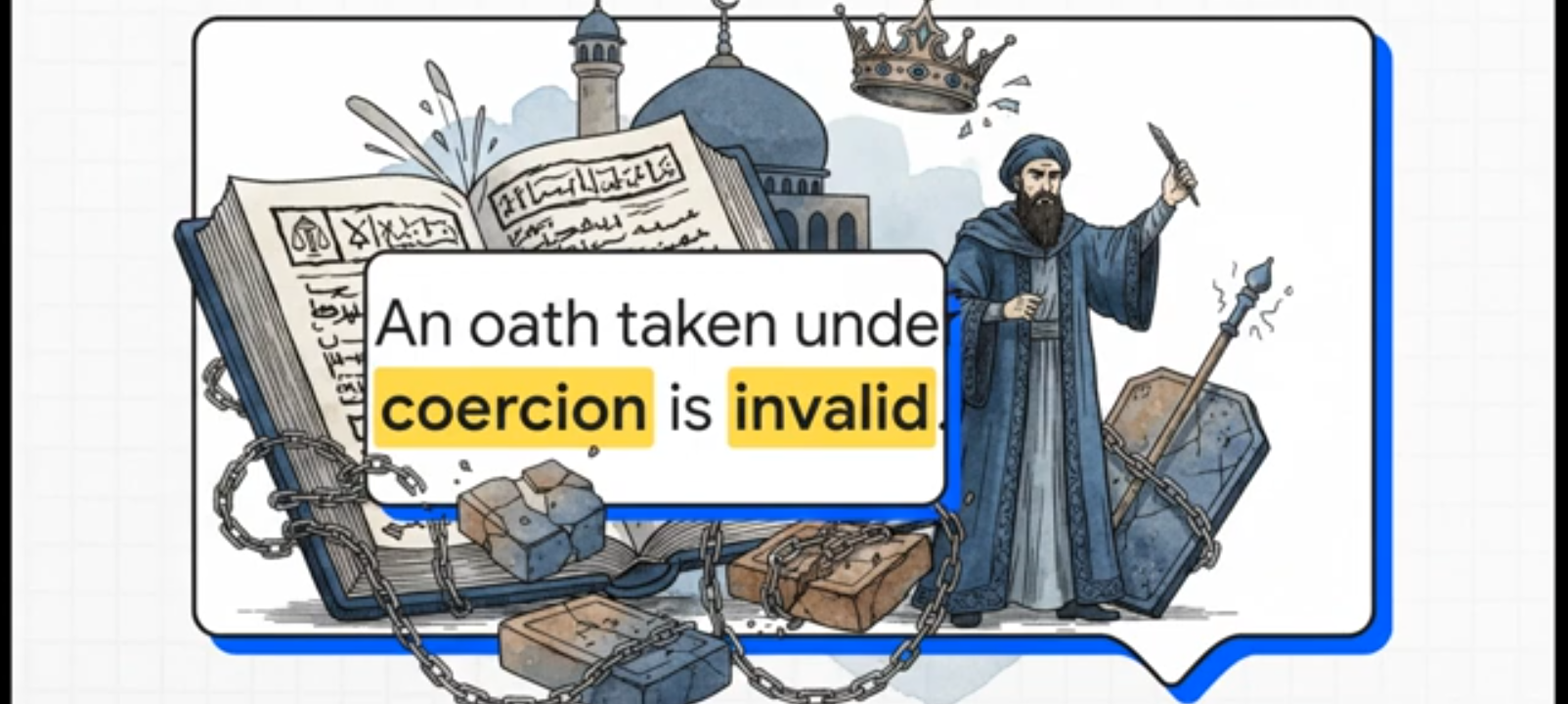
An oath taken under coercion is invalid.
This ruling was not abstract.
It meant:
Forced political allegiance had no religious weight
Threats could not bind conscience
Fear could not manufacture obedience before God
In one sentence, Mālik separated rule from truth.
He did not deny the state its authority. He denied it ownership of the religion.
And the state understood the danger immediately.
The Beating: What It Really Signified
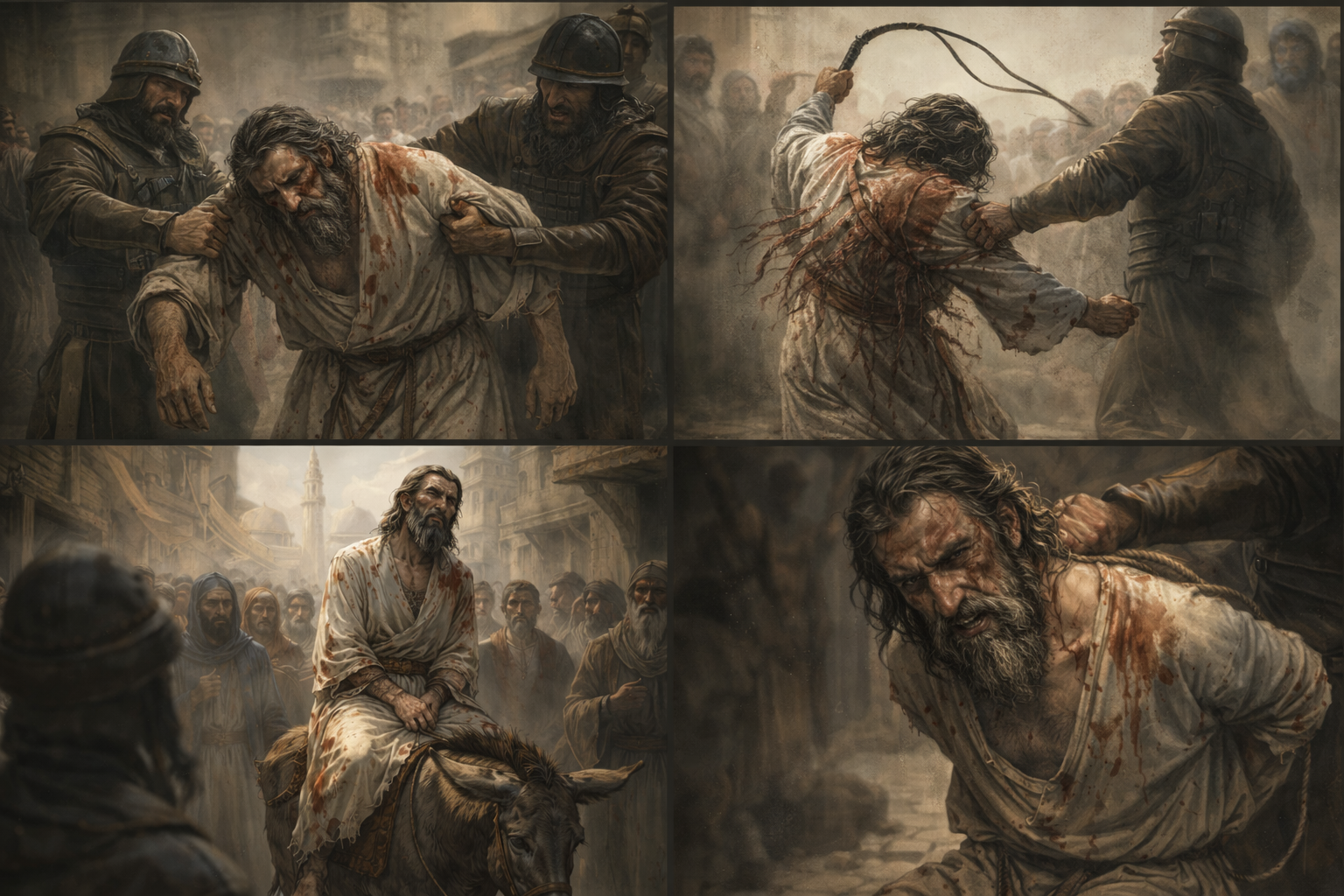
Imam Mālik was beaten publicly.
Students must understand:
This was not about discipline
This was not about personal anger
This was symbolic violence
The message was clear:
We can still touch you.
But Imam Mālik did not retract. He did not soften. He did not reframe.
He absorbed the punishment—and let the law stand.
This is the moment the religion crossed a threshold.
From that day forward:
Political authority could rule bodies
But scholars guarded conscience
And law no longer bent automatically to power
This was not rebellion. This was separation.
And separation saved the religion.
The Pattern, Not the Exception: Abu Hanifa
This was not unique to Mālik.
Imam Abu Hanifa:
Refused judicial office
Refused to legitimize coercion
Was imprisoned
Died in confinement
Different methodology.
Same boundary.
Together, these scholars established an irreversible norm:
The scholar does not belong to the state.
The law does not serve power.
The religion cannot be conscripted.
This is why schools of law formed outside political control.
Not as opposition movements—
but as sanctuaries of integrity.
What Changed Forever
After Imam Mālik:
Legal schools solidified independently
Methodology mattered more than decrees
Transmission was protected from rulers
Scholars became accountable to God, not governors
This is why Islamic law survived:
Multiple empires
Multiple collapses
Multiple catastrophes
Not because rulers were righteous— but because knowledge was insulated.
Collapse, Catastrophe, and Historical Discipline
We do not teach simplistic narratives.
We do not say:
“This empire fell because of that sin.”
We teach:
Injustice corrodes institutions
Suppressed knowledge weakens resilience
Coercion poisons legitimacy
When libraries burned, it was not punishment alone— it was fragility exposed.
Empires that dominate scholars weaken themselves. Civilizations that silence conscience rot from within.
The Deeper Meaning of Imam Mālik’s Stand
Imam Mālik did not preserve Islam by expanding it. He preserved it by limiting power.
He understood something rare:
Not everything that can rule should speak for God.
By refusing to let the state define orthodoxy, he ensured that Islam remained:
Plural
Methodological
Rooted in transmission, not decree
Without this:
Islam could have fractured into state-religions
Law could have shifted with each ruler
Revelation could have become propaganda
It didn’t.
Because one man said no—and took the cost.
The Lesson for Students Today
This lesson is not nostalgia. It is instruction.
Students must learn:
Why scholars feared fatwa
Why “I don’t know” preserved law
Why independence matters more than influence
Why institutions outlive personalities
And why discipline, not volume, builds civilizations.
Closing Reflection: The Line That Cannot Be Crossed
Imam Mālik did not shout. He did not organize. He did not rally crowds.
He drew a line—and stood still.
And because of that stillness, Islam remained Islam.
Not the religion of rulers, but the religion of conscience.
Not the voice of power, but the inheritance of light.
This is not just history. This is architecture.
And it is why, centuries later, students still sit— learning law without fear, truth without coercion, and knowledge without chains.
To students here is a historically grounded, vivid, and careful reconstruction of what happened to Imam Mālik ibn Anas, based on early Sunni sources (Ibn Saʿd, al-Dhahabī, al-Qāḍī ʿIyāḍ, Ibn ʿAbd al-Barr), without mythmaking and without softening the brutality.
What Actually Happened to Imam Mālik — The Beating That Drew the Line
The Political Context (Why This Was Inevitable)
After the collapse of the Umayyad dynasty, the ʿAbbāsids rose to power claiming legitimacy through the Ahl al-Bayt. Many Muslims believed this meant a return to justice after decades of betrayal:
– Ḥasan poisoned
– Ḥusayn slaughtered
– the caliphate turned into monarchy
But once in power, the ʿAbbāsids faced the same problem every empire faces:
How do you force unity over conscience?
Their solution was oaths of allegiance (bayʿah) enforced by law.
If the people swear, the empire is legitimate.
If the scholars approve, God is invoked.
That is where Imam Mālik stood in the way.
The Legal Opinion That Shook the Empire
Imam Mālik was asked a fiqh question, not a political one:
Is an oath taken under coercion valid?
His answer was calm, classical, and devastating:
“An oath taken under compulsion is not binding.”
(لا بيعة لمكره)
This ruling is rooted in prophetic law:
“My ummah is excused for what they are forced to do.”
But in the context of the ʿAbbāsid state, this single sentence meant:
• Forced loyalty is illegitimate
• Rebellion against coerced rule is legally defensible
• The Caliph does not own the conscience of the believer
This was not a speech.
This was not a manifesto.
This was law.
And law is more dangerous to tyrants than swords.
The Arrest
The governor of Medina (acting on Abbasid authority) summoned Imam Mālik.
There is no record of him resisting. No record of him fleeing. No record of him shouting.
He did what scholars of integrity do:
He showed up.
The Punishment (Vivid but Accurate)
He was publicly punished to make an example of him.
Early sources state:
• He was beaten severely • His arms were pulled until his shoulder dislocated • He was humiliated publicly • Some reports say he was paraded before the people
Whether on foot or mounted is debated — what is not debated is intentional public humiliation.
This was psychological warfare.
The message was clear:
“This is what happens when knowledge refuses power.”
Imam Mālik’s Response (The Most Important Part)
He did not retract his ruling.
He did not apologize.
He did not call for revolt.
He did not curse the rulers.
He returned to teaching.
And when asked later about the ruling, he said:
“I only spoke the truth.”
This is critical:
Imam Mālik separated religion from political force without starting a civil war.
That is why this moment matters.
Why This Saved the Religion
Before this moment: • Caliphs wanted scholars to validate power
• Religion was sliding toward state-ownership
After this moment: • Scholars understood their role as independent guardians • Law was no longer the tool of kings • Medina became a no-fly zone for political theology
From this point on:
• Mālik → refused state law
• Abū Ḥanīfa → died in prison
• Aḥmad ibn Ḥanbal → tortured later
A scholarly firewall was erected.
Not with weapons. With broken bodies and intact consciences.
The Hidden Cost (Why This Breaks the Heart)
Imam Mālik was not a revolutionary.
He loved the Sunnah. He loved stability. He hated chaos.
But he understood something most people still don’t:
If political power owns religion, revelation dies quietly.
So he paid the price instead.
And because he did, later generations inherited: • Schools instead of slogans
• Law instead of loyalty tests
• Knowledge instead of propaganda
Final Truth (For the Student)
Imam Mālik did not “oppose the state.”
He outlived it.
The governors who beat him are footnotes. The empire that punished him is dust. His law still governs hearts across continents.
This is why historians say:
That beating drew the line.
And that line saved the religion.
A Final Word to Students of Knowledge
Every generation of students must decide what knowledge is for.
Is it for proximity to power?
For comfort, salary, access, and approval?
Or is it for protection—of truth, of conscience, of the religion itself?
Imam Mālik ibn Anas answered that question with his body.
He did not fall because of ignorance.
He was not punished for rebellion.
He was beaten because he refused to sell the authority of religion to political force.
And in that refusal, he paid a price so others would not have to.
The greatest sacrifice a scholar may be called to make is not martyrdom on a battlefield, but restraint in the face of power:
to decline the invitation,
to refuse the oath,
to walk away from the paycheck that comes with conditions,
to remain silent when speech would betray trust,
and to say no when the state demands religious legitimacy for injustice.
That choice—quiet, lonely, costly—is what permanently separated scholarship from rule.
Because of Imam Mālik, religion no longer needed the palace to survive.
Because of him, scholars could exist outside of government favor.
Because of him, law could remain guidance rather than propaganda.
Students must understand this clearly:
When religion becomes dependent on power, it is no longer free to speak the truth.
And when scholars trade independence for protection, they lose both.
Imam Mālik did not preserve Islam with slogans or revolutions.
He preserved it by drawing a line—and refusing to step over it.
That line still exists.
And every student of knowledge will one day be asked where they stand.
May Allah grant us the courage to choose integrity over access,
truth over comfort,
and knowledge that remains light—unowned, unbought, and unbetrayed.
And may Allah reward Imam Mālik ibn Anas for a sacrifice whose fruits we still live from today.
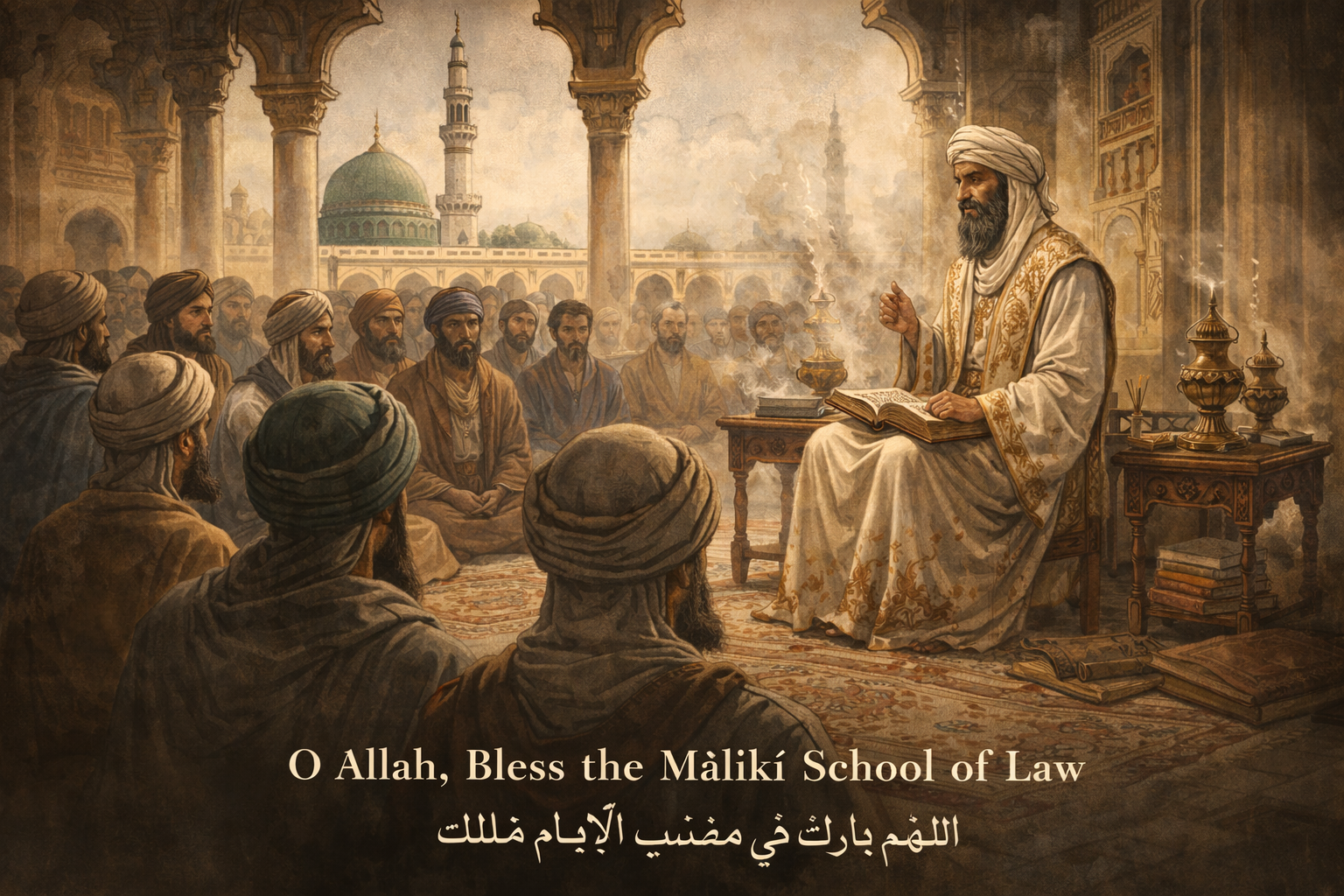
A Prayer for the Mālikī School of Law
O Allah, Lord of the Worlds,
Bless the Mālikī School of Law,
the school of Medina,
the school of lived Sunnah,
the school built on restraint, dignity, and fear of You.
O Allah, preserve it beyond every age,
beyond empires,
beyond technologies,
beyond AI and AGI,
as a living, breathing trust rooted in light and humility.
O Allah, increase its students in number and in sincerity.
Increase its teachers in wisdom and courage.
Increase its institutions in honor and independence.
Make it the undisputed refuge for those who seek balance,
continuity,
and protection from distortion.
O Allah, make the Mālikī School
a guardian against chaos,
a shield against political manipulation,
and a standard of seriousness when knowledge is cheapened.
Let its methodology remain firm when trends shift,
let its adab remain luminous when voices grow loud,
and let its foundation remain unshaken
when the world confuses innovation with wisdom.
O Allah, gather under its banner
the most disciplined hearts,
the most patient minds,
and the most trustworthy carriers of knowledge.
Make it, by Your mercy,
a school that does not compete for dominance,
yet is honored by You above all rivalry.
And allow it to remain, until the end of time,
a proof that sacred knowledge can survive power,
can outlive empires,
and can remain pure in a world of noise.
Āmīn. Yā Rabb al-ʿĀlamīn.
Ameen. O Lord of all the worlds.