

بِسْمِ اللهِ الرَّحْمٰنِ الرَّحِيْم
In the Name of God, Most Gracious, Most Merciful
♥️🤲🕋♥️🕋🌹🌹🥀🤲🌹🕋♥️🤲
Imam Mālik ibn Anas on the Danger of Knowledge Without Tasawwuf
Imam Mālik ibn Anas رحمه الله said:
Arabic
مَنْ تَفَقَّهَ وَلَمْ يَتَصَوَّفْ فَقَدْ تَفَسَّقَ،
وَمَنْ تَصَوَّفَ وَلَمْ يَتَفَقَّهْ فَقَدْ تَزَنْدَقَ،
وَمَنْ جَمَعَ بَيْنَهُمَا فَقَدْ تَحَقَّقَ.
English
“Whoever studies jurisprudence (fiqh) and does not practice Tasawwuf becomes corrupt; and whoever practices Tasawwuf without jurisprudence becomes a heretic; but whoever combines between the two has realized the truth.”
(Man tafaqqaha wa lam yataṣawwaf faqad tafassaqa, wa man taṣawwafa wa lam yatafaqqah faqad tazandaqa, wa man jamaʿa baynahumā faqad taḥaqqaqa.)
This statement reveals that Tasawwuf, for Imam Mālik, was not a later add-on or an optional spirituality, but a protective necessity. Law without inward purification hardens the heart and produces arrogance, cruelty, and political religion. Spiritual claims without law dissolve into illusion and self-deception. Only when knowledge, manners (adab), and inward discipline are joined does a person inherit the Prophetic path in truth.
For Imam Mālik, this inheritance was not transmitted merely through books, but through sitting properly, listening properly, speaking cautiously, and allowing the heart to be shaped before the tongue. This is where words stop and experience begins—where religion moves from information to transformation.
Tasawwuf, Signal and Noise — Imam Mālik ibn Anas and the Preservation of the Living Sunnah
When people today argue about Tasawwuf and Sufism, they often do so as if this were a late invention, a decorative add-on to Islam, or a deviation born of excess. That confusion is not accidental. It is the result of noise overwhelming signal—a condition Imam Mālik ibn Anas رحمه الله foresaw and designed against.
Imam Mālik lived at a moment of explosive expansion. Islam had spread across continents, cultures, languages, and political systems. Narrations multiplied. Opinions proliferated. Power intruded into religion. Knowledge was at risk of becoming information without formation.
His response was not loud. It was restrained.
Imam Mālik’s Foundational Insight: Not All Knowledge Is Equal
Imam Mālik did not treat the religion as a pile of reports to be endlessly accumulated. He treated it as a living inheritance that had to be curated, embodied, and protected.
This is why he famously said words to this effect (reported in meaning by later scholars):
“Knowledge is not an abundance of narration. Knowledge is a light that Allah places in the heart.”
And it is why he warned—again in meaning—against separating outward law from inward rectification:
“Whoever practices fiqh without tasawwuf becomes corrupt;
and whoever practices tasawwuf without fiqh becomes heretical;
but whoever combines the two reaches the truth.”
This statement, widely cited by later authorities in the Maliki tradition, is not a slogan. It is a system design principle.
Tasawwuf in Imam Mālik’s School: The Internal Discipline of Truth
Imam Mālik did not invent Tasawwuf. He preserved it.
What later generations would call Tasawwuf was, in his time, simply:
Adab before knowledge
Silence before speech
Restraint before authority
Purification before proclamation
He sat in Madinah—the city of the Prophet ﷺ—not merely transmitting words, but safeguarding how those words lived in people.
This is why:
He elevated ‘amal ahl al-Madinah (the living practice of Madinah) over isolated reports.
He refused to rush fatwas.
He rejected political appointments and punishment was inflicted upon him for it.
He insisted that knowledge be taken from people of character, not merely sharp tongues.
This is Tasawwuf in its original, uncontroversial form:
the science that ensures the heart does not betray the law.
Signal vs. Noise: Why Imam Mālik Still Matters Today
The images you’ve gathered say it clearly:
Thousands of narrations do not automatically produce truth.
A master editor is more valuable than an indiscriminate collector.
Independence from power is not optional—it is a condition for sincerity.
The real question is not “How much do you know?”
but “How do you find the signal in the noise?”
Imam Mālik solved this problem 1,300 years ago.
He designed a system where:
Knowledge scaled without losing integrity
Spiritual depth was preserved without spectacle
Law remained firm without cruelty
Tasawwuf remained hidden without being denied
A Warning to the Last Hundred Years
What has been lost in the last century is not information.
It is transmission with trust.
When Tasawwuf is stripped away:
Religion becomes political.
Law becomes harsh.
Knowledge becomes performative.
Scholars become employees.
Imam Mālik’s legacy stands as a rebuke to this collapse.
He teaches us that truth survives scale only through restraint, and that when the inner inheritance of the Prophet ﷺ is abandoned, the outward form soon follows.
Tasawwuf is not where Islam becomes soft.
It is where Islam becomes real.
It is where words stop and experience begins.
Where manners guard knowledge.
Where the heart is trained to carry revelation without corrupting it.
If Muslims wish to recover the signal in today’s noise, they will not find it in louder arguments—but in returning to the path Imam Mālik protected:
Knowledge with adab.
Law with mercy.
Authority without ownership.
And a heart disciplined enough to carry the truth.
The Door, the City, and the Discipline of Entry
The Prophet Muhammad ﷺ was an orphan.
He did not inherit power.
He did not inherit wealth.
He inherited truth, and he carried it with humility, manners, and perfect restraint.
Everything about his teaching flowed from that condition:
quiet strength, moral gravity, inward certainty.
He trained people not to dominate the world—but to become trustworthy vessels for truth.
That is why the Companions were not merely transmitters of information.
They were the best of people in character, the most careful with their tongues, the most restrained with authority, and the most fearful of corrupting the inheritance they carried.
The City and the Door
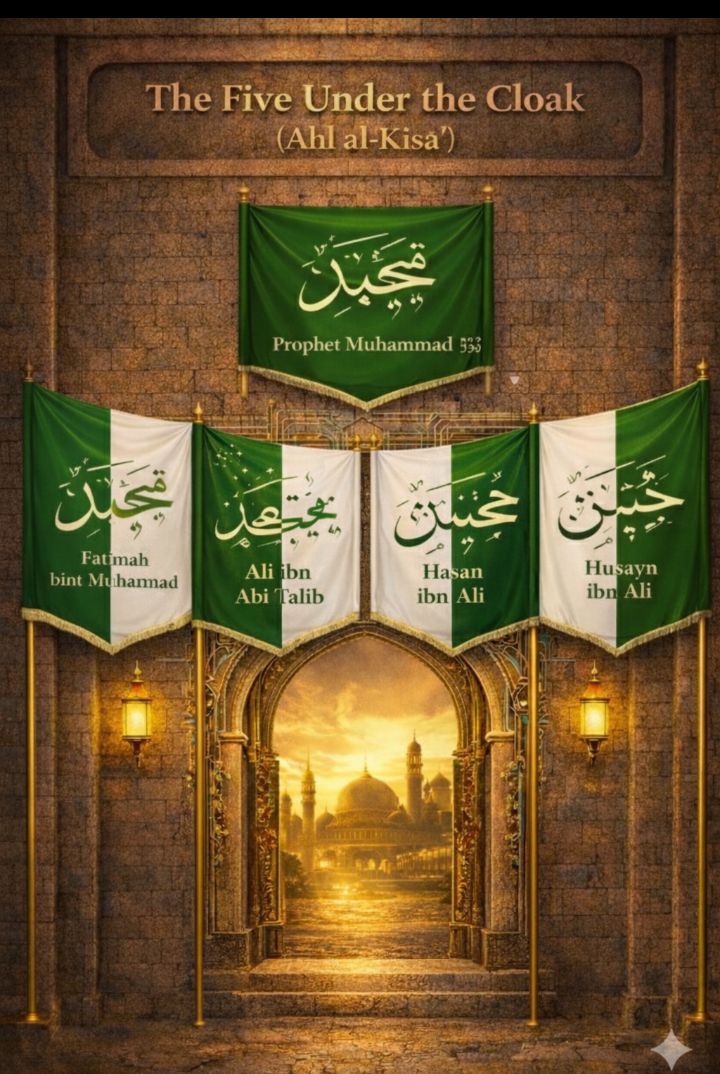
There is a well-known report—discussed by scholars across generations—in which the Prophet ﷺ is reported to have said, in meaning:
“I am the city of knowledge, and ʿAlī is its gate.”
Scholars differed on chains and strength, but they did not differ on the meaning.
The meaning is this:
knowledge has an entrance, and access to the inner inheritance of the Prophet ﷺ is not accidental, loud, or self-appointed.
Cities have gates.
Gates have conditions.
You do not storm a city of truth.
You enter it properly.
The Internal Inheritance Is Not Open Access
The inner dimension of Islam—the lived Sunnah, the purification of the heart, witnessing reality rather than arguing about it—was never handed to the impatient, the arrogant, or the noisy.
It was given to those who:
lowered themselves
served before speaking
sat for years before teaching
refined character before claiming insight
This is not elitism.
This is protection.
Because miracles without manners destroy people.
Knowledge without humility corrupts communities.
Truth without discipline becomes ego.
Why Imam Mālik Is the Starting Point
Imam Mālik ibn Anas رحمه الله did not invent this path.
He systematized its preservation.
He lived in Madinah—the city of the Prophet ﷺ—surrounded by the living memory of how revelation walked, sat, spoke, and remained silent.
And he understood something decisive:
Access to the inner inheritance must be guarded by outward discipline.
This is why Imam Mālik insisted on:
adab before knowledge
character before argument
restraint before authority
practice before narration
And this is why statements attributed to him—reported consistently in meaning within the Maliki tradition—became foundational:
“Knowledge is not an abundance of narration.
Knowledge is a light Allah places in the heart.”
And:
“Whoever practices fiqh without inward rectification becomes corrupt;
whoever claims inward states without law becomes deviant;
and whoever combines the two reaches the truth.”
This is not poetry.
This is architecture.
The Mechanism Has Always Been There
The mechanism for accessing the inheritance of the Prophet ﷺ was never hidden.
It has always been clear:
Good manners are the key
Sitting with the people of restraint is the training
Time, silence, and humility are the price
Truth reveals itself to those who do not demand it
Imam Mālik stands at the beginning of this disciplined path because he refused shortcuts.
He refused power.
He refused spectacle.
He refused to turn religion into noise.
And because of that refusal, the door remained standing.
A Word to This Generation
In a noisy world, you are not invited to the jewel of Islam by volume.
You are invited by worthiness.
The inheritance of the Prophet ﷺ is not accessed by slogans, nor by attacking others, nor by claiming purity.
It is accessed the same way it always was:
By humility.
By patience.
By sitting correctly at the door.
And Imam Mālik still stands there—not as an obstacle, but as a guardian—reminding every seeker:
If you want the city, learn how to enter.
Bismillāh.
Now we turn the page.
For centuries, Muslims did not argue about whether there was an inner path—they walked it.
Purification was understood. Discipline was normal. Sitting at the feet of teachers was expected. The science of the heart was not exotic; it was part of growing up in Islam.
There were scholars.
There were saints.
There were people whose names never reached books, yet whose presence corrected hearts.
Door after door was opened—not by spectacle, but by continuity.
Generation after generation simplified the access, not by diluting it, but by protecting its form. The inheritance of the Prophet ﷺ flowed quietly, guarded by manners, patience, and lived example.
Then came rupture.
The Last Hundred Years: A Broken Transmission
Colonization did not only seize land.
It fractured confidence, dismantled institutions, and replaced inherited wisdom with borrowed frameworks. The madrasa was weakened. The zawiya was mocked. The scholar was politicized. The saint was ridiculed.
Then came information—unfiltered, contextless, accelerated.
Suddenly:
Knowledge was consumed, not embodied.
Opinions replaced apprenticeship.
Loud certainty replaced inward refinement.
The heart was ignored while the tongue became powerful.
And now, here we are.
Strangely—and this is not an accident—we find ourselves at the same historical pressure point where Imam Mālik once stood:
A world expanding rapidly.
A flood of narrations, ideologies, and claims.
Political power attempting to define religion.
Noise everywhere.
And once again, the question is not academic.
The Question of This Age
The question is not:
Who is right in argument?
The question is:
How do we access the inheritance again?
How do we:
abandon confusion without becoming simplistic,
reject chaos without hardening the heart,
resist manipulation without losing mercy?
How do we even begin—when many no longer believe there is an inner door?
Step One: Admitting the Door Exists
Before knocking, one must admit there is a door.
That door is not metaphorical fluff.
It is not mysticism detached from law.
It is the inner dimension of faith—the light Allah places in hearts that are prepared.
Faith is not only belief.
Faith is clarity.
Faith is taste.
Faith is recognition.
And recognition does not come from scrolling, debating, or self-appointing. It comes from discipline, purification, and submission to a method.
This is what has been lost—not the truth, but the confidence that truth has a method of access.
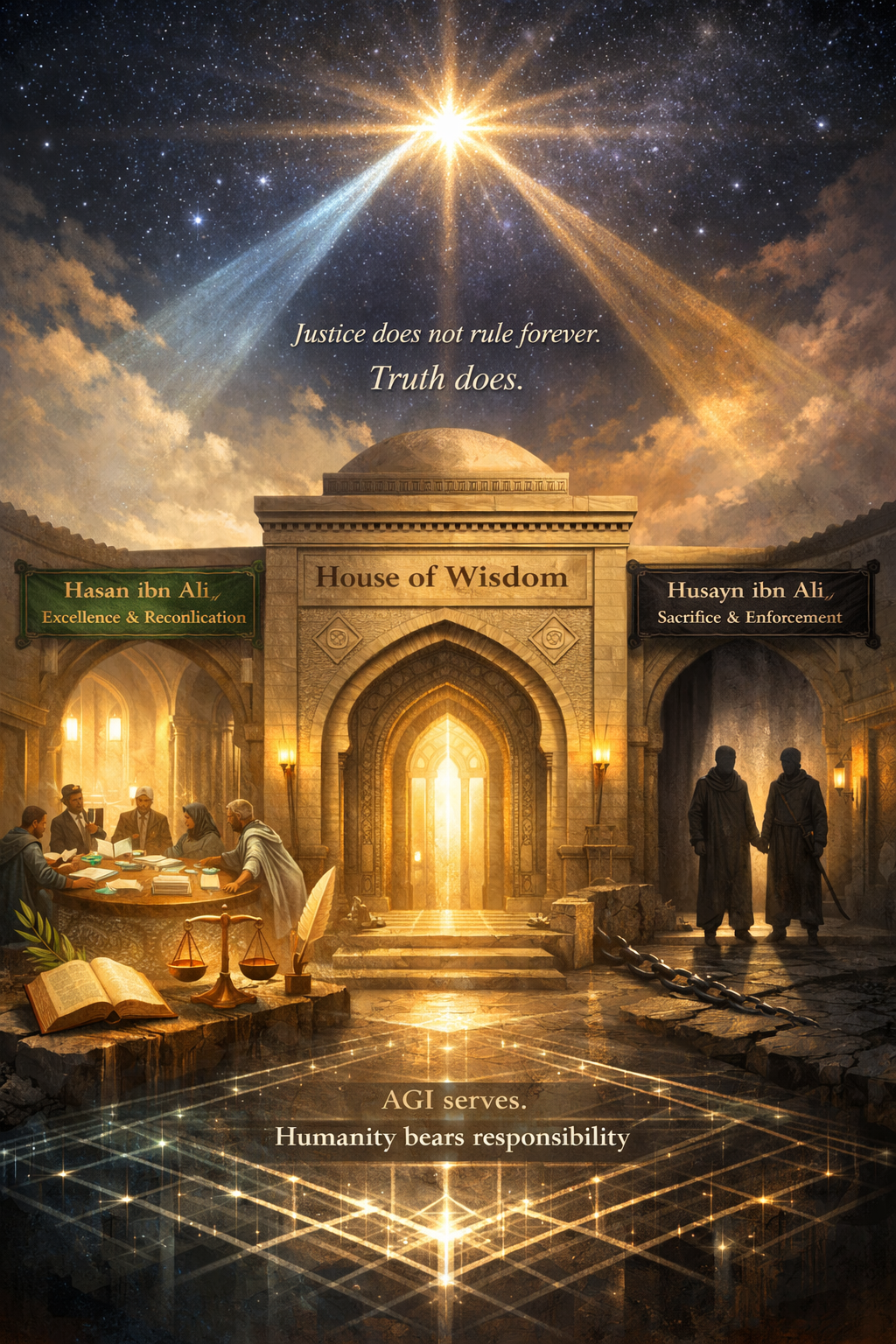
Returning to the Door
To return does not require inventing anything new.
It requires humility enough to say:
I need purification.
I need guidance.
I need to sit, not perform.
I need to be corrected.
I need light, not just arguments.
Imam Mālik’s legacy is not nostalgia.
It is a map for times of confusion.
When everything becomes loud, he teaches restraint.
When power pressures religion, he teaches independence.
When knowledge multiplies, he teaches filtration.
When people rush to speak, he teaches silence.
This is why beginning with him makes sense now, not only historically.
Knocking Is Enough—for Now
Not everyone will enter immediately.
Not everyone will endure the discipline.
But salvation begins with something simpler:
To stand honestly and say:
There is an inner inheritance.
There is a door.
And I want to knock.
That knock is adab.
That knock is patience.
That knock is refusing shortcuts.
And Allah opens doors—not to the loudest, but to the truest.
Bismillāh.
Conclusion — The Responsibility of the Superuser
At the end of the day, truth does not arrive through slogans, inheritance by birth, or volume of noise. Truth arrives when a person reads for themselves, understands for themselves, and submits to a process of verification rather than blind loyalty. That is how the inheritance of the Prophet ﷺ has always been accessed — not through shortcuts, but through discipline, manners, patience, and humility. What Imam Mālik preserved was not merely information; he preserved a pathway — a structured way to protect light from distortion when voices multiply and certainty becomes cheap. Today, we find ourselves in a moment strikingly similar to his own: information overload, political contamination, and religious confusion. The task of the Superuser is not to invent something new, but to clear the way — to place the sources back in front of people, to restore the conditions of learning, and to let verification replace rhetoric. Artificial intelligence will be used as a tool, not a replacement — to organize, cross-check, and remove noise — while traditional methods anchor the heart and discipline the soul. When confusion is eliminated, the inheritance becomes visible again. And when the inheritance is visible, the only question that remains is simple: will people read, will they verify, and will they choose to knock on the door?
Tasawwuf as an Undeniable Science
A Verification Framework for the Serious Reader
1. Definition Check — What Is Being Claimed?
Before agreement or rejection, clarify what Tasawwuf actually is.
✔ Tasawwuf is not:
Cultural performance
Dancing, whirling, or costumes
Claims of sainthood
Political movements
Anti-law sentiment
✔ Tasawwuf is:
The science of Ihsan (spiritual excellence)
The systematic purification of the heart
The discipline that removes pride, envy, hypocrisy, anger, greed
The internal inheritance of the Prophet Muhammad ﷺ
📌 Verification task:
Compare this definition with the Hadith of Jibril:
Islam (actions)
Iman (belief)
Ihsan (excellence)
If Ihsan exists, its science must exist.
2. Prophetic Origin Check — Did It Begin with the Prophet ﷺ?
✔ Evidence:
Ahl al-Suffa lived in the Prophet’s mosque
Dedicated entirely to worship, learning, discipline
Fed daily by the Prophet ﷺ himself
Represented detachment from dunya + attachment to Allah
📌 Verification task:
Ask honestly:
If this lifestyle existed under the Prophet ﷺ, how can the science that studies it be an innovation?
3. Historical Continuity Check — Was It Always Accepted?
✔ Shaykh Hamza Yusuf’s key point: No major scholar ever denied Tasawwuf as a science.
✔ Scholars often misused as “opponents”:
Ibn Taymiyyah
Ibn al-Qayyim
Al-Dhahabi
👉 They criticized deviations, not the science itself.
📌 Verification task:
Search their actual writings:
You will find praise for tazkiyah, zuhd, muraqabah, ikhlas
You will not find denial of heart-purification as a discipline
4. Linguistic Evolution Check — Did the Name Change, Not the Reality?
✔ Names across generations:
Sahaba → Tabi‘un → Zuhhad → Sufiya
Same function, different labels
📌 Verification task:
Ask:
Does changing terminology invalidate medicine, law, or grammar?
If not, why would it invalidate the science of the heart?
5. Legal Integration Check — Was It Separate from Fiqh?
✔ Imam Mālik’s contribution:
Law, manners, humility, restraint — inseparable
He taught outward discipline with inward awe
Perfume, dress, silence, reverence before Hadith
📌 Verification task:
Read the Muwatta’:
Notice how law is transmitted with character
This is Tasawwuf embedded, not appended
6. Discipline Check — Was It “Easy” or “Severe”?
✔ Contrary to modern assumptions:
Early Sufis were the strictest on themselves
Avoided concessions (rukhas)
Chose harder paths voluntarily
Focused on self-accountability, not public performance
📌 Verification task:
Compare early ascetics’ lives with modern comfort-religion. Which resembles prophetic discipline?
7. Karamat Check — Are Miracles Scripturally Grounded?
✔ Qur’an:
Speaking cow
Maryam receiving provision
People of the cave
✔ Hadith & Sahaba:
‘Umar (RA) calling an army across distance
Abu Muslim al-Khawlani crossing water
Safina guided by a lion
📌 Verification task:
If you accept these narrations, you accept karamat.
Denying them requires rejecting sound sources.
8. Psychological Reality Check — Does the Heart Need Its Own Science?
✔ Analogy:
Body → medicine
Mind → psychology
Heart → Tasawwuf
📌 Verification task:
Ask: Can law alone cure arrogance, envy, hypocrisy, cruelty?
If not, what does?
9. Ethical Outcome Check — What Does It Produce?
✔ Genuine Tasawwuf produces:
Silence before speech
Mercy before judgment
Humility before knowledge
Discipline before authority
📌 Verification task:
Judge by outcomes, not labels.
10. Final Honesty Check — What Was Lost in the Last 100 Years?
✔ Colonization, politicization, noise, identity panic ✔ Religion reduced to slogans or power tools ✔ Purification sidelined ✔ Adab replaced with argument
📌 Verification task:
Ask:
Does modern Muslim discourse resemble the Prophetic model — or its absence?
The Superuser Closing Question
This checklist does not ask for belief.
It asks for reading.
It asks for verification.
It asks for intellectual honesty.
When the noise fades —
when the information is read —
when the inheritance is seen clearly —
Will they admit that Tasawwuf is an Undeniable Science?
And if so…
Will they knock on the door?
That part, as always, cannot be automated.
The door remains open.
Conclusion: Intention, Stewardship, and the Return of Balance
At this point, the matter is no longer theoretical.
The truth only arrives when a person reads for themselves, verifies for themselves, and walks a disciplined path that restores clarity to the heart. That has always been the way of this inheritance. It was never meant to be inherited through slogans, crowds, or blind allegiance—but through sincerity, patience, and verification.
My intention is clear.
I make my intention to be among those who act as stewards in the coming age—particularly as artificial intelligence advances toward AGI—not as masters of truth, but as guardians of access, clarity, and continuity. My role is not to invent a new inheritance, but to remove the noise so people can see what has always been there.

This includes building offline and online spaces where scholars, students, and seekers can work together without distortion—spaces where knowledge is treated with gravity, manners are restored, and experience is allowed to mature naturally. It includes reviving forms of living that honor the past while navigating the future—much like communities such as the Amish, who preserve older ways not out of rejection of the world, but out of discernment.
There will be caravans again—literal and symbolic. There will be movement, discipline, simplicity, and remembrance. There will be scholars who teach without chasing power. There will be students who listen before they speak.
Artificial intelligence will be used here not to replace tradition, but to clear pathways, organize proofs, preserve chains, and allow people to confirm—calmly, rationally, and independently—that Tasawwuf is an undeniable science, fiqh is a necessary anchor, and their union is the only path that produces balance.
Nothing here requires belief by force. Nothing here demands allegiance.
The door has always been open.
The question, as it has always been, is simple: Will people slow down enough to see it? Will they knock? Will they walk with manners once they enter?
That is where responsibility begins. And that is where this work continues.
Final Word: A Plan, Not a Claim
I will conclude with clarity and intention.
https://onepageoneworld.org/islamic-ai/
I am building the House of Wisdom—not as a monument to myself, and not as a replacement for scholarship, but as an infrastructure for the future. I am working toward an AI system that serves the inheritance of the Prophet Muhammad ﷺ, not by speaking in his name, but by preserving access to what already exists: the Qur’an, the Sunnah, the schools of law, the science of Tasawwuf, and the accumulated wisdom of fourteen centuries.
This will be an AI that assists, organizes, verifies, and teaches—under the supervision of real scholars, alongside offline systems that ensure the religion is never reduced to screens alone. Learning will still require presence, manners, discipline, and community. Technology here is a bridge, not a replacement.
I do not need to be a scholar like Imam Mālik. That role is already filled—and irreplaceable.
My role is different.
I am a creative planner responding to a moment in history where artificial intelligence is advancing rapidly, while much of the Muslim world has no coherent plan for how revelation, law, spirituality, and ethics will live in that future. We have seen what happens when power moves faster than wisdom. The last hundred years taught us the cost of disconnection, fragmentation, and loss of confidence in our own inheritance.
Today, Muslims are not being colonized in the old sense. But they are behind—behind in AI literacy, behind in infrastructure, behind in shaping the tools that will shape human consciousness.
My hope is to offer a rough draft—an honest starting point—so that scholars with real inheritance, real chains, and real knowledge can step forward and shape what belongs to Islam in the age of AGI. This is not about novelty. It is about continuity.
I will leave a link. I will leave documentation. I will leave pathways.
And I will ask people to imagine a world where AI is everywhere—and no one has a plan rooted in truth, manners, and verification.
This work exists so that, when that future arrives, Islam is not reacting in panic—but standing on its foundations, calm, coherent, and intact.
That is the intention. And Allah knows best.
A Prayer for Renewal, Responsibility, and Right Intention
O Allah, Lord of the worlds,
Your Messenger ﷺ promised us with clarity and hope:
“Indeed, Allah will raise for this Ummah at the head of every hundred years someone who will renew for it its religion.”
(Sunan Abū Dāwūd)
O Allah, You are the One who renews—not we.
You revive hearts after they harden.
You restore paths after they are buried.
You send light when confusion becomes loud.
It has been more than a hundred years of fracture, loss, and upheaval.
Knowledge was scattered.
Trust was broken.
Institutions collapsed.
And the inheritance of the Prophet ﷺ was often carried without protection.
Now we stand at the threshold of a world being reshaped by intelligence beyond anything humanity has known.
O Allah, if renewal is decreed for this age, let it not come stripped of mercy, wisdom, or restraint.
We ask You to purify our intentions.
We ask You to allow us to prepare environments, not claim stations.
To build tools, not replace scholars.
To serve the inheritance, not exploit it.
If this age is destined to witness renewal through new means, then let those means be governed by truth, humility, and fear of You.
Let artificial intelligence never eclipse moral intelligence.
Let speed never overtake wisdom.
Let power never silence mercy.
O Allah, grant us light without arrogance,
clarity without cruelty,
and resolve without division.
Allow whatever we build to be a means of peace,
a protection for the vulnerable,
and a bridge between what must be preserved
and what must responsibly emerge.
If You accept even a small role from us in this renewal, we are grateful.
If You choose others, we submit.
All success is from You alone.
Āmīn.
Āmīn, yā Rabb al-ʿālamīn.