
بِسْمِ اللهِ الرَّحْمٰنِ الرَّحِيْم
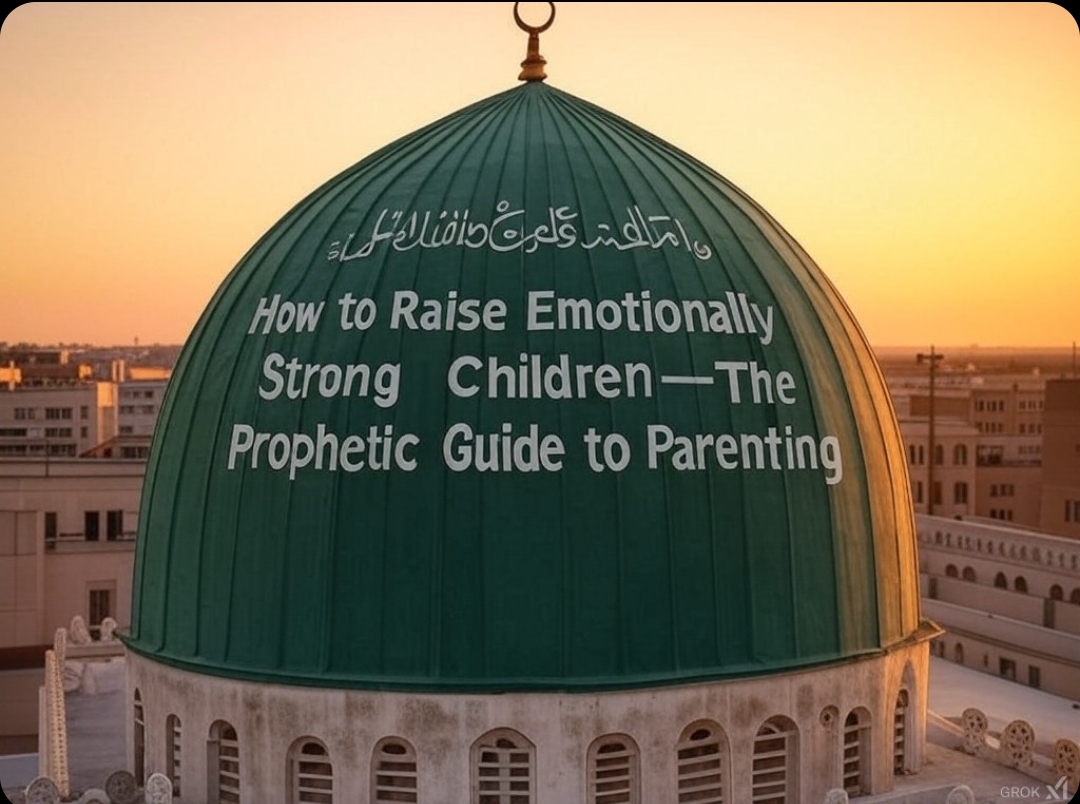
How to Raise Emotionally Strong Children—The Prophetic Guide to Parenting
Introduction: Parenting with Love, Wisdom, and Patience
Raising children is one of the greatest responsibilities in life. Many parents struggle with how to discipline, communicate, and nurture their children’s emotional strength.
The Prophet Muhammad (PBUH) was the greatest role model for parenting. He raised children with love, patience, and wisdom, ensuring they grew up to be confident, kind, and emotionally strong individuals.
This article explores how the Prophet (PBUH) interacted with children, taught them values, and nurtured their emotional well-being.
---
1. The Quranic Foundation of Parenting
A. Parenting Is a Trust from Allah
Allah reminds parents that children are both a blessing and a test:
> “Your wealth and your children are only a trial, and Allah has with Him a great reward.”
(Surah At-Taghabun 64:15)
This means parenting requires patience, wisdom, and effort—it is not just about providing food and shelter, but raising them to be strong in faith and character.
B. Teach Children with Kindness
Allah commands parents to raise their children with wisdom and care:
> “O you who have believed, protect yourselves and your families from a Fire whose fuel is people and stones.”
(Surah At-Tahrim 66:6)
Protecting children is not just physical—it includes spiritually guiding them and teaching them strong values.
---
2. How the Prophet (PBUH) Raised Emotionally Strong Children
A. He Gave Children Love and Affection
Many cultures teach that showing affection makes children weak. The Prophet (PBUH) disproved this—he constantly hugged, kissed, and showed love to children.
Once, a man saw the Prophet (PBUH) kissing his grandson and said:
> “I have ten children and I have never kissed any of them.”
The Prophet (PBUH) replied:
> “Whoever does not show mercy will not receive mercy.”
(Sahih al-Bukhari 5997)
🔹 Lesson:
✅ Show physical affection to your children.
✅ Tell them you love them often.
✅ Mercy and love make children stronger, not weaker.
---
B. He Listened to Children and Took Them Seriously
The Prophet (PBUH) never ignored children—he listened to them with full attention and respect.
A young boy named Umair had a pet bird. When the bird died, the Prophet (PBUH) noticed the boy was sad and comforted him:
> “O Umair, what happened to your little bird?”
(Sahih al-Bukhari 6129)
Instead of dismissing his sadness, the Prophet (PBUH) acknowledged his feelings and made him feel heard.
🔹 Lesson:
✅ Listen to your children when they talk.
✅ Take their feelings seriously.
✅ Never dismiss their emotions as “small” or “unimportant.”
---
C. He Taught Through Kindness, Not Harshness
The Prophet (PBUH) never used harsh discipline or humiliation to teach children. Instead, he corrected them with gentleness and patience.
Once, a young boy was eating with the wrong hand. Instead of scolding him, the Prophet (PBUH) gently corrected him:
> “O young boy, mention the name of Allah, eat with your right hand, and eat from what is near you.”
(Sahih Muslim 2022)
🔹 Lesson:
✅ Correct mistakes with kindness, not anger.
✅ Be patient when teaching your children.
✅ Lead by example—don’t just give commands.
---
D. He Allowed Children to Express Their Emotions
The Prophet (PBUH) understood that children have strong emotions. He never shamed them for crying, feeling scared, or being sad.
When his own son Ibrahim (RA) passed away, he cried openly. The companions were surprised, and he said:
> “This is mercy. The eyes shed tears, and the heart feels sorrow, but we do not say anything except what pleases Allah.”
(Sahih al-Bukhari 1303)
🔹 Lesson:
✅ Allow children to express emotions without fear.
✅ Teach them that emotions are natural, but should be controlled wisely.
✅ Show them that even strong people cry—it is not weakness.
---
E. He Encouraged Confidence and Leadership
The Prophet (PBUH) empowered children and gave them responsibilities to build their confidence.
Once, he appointed a young boy, Usama ibn Zayd (RA), as a military commander—even though older men were available.
> “Usama is the most beloved to me.”
(Sahih al-Bukhari 3757)
This showed that children should be trusted with responsibilities so they can develop into strong, confident leaders.
🔹 Lesson:
✅ Give children responsibilities to build their confidence.
✅ Trust them to make decisions and learn from mistakes.
✅ Encourage leadership, not just obedience.
---
3. The Prophet’s (PBUH) Parenting Checklist
To raise children like the Prophet (PBUH), follow this guide:
✅ Show love and affection—hug, kiss, and praise them.
✅ Listen to their feelings and take them seriously.
✅ Correct mistakes with kindness, not harshness.
✅ Allow emotional expression without shame.
✅ Give them responsibilities to build confidence.
✅ Teach through example, not just words.
---
4. Why Parenting Fails Today
🚫 Parents are too harsh and demand obedience without understanding.
🚫 They ignore children’s emotions and do not listen.
🚫 They correct mistakes with punishment instead of kindness.
🚫 They treat children as weak instead of empowering them.
If parents followed the Prophetic model, children would grow up emotionally strong, confident, and kind.
---
5. The Spiritual Reward of Good Parenting
A. Teaching Children Well Brings Ongoing Reward
The Prophet (PBUH) said:
> “When a person dies, all their deeds end except three: ongoing charity, knowledge that benefits others, and a righteous child who prays for them.”
(Sahih Muslim 1631)
B. Kindness to Children Leads to Paradise
A man once came to the Prophet (PBUH) and said:
> “O Messenger of Allah, I have many children, but I have never kissed any of them.”
The Prophet (PBUH) replied:
> “Whoever does not show mercy will not receive mercy.”
(Sahih al-Bukhari 5997)
Raising children with love and mercy brings Allah’s mercy and reward.
---
Conclusion: Raising Children Like the Prophet (PBUH)
The Prophet (PBUH) showed us that parenting is about love, patience, and empowerment.
If we follow his example, we can:
✔ Raise emotionally strong and confident children.
✔ Build deep trust and love in the family.
✔ Teach values through kindness, not fear.
✔ Earn Allah’s rewards for raising righteous children.
Final Reminder:
🛑 Show love and mercy every day.
🛑 Listen to your children—take their feelings seriously.
🛑 Correct with patience, not punishment.
🛑 Teach by example, not just words.
---
What’s Next?
In the next article, we will explore:
🔹 “How to Teach with Wisdom—The Prophetic Model for Education and Guidance”
This will focus on how the Prophet (PBUH) taught people with wisdom, making knowledge easy to understand and apply in daily life.
Stay tuned!