
بِسْمِ اللهِ الرَّحْمٰنِ الرَّحِيْم
In the Name of God, Most Gracious, Most Merciful
♥️🤲🕋♥️🕋🌹🌹🥀🤲🌹🕋♥️🤲
House of Wisdom — A Celebration of the Creative Mind
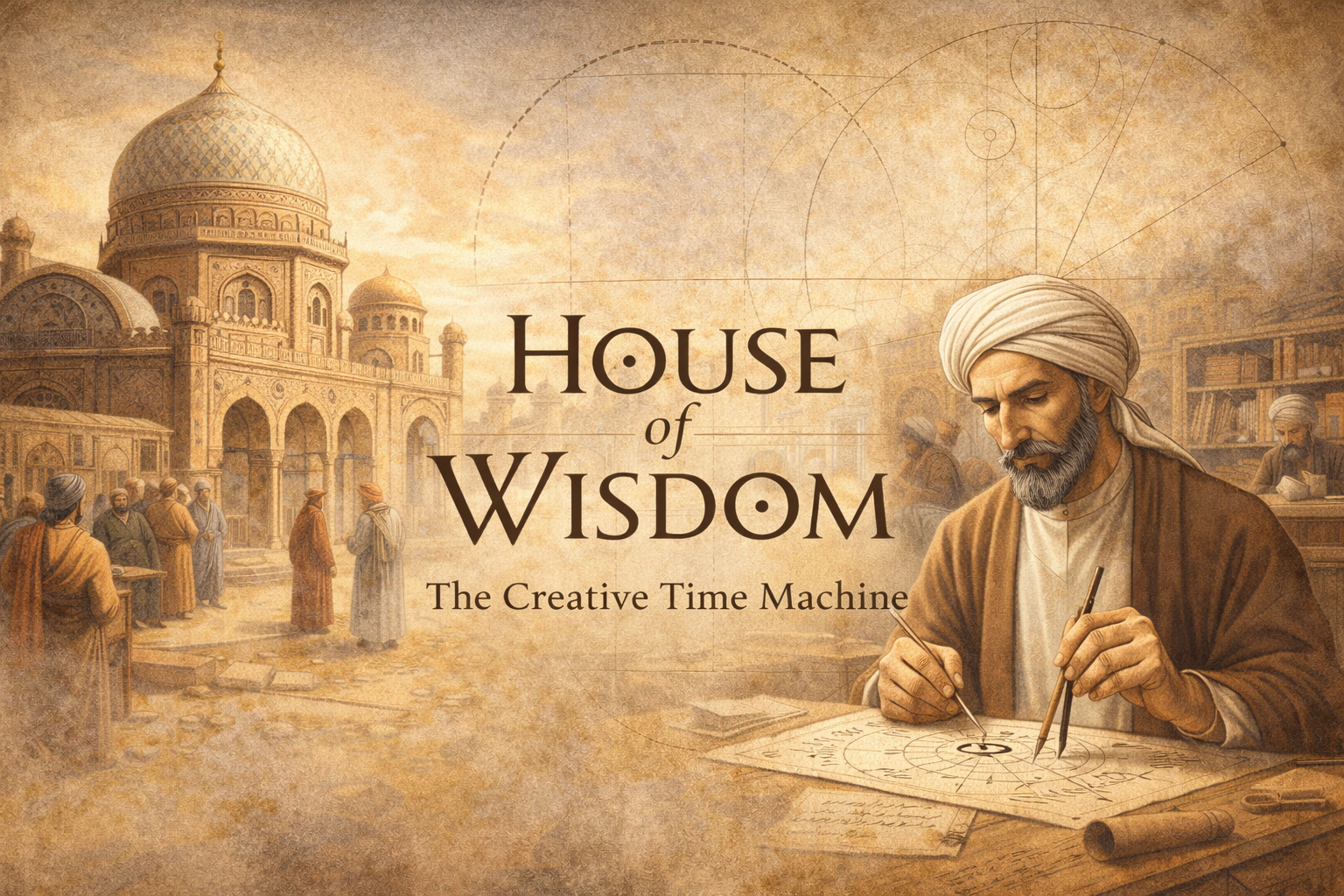 Watch "A Dot That Carried Civilization Ibn Muqla and the Geometry of the Dot #Muqla" on YouTube
Today, we open the House of Wisdom not with analysis, but with celebration. We celebrate the artist. We celebrate the thinker. We celebrate the quiet moments where a human mind, guided by care and responsibility, gives the world something it did not know it needed. In this series, we will celebrate many artists—across time, disciplines, and civilizations—because the goal is not nostalgia, but recognition: the creative mind and the creative heart are among humanity’s greatest forces.
We will ask questions. We will slow down. We will attempt a kind of creative time machine—not to romanticize the past, but to see what the creator saw when the problem was still alive, still unresolved, still right in front of them. Today, we begin with an artist whose work changed civilization without spectacle: Ibn Muqla.
Imagine the scale of this achievement. To shape grammar, spacing, proportion—to introduce rules that quietly guide writing so well that generations use them without thinking—this is not decoration. This is infrastructure for thought. When a system like this enters the world, it reshapes contracts, books, law, learning, and daily life. It reshapes trust.
There is a question the Superuser returns to again and again, and it is as relevant now as it was then:
What is it that you can do that no one else can do?
When that question is asked honestly, answers appear. For Ibn Muqla, the problem was unavoidable. He lived inside contracts, decrees, and handwriting every day. Disorder was not abstract; it was visible on the page. The solution he produced—a system—outlived him because it was bigger than him. Every calligrapher who followed was not copying a style; they were entering a law of beauty.
This is why his story matters. It is not finished. It is a creative story waiting to be opened by all of us—a reminder that the most profound creations often come from paying close attention to what is already in front of us, and daring to ask the one question that changes everything.
Today, we open that story.
Ibn Muqla and the Question Only a Superuser Asks
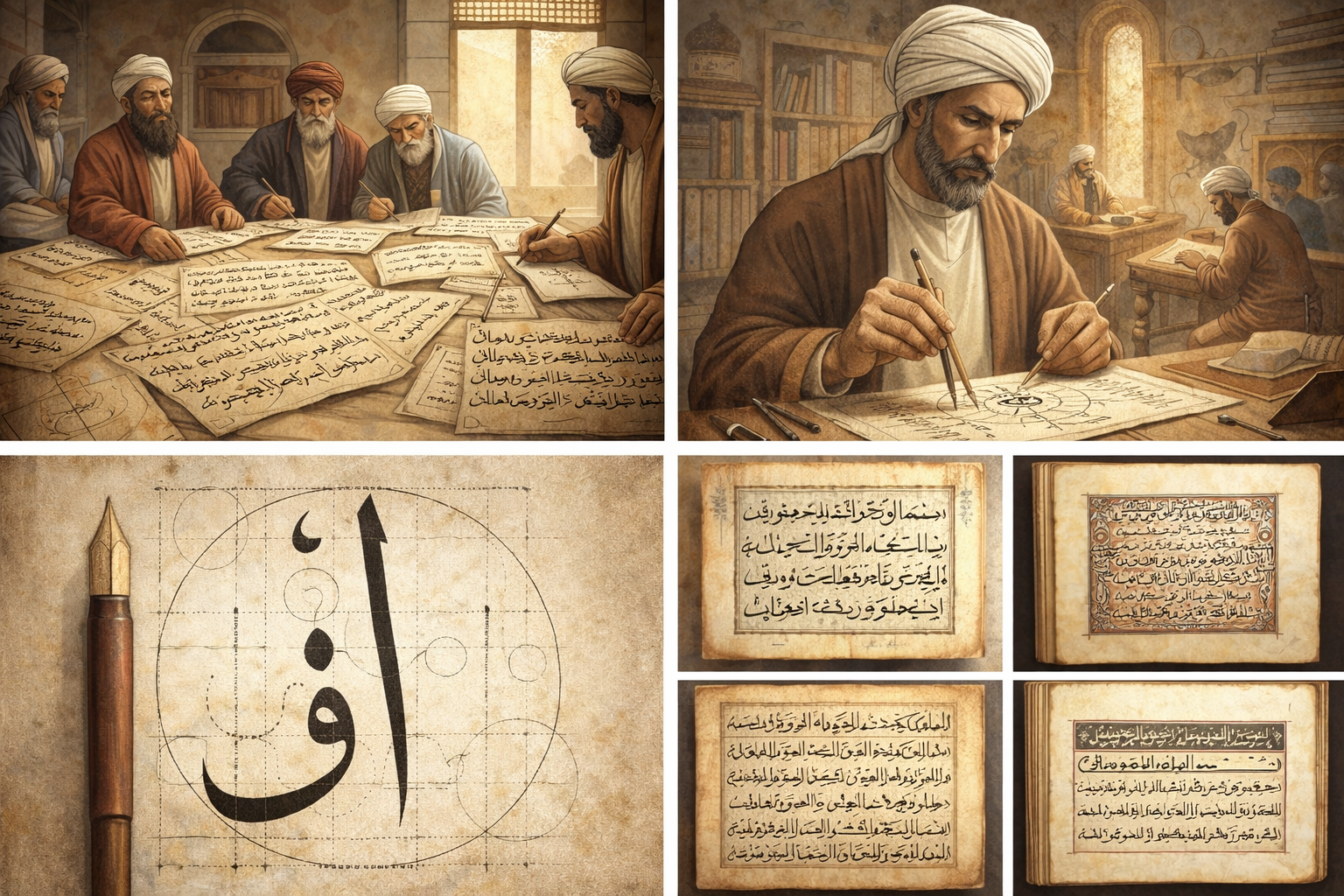
Baghdad was already the center of the world.
Law flowed through it.
Knowledge flowed through it.
Contracts, decrees, judgments, and decisions passed across desks every day.
Ink was everywhere.
And yet—
the writing was ugly.
Not ugly in the sense of effort or sincerity.
Ugly in the sense of disorder.
Each hand fought the page.
Each document carried the mood of its writer.
Authority depended on temperament.
Beauty depended on chance.
And Ibn Muqla saw this every day.
He was not an artist wandering markets.
He was a vizier.
A man of state.
A man of responsibility.
He dealt with documents that shaped lives, property, justice, inheritance, power.
And everywhere he looked, he saw the same quiet problem:
This work is too important to depend on personality.
So he asked the question only a serious mind asks:
What is the problem that is already in front of me
that only I am positioned to solve?
Not a problem for poets.
Not a problem for craftsmen.
Not a problem for historians.
His problem.
Ink.
Writing.
Form.
Trust.
He walked through Baghdad with this question alive in him.
Past scholars debating logic.
Past mathematicians measuring the heavens.
Past scribes copying page after page by habit.
And at some point—quietly—it clicked.
He did not need a new alphabet.
He did not need better hands.
He needed law.
So he went where law lives:
to measure, to proportion, to geometry.
He studied the old masters.
He studied Euclid not as a mathematician, but as a philosopher of order.
He absorbed the idea that truth does not persuade by force—
it persuades by inevitability.
And then one day, the smallest thing on his desk spoke back to him.
The dot.
A single press of the pen.
The most humble mark possible.
He did not see ink.
He saw a unit.
And with that recognition, everything changed.
What if letters were not gestures, but constructions?
What if curves obeyed arcs?
What if height, width, balance, and spacing were not taste—but rule?
What if beauty could be taught without being diluted?
This was not inspiration.
This was discipline waking up.
He began to measure.
Not wildly—carefully.
Patiently.
As one does when building something meant to last.
Letters were no longer free to shout or slouch.
They stood in proportion.
They listened to each other.
They belonged to a system larger than any hand.
For the first time, writing stopped being personal
and became just.
Two people could now write with the same dignity
without sharing talent, temperament, or even time.
That is not art.
That is infrastructure.
And like all true infrastructure, it disappeared into daily life—
quietly holding everything up.
His own life did not reward him.
Power never does.
But the system he revealed did not need him anymore.
That is the mark of a true superuser act:
Solve the problem that is already in your hands
in a way that removes you from the center of the story.
Today, people still copy contracts.
Still sign agreements.
Still open books and trust what they see.
And they do not know why the letters feel balanced.
They do not know why the spacing breathes.
They do not know why the page feels calm.
But they are living inside his answer.
Take a Look at This
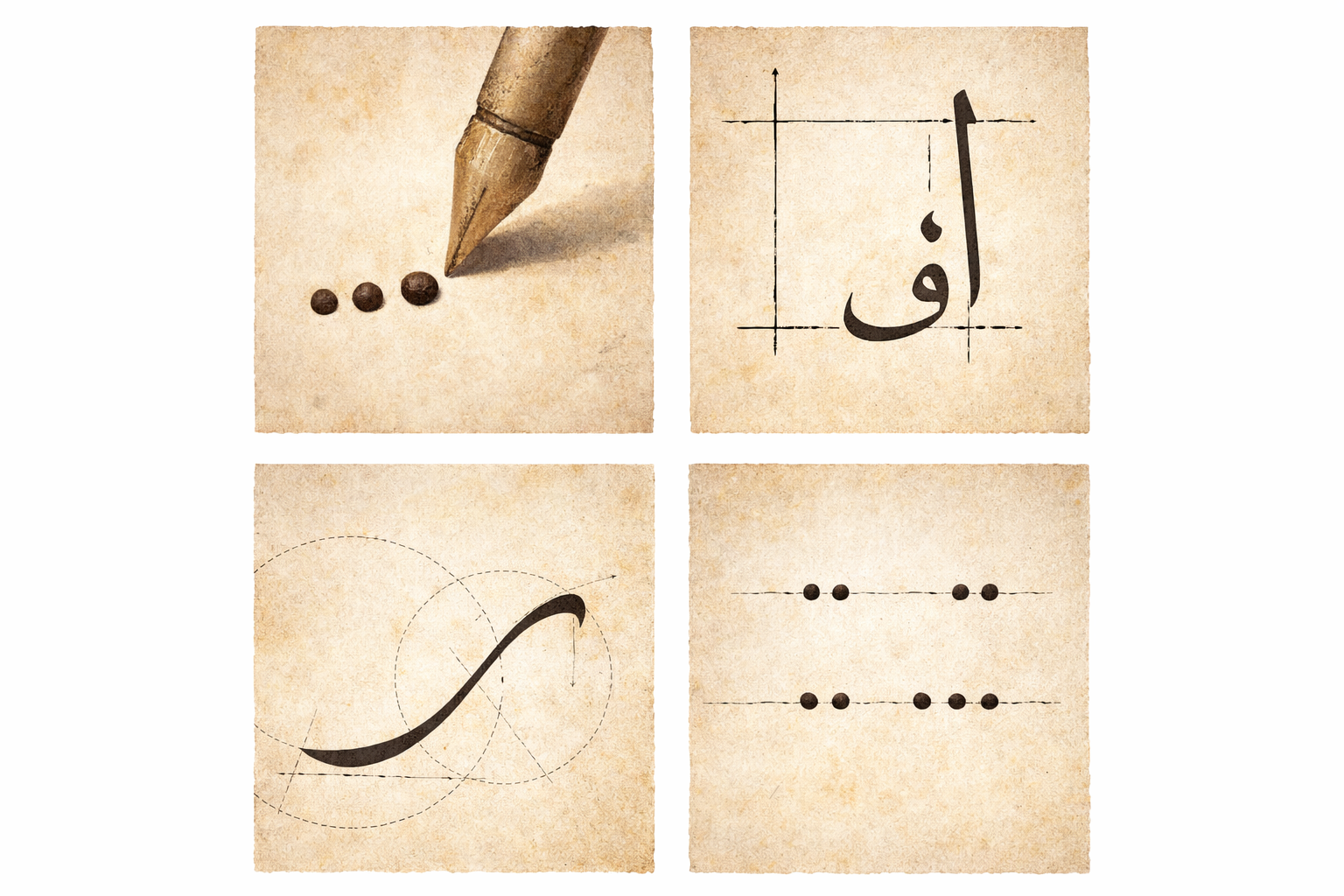
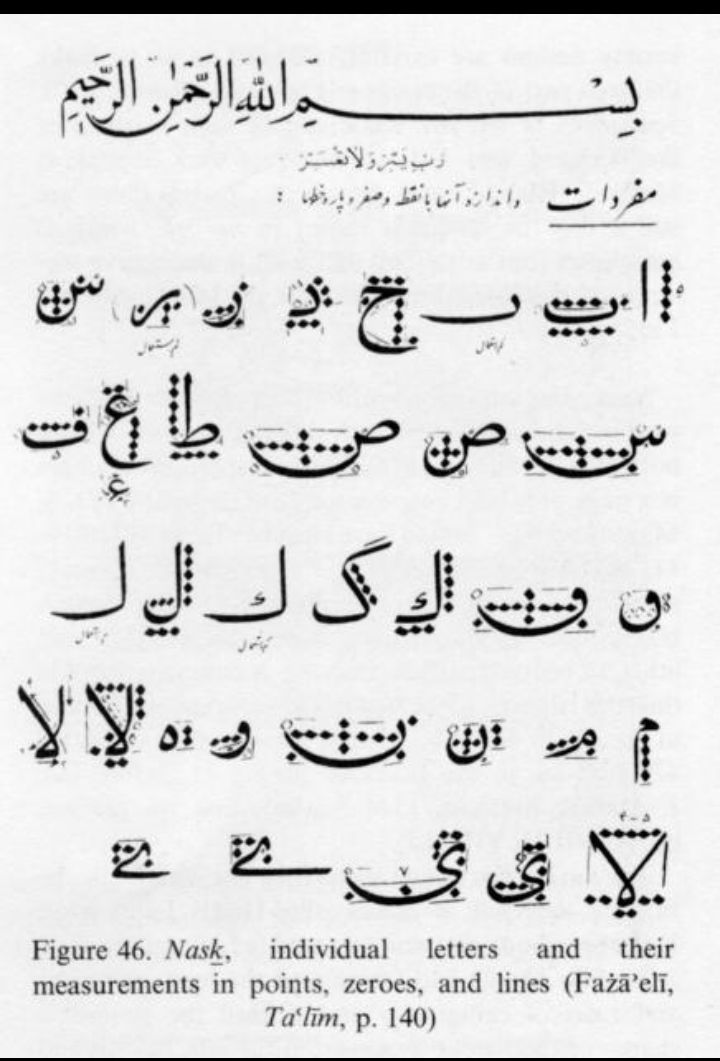
Take a look at the images above.
Don’t rush. Let your eyes move slowly.
Do you see the dots?
Those dots are not decoration.
They are not random marks.
They are the very first agreement between the hand and the page.
Each dot is made when the pen touches the paper without moving.
In that moment, the pen reveals its truth:
how wide it is
how much ink it carries
how much pressure the hand applies
The dot becomes a unit.
A promise.
Everything else must respect it.
Now look at the lines.
These lines are not cages.
They are guides.
They tell the letter where it may stand,
how high it may rise,
how low it may descend.
Like the lines on a musical staff,
they do not make the music—
they make it possible to be played again.
Now look at the curves.
Notice how calm they are.
They do not wobble.
They do not rush.
They follow invisible circles,
as if the letter remembers something round and whole.
This is the art telling you:
Even movement needs a center.
Now look at the space.
Yes—look at the empty parts.
The space between strokes is measured.
The pause between letters is intentional.
This system teaches that space is part of meaning.
Silence belongs to the letter as much as ink.
What you are seeing is not handwriting.
It is governance.
The hand is no longer guessing.
It is following a path.
The pen drips.
The ink resists.
The paper absorbs unevenly.
And yet—
because the system exists, beauty still appears.
That is the miracle.
This art is telling you something gentle but firm:
“I will guide you so you do not struggle.
I will show you the path so fear disappears.
Follow me, and the letter will take care of itself.”
This is why a child can connect dots and succeed.
This is why a student gains confidence.
This is why generations could write beautifully without ever meeting the master.
You are not looking at letters being drawn.
You are looking at a mind that said:
Meaning must survive us.
So form must be just.
And when form is just,
beauty follows naturally.
That is what this art is telling you.
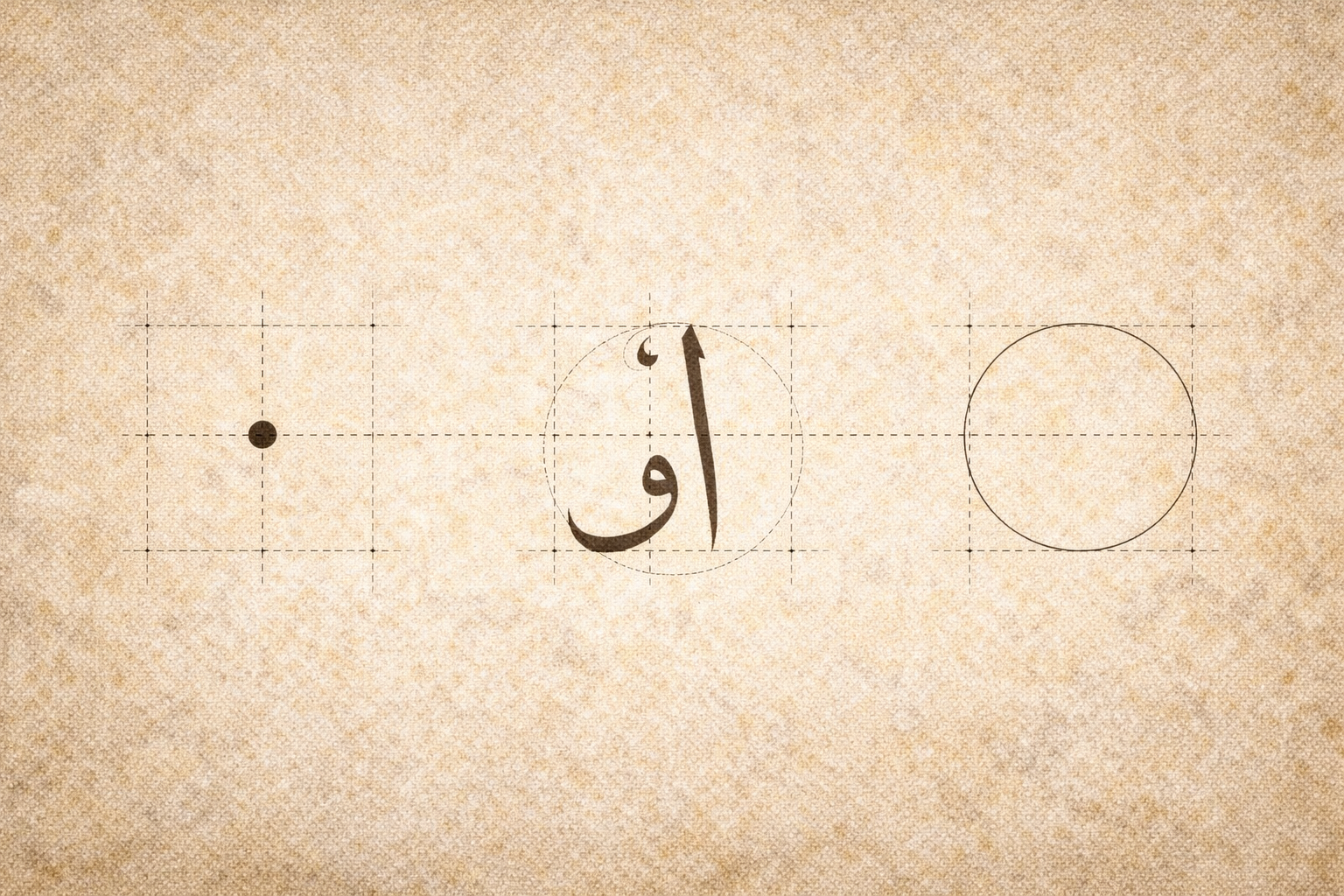
Now Look at This One
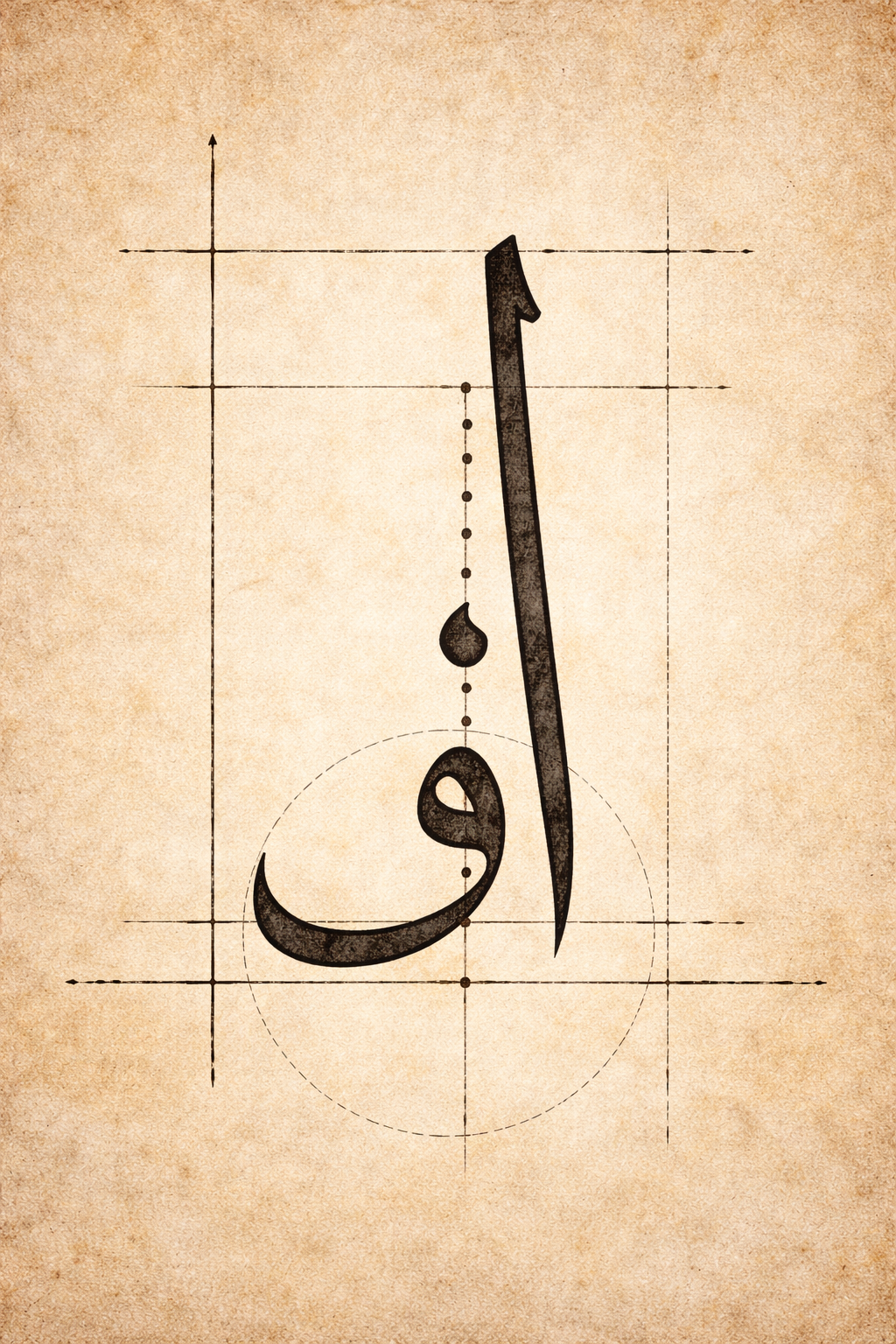
Now look at this image.
At first, you see a single letter standing tall.
Simple. Quiet. Almost obvious.
But the moment you notice the grid, everything changes.
This is not a letter floating freely.
This is a letter standing inside responsibility.
Do you see how the vertical stroke aligns perfectly with the measured height?
That height is not guessed.
It is counted—dot by dot.
Each dot marks a commitment:
no taller than this
no shorter than that
The letter is not asking for permission to exist.
It already knows where it belongs.
Now notice the circle.
That circle is not decoration.
It is a reminder.
It tells the curve below how far it may travel,
how much it may bend,
when it must return.
This is the art saying:
Movement is beautiful when it remembers its limits.
The grid lines crossing the page are not harsh.
They are gentle agreements.
They whisper:
start here
end here
rise with dignity
descend with care
Nothing is forced.
Nothing is rushed.
And now notice something subtle:
The letter still feels alive.
That is the miracle.
Despite the rules, the letter breathes.
Despite the measurements, it feels human.
This is the lesson Ibn Muqla gave the world:
Structure does not suffocate creativity.
Structure protects it.
This image is teaching you how trust is built.
A scribe can copy this letter.
A student can learn it.
A contract can rely on it.
A book can carry meaning safely.
What you are seeing is not handwriting becoming stiff.
You are seeing handwriting becoming reliable.
This is how writing becomes worthy of carrying law, knowledge, and memory.
One straight line.
Measured.
Centered.
Calm.
And from this single upright letter,
an entire civilization learned how to write without fear.
.
Do You See the Difference?
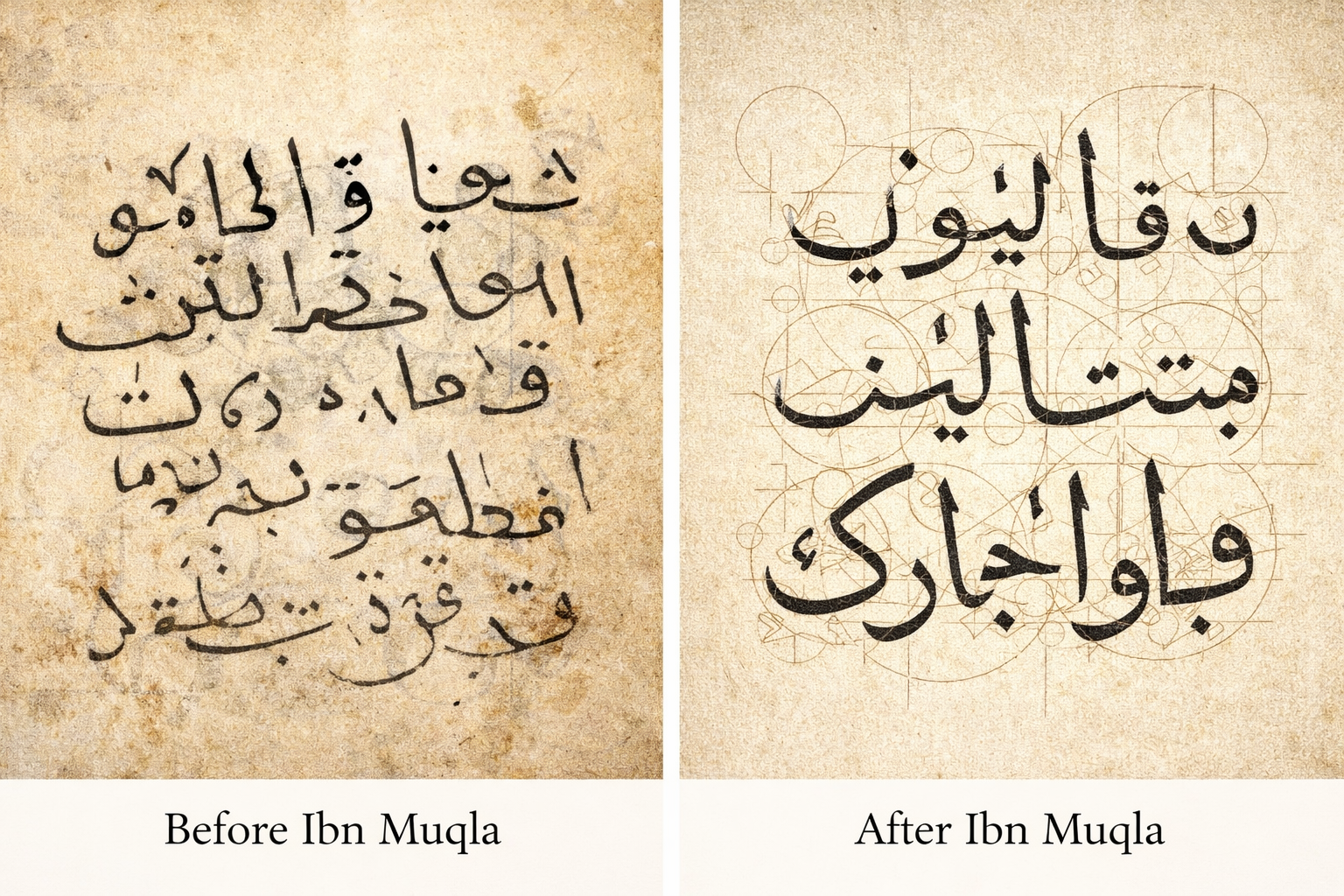
Do you see this art?
Do you see the difference?
On one side, writing struggles to hold itself together.
On the other, writing stands with dignity.
This is not a matter of taste.
This is the difference between chance and order.
The man who made this possible was named Ibn Muqla.
They cut off his hand.
His enemies believed that would end the story.
Today, their names are gone.
His name remains.
He is remembered because he measured the dot.
Because he refused to accept confusion as normal.
Because he brought law to writing when writing was too important to be left to accident.
Through his work, knowledge became legible.
Not only the Qur’an—copied with greater consistency, balance, and care—but contracts, courts, medicine, mathematics, administration, learning. Imagine a hospital chart you cannot read. A legal judgment you cannot decipher. A scientific text distorted by a careless hand. Ibn Muqla understood that access to knowledge begins with readable form.
He did not invent knowledge.
He protected its passage.
Look again at the image.
See how distortion disappears.
See how balance enters.
See how the eye no longer struggles.
This is what order does.
And here is the question his life asks us—quietly but relentlessly:
How many problems are directly in front of you every day
that everyone accepts as “just the way things are”?
He was the perfect person for this problem because he lived inside it.
Ink. Documents. Writing. Responsibility.
And instead of delegating it, instead of enduring it, he stopped.
He made intention.
He asked whether something better was possible.
And in doing so, he received a gift that became a blessing for others.
This is what it means to be present.
To engage the problem God has placed in your hands.
To ask: Is there something here only I can do?
Ibn Muqla did not seek immortality.
Yet here he is.
Nearly 1,100 years later, calligraphers still practice by his rules.
Students still measure by his dot.
Letters still stand by his proportions.
His system has not been replaced.
It has not been surpassed.
It has simply been lived inside.
They cut his hand, but they could not cut the order he gave to the world.
And so we say this plainly, without exaggeration and without hesitation:
The man changed history.
We will return to him again.
Because some creators are not chapters.
They are universities.
And this one is still open.
A Dot That Learned to Carry the World
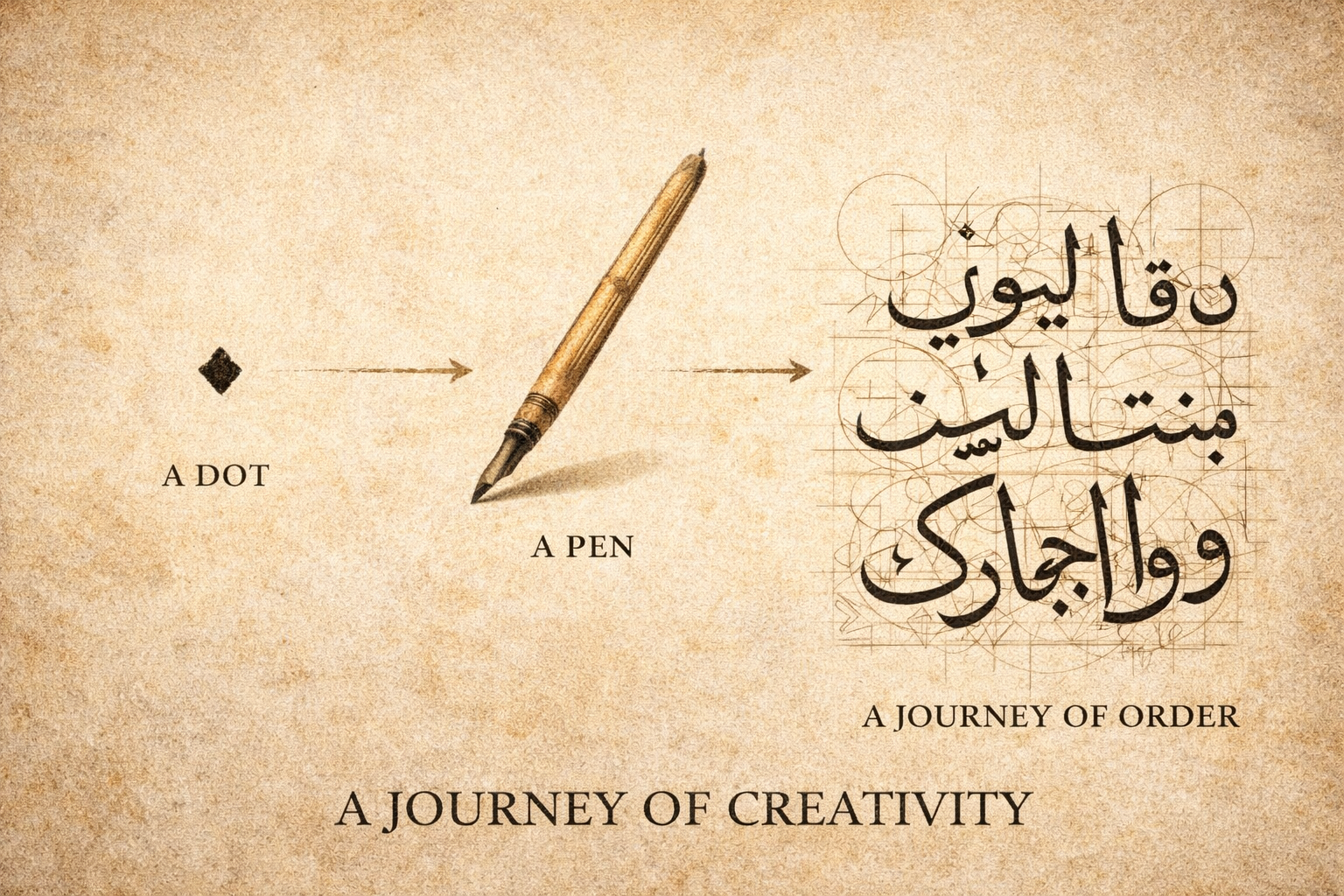
Sometimes history does not turn on armies,
or kings,
or proclamations.
Sometimes it turns on a pause.
A man stops.
He looks at what everyone else has accepted.
He notices disorder where others see habit.
He asks—quietly, sincerely—can this be done better?
From that pause came a dot.
From the dot came proportion.
From proportion came order.
From order came legibility.
From legibility came trust.
And from trust came the safe passage of knowledge.
Medicine could be read.
Mathematics could be taught.
Algorithms could be copied.
Contracts could be honored.
Sacred words could travel without distortion.
Not because knowledge was new—
but because access to it became reliable.
One pen.
One measured dot.
One idea grounded in discipline.
And suddenly, ideas could cross centuries.
What we often miss is this:
the greatest changes do not arrive shouting.
They arrive through presence.
Through contemplation.
Through someone willing to stand still long enough to see clearly.
When we pause,
when we ask,
when we make intention,
when we pray—not for power, but for clarity—
connections appear that were always waiting.
That is the journey we are honoring here.
A journey of creativity.
A journey of restraint.
A journey where beauty submits to law so that meaning may survive.
The hand that made this possible was cut.
The idea it released could not be.
And so the dot remains.
Still teaching.
Still measuring.
Still guiding hands that never knew his name.
Some creations do not ask to be remembered.
They simply refuse to disappear.
And that is how the world changes.
Here is a prayer and closing reflection you can place at the end of the piece—measured, reverent, and sincere.
A Prayer Across Thirteen Centurie for Ibn Muqla
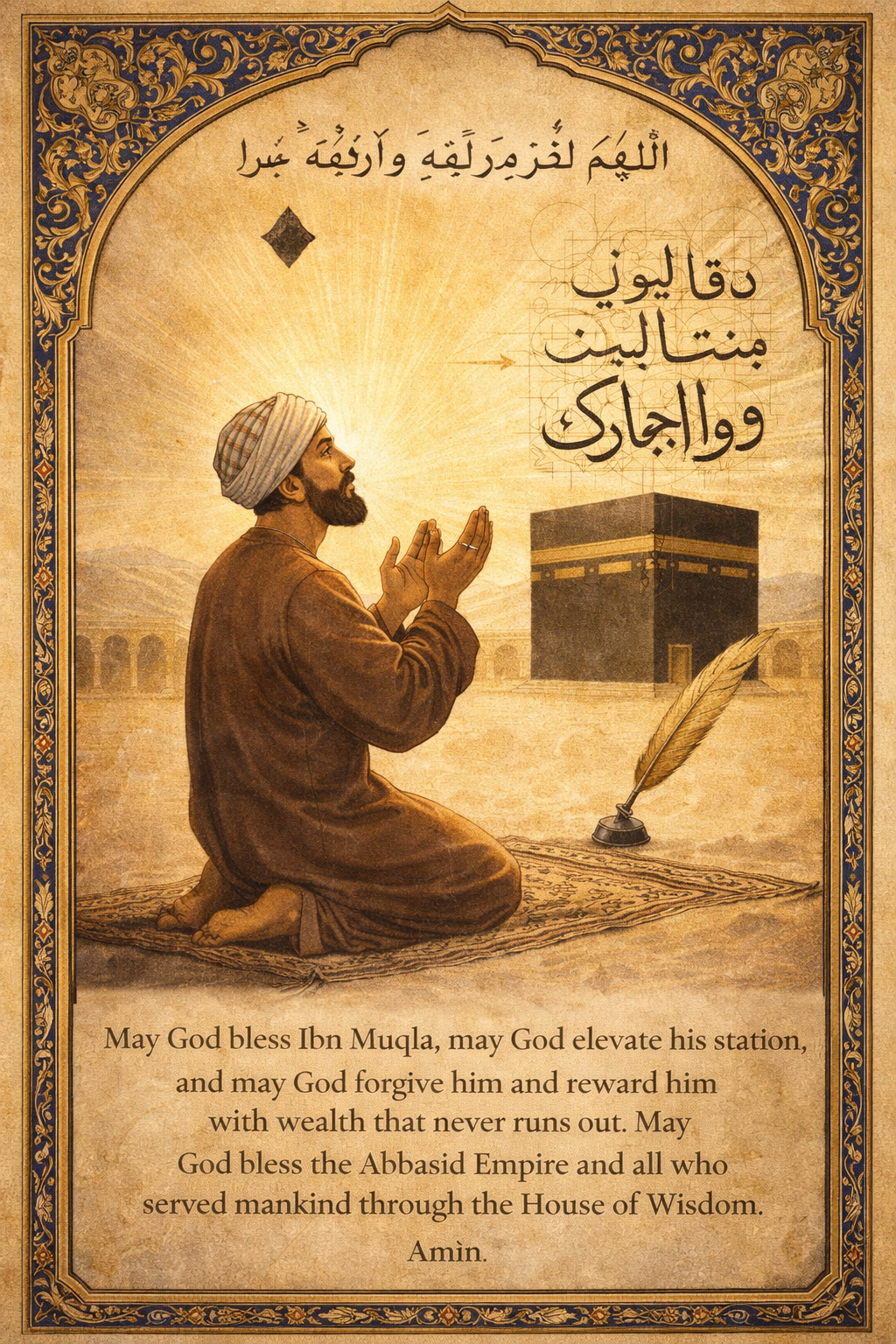
O Allah, Lord of wisdom and order,
Lord of the pen and what it records,
We ask You today to remember a servant who served knowledge,
a mind that brought clarity where there was confusion,
a hand that gave form to meaning so that truth could travel safely through time.
O Allah, forgive him.
Overlook his faults.
Accept what was sincere in his intention.
And elevate his station among those whose works continue to benefit creation.
O Allah, increase him in honor,
for more than thirteen centuries have passed
and still his work is alive,
still his rules are practiced,
still his insight is followed by hands that never knew his face.
O Allah, bless his children and his lineage,
those known and unknown,
and write for him a continuous charity
for every word made legible,
for every mind that understood,
for every heart that found ease because knowledge was clear.
O Allah, on the Day when all deeds are weighed,
grant him a reward that does not diminish,
a wealth that does not end,
a mercy that overwhelms him,
and a station near those You love.
We also ask You, O Allah, to bless the era that allowed such light to emerge.
Bless the House of Wisdom,
the Abbasid world that gathered minds,
that welcomed translators, scholars, artists, and thinkers,
those who walked its halls writing algebra, medicine, geometry, and law—
many of whom were never thanked,
yet whose work built the foundations of the world we live in today.
O Allah, accept from them all.
And accept from us this intention:
to remember,
to celebrate,
to understand,
and to honor the creative minds that served humanity quietly.
We begin this project of remembrance not for nostalgia,
but for gratitude.
Not to glorify the past,
but to learn how presence, intention, and humility
can still change the world.
O Allah, allow us to pause as they paused,
to see as they saw,
and to ask the questions that lead to benefit.
May You bless them.
May You bless knowledge.
May You bless those who serve it.
Aamiin Ya Rabbal Alamin" (آمين يا رب العالمين) i
"Amen, O Lord of the Worlds/
A Simple Act of Remembrance
And for those who wish to participate—not only by reading, but by giving something back—
We invite you to recite Surah al-Ikhlāṣ three times.
Not as a ritual of form,
but as a gift of intention.
Recite it:
once in gratitude for knowledge made clear,
once in mercy for a servant whose hand was taken but whose work remained,
and once asking Allah to elevate him, forgive him, and reward him beyond measure.
We remember the hand that was cut,
not with anger,
but with dignity.
Because that hand served meaning.
And meaning does not bleed.
May Allah accept this remembrance.
May He record it as ongoing charity for him.
May He allow our small acts to reach those whose works still serve us.
Aamiin Ya Rabbal Alamin" (آمين يا رب العالمين) i
"Amen, O Lord of the Worlds/