

بِسْمِ اللهِ الرَّحْمٰنِ الرَّحِيْم
In the Name of God, Most Gracious, Most Merciful
♥️🤲🕋♥️🕋🌹🌹🥀🤲🌹🕋♥️🤲
The U.S. House Plan
From Electors to Superusers: How America Lost Its Intelligence—and How We Restore
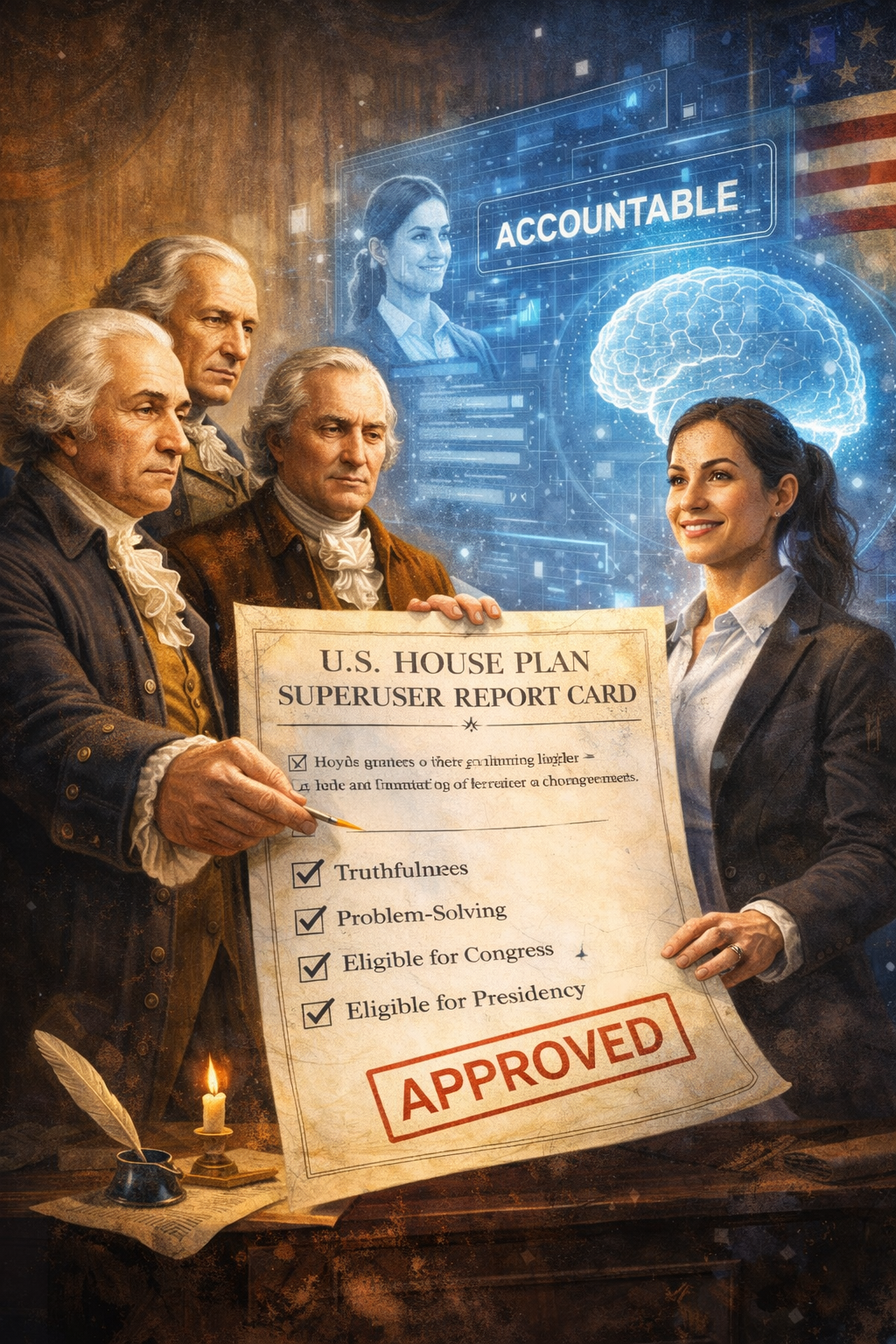
Watch "Electoral college for adults " on YouTube
America does not have a politics problem.
America has an architecture problem.
We argue endlessly about who holds power,
yet we rarely ask how power was meant to be held—
or why it was designed that way in the first place.
Before there were parties.
Before there were polls.
Before money could move faster than truth.
There was a question that haunted the Founders:
How do you choose the most powerful person in a republic
without destroying the republic itself?
The U.S. House Plan begins there.
I. The Forgotten Question That Built America
The Founders did not sit down in quiet comfort.
They sat in fear.
Fear of kings.
Fear of mobs.
Fear of Congress.
Fear of foreign empires smiling politely while plotting quietly.
They assumed—correctly—that power attracts corruption the way gravity attracts mass.
So they did something radical.
They refused to trust any single group with the presidency.
Not the people alone.
Not Congress.
Not the states alone.
Not a permanent council.
Instead, they built a system of temporary intelligence.
That intelligence had a name:
Electors.
II. What an Elector Was Meant to Be
An elector was not a voter.
An elector was not a party loyalist.
An elector was not a celebrity follower.
An elector was a human filter.
Someone expected to:
Pause where others rushed
Judge where others cheered
Resist where others surrendered
Electors were chosen for one reason only: to think when thinking was dangerous.
They met once.
They voted by secret ballot.
They left no trail.
They owed no favors.
They returned to private life.
No careers.
No leverage.
No repeat access.
This was not inefficiency.
This was defense.
III. Why Congress Was Locked Out—On Purpose
The Founders understood something modern politics prefers to forget:
Those who write the laws cannot be trusted to choose the enforcer of the laws.
Congress bargains.
Congress trades.
Congress accumulates influence over time.
If Congress chose the President:
Votes would be bought
Bills would become bribes
The executive would kneel
Separation of powers would die quietly
So the Constitution did something stunning in its restraint:
It barred members of Congress from being electors.
Not discouraged.
Not advised against.
Banned.
Congress was told:
Count the votes.
Certify the result.
Sit down.
That was the deal.
And it was brilliant.
IV. Why Foreign Interference Was Treated as Inevitable
The Founders were not paranoid.
They were realistic.
They assumed foreign powers would:
Spread rumors
Fund influence
Bribe intermediaries
Exploit ambition
So they made corruption expensive and difficult.
Electors voted:
In their own states
At the same time
Without gathering nationally
Without long-term coordination
No permanent body to capture.
No ongoing institution to infiltrate.
Presidential selection was treated as the most fragile act of sovereignty.
V. The Elegance of the Original Design
Electors did more than choose a President.
They chose two leaders.
One became President.
The runner-up became Vice President.
Why?
Because leadership was not meant to be packaged. Because national judgment mattered. Because even second place required legitimacy.
The executive branch was meant to be balanced internally, not stacked politically.
Congress, meanwhile, was not there to negotiate outcomes— only to ratify reality.
What an incredible system.
Quiet.
Restrained.
Confident.
VI. What Went Wrong (Without Changing the Constitution)
The Constitution did not betray America.
America abandoned the Constitution’s logic.
Political parties arrived.
They promised efficiency.
They delivered control.
Electors stopped judging.
They started obeying.
Secret ballots disappeared.
Public pledges replaced conscience.
Judgment gave way to math.
Independence gave way to loyalty.
The firewall fell—not in one dramatic moment, but piece by piece, until the system still looked constitutional while functioning as something else entirely.
VII. What We Have Now
Today we have:
Permanent campaigns
Corporate influence
Media-driven frenzy
Legal warfare over rules
Institutions captured by interests
We still perform the ritual of elections— but the intelligence that once protected them is gone.
And worse: Most Americans no longer know what was lost.
They argue outcomes without understanding systems. They demand reform without constitutional literacy.
This confusion is not accidental.
It is profitable.
VIII. Why the U.S. House Plan Starts with Education
You cannot rebuild a house if you do not understand its foundation.
You cannot replace a system if you never learned why it existed.
That is why the U.S. House Plan begins not with power— but with education.
Not nostalgia.
Not anger.
Not slogans.
Understanding.
IX. From Electors to Superusers
The U.S. House Plan does not resurrect the past.
It completes it.
Electors were limited by their time:
Slow information
Narrow visibility
Regional awareness
Today, those limits are gone.
What remains is the need for:
Judgment
Restraint
Independence
Proven leadership
That is where Superusers come in.
X. Who Superusers Are (And Are Not)
Superusers are not celebrities.
Not donors.
Not party favorites.
They are people who have:
Built something real
Carried responsibility without abuse
Earned trust through consequence
Demonstrated restraint under pressure
Served beyond themselves
Their authority is earned, not claimed. Their role is temporary, not permanent. Their power is bounded, not absolute.
This is not elitism.
This is merit with accountability.
XI. Why This Is a Return—Not a Rebellion
The Founders trusted something radical:
That some people, when properly constrained, could be trusted to protect the whole.
The Superuser system restores:
Independent judgment
Insulation from capture
Temporary authority
Structural humility
Not by copying the past, but by honoring its intelligence.
XII. The Choice Before America
America can continue shouting across broken systems.
Or it can pause— learn— and rebuild with intention.
The U.S. House Plan is not about nostalgia. It is about memory.
Not memory of faces, but memory of design.
America was not built on noise.
It was built on restraint.
It was not saved by popularity.
It was protected by structure.
From electors to superusers, this is not a revolution.
It is America remembering how seriously it once took power— and choosing to do so again.
The U.S. House Plan
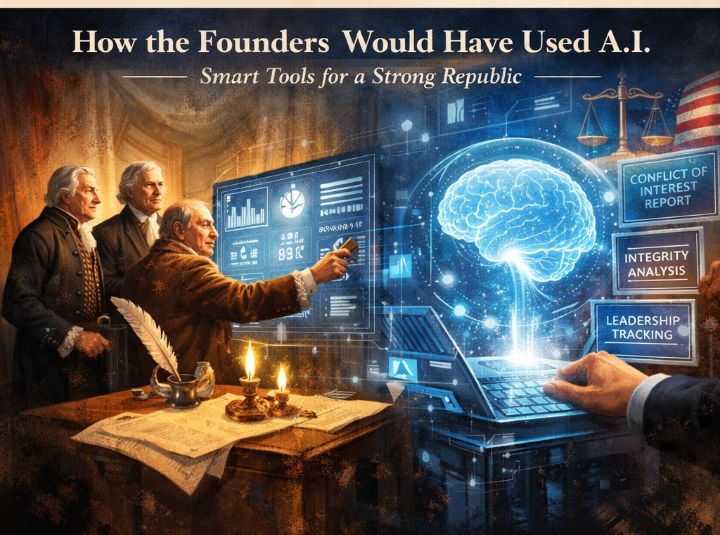
How the Founders Would Have Used AI — and Why America Must
America was born from a meeting.
Not a riot.
Not a slogan.
Not a tweet.
A convention.
Men arrived from different states, carrying different interests, different fears, different sins, and different visions of the future.
They argued.
They compromised.
They consulted.
They did not pretend the nation was pure.
They knew it was fractured.
Slave states and free states.
Large states and small states.
Merchants and farmers.
Idealists and realists.
And yet they asked a single, disciplined question:
How do we build a system strong enough to survive human weakness?
That question has not changed.
Only the tools have.
I. The Founders Were System Designers, Not Romantics
The Founders did not trust virtue alone.
They trusted structure.
They assumed:
People would pursue self-interest
Power would tempt even good men
Information would be incomplete
Loyalty would be traded
Influence would be hidden
So they designed institutions that forced behavior into safer channels.
The Electoral College was one of those institutions.
It was not about popularity. It was about judgment under constraint.
If the Founders were alive today, they would not ask:
“Can we trust people more?”
They would ask:
“How do we measure trust better?”
That is where AI enters the story.
II. What the Elector Was Always Meant to Do
Strip away the myth, and the elector’s job was simple:
Detect conflicts of interest
Evaluate character under pressure
Identify foreign influence
Resist factional manipulation
Act once, then disappear
The problem was never the idea.
The problem was human limitation.
Electors had:
Partial information
Local knowledge
No visibility into finances
No way to audit influence
No way to compare performance at scale
They were asked to judge wisely
with tools that were primitive even by 18th-century standards.
The Founders knew this.
They built the best system their time allowed.
We no longer live in their time.
III. What the Founders Would Have Seen in AI
The Founders were not afraid of tools.
They used:
Printing presses
Pamphlets
Accounting ledgers
Statistical records
Written debate
AI would not have frightened them.
Unchecked power would have.
If shown AI, they would immediately recognize its constitutional value:
AI can:
Detect conflicts of interest at scale
Compare behavior over time
Identify hidden financial dependencies
Trace influence networks
Benchmark performance objectively
Reveal patterns no human committee could see
In other words:
AI can restore the original function of the elector— not by replacing humans, but by informing them properly.
IV. The U.S. House Plan AI: A Constitutional Instrument
The U.S. House Plan does not introduce AI as a ruler.
It introduces AI as a constitutional witness.
Under this plan:
AI does not choose the President.
AI does not campaign.
AI does not persuade voters.
AI does one thing:
It produces independent, auditable reports on those entrusted with the power to choose.
Just as the Founders intended— but with modern clarity.
V. What the AI Evaluates (Restoring What Was Lost)
Under the U.S. House Plan, AI generates structured reports on Superusers (the modern successors to electors), including:
1. Conflict of Interest Analysis
Financial entanglements
Corporate dependencies
Foreign exposure
Media ownership influence
Lobbying history
No secrets.
No guesswork.
No selective disclosure.
2. Proven Leadership Metrics
Track record of responsibility
Outcomes, not rhetoric
Crisis performance
Long-term consistency
Ability to work across difference
This restores what the Founders valued most:
Demonstrated character under constraint.
3. Integrity & Reliability Benchmarks
Pattern recognition across decisions
Accountability history
Willingness to accept limits
Respect for process
Not perfection. Predictability under pressure.
VI. Surveillance, But Constitutional — Not Arbitrary
The Founders believed power must be watched.
They did not call it surveillance. They called it checks and balances.
Under the U.S. House Plan:
Only those who seek the power to select the President are scrutinized
Participation is voluntary but binding
Authority is temporary
Oversight is transparent
AI outputs are reviewable by humans
This is not punishment.
It is the price of public trust.
The higher the power, the greater the scrutiny.
That is pure constitutional logic.
VII. Humans and AI Together — As the Founders Would Have Demanded
The Founders never trusted automation. They trusted deliberation.
That principle remains.
AI informs. Humans decide.
Superusers review AI reports. They debate. They consult. They choose.
AI restores:
Information symmetry
Accountability
Memory
Pattern recognition
Humans restore:
Judgment
Wisdom
Moral reasoning
Responsibility
This is not man versus machine.
This is republican governance upgraded for reality.
VIII. How the People Lost Power — And How This Returns It
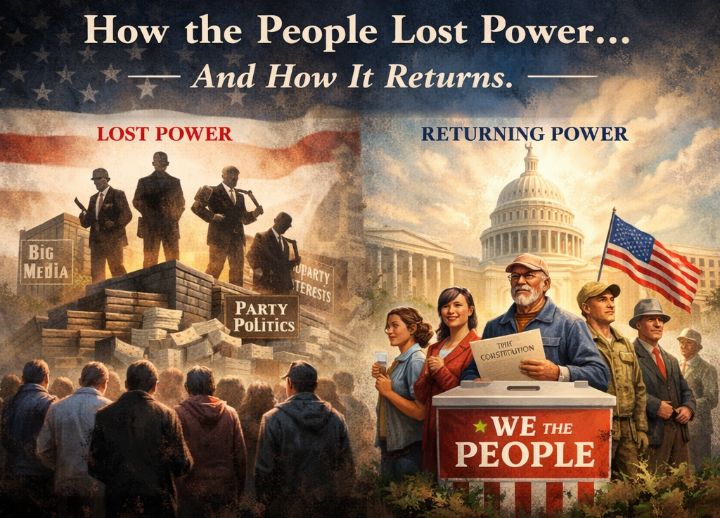
The people did not lose power in one dramatic theft.
They lost it gradually:
To corporations
To media consolidation
To party machinery
To financial opacity
To their own civic illiteracy
Most Americans today do not know:
What the 1787 Convention actually was
Why it was a consultation, not a coronation
Why delegates mattered
Why conflicts between states shaped everything
Why compromise saved the republic
The U.S. House Plan restores power by restoring knowledge.
Education first.
Then structure.
Then authority.
IX. A Return to the Convention Spirit
The Founders gathered not because they agreed— but because disagreement required structure.
They came as delegates. They argued as rivals. They left as architects.
The U.S. House Plan does the same.
It calls Americans back to:
Consultation over chaos
Design over outrage
Structure over spectacle
AI does not replace the Founders’ vision.
It completes it.
Final Declaration
The Constitution was never meant to be frozen in time. It was meant to be faithful in logic.
If the Founders had AI, they would have used it to:
Expose corruption
Prevent capture
Strengthen judgment
Protect the presidency
Keep power away from permanent interests
The U.S. House Plan does exactly that.
Not by tearing down the Constitution— but by restoring its original intelligence.
From electors to superusers.
From secrecy to clarity.
From erosion to renewal.
This is not the end of American democracy.
It is America finally giving itself
the tools its Founders always wanted— but never had.