

بِسْمِ اللهِ الرَّحْمٰنِ الرَّحِيْم.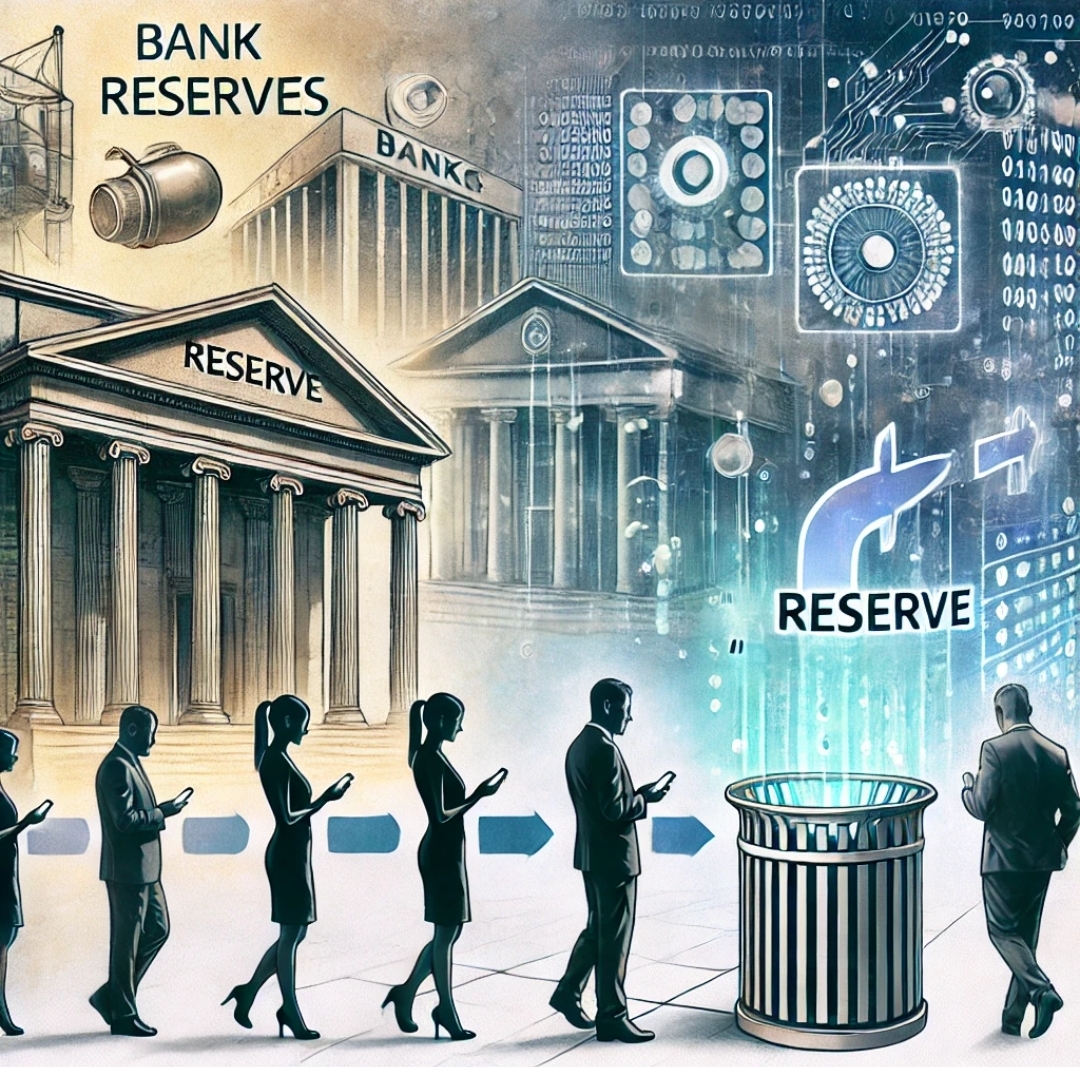
Traditionally, reserve requirements have been a key tool for central banks to manage the liquidity of the banking system. Banks are required to hold a certain percentage of their deposits in reserve, ensuring they have enough funds to meet withdrawal demands and manage financial stability. However, as we move into an era where the Brand Currency System and digital coupons replace traditional banking, the role of the reserve requirement must evolve.
Why the Traditional Reserve Requirement Is No Longer Necessary
In the new economy, where central banks directly monitor supply and demand through real-time data, there is less need for traditional reserve requirements. In the current system, banks are often more focused on profits than on their role in stimulating the economy. They hold reserves, but rather than injecting liquidity responsibly, they often lend to each other or use the money to maximize returns, with little benefit to the broader economy.
As we move towards a system where tech companies manage the flow of funds and individuals generate digital coupons through their transactions, the need for traditional reserves diminishes. The Brand Currency System can provide a more direct and transparent way for the central bank to control liquidity without relying on banks to fulfill their role.
What Will Replace the Reserve Requirement?
Even though we are eliminating traditional banks, reserves will still play a crucial role in this new system. However, instead of cash reserves, we will introduce data reserves. These reserves will be built on the data collected from individuals and businesses as they engage in transactions, produce, and consume.
Digital coupons created through each transaction will be recorded and categorized.
These coupons will reflect important data points like product quality, supply chain transparency, and environmental impact.
Individuals will be required to take part in the system by generating these data reserves—such as by taking pictures of the products they use or reporting on the quality of services they receive.
These data reserves will not only help central banks monitor the economy more effectively but will also create standards that guide economic activity. For example, businesses or sectors that do not meet human rights, environmental, or supply chain standards will need to hold higher reserves to mitigate the risk of harm to the economy.
Reserving the Data That Matters
The new reserve system will be based on real-world data. The more individuals and businesses participate in creating valuable, transparent data, the healthier their reserves will be. Individuals who generate high-quality data about their transactions, such as documenting the proper use and disposal of products, will increase their reserves of good data. This, in turn, unlocks more liquidity for them, enabling more access to credit or funds.
For businesses, especially tech companies replacing traditional banks, reserves will be tied to data standards. They will be required to meet certain benchmarks that ensure the data they are collecting is accurate and reflective of actual economic activity. The central bank will be able to use these reserves to track economic activity and inject liquidity more precisely.
Why This Is Critical for the Future of the Economy
As we phase out traditional banks, it's important that we don’t eliminate the tools that manage the economy. Instead, we will reimagine those tools to fit the new reality of a data-driven economy. While cash reserves helped banks manage liquidity in the past, the future economy will require reserves based on data—data that reflects human rights, sustainability, and economic health.
These data reserves will not only give the Fed more control but will also create a more transparent and accountable system, where businesses and individuals are rewarded for their contributions to the economy. Those who don’t participate—by failing to provide data or undermining transparency—will not have access to the liquidity that drives economic growth.
Conclusion: Reshaping Reserves for the Future
In this new system, reserves will not disappear—they will evolve. Traditional cash reserves are no longer necessary because data reserves will offer a far more nuanced and effective way to control liquidity. By ensuring that businesses and individuals provide meaningful data, the central bank will have a new set of tools to manage the economy in real time.
As we move forward, the Brand Currency System will play a central role in this transformation, offering a new way to balance economic growth, protect human rights, and create a more transparent, accountable financial system. This is the future of reserves, and it will be essential as we replace banks and build the economy of tomorrow.
Now, for those of you who are new to the concept of reserves, let’s break it down. Reserves have traditionally been a requirement for banks to ensure they have enough liquidity to meet demands. Moving forward, you will have reserves too, but instead of money, your data will serve as a reserve. As the banking system gets replaced, your role becomes more central, and by meeting certain data requirements, you will generate the necessary reserves. These reserves will allow us to create new tools for the Federal Reserve, unlocking credit and liquidity for individuals in a more efficient, transparent system. Let's dive deeper into why this is so crucial.
Why the Federal Reserve Implements Reserve Requirements
Many people feel uneasy or confused about the Federal Reserve's role in managing the economy, and one area that often sparks questions is the concept of reserve requirements. The Fed plays a vital role in regulating the economy, and reserve requirements are part of the tools used to keep a check on the banking system. Let’s explain why this is important and how it works.
What Are Reserve Requirements?
Reserve requirements are rules set by the Federal Reserve that mandate how much money banks must keep on hand at any given time. This amount is usually a percentage of the deposits they hold from customers. The purpose of these reserves is to ensure that banks have enough funds available to meet customer withdrawals and other obligations.
Historically, reserve requirements have been used to manage liquidity in the banking system. If too many people try to withdraw their money at the same time (a bank run), reserves ensure that the bank can cover those withdrawals and prevent financial panic. By regulating the amount banks hold, the Fed prevents banks from lending out too much money and helps manage economic stability.
Why Do We Need Reserves?
Reserves act as a safeguard for the financial system. They prevent banks from overextending themselves by lending out all the money they receive. When banks are required to hold a certain portion of deposits in reserve, they can’t lend it all out, which reduces the risk of running out of money during a crisis.
The Federal Reserve uses reserve requirements as a tool to keep the banking system in check. While it may seem complex or unnecessary to some, this is one of the Fed’s most important responsibilities in maintaining the stability of the economy. Without this regulation, the risk of bank collapses or severe liquidity problems would be much higher.
What Happens When Banks Are Eliminated?
As we move toward a new financial system, where banks are no longer the gatekeepers of liquidity, individuals will take on some of the responsibilities previously held by banks. Instead of banks holding reserves to protect against economic crises, you, as an individual, will have the opportunity to generate the data needed to regulate the system yourself.
This will be done through the Brand Currency System, where individuals generate digital coupons for every transaction. This data-driven approach will allow the central bank to directly monitor the supply and demand of goods and services. For example, when you purchase something from the supermarket, you’ll simply take a picture of the product, upload it, and AI will automatically generate the necessary data to ensure liquidity is flowing properly in the system. This data will form a personal reserve, allowing you to access credit or liquidity when you need it.
You Will Play a Key Role in Economic Stability
Just as banks are required to hold reserves today, individuals in the future economy will be required to provide certain types of data to ensure their personal liquidity. This is a new form of economic participation that empowers you to manage your finances directly.
For instance, if you’re a pregnant mother who needs essential supplies like milk, the system will prioritize your needs based on the data you provide. AI will calculate your requirements and ensure that you have access to what you need. Someone who is simply trying to buy and resell goods, on the other hand, will have a different priority level in the system.
Your Data Belongs to You
The beauty of this system is that you control your data. It doesn’t belong to the central bank or any other institution. You have the option to share it when it benefits you—such as when you want to access liquidity quickly—or to keep it private. This is a revolutionary shift from the way we think about money and the economy today, where banks and corporations hold much of the power.
Moving Forward: Your Role in the Economy
As banks are replaced by tech companies and data-driven systems, the mechanisms of economic control will shift. However, checks and balances will still be needed, and reserves will continue to play a role. But instead of holding money, we’ll be holding data.
This data will ensure the economy runs smoothly, and it will be up to individuals to contribute responsibly by providing the necessary information about their transactions. The system will automatically track your economic activity and make sure liquidity is injected where it’s needed, without the need for banks.
The future of the economy lies in your hands, and with AI and the Brand Currency System, we can ensure that every individual plays a role in shaping the future. You won’t just be a participant—you’ll be a key player in determining how liquidity flows, how credit is issued, and how supply chains are managed.
We are unveiling a future where your feedback matters, and it’s up to you to decide how involved you want to be. T
he days of being left out of economic decisions are over. Welcome to the new economy.