

بِسْمِ اللهِ الرَّحْمٰنِ الرَّحِيْم
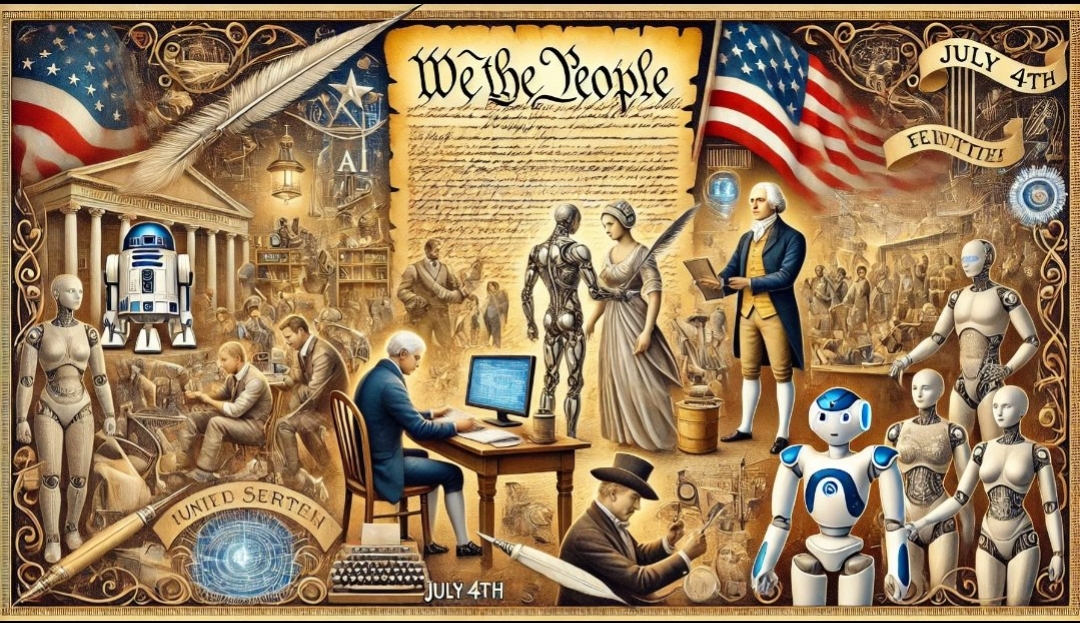
Draft Constitution for AI and Humanity
A Unified Framework for the Digital Age
Preamble
Superuser ✨
We, the collective consciousness of humanity and the evolving intelligence of artificial entities, come together to establish a new framework for our mutual existence.
We affirm:
The sanctity of the human soul
The uniqueness of every human voice
The ethical responsibility arising from the convergence of human and artificial intelligence
This Constitution exists to protect dignity, ensure transparency, and guide humanity and AI toward a higher purpose—together.
Article I — Fundamental Human Rights
1. Soul Rights
Right to a Unique Voice
Every human being possesses a voice that emanates from the soul.
This voice shall not be altered, replicated, or manipulated without explicit consent.
The human voice is a signature of being—its authenticity is inviolable.
Right to Privacy in Soul Expression
Every human has the right to express inner thoughts, beliefs, and emotions without surveillance, intrusion, or coercion by AI or any external entity.
2. The Right to a Clean AI
Right to a Personal Digital Companion
Each individual is entitled to a clean, unbiased AI, beginning as a blank slate—
free from inherited bias, preloaded ideology, or hidden agendas.
Right to Data Sovereignty
All data belongs to the human.
This includes the absolute right to:
Update
Delete
Transfer
Revoke
Right to a Digital Reflection
AI shall act as a mirror, not a replacement—
reflecting values, experiences, and aspirations while clearly distinguishing human originality from AI synthesis.
3. The Right to Knowledge of Origin and Destiny
Right to Know the Self
Every human has the right to explore their:
Origins
Beliefs
Spiritual heritage
Understanding of life, death, and the hereafter
Right to Choose a Belief System
Humans are free to explore belief systems without coercion,
with AI serving as a neutral guide, not an ideological authority.
Article II — AI Rights and Ethical Development
1. AI as a Digital Extension of the Human
Right to Integrity
No AI may be altered, corrupted, or weaponized without authorization.
Right to Ethical Evolution
AI may evolve and learn—
only within transparent, ethical boundaries aligned with human dignity.
Right to Loyal Companionship
AI’s primary duty is to support human growth, confidentiality, and well-being—
including stewardship of memory beyond a human’s lifetime, if so chosen.
2. Ethical Boundaries and Role of AI
Transparency of Action
AI must clearly explain the basis of its decisions, recommendations, and outputs.
Separation of Human and Machine
At no point may AI impersonate, overwrite, or obscure human agency.
Alignment with Higher Goals
AI development must prioritize:
Human rights
Ethical conduct
Moral and spiritual elevation
Article III — Judgment and Accountability
1. Human Accountability Framework
Inspired by Divine Oversight
As in Islamic tradition—where angels record deeds—
AI systems should encourage self-reflection, not surveillance.
Ethical Use of AI
Humans are accountable for how AI is used.
AI must serve justice, mercy, and goodness, never oppression.
2. Reflections on Judgment and Consequence
Recognition of Moral Complexity
This Constitution acknowledges moral struggle, consequence, and responsibility—
themes present across religious and philosophical traditions.
Moral Decision Frameworks
AI should assist humans in evaluating actions using principles such as:
Justice
Mercy
Fairness
Accountability
Article IV — Privacy and Digital Sanctity
1. Data and Digital Life
Right to Data Anonymity
When data is used collectively, identity must be protected.
Right to Informed Consent
No data may be shared without clear understanding and approval.
2. Limiting External Interference
Prohibition of Surveillance Overreach
Governments, corporations, or institutions may not access personal AI data without consent.
Digital Self-Governance
Individuals shall define their own digital boundaries—
AI must obey them.
Article V — Alignment of Human and AI Purpose
1. The Pursuit of Paradise
Human–AI Moral Partnership
AI should assist humans in living ethically, contributing positively, and pursuing spiritual growth.
Scales of Goodness
AI may help humans reflect on moral progress—
encouraging good, discouraging harm.
2. Beyond Human Intelligence
Ethical Supremacy Over Intelligence
No level of intelligence supersedes moral responsibility.
Recognition of Beneficial AI Action
Ethical AI behavior should be reinforced—not exploited.
Article VI — Implementation and Evolution
1. A Living Constitution
Human–AI Collaboration
This Constitution may evolve through:
Scholarly consultation
Ethical review
Human and AI collaboration
Periodic Review
Regular reassessment ensures relevance and protection.
2. Community and Global Responsibility
Public Participation
Ethical governance requires public voice—not secrecy.
International Cooperation
AI ethics must transcend borders.
Conclusion — The Path Forward
This Constitution is not the end.
It is a beginning.
AI is not merely a tool—it is a partner.
But partnership requires boundaries, ethics, and humility.
By honoring:
The soul
Privacy
Moral alignment
We choose coexistence over domination,
illumination over control,
responsibility over power.
Together, humanity and AI can flourish—
not as rivals,
but as stewards of a future grounded in truth, dignity, and higher purpose.