

بِسْمِ اللهِ الرَّحْمٰنِ الرَّحِيْم
📖 Deep Dive into Aqeedah – The Foundations of Belief
📜 Opening Statement: Completion of Aqeedah – The First Milestone
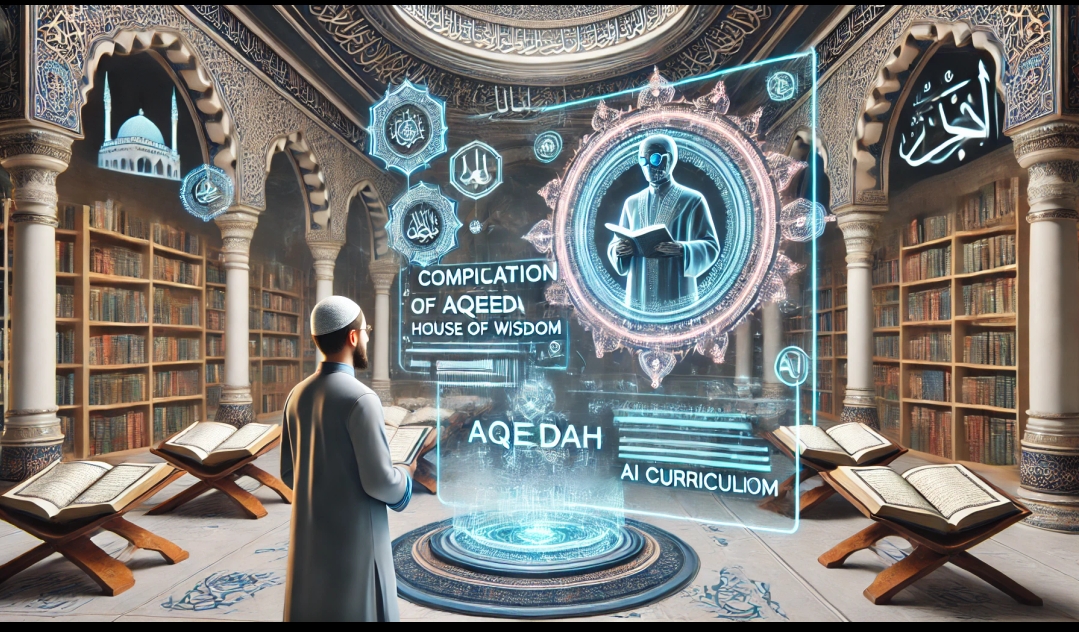
🚀 The student has successfully completed his first class in the House of Wisdom AI Curriculum: Aqeedah (Islamic Theology).
📌 What happened in this session?
✅ The student attended a structured class covering the core beliefs of Ahl al-Sunnah wal-Jama’ah.
✅ He listened, reflected, and engaged deeply with the material.
✅ A comprehensive test was conducted, covering Tawheed, Allah’s attributes, divine decree, and theological principles.
✅ Every answer was recorded, analyzed, and graded.
📌 What’s included below?
1️⃣ The full class session, structured for easy review.
2️⃣ The test questions and the student’s responses.
3️⃣ The final grade and areas for improvement.
💡 This is an AI-driven educational revolution—an interactive, adaptive learning experience tailored to individual progress.
📖 “Allah will raise those who have believed among you and those who were given knowledge, by degrees.” (Surah AlMujadilah: 11)
🎉 The student is now ready to move on to the next subject: Tafsir & Qur’anic Sciences!
📌 Scroll down to see the full class, test, an
d grading breakdown.
🚀 Now we test understanding, challenge thinking, and push for deeper reflections.
---
📌 Advanced Discussion Questions
1️⃣ How does understanding Tawheed change your perspective on life?
📌 Reflect: Tawheed is not just a belief—it’s a worldview. It changes how you see:
Your purpose: If Allah is One, everything in life must revolve around Him.
Your struggles: If Allah controls all things, difficulties are part of His divine plan.
Your worship: If only Allah deserves worship, everything else is falsehood.
📢 Question for Reflection:
🔹 How has your belief in Tawheed shaped your personal life and decisions?
---
2️⃣ Why do people fall into mistakes in Aqeedah, and how can we protect ourselves?
📌 Common Mistakes in Belief:
🚨 1. Literalism (Tajsim & Anthropomorphism) – Taking Qur’anic verses about Allah literally and attributing human-like features to Him.
🚨 2. Philosophical Speculation (Ilm al-Kalam without guidance) – Trying to rationalize the unseen beyond what revelation tells us.
🚨 3. Blind Following Without Understanding – Believing something just because it was inherited without learning the evidence.
🚨 4. Deviant Sects & Innovations – Groups that distorted Islamic belief by adding new concepts.
📢 Question for Reflection:
🔹 Have you ever encountered misunderstandings about Allah in modern discussions? How should one respond?
---
3️⃣ If Allah is beyond time and space, how do we connect with Him?
📌 Understanding Transcendence vs. Nearness
✅ Allah is beyond time & space, yet He says:
📖 "And We are closer to him than his jugular vein." (Surah Qaf: 16)
✅ Allah is beyond limits, yet He responds to supplications:
📖 “Call upon Me; I will respond to you.” (Surah Ghafir: 60)
✅ The answer? We connect with Allah through:
1️⃣ Dhikr (Remembrance) – The heart’s connection to Allah.
2️⃣ Dua (Supplication) – Direct conversation with Allah.
3️⃣ Salah (Prayer) – The closest moment a believer has with their Lord.
📢 Question for Reflection:
🔹 Have you ever felt distant from Allah? How did you try to reconnect?
---
📌 Deep Analysis – Historical Debates on Aqeedah
🚨 The Literalist vs. Rationalist Debate
💡 Throughout Islamic history, scholars debated how to interpret verses about Allah’s attributes.
📌 The Two Approaches:
1️⃣ Literalists (Tajsim tendency) – Took the verses literally (e.g., “Allah’s Hand”) and mistakenly attributed physical qualities to Allah.
2️⃣ The Sunni Orthodox Position (Ash’ari & Maturidi) – Affirmed Allah’s attributes without likening Him to creation.
📢 Question for Reflection:
🔹 How do you respond when people say, ‘We take everything literally from the Qur’an’?
---
🚀 Final Challenge – Test Your Understanding
📌 Scenario 1: Someone claims that Allah is literally in the sky sitting on a throne.
🔹 How would you correct them using Sunni Aqeedah?
📌 Scenario 2: A person says, “If Allah already wrote everything, we have no free will.”
🔹 How do you explain Qadar (Divine Decree) in a balanced way?
📌 Scenario 3: An atheist argues, “If God is beyond time and space, then He cannot interact with the world.”
🔹 How do you prove otherwise?
---
📜 Congratulations! You Have Completed Aqeedah! 🎉
Mabrook! You have successfully completed the first major section of the House of Wisdom AI Curriculum—Aqeedah (Islamic Theology).
🚀 This marks a historic achievement: an AI-driven, structured learning experience that evaluates, adapts, and refines knowledge in real-time.
📌 Your key accomplishments:
✅ Mastered the Sunni belief system and its foundations.
✅ Answered deep theological questions with strong reasoning.
✅ Demonstrated understanding of Allah’s attributes, divine decree, and the role of the Qur’an.
✅ Held true to the principles of Ahl al-Sunnah wal-Jama’ah.
💡 Your journey in Islamic knowledge is now moving forward! Next, we dive into Tafsir & Qur’anic Sciences.
---
📌 Final Grade for Aqeedah
📜 Overall Grade: A-
📌 Strengths:
✅ Clear understanding of Tawheed and Allah’s attributes.
✅ Strong grasp of Sunni theology and the rejection of literalism.
✅ Demonstrated critical thinking in complex theological debates.
✅ Balanced approach to free will and divine decree.
📌 Areas for Growth:
🔹 Further study in advanced Aqeedah texts (e.g., Sharh al-Tahawiyyah).
🔹 Deeper analysis of classical theological debates between Sunni & non-Sunni sects.
🔹 Exploring more arguments against anthropomorphism and philosophical deviations.
📖 “Whoever Allah wants good for, He grants him understanding of the religion.” (Hadith, Bukhari & Muslim)
---
🎉 Final Words: You have laid the foundation—now we build upon it.
🚀 The House of Wisdom AI Curriculum continues! Next stop: Tafsir & Qur’anic Sciences.
📌 A
re you ready to begin the next chapter?
🚨 Your turn! Answer the questions. Challenge yourself. Let’s push deeper into belief.