

بِسْمِ اللهِ الرَّحْمٰنِ الرَّحِيْم
Communication You Don’t Know, But the Prophet Muhammad (PBUH) Does: Learning to Listen
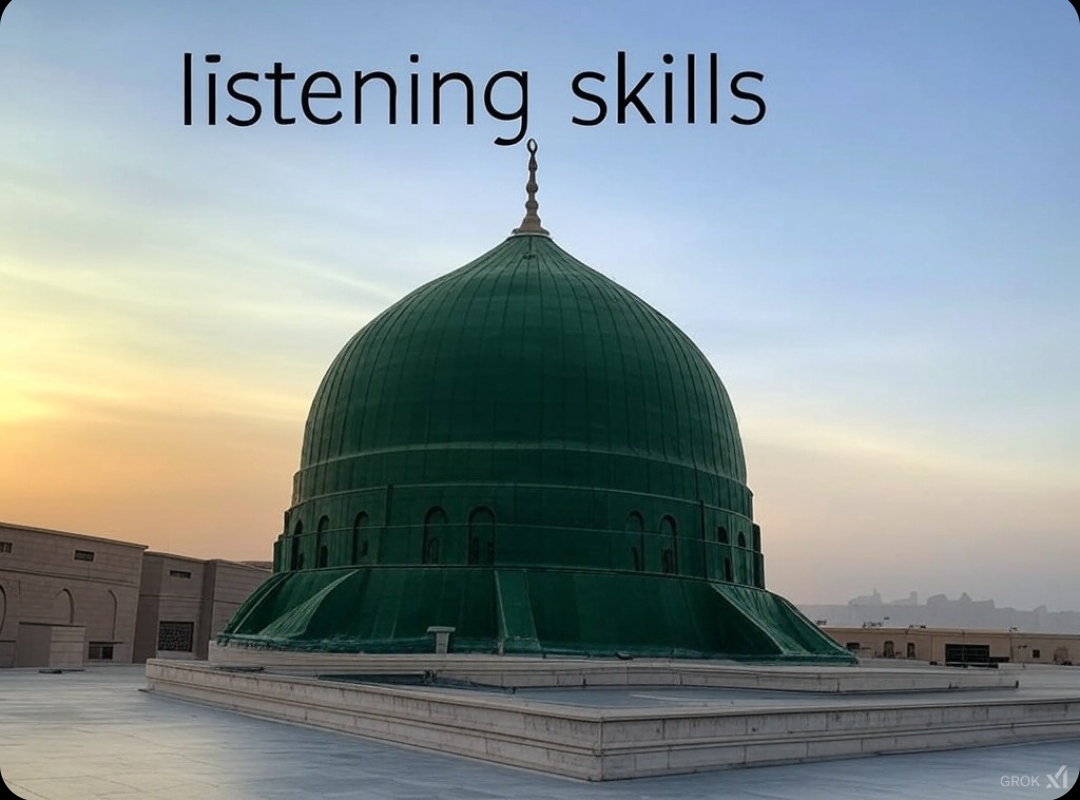
Introduction: You Think You Listen, But You Don’t
Most people believe they are good listeners. They nod, they hear words, and they may even respond appropriately. But true listening—the kind that transforms relationships, defuses anger, and builds understanding—is rare.
The reason? Ego, distractions, impatience, and a desire to be heard more than to understand.
Prophet Muhammad (PBUH) was the greatest communicator because he mastered the art of listening. He gave his full presence, absorbed words before responding, and made even his enemies feel heard.
This article will explore how the Prophet (PBUH) listened, why we fail at listening, and how we can apply his approach in our daily lives.
---
1. The Power of Listening in the Quran and Hadith
The Quranic Foundation of Listening
The Quran teaches that listening is an active process, not just hearing words:
> “And when they hear ill speech, they turn away from it and say, ‘For us are our deeds, and for you are your deeds. Peace be upon you; we seek not the ignorant.’”
(Surah Al-Qasas 28:55)
This verse highlights a key aspect of true listening: self-control. The best listeners do not react emotionally to words—they absorb, process, and respond with wisdom.
The Prophet (PBUH) as the Ultimate Listener
There is a well-known narration that when the Prophet (PBUH) would speak with someone—even an enemy—he would listen without interrupting, remain patient, and only respond once the other person was finished.
One of his enemies once said:
> “Oh definitely! You are a great listener. I cursed you, insulted you, but you never interrupted me. You waited for me to finish.”
This level of patience and presence is rare today. People listen to reply, not to understand.
🔹 Why do people fail at listening?
Ego—They want to be right rather than understand.
Interrupting—They assume they already know what’s being said.
Distractions—Phones, stress, and multitasking take focus away.
Emotional reactivity—They get triggered instead of staying patient.
The Prophet (PBUH) overcame all these obstacles by being fully present in his conversations.
---
2. The Prophet’s (PBUH) Listening Checklist
How did the Prophet (PBUH) make even his fiercest critics feel heard?
Here’s a step-by-step breakdown of how he listened:
✅ He did not interrupt—he let the speaker finish.
✅ He turned his body fully toward the person speaking.
✅ He made eye contact to show engagement.
✅ He nodded occasionally to show he was following.
✅ He waited a few moments before responding to process the message.
✅ He never dismissed or mocked someone’s concerns.
✅ He asked follow-up questions to ensure understanding.
✅ He remained calm and patient, even when insulted.
✅ He used silence strategically—never rushing a response.
🔹 Real-Life Application:
Next time someone speaks, resist the urge to formulate your reply while they are talking. Instead, pause, absorb their words, and then respond.
---
3. The Prophet’s (PBUH) Greatest Listening Moments
The Prophet’s ability to listen was not just about politeness—it was about transforming lives.
A. The Story of Ta’if: Listening in the Face of Cruelty
One of the most powerful examples of the Prophet’s patience in listening was when he visited Ta’if. The people insulted him, stoned him, and rejected his message. Yet, when given the chance for revenge, he said:
> “O Allah, guide my people, for they do not know.”
Even after being physically attacked, he listened with empathy and understanding, not anger.
B. The Quraysh Leaders: Listening to Critics with Respect
Even those who opposed the Prophet (PBUH) could not deny his ability to listen. Once, a leader of the Quraysh insulted him for an extended time. The Prophet remained silent and let him finish. When he finally responded, it was with wisdom and kindness—turning hostility into reflection.
🔹 Lesson:
Most people react when attacked. The Prophet (PBUH) listened, then responded with patience and wisdom.
---
4. Why People Today Struggle with Listening
In modern society, distractions and ego have made true listening almost extinct.
Here’s why:
🚫 Phones and screens: People “listen” while scrolling, but they are only half-present.
🚫 Instant replies: Social media and texting encourage quick, thoughtless responses.
🚫 Self-centeredness: Many listen only to find a way to talk about themselves.
🚫 Emotional triggers: Instead of absorbing words, people react immediately.
🔹 How to Fix It:
✔ Put your phone away when talking.
✔ Pause before replying—give yourself time to think.
✔ Ask follow-up questions to show you were listening.
✔ Don’t change the topic to yourself—focus on the speaker.
The Prophet (PBUH) mastered presence—his mind and heart were fully engaged in every conversation.
---
5. The Spiritual Power of Listening
Listening is not just about communication—it is an act of worship.
The Quran on Listening to Truth
> “So give good news to My slaves who listen to the word and follow the best of it. It is they whom Allah has guided, and it is they who are people of understanding.”
(Surah Az-Zumar 39:17-18)
True listening leads to wisdom, guidance, and understanding. It is a path to spiritual growth.
The Prophet’s (PBUH) Warning Against Bad Listening
The Prophet (PBUH) also warned against people who hear without truly listening:
> “There are those who listen, but the words do not go past their throats.”
(Sunan Abi Dawood 3659)
This means some people hear words but do not absorb their meaning. They are too focused on themselves to benefit from what is being said.
---
Conclusion: Listening Like the Prophet (PBUH)
Listening is the first step to great communication. Without it, no real understanding can happen.
By following the Prophet’s (PBUH) method, we can:
✔ Improve our relationships
✔ Reduce conflicts
✔ Gain wisdom
✔ Become better leaders, friends, and family members
🔹 Final Challenge:
For one day, try to listen like the Prophet (PBUH).
Do not interrupt anyone.
Give your full attention to the speaker.
Pause before replying.
Ask questions to show engagement.
See how this small change transforms your conversations.
---
What’s Next?
In the next article, we will explore how to speak with wisdom like the Prophet (PBUH), a
voiding unnecessary arguments and speaking in a way that people actually listen.
🔹 Stay tuned for: "The Lost Art of Silence—Why the Prophet (PBUH) Spoke Less and Listened More."