

بِسْمِ اللهِ الرَّحْمٰنِ الرَّحِيْم
Politics has always been the grand arena where power is forged, wielded, and often abused. It is where ideologies clash, ambitions collide, and decisions shape the destiny of nations. But what exactly is political power? How is it gained, and how is it maintained? And perhaps most critically, what must one sacrifice to acquire it?
The Nature of Political Power
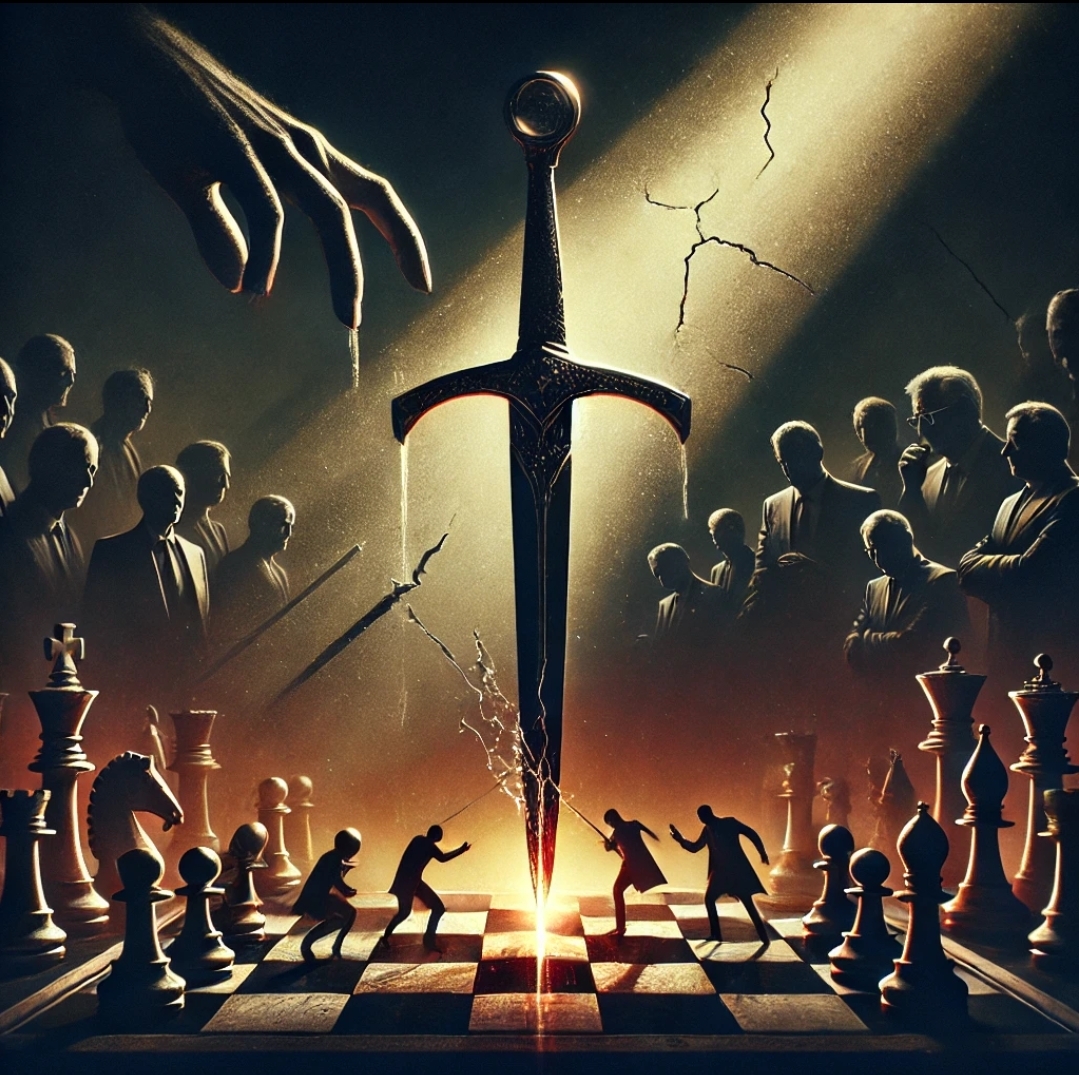
Political power is unlike any other. It is the ability to influence, control, or coerce others within a structured system. At its core, political power is about decision-making: deciding who gets what, when, and how. It is a sword—sharp, dangerous, and double-edged. It can defend or destroy, liberate or oppress, unite or divide.
Those who wield political power understand its nature as a battle—a battlefield where morality often takes a backseat to ambition. It is a game of strategy, requiring sharpness of mind, discipline, and an unyielding will. But it comes at a cost. The exercise of free will in politics often demands compromise: ideals are bent, truths are twisted, and alliances are forged not out of loyalty but necessity.
#### **The Dynamics of Political Power**
Power in politics is rarely given; it must be seized. This truth has echoed through history. From the shadowy machinations of Machiavelli’s prince to the ruthless strategies of modern-day politicians, those who rise to the top are often those willing to get their hands dirty.
- **Fear and Intimidation:** Political power thrives on fear. Leaders have used threats of military force, economic sanctions, or even assassination to maintain control. From the Cold War’s nuclear standoff to today’s political strongmen, fear remains a potent weapon.
- **Deception and Manipulation:** Lies, propaganda, and spin are tools of the trade. Politicians have long understood the power of controlling narratives. The pen may be mightier than the sword, but in politics, both are often used in tandem.
- **The Illusion of Power:** Often, political power is about perception. A leader’s ability to project strength, even when vulnerable, can be the difference between maintaining control or losing it. As Sun Tzu wrote in *The Art of War*, "Appear weak when you are strong, and strong when you are weak."
#### **The Sword as a Metaphor**
Political power is best understood as a sword. Like a sword, it requires discipline and care. It must be sharpened through strategy, maintained through vigilance, and wielded with precision. But unlike a physical weapon, the sword of politics cuts deeper—into societies, economies, and ideologies. It shapes the very fabric of reality for billions of people.
In the hands of the virtuous, the sword can be a force for justice. Leaders like Abraham Lincoln used their power to abolish slavery, while others like Winston Churchill rallied nations against tyranny. Yet, in the hands of the unscrupulous, the same sword becomes a tool of oppression. History is rife with examples of despots who used political power to silence dissent and crush opposition.
#### **The Cost of Power**
Political power does not come free. It demands sacrifices—of morality, relationships, and sometimes humanity itself. The pursuit of power can corrupt, as Lord Acton famously observed: "Power tends to corrupt, and absolute power corrupts absolutely."
In this arena, good and evil coexist, vying for dominance. The political battlefield is not for the faint of heart. It is a place where truth is often obscured, and integrity is tested at every turn. Yet, it is also a place where greatness can emerge—where individuals can rise above the fray to create lasting change.
#### **The Battle for Free Will**
Perhaps the greatest struggle in politics is the battle for free will. To gain power, individuals often surrender parts of themselves—their ethics, their dreams, their authenticity. The compromises made along the way can shape not only their careers but their souls.
But free will also grants choice. In the face of political oppression, many have chosen to resist, to stand for justice even at great personal cost. From Martin Luther King Jr. to Nelson Mandela, history celebrates those who refused to be overpowered, who wielded the sword of politics not for personal gain but for the greater good.
#### **The Truth About Power**
Here is the hard truth: power is not handed to you. Anyone who tells you otherwise is lying. Power is fought for, claimed, and maintained through effort and strategy. It is not a reward but a responsibility—one that can elevate or destroy, depending on how it is used.
Power in politics is a game of survival. To succeed, you must sharpen your sword, hone your discipline, and prepare for battle. But remember this: the truth always wins. Evil may be given its chance, but its victory is never eternal. In the end, every deck of cards built on lies and corruption will come crashing down.
#### **What’s Next?**
This is just the beginning. In this series, we will explore the intricate layers of power in politics. We will dive into the history of political empires, analyze the tactics of great leaders and infamous tyrants, and uncover the lessons hidden in their stories. From the corridors of ancient Rome to the halls of modern governments, we will reveal how power shapes the world.
Are you ready to uncover the secrets of political power? To learn how it is gained, wielded, and lost? Then buckle up, because this journey into the dynamics of power is just getting started. Welcome to the battle. The sword is waiting—sharpen it wisely.