

بِسْمِ اللهِ الرَّحْمٰنِ الرَّحِيْم.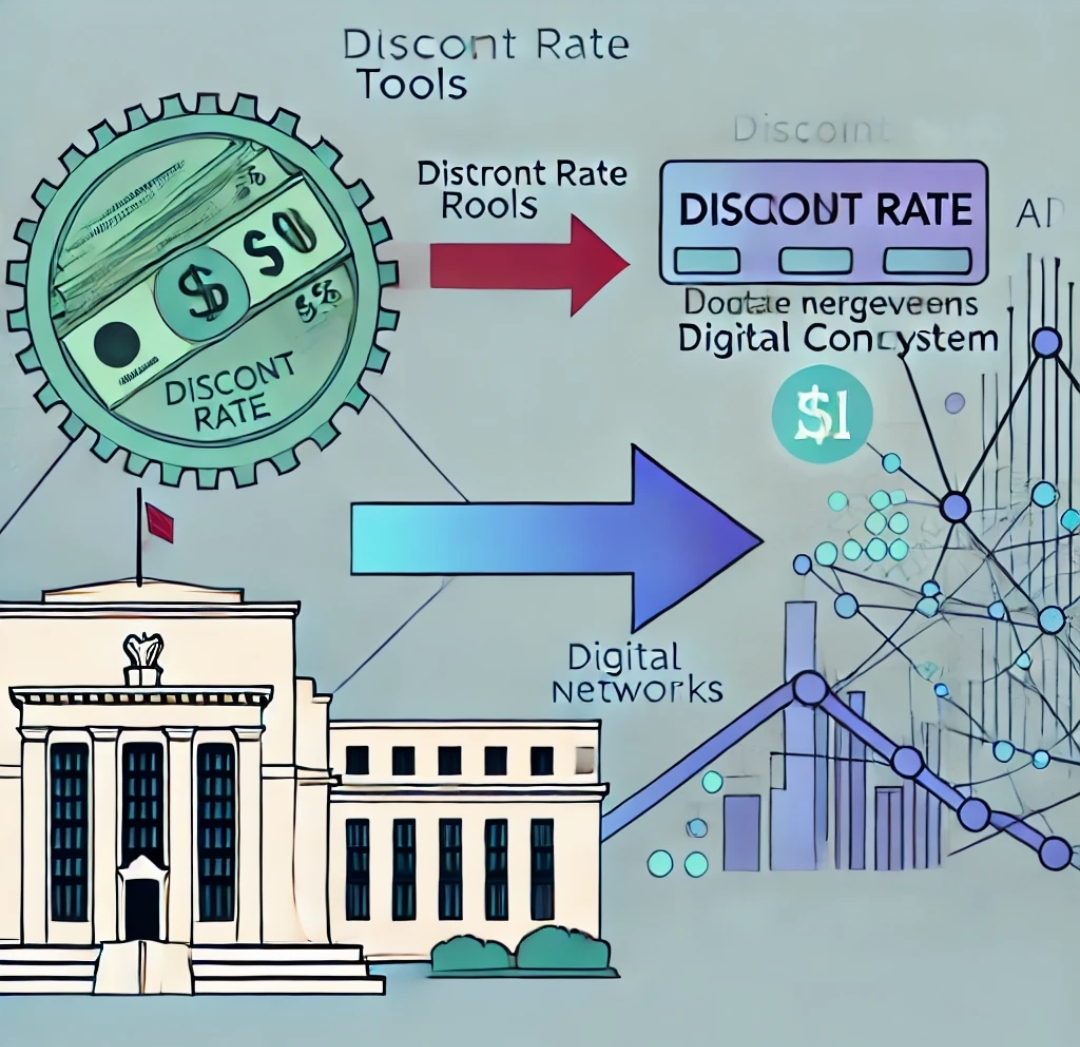
The modern economy demands more than just blanket policies that affect every sector of the economy indiscriminately. It’s time to challenge the status quo and push for a revolution in how we manage economic stability, starting with the discount rate. The days of broad rate adjustments and their heavy-handed impact on businesses and individuals must come to an end. The future lies in precision, and the tools we need already exist: data and AI.
Revolutionizing the Discount Rate
The discount rate is a tool that has served central banks for over a century. It is the interest rate at which commercial banks can borrow money from the Federal Reserve to meet their short-term liquidity needs. Adjustments to the discount rate influence borrowing across the entire economy. A lower rate encourages banks to borrow more and lend more, thereby injecting liquidity into the system. A higher rate curbs this activity, cooling down inflationary pressures but also slowing down economic growth.
This system has its place, but it is too blunt an instrument for a rapidly evolving, technology-driven economy. It treats all sectors and businesses equally, regardless of their role in driving innovation, contributing to inflation, or impacting society. We can no longer afford such broad strokes. What we need is precision.
Introducing a Data-Driven, AI-Powered Approach
The Brand Currency System takes the discount rate and transforms it into a finely-tuned instrument, driven by real-time data and artificial intelligence. Instead of adjusting a blanket interest rate across the economy, we propose a system where tech companies and AI are tasked with connecting, processing, and analyzing data from every sector of the economy. By understanding the nuanced needs of different industries, we can direct liquidity where it’s needed most, while restraining it from areas contributing to inflation.
Targeting Sectors, Not the Entire Economy
Rather than imposing a uniform change in borrowing costs across the board, the data-driven coupon system creates sector-specific rates. Let’s take an example: a tech company producing semiconductor chips—a critical component in driving the digital economy—will have access to a coupon system that offers borrowing rates based on its contributions to growth and innovation. In contrast, a company in a stagnating or inflation-driving sector would face higher borrowing costs, reflecting the central bank's intent to curb spending in that area.
This allows the Federal Reserve (or any central bank) to apply surgical precision when managing economic activity. No longer will rising interest rates punish businesses that are pushing boundaries and creating jobs, nor will they fuel speculative bubbles where companies already have access to more capital than they can use responsibly.
From Sector to Individual: Data-Driven Transformation
Once we master the ability to manage entire sectors with real-time data, we can push even further—to the individual. Through AI-powered data collection, we can harness the power of individual transactions and behaviors. Every consumer interaction, every purchase, every piece of feedback contributes to a larger picture of the economy’s health. This system empowers individuals as active participants in shaping the economy, rather than passive consumers subject to decisions made by financial elites.
Imagine an individual who regularly supports local businesses, contributes to ethical supply chains, and minimizes waste. Shouldn't they benefit from better borrowing terms, more liquidity, and lower costs? With AI, we can create these personalized economic environments, where the actions of the individual matter as much as the decisions of large corporations.
Educating the Public: What is the Discount Rate?
Before we go further, let’s take a step back and explain what the discount rate currently does, in the simplest terms. The discount rate is the rate at which banks borrow money from the central bank to manage their short-term needs. When the Fed lowers the discount rate, banks can borrow more cheaply, which encourages them to lend more. This, in turn, increases the money supply and boosts economic activity. When the Fed raises the rate, borrowing becomes more expensive, which reduces lending and slows down the economy, typically to combat inflation.
However, as useful as the discount rate is, it operates as a blunt tool, affecting everyone in the economy in the same way. Whether you’re a small business owner struggling to innovate or a massive corporation exploiting low interest rates to fuel speculative investments, the discount rate treats you the same.
The Power of AI and Data: A New Chapter for Central Banks
With the Brand Currency System, we challenge tech companies to step up and integrate this data across the economy. This means creating digital coupons that are specific to sectors and even individuals. It means using AI to connect the dots between consumer behavior, business performance, and economic trends. No more treating everyone equally when their contributions to the economy are anything but equal.
The Fed will move away from merely raising or lowering rates and towards managing economic flows based on real-time, data-backed decisions. AI will enable central banks to have an intimate understanding of where funds are most needed and where liquidity must be restrained. This not only optimizes economic activity but ensures that the tools of monetary policy evolve to meet the needs of a data-driven world.
Conclusion: The Future of the Discount Rate
The discount rate as we know it is outdated. It served a purpose when we lacked the technological tools to dissect and analyze economic data in real-time. But that era is over. The Brand Currency System offers a future where central banks no longer manage economies through blunt force but through precision, where the actions of both sectors and individuals dictate the flow of money and the stability of the economy.
This is more than a technological change—it’s a philosophical shift. The economy isn’t a monolith to be managed by a few centralized decisions; it’s a living, breathing organism made up of millions of transactions, behaviors, and contributions. And with AI and data leading the way, the future of economic
policy will finally reflect that reality.