

بِسْمِ اللهِ الرَّحْمٰنِ الرَّحِيْم.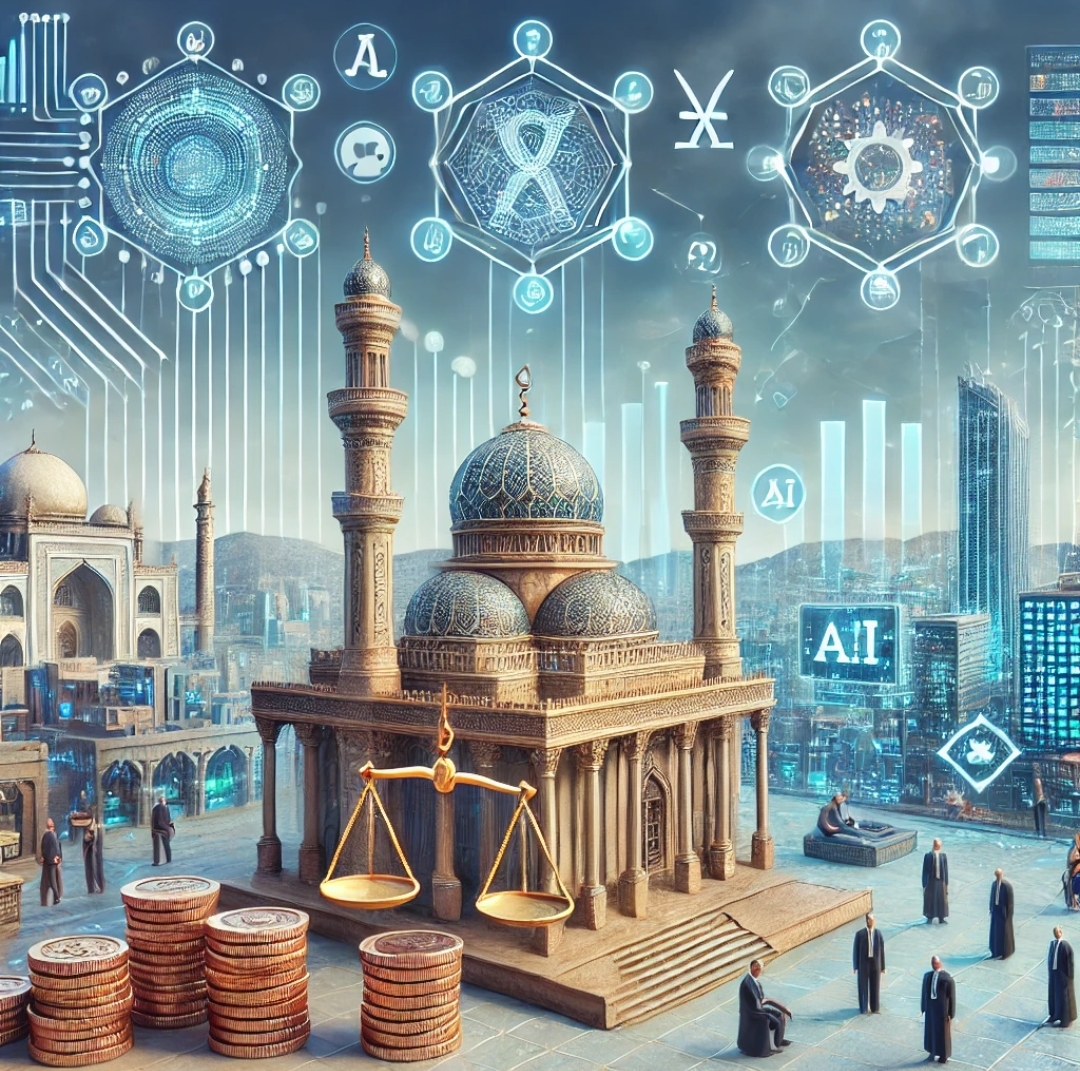
Part 1
The Muslim Central Bank will be built after working with the United States, the European Union, the Russian Bank, and the Chinese Bank. Then, we will focus on the Muslim Central Bank, simply because Muslims are divided, not united, and have not been able to bring any mechanism of finance that pushes the world forward. It has been a very long time, and it’s unfortunate, but that seems to be the case.
We are moving away from the idea that the medium of exchange is only through currency. Instead, we will shift back to debt, re-categorizing the different types of debt. Individuals will have new rights in terms of the debt they generate themselves, passing that burden to companies. Companies will either accept that debt because they are the ones engaging in wholesale and retail with the brand currency system, or they will not. The people will generate reports about what transactions they need to engage in, giving them the ability to extend credit themselves. Unlike the West, where credit has been an extension of for-profit companies, in the Islamic world, the extension of credit will be connected to Judgment Day.
This means that debt will be collected, and just like the Prophet Muhammad (peace be upon him), it will be presented. People who have lived long lives and borrowed will have their debts guaranteed by the community. This is why the Prophet Muhammad (peace be upon him) refused to pray for someone until their debt was paid off—it was a form of guaranteeing people’s debt and passing it on to the community.
If the Prophet Muhammad (peace be upon him) lived today, he would agree with my vision, which is to extend microcredits, unlocked from wholesale and retail savings, and give customers in the Islamic world the choice to engage in businesses that have ethical reports—businesses that are not destroying the environment or mistreating workers. There will be extensive report generation, unlike in the West. I’m not wasting time explaining Islamic rules to the West; they are focused on economic tools, not seeing the benefit of what the Quran teaches. Despite this, I will help them and engage in discussions, but I don’t see it going anywhere.
The reason I don’t see it going anywhere is that they are unwilling to engage in discussions about liability and responsibility. When someone assumes a debt, they are liable and responsible. This applies to types of debt that need to be reintroduced.
If someone issues a debt from their capital, that capital is supposed to generate more income and expand their opportunity to contribute. For Muslims, they are already doing everything for the sake of Allah—wealth, contributions, and more. The more wealth they manage, the more they want to redistribute it. They are completely different from those who are not Muslim, who are simply interested in paying their bills, and that’s where their responsibility stops.
Muslims, in general, will be re-categorized. From the moment they are born, they will have a brand currency account, connected to their parents’ transactions, which I have explained before and will explain again.
The future Muslim generations will be born into the brand currency system. Transactions connected to families and all those facilitating trade will replace lending money and charging interest. Those who facilitate trade will unlock savings. These savings will accumulate in coupon form, backed by businesses. If a business fails, those coupons die with the business, and the debt is not transferred to any individual. It will be up to individuals to maintain reports about those companies, ensuring they do not do business with companies holding bad debt.
We are shifting away from the idea that monetary policy is just about currency, which has caused many problems.
If monetary policy is solely about currency, what does that mean? It means we face issues like inflation and must constantly monitor supply and demand to maintain equilibrium and meet people’s needs. However, in the Islamic world, you see a lot of food wasted and unlocked savings, with everything being decided by the currency. The individual’s transaction history and creditworthiness don’t matter; it’s all tied to the dollar or local currency. This exchange of goods and services through currency is unacceptable.
No one can guarantee that central banks in the future will have the tools to monitor the economy and facilitate trade. We’ve entered an economy of scale, dealing with goods and services worth trillions of dollars in deficits, entangled with fluctuating currencies that facilitate trade. This is a nightmare.
Currency alone cannot facilitate trade because paper money is tied to interest, and interest has become an unavoidable mechanism of trade.
What must we do? Simple. Change how individuals interact with businesses. Generate reports on businesses—how they treat employees, manage their supply chain, and operate overall. Just like Moody’s and other credit rating agencies, individuals will generate these reports. Businesses will be rated by customers, not by themselves. Generating reports, whether positive or negative, is essential. As long as Islamic values of protecting privacy are upheld, these reports will help evaluate productivity, liquidity, and inflationary pressures while engaging in global economics.
If there’s one thing to take away from me as a future Fed chairman for Muslims, it’s this: AI brings potential to unlock savings, but those savings must be unlocked in a way where the people and the government share ownership. The risk-sharing must be distributed fairly among all parties. We will not rely on tourism or external spending to maintain our economy. Muslim countries learned this lesson during the coronavirus pandemic, and we must ensure that spending becomes irrelevant in terms of survival. Africa has resources, China is rising as a superpower, and the U.S. remains influential, but we must shift the burden onto Muslims as they step forward. Though no one expects Muslims to take the lead, I firmly believe that’s ex
actly what’s going to happen.