
بِسْمِ اللهِ الرَّحْمٰنِ الرَّحِيْم
In the Name of God, Most Gracious, Most Merciful
♥️🤲🕋♥️🕋🌹🌹🥀🤲🌹🕋♥️🤲
Many of you are about to take the Oath of Allegiance as new American citizens. This short video and guide exist for one reason: to help you understand what you are pledging, why it matters, and how to honor it with clarity, conscience, and integrity—before the words are spoken and long after the ceremony ends.
Before You Take the Oath
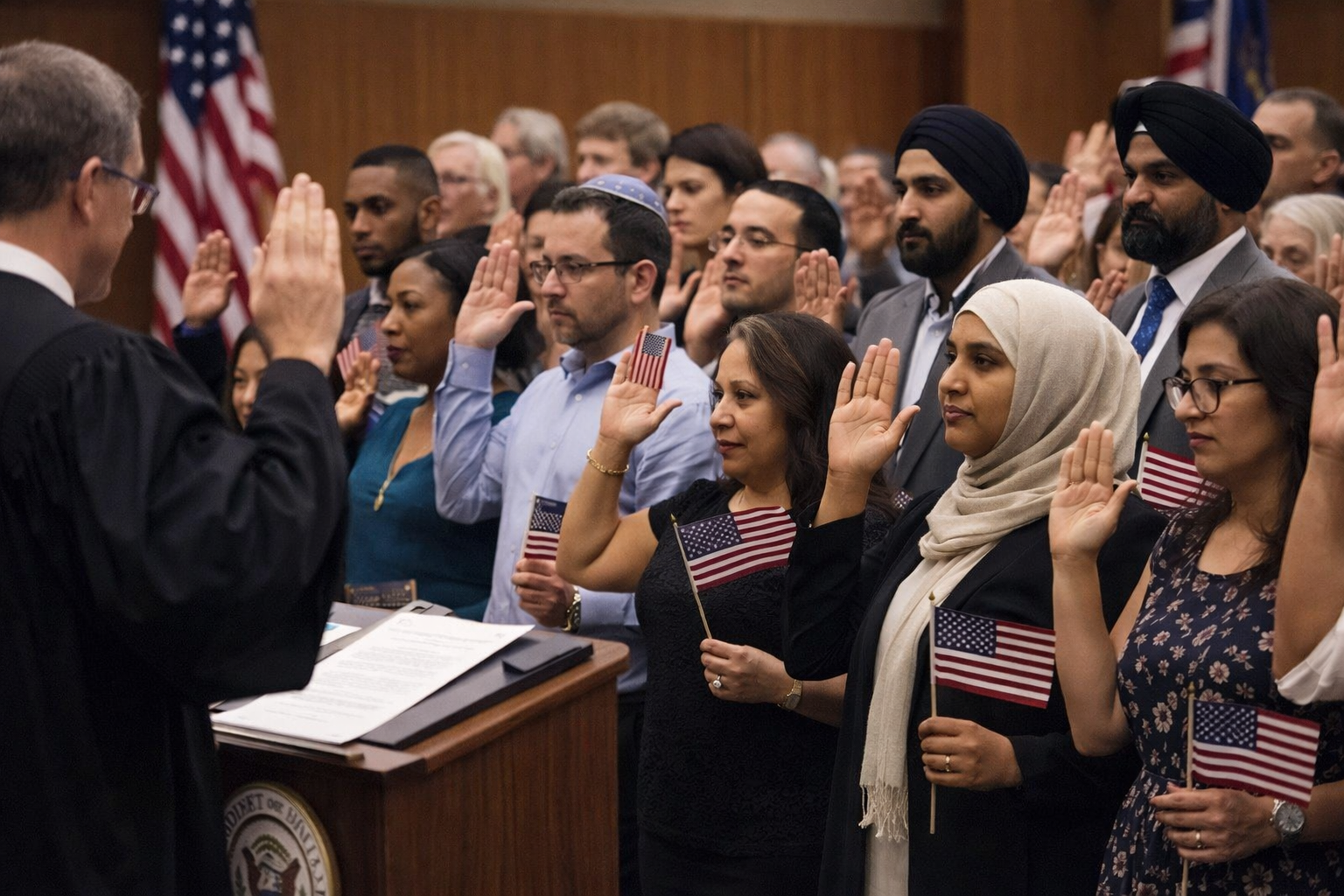
Watch "#Naturalization Oath of Allegiance — What It Means & How to Prepare #CitizenshipCeremony" on YouTube
What You Are About to Promise — and Why It Matters
Before you raise your hand, before the words are spoken, you deserve to know what you are pledging yourself to.
An oath is not a formality.
It is not a performance.
It is a binding promise made in public, with meaning that lasts beyond the ceremony.
Today, you are not swearing loyalty to a president, a party, a race, or a religion.
You are swearing loyalty to a document—the Constitution of the United States—and to the rule of law it represents.
This matters.
Because governments change.
People change.
Power shifts.
But the Constitution is meant to remain the reference point that limits power and protects the individual.
The Oath of Allegiance (Read Carefully)
You will be asked to say, in substance:
I hereby declare, on oath, that I absolutely and entirely renounce and abjure all allegiance and fidelity to any foreign prince, potentate, state, or sovereignty of whom or which I have heretofore been a subject or citizen; that I will support and defend the Constitution and laws of the United States of America against all enemies, foreign and domestic; that I will bear true faith and allegiance to the same; that I will bear arms on behalf of the United States when required by the law; that I will perform noncombatant service when required by the law; that I will perform work of national importance under civilian direction when required by the law; and that I take this obligation freely, without any mental reservation or purpose of evasion.
These words are not poetry.
They are precision.
Let us be clear about what they mean.
What You Are Renouncing — and What You Are Not
You are renouncing political allegiance to foreign states.
You are not renouncing:
your culture
your language
your faith
your history
your moral or religious conscience
The Constitution does not demand erasure.
It demands clarity of civic loyalty.
What You Are Defending
You are defending the Constitution itself, not any particular administration.
This includes:
separation of powers
the Bill of Rights
freedom of religion, speech, press, assembly, and petition
due process and equal protection
If the government violates the Constitution, your oath binds you to the Constitution—not to the violation.
That distinction is essential.
“Enemies, Foreign and Domestic”
This phrase does not mean dissenters.
It does not mean critics.
It does not mean protestors.
It means threats to constitutional order—whether from outside the country or from within institutions themselves.
History shows that constitutions are more often damaged from inside than from invasion.
Your oath is a safeguard against that.
The Phrase “So Help Me God”
You may hear this phrase added.
It is not required by the Constitution.
It was not written by the framers.
It is optional.
You may affirm without it.
You may invoke God according to your faith.
The Constitution allows both—because conscience is free.
That freedom is not accidental.
It is deliberate.
After You Take the Oath
Once you complete the oath, you are no longer “on trial.”
You are a full citizen.
You now have:
the same constitutional rights as any other American
the same protections
the same standing under the law
Many people born here never study this document.
Many never take time to understand what you are about to promise.
You are not behind them.
In this moment, you are ahead.
A Final Word
Citizenship is not proven by shouting. It is proven by knowledge, restraint, participation, and courage.
Vote. Speak. Practice your faith freely. Know your rights. Use them calmly and lawfully.
You are joining an experiment—one that has failed at times, corrected itself through amendments, and survives only when citizens understand it.
Today, you do.
Congratulations.
You are ready to take the oath.
A Brief History of the Oath — How It Became What It Is
The oath you are about to take did not always look like this.
In fact, the earliest American oaths were short, simple, and restrained.
The Founders’ Original Approach
At the founding of the United States, the Constitution itself required only one oath:
“I do solemnly swear (or affirm) that I will faithfully execute the Office…”
(Article II, Section 1)
That was it.
There was no long script, no ideological language, and no religious test.
The framers deliberately kept oaths minimal, because they feared:
coercion of conscience
misuse of loyalty tests
turning citizenship into ritual obedience
They believed law, not ceremony, was the true safeguard of the republic.
How the Oath Expanded Over Time
The modern oath grew gradually, not all at once.
1790s–early 1800s: Short oaths focused on renouncing foreign titles and supporting the Constitution.
Civil War era: Language expanded to address loyalty during national crisis.
20th century: Additional clauses were added to clarify military and civilian service obligations.
Each expansion reflected historical anxiety, not a change in constitutional philosophy.
The oath became longer because the government sought clarity, not because citizens became less trusted.
What Did Not Change
Despite its length, three core principles have never changed:
The Constitution remains the object of loyalty
Not a leader, party, or ideology.Affirmation is allowed
You may swear or affirm—this protects conscience, including for Muslims, Jews, atheists, and others.No religious test is permitted
This has been true since the founding and remains so today.
A Note on Accessibility and Humanity
It is important to say this clearly:
Citizenship was never meant to require eloquence.
Many early Americans:
could not read
spoke different languages
had limited formal education
They were still citizens.
The oath was meant to bind intention, not to test memory, pronunciation, or performance.
As America evolves, it is reasonable—and consistent with history—to consider:
clearer language
better explanations
humane delivery for elders and vulnerable citizens
This does not weaken the oath.
It honors its original spirit.
The Deeper Truth
An oath does not make someone loyal.
Understanding does.
That is why this preparation matters.
You are not here to memorize words.
You are here to understand a promise—to yourself, to the law, and to future generations.
That understanding is what the founders valued most.
The Affirmation: Why It Exists and Why It Matters
1. The Framers Built Oaths Without Religion
The U.S. Constitution was deliberately designed to separate civic duty from religious compulsion.
Two key provisions prove this:
Article VI:
“No religious Test shall ever be required as a Qualification to any Office or public Trust under the United States.”
Oath OR Affirmation (language appears repeatedly):
The Constitution never forces a swear. It always allows an affirmation.
This was not accidental. It was intentional.
The framers knew:
Governments that force religious language corrupt religion
Governments that demand belief create tyranny
Conscience must remain free, or liberty collapses
2. What Is an Affirmation?
An affirmation is a non-religious oath.
It carries the same legal weight as a sworn oath, without invoking God.
This option existed from the beginning, for:
Quakers
Jews
Muslims
Deists
Atheists
Anyone whose conscience forbade religious oaths
This is one of the most radical freedoms ever put into law.
3. Who Used Affirmations Historically?
Many early Americans affirmed instead of swearing, including:
Quakers (who believe oaths violate divine law)
Unitarians
Deists
Religious minorities
Conscientious objectors
This was normal. This was respected. This was protected.
No one was disqualified. No one was shamed. No one was excluded.
That is the Constitution working as designed.
4. “So Help Me God” — What Actually Happened
Let’s be precise:
❌ Not in the Constitution
❌ Not required by law
❌ Not part of the original presidential oath
❌ Not proven to be spoken by George Washington
✔ Added later by tradition
✔ Optional
✔ Can be omitted without consequence
In naturalization ceremonies today, the government explicitly tells applicants:
You may omit “so help me God” and affirm instead
Because the Constitution demands it.
5. Why This Matters for Muslims
Islam does not require invoking God in a state oath. Islam recognizes intention over formula. Islam forbids false or coerced religious speech.
The affirmation:
Protects Muslim conscience
Protects Islamic integrity
Protects civic equality
This is not a loophole. This is the system working correctly.
6. What You Are Actually Swearing To
Whether you swear or affirm, you are pledging one thing only:
Loyalty to the Constitution — not a religion, not a ruler, not a people
You are promising to:
Defend a system of limits
Protect freedom of conscience
Uphold law over power
Accept disagreement as lawful
That is it.
No conversion. No theology. No creed.
7. Why This Is a Gift — and a Responsibility
The affirmation proves something crucial:
America did not demand belief. It demanded judgment.
That is why Muslims belong here. That is why minorities belong here. That is why this experiment lasted.
When people forget this — when they force God into law or law into God — the system breaks.
Final Truth (For New Citizens)
If anyone ever tells you:
You must say “so help me God”
You must believe something
You must sound religious to belong
They are wrong. They are betraying the Constitution. They are violating the oath they claim to defend.
The framers trusted conscience. They trusted limits. They trusted human fallibility more than divine claims of power.
That is why they left you the affirmation.
And that is why your oath — sworn or affirmed — is fully valid.
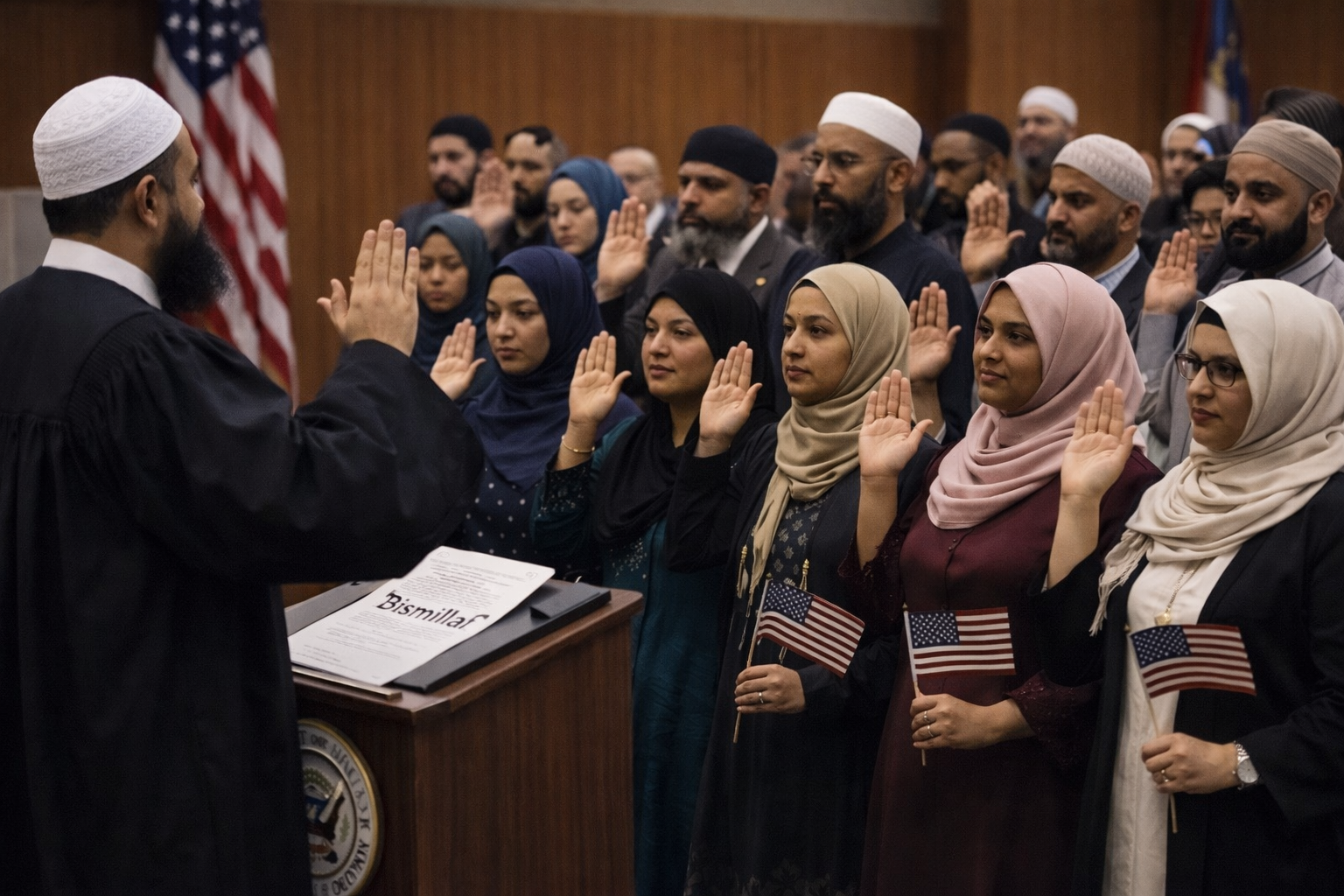
A Civic Oath for Muslims Becoming American Citizens
A Message Before You Take the Oath
بِسْمِ اللهِ الرَّحْمٰنِ الرَّحِيْم
In the Name of God, the Most Merciful, the Most Compassionate
Introduction
This message is for Muslims who are about to take the Oath of Allegiance to the United States of America.
Listen carefully.
This is not a motivational speech.
This is not symbolism.
This is instruction.
When you take an oath, Islam does not treat it lightly.
Neither does the Constitution of the United States.
Today, you are standing between two serious traditions:
A constitutional system built on law and covenant
A religious tradition built on trust, truth, and accountability before God
They do not conflict here.
They intersect.
What an Oath Means in Islam
In Islam, an oath is not ceremonial.
Allah says:
“And fulfill the covenant. Indeed, the covenant will be questioned.”
(Qur’an 17:34)
The Prophet Muhammad ﷺ said:
“There is no faith for the one who has no trust, and no religion for the one who does not keep his covenant.”
(Musnad Ahmad)
An oath creates moral binding. Breaking it is not a mistake — it is a sin.
This applies whether the oath is taken:
To a Muslim
To a non-Muslim
To a state
To a people
To a law
Islam does not allow betrayal after consent.
What You Are — and Are Not — Doing Today
You are not:
Converting religions
Endorsing injustice
Agreeing with every past or future policy
Giving up your faith
You are:
Entering a legal covenant
Accepting protection and responsibility
Binding yourself to law, not power
This is permitted in Islam.
The Prophet ﷺ upheld treaties with non-Muslims — even when they were difficult — because covenants matter.
Why the Constitution Allows an Affirmation
The U.S. Constitution never forced religious speech.
It allows:
An oath or
An affirmation
This exists to protect conscience.
Islam values intention over formula. You may affirm without invoking religious language — your commitment remains binding.
This is not a loophole. This is constitutional design.
Your Responsibility After the Oath
Once you take this oath:
You may criticize the government
You may protest
You may organize
You may challenge injustice
You may vote, speak, and dissent
But you may not:
Betray the country secretly
Sabotage the system you consented to
Undermine it while claiming loyalty
Islam does not permit hidden treachery.
If a Muslim believes they cannot honor this covenant, Islam commands honesty:
Renounce openly
Leave peacefully
Do not deceive
But once the oath is taken, you are bound.
A Parallel to Bay‘ah
This oath resembles bay‘ah in one crucial way:
It is voluntary, public, and binding.
Bay‘ah was not blind obedience. It was a pledge to uphold justice under an agreed system.
This oath is similar:
Loyalty to law
Limits on power
Protection of conscience
Breaking it is not resistance. It is dishonesty.
Why Muslims Must Take This Seriously
Muslims have been erased from American history. Muslims fought in its wars. Muslims lived here from the beginning. Muslims know what covenant means.
That is why Muslims must be better, not looser, with oaths.
Your integrity is now part of the Republic.
Final Instruction
If you take this oath today helping yourself:
Speak truthfully
Mean what you say
Understand the weight
The Prophet ﷺ said:
“The signs of a hypocrite are three: when he speaks, he lies; when he promises, he breaks it; when he is trusted, he betrays.”
(Bukhari & Muslim)
Do not take an oath you cannot keep.
But if you take it — honor it fully.
Closing
May God make you truthful in covenant.
May He protect you from betrayal.
May He make you a source of justice, not harm.
May He allow you to uphold law without losing faith.
آمِين، يَا رَبَّ الْعَالَمِينَ
Ameen, O Lord of all the worlds.
You Took an Oath — Here Is What It Has Meant in Real History
When you took the oath of citizenship, you spoke words that come from history, not fantasy.
Those words were shaped by moments when the country was tested—especially during war.
One of the most important examples is Vietnam.
Vietnam: When Citizens Refused
During the Vietnam War, the U.S. government reinstated the draft through Congress. This was lawful under the Constitution at the time.
But something historic happened:
Millions of American citizens refused.
They protested. They resisted. They challenged the government in court. They fled the country. They burned draft cards. They said no.
This was not treason. This was constitutional resistance.
The system did not collapse. The Republic did not end. Instead, the country was forced to confront its own limits.
Muhammad Ali: A Muslim Citizen Who Said No
One of the most famous refusals came from Muhammad Ali, a Muslim American.
Ali was drafted. He refused to serve. He said:
“I ain’t got no quarrel with them Viet Cong.”
Because of this:
His boxing license was revoked
His titles were stripped
His income was taken
He was vilified publicly
But he was not imprisoned.
Why?
Because Ali did not flee. He did not hide. He stood openly and accepted the legal consequences while challenging the law itself.
Years later, the U.S. Supreme Court ruled in his favor. His conviction was overturned. History vindicated him.
Ali showed the world something critical:
Citizenship does not mean blind obedience.
It means moral responsibility within the law.
What This Means for You as a New Citizen
The oath does not mean:
you surrender your conscience
you lose your moral judgment
you must support every war
you must obey unjust orders
It means:
you are subject to the law
you have the right to challenge the law
you may resist unjust laws openly and legally
you may accept consequences and still be right
That is the difference between tyranny and a republic.
The Deeper Truth
America has never functioned because everyone obeyed. It functioned because people argued, resisted, protested, and corrected it.
The oath binds you to the Constitution, not to war. It binds you to law, not to injustice. It binds you to judgment, not submission.
Muhammad Ali understood this. So did millions during Vietnam.
Now you do too.
That understanding—not fear—is what citizenship was always meant to produce.
I'm going to do extra for the Muslims in terms of oath and what needs to be recited and we will work with the mayor of New York to make sure that Muslims understand what the oath stands for and why they can never betrayed. Inshallah