

بِسْمِ اللهِ الرَّحْمٰنِ الرَّحِيْم
The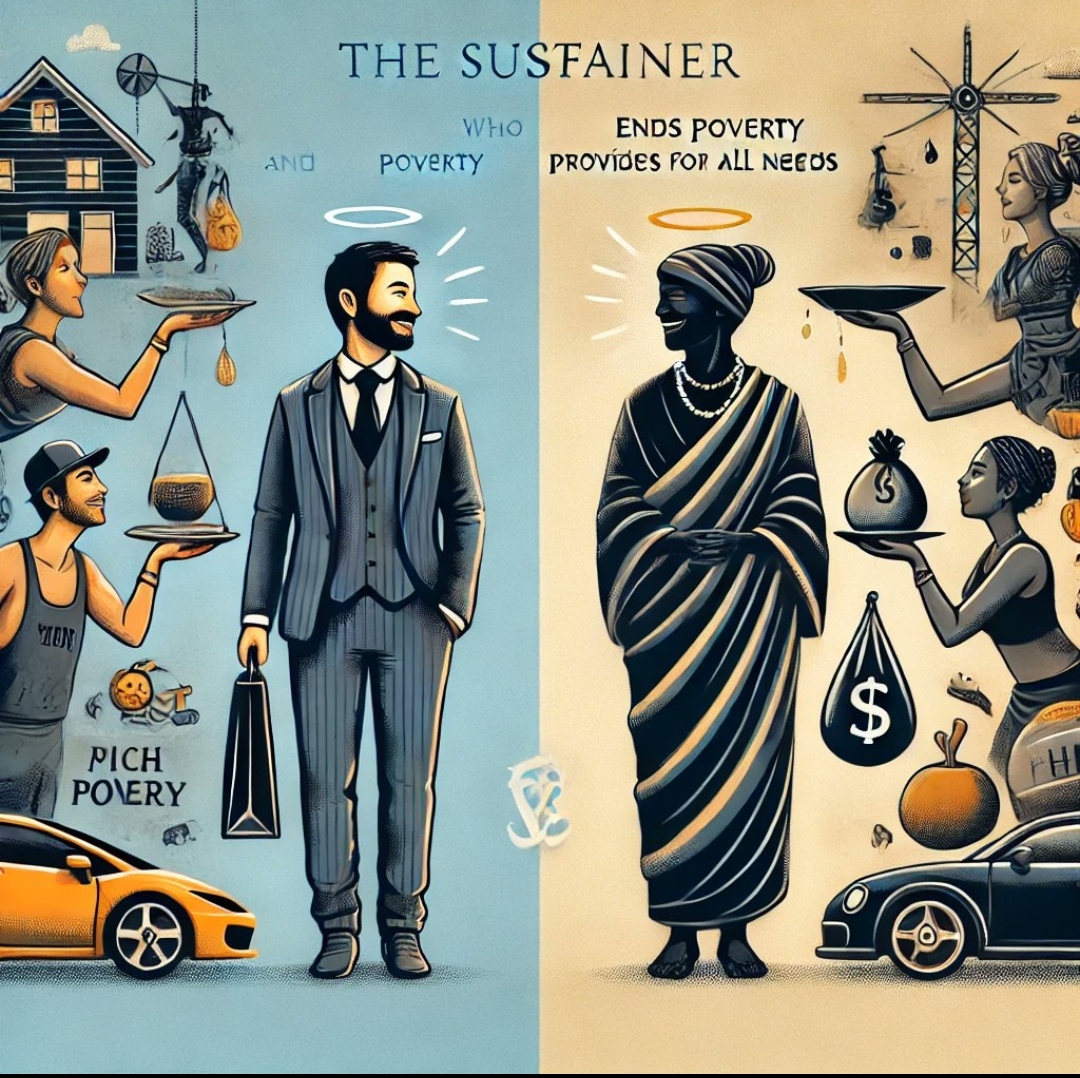 Sustainer: The One Who Ends Poverty and Provides for All Needs
Are you worried about bills? Afraid of falling into poverty? Do you fear the tragedy of financial hardship? The Owner of the universe is not just the Creator; He is also "The Sustainer," the One who provides, ends poverty, and fulfills every need. Imagine if all your fears about money could be put to rest—not because you had wealth beyond measure, but because you were connected to the One who owns all wealth and sustains every being.
We often find ourselves anxious about where our next meal will come from or how we will pay our bills. We depend on our jobs, opportunities, and the income that these provide. But how often do we reflect on the One who is the true source of all sustenance?
The Quran on Sustenance: The Sustainer Needs Nothing from His Creation
The Quran is filled with verses that emphasize that Allah does not need sustenance from His creation. Rather, He is the one who provides for all. He is the One who ends poverty, the One who sustains, the One who provides everything we need, even when we forget to ask.
"وَمَا خَلَقْتُ الْجِنَّ وَالْإِنسَ إِلَّا لِيَعْبُدُونِ . مَا أُرِيدُ مِنْهُم مِّن رِّزْقٍ وَمَا أُرِيدُ أَن يُطْعِمُونِ . إِنَّ اللَّهَ هُوَ الرَّزَّاقُ ذُو الْقُوَّةِ الْمَتِينُ"
"And I did not create the jinn and mankind except to worship Me. I do not want from them any provision, nor do I want them to feed Me. Indeed, it is Allah who is the [continual] Provider, the firm possessor of strength." (Quran 51:56-58)
This verse is a powerful reminder that Allah, the Creator, does not require anything from us—He is self-sufficient. It is we who are in need of Him, and He provides for every creature without exception.
The Angels and the Divine Record
Every aspect of our sustenance is written and recorded by the angels at Allah’s command. From the moment we are created, our provisions, lifespan, and every event in our lives are recorded. This knowledge should alleviate our anxiety and fear, for Allah has already determined our sustenance and nothing can change that except His will.
The Prophet Muhammad (peace be upon him) said:
"Verily, the creation of each one of you is brought together in his mother’s womb for forty days, then he becomes a clot of thick blood for a similar period, then a piece of flesh for a similar period. Then Allah sends an angel who is commanded to write four things: his provision, his lifespan, his deeds, and whether he will be wretched or blessed." (Sahih Bukhari)
Despite this, many of us are anxious about money, fearing that we will not have enough. But Allah reminds us repeatedly that He is the Provider, that our sustenance is guaranteed, and that we must place our trust in Him.
The Hadith on Gratitude for Simple Blessings
The Prophet Muhammad (peace be upon him) emphasized the importance of being grateful for even the simplest blessings. He said:
"Whoever among you wakes up secure in his property, healthy in his body, and has his food for the day, it is as if he were given the entire world." (Tirmidhi)
This hadith teaches us that true wealth lies in contentment and gratitude. If we have enough to eat for a day, if we are healthy and safe, then we are among the fortunate. Yet, in today's world, we often forget this simple truth. We have grown accustomed to comfort and convenience, and our hearts have moved away from reliance on Allah.
The Reality of Modern Comforts
Today, we have many comforts and benefits that previous generations did not have. If we are in danger, we call the police. If we are sick, we go to the hospital. But what about the comfort of our hearts? What about the reliance on Allah that brings true peace? Instead of twisting and turning, trying to solve every problem ourselves, we need to learn how to truly trust in Allah—to believe that He is the One who provides and sustains.
The Book of Destiny and the Divine Will
There are two books: the first, in which our destiny is written, and the second, with Allah, which can change our fate. Our sustenance, our provisions, our life, and our death are all written in the first book. But Allah, in His infinite mercy, holds another record—the Divine Will that can change our destiny. The Prophet Muhammad (peace be upon him) said:
"Nothing can change the Divine decree except supplication." (Tirmidhi)
This means that while our sustenance is preordained, our prayers can bring about a change. If we turn to Allah, sincerely ask for His help, and repent for our sins, He can change our situation. But we must also understand that our sins and continuous wrongdoings can suspend our prayers and block our blessings from reaching us.
The Power of Dua (Supplication)
The power of dua cannot be overstated. When we are in need, when we fear poverty, when we worry about our sustenance, the best thing we can do is turn to Allah and ask Him. The Prophet (peace be upon him) taught us to never underestimate the power of asking Allah for our needs, for He loves those who call upon Him.
Moving on to a verse that encourages reflection on Allah's role as the Provider, a verse that invites us to turn our hearts towards Him in trust and gratitude:
"قُلْ مَن يَرْزُقُكُم مِّنَ السَّمَاءِ وَالْأَرْضِ ۖ أَمَّن يَمْلِكُ السَّمْعَ وَالْأَبْصَارَ وَمَن يُخْرِجُ الْحَيَّ مِنَ الْمَيِّتِ وَيُخْرِجُ الْمَيِّتَ مِنَ الْحَيِّ وَمَن يُدَبِّرُ الْأَمْرَ ۚ فَسَيَقُولُونَ اللَّهُ ۚ فَقُلْ أَفَلَا تَتَّقُونَ"
"Say, 'Who provides for you from the heaven and the earth? Or who controls hearing and sight and who brings the living out of the dead and brings the dead out of the living and who arranges [every] matter?' They will say, 'Allah,' so say, 'Then will you not fear Him?'" (Quran 10:31)
This verse is a reminder that Allah is the source of all
This verse is a reminder that Allah is the source of all sustenance, the One who controls every aspect of our lives. When we recognize that our provision comes from Him alone, we can let go of our fears and anxieties about the future. The world may change, jobs may come and go, but the Sustainer never changes. He is always there, always providing, always ensuring that we have what we need.
The Importance of Trusting in the Sustainer
In today's world, we often place our trust in our jobs, our savings, or our investments. But the truth is that true security comes only from trusting in Allah. Our jobs are merely a means, a tool that Allah uses to provide for us. The source of all wealth, of all provision, is Allah alone. When we place our trust in Him, we are no longer worried about where our next meal will come from or how we will pay our bills. We know that the Owner of the universe has already decreed our sustenance, and He will not let us go without.
"وَمَا مِن دَابَّةٍ فِي الْأَرْضِ إِلَّا عَلَى اللَّهِ رِزْقُهَا وَيَعْلَمُ مُسْتَقَرَّهَا وَمُسْتَوْدَعَهَا ۚ كُلٌّ فِي كِتَابٍ مُّبِينٍ"
"And there is no creature on earth but that upon Allah is its provision, and He knows its place of dwelling and its place of storage. All is in a clear register." (Quran 11:6)
This verse reassures us that Allah has taken upon Himself the responsibility of providing for every living being. From the smallest insect to the largest animal, every creature's sustenance is guaranteed by Allah. And He knows where each one resides, where each one will find its sustenance. It is all written, and nothing is forgotten.
Prayers That Change Destiny
While everything is written, Allah, in His mercy, has given us the gift of dua (supplication) to change our destiny. Our prayers have the power to bring about change, to alter our circumstances, and to bring us closer to Allah's mercy. But we must be sincere, we must repent for our wrongdoings, and we must have full trust in Allah.
The Prophet Muhammad (peace be upon him) said:
"The supplication of every one of you will be granted if he does not get impatient and say, 'I supplicated my Lord but my prayer has not been granted.'” (Sahih Bukhari)
This hadith teaches us that we must be patient and persistent in our prayers. Allah hears every prayer, and He answers them in the best way, at the best time. We may not always understand why our prayers are delayed or answered in a different way, but we must trust that Allah knows what is best for us.
Sometimes, our sins and wrongdoings can be a barrier between us and the acceptance of our prayers. The heavens may be suspended from answering us because of the evil we have done. But Allah is also the Most Merciful, and He loves those who repent and return to Him.
"وَقَالَ رَبُّكُمُ ادْعُونِي أَسْتَجِبْ لَكُمْ ۚ إِنَّ الَّذِينَ يَسْتَكْبِرُونَ عَنْ عِبَادَتِي سَيَدْخُلُونَ جَهَنَّمَ دَاخِرِينَ"
"And your Lord says, 'Call upon Me; I will respond to you.' Indeed, those who disdain My worship will enter Hell [rendered] contemptible." (Quran 40:60)
Allah invites us to call upon Him, to ask for His help, and to rely on Him for all our needs. He promises to respond to those who call upon Him with sincerity and humility.
The Dua of the Needy
There is a beautiful dua that has been narrated in the Quran and hadith that we can use to ask Allah for sustenance and provision:
"رَبِّ إِنِّي لِمَا أَنزَلْتَ إِلَيَّ مِنْ خَيْرٍ فَقِيرٌ"
"My Lord, indeed I am, for whatever good You would send down to me, in need." (Quran 28:24)
This was the dua of Prophet Musa (Moses) when he found himself in need of Allah's help and provision. It is a simple yet powerful supplication that expresses our complete dependence on Allah, our recognition that we are in need of His blessings and mercy.
Moving on to a verse that reminds us of Allah's role as the ultimate Provider and Sustainer, a verse that encourages us to place our trust in Him alone:
"وَفِي السَّمَاءِ رِزْقُكُمْ وَمَا تُوعَدُونَ"
"And in the heaven is your provision and whatever you are promised." (Quran 51:22)
This verse is a reminder that our sustenance is decreed by Allah and that it is not tied to the material world alone. When we place our trust in Him, we can let go of our fears and anxieties, knowing that He will provide for us in ways that we cannot even imagine.
Certainly! Here's an extensive conclusion focusing on the story of Moses (Musa, peace be upon him) and his journey, emphasizing the lessons we can draw about effort, patience, and ultimately turning to Allah for sustenance.
The story of Prophet Musa (Moses, peace be upon him) is a profound lesson in relying on Allah while putting forth the necessary effort. Musa, after fleeing from Egypt, found himself in the desert—hungry, thirsty, lost, and full of fear. But instead of succumbing to despair, he journeyed until he reached a place where he saw people in need.
Upon arriving at a well in Madyan, Musa saw shepherds watering their flocks, and beside them, two women struggling to hold back their sheep, unable to access the water due to the crowd. Instead of thinking only of his own needs, Musa approached them and offered his help, demonstrating his character as a servant of Allah, always willing to do good and assist others.
After helping them, Musa finally turned to his Lord in prayer. This sequence is important—he made an effort, he exerted himself for the sake of others, and only then did he call upon Allah.
The Verses from the Story of Musa
The Quran describes the sequence of events beautifully, emphasizing Musa's character, his humility, and his ultimate reliance on Allah for sustenance:
"وَلَمَّا وَرَدَ مَاءَ مَدْيَنَ وَجَدَ عَلَيْهِ أُمَّةً مِّنَ النَّاسِ يَسْقُونَ وَوَجَدَ مِن دُونِهِمُ امْرَأَتَيْنِ تَذُودَانِ ۖ قَالَ مَا خَطْبُكُمَا ۖ قَالَتَا لَا نَسْقِي حَتَّىٰ يُصْدِرَ الرِّعَاءُ وَأَبُونَا شَيْخٌ كَبِيرٌ"
"And when he came to the well of Madyan, he found there a crowd of people watering [their flocks], and he found aside from them two women driving back [their flocks]. He said, 'What is your circumstance?' They said, 'We do not water until the shepherds dispatch [their flocks]; and our father is an old man.'" (Quran 28:23)
"فَسَقَىٰ لَهُمَا ثُمَّ تَوَلَّىٰ إِلَى الظِّلِّ فَقَالَ رَبِّ إِنِّي لِمَا أَنزَلْتَ إِلَيَّ مِنْ خَيْرٍ فَقِيرٌ"
"So he watered [their flocks] for them; then he went back to the shade and said, 'My Lord, indeed I am, for whatever good You would send down to me, in need.'" (Quran 28:24)
This dua of Musa is powerful and profound: "My Lord, indeed I am, for whatever good You would send down to me, in need." It is a simple supplication that conveys complete reliance on Allah, a recognition of one’s own neediness, and a humble request for whatever good Allah has decreed.
The Lesson from Musa's Journey
Musa's story teaches us an important lesson: before asking Allah for help, we must put in our best effort. Musa did not simply sit by the well and raise his hands in supplication. He saw people in need, he helped them, and only then did he turn to his Lord and ask for sustenance.
This is the way of the believer—effort, patience, and then reliance on Allah. We must strive, work hard, and do good, and then turn to Allah, knowing that He is the true Provider. Musa’s supplication was answered almost immediately, as one of the women returned to invite him to meet their father, who eventually offered him a place to stay and even gave him one of his daughters in marriage.
"فَجَاءَتْهُ إِحْدَاهُمَا تَمْشِي عَلَى اسْتِحْيَاءٍ قَالَتْ إِنَّ أَبِي يَدْعُوكَ لِيَجْزِيَكَ أَجْرَ مَا سَقَيْتَ لَنَا ۖ فَلَمَّا جَاءَهُ وَقَصَّ عَلَيْهِ الْقَصَصَ قَالَ لَا تَخَفْ ۖ نَجَوْتَ مِنَ الْقَوْمِ الظَّالِمِينَ"
"Then one of the two women came to him walking with shyness. She said, 'Indeed, my father invites you that he may reward you for having watered for us.' So when he came to him and related to him the story, he said, 'Fear not. You have escaped from the wrongdoing people.'" (Quran 28:25)
The Power of This Dua
This dua of Musa is not just a request for sustenance; it is a declaration of absolute dependence on Allah. It is a reminder that no matter how much we strive, the ultimate result is in Allah’s hands. Musa made an effort, but he knew that only Allah could provide for him.
Repeat This Dua to Open the Doors of Sustenance
"رَبِّ إِنِّي لِمَا أَنزَلْتَ إِلَيَّ مِنْ خَيْرٍ فَقِيرٌ"
"My Lord, indeed I am, for whatever good You would send down to me, in need." (Quran 28:24)
This is the dua that opened the doors of sustenance for Musa, and it can open the doors of sustenance for you as well. It is a dua of humility, of gratitude, and of complete reliance on Allah. When you find yourself in need, when you fear poverty, when you are anxious about your sustenance, remember the story of Musa. Remember his effort, his patience, and his trust in Allah. And repeat his supplication, knowing that Allah is the Sustainer, the Provider, and the One who answers those who call upon Him.
Final Reflection: Trust in the Sustainer and Put in the Effort
Musa's story is a reminder that we must always put in our best effort and then place our trust in Allah. We cannot simply sit back and expect sustenance to come to us without doing our part. We must strive, we must help others, we must be patient, and then we must turn to Allah with humility and ask for His provision.
We leave you with this dua, as a jewel from the Quran, to inspire your prayers and reflection:
"رَبِّ إِنِّي لِمَا أَنزَلْتَ إِلَيَّ مِنْ خَيْرٍ فَقِيرٌ"
"My Lord, indeed I am, for whatever good You would send down to me, in need." (Quran 28:24)
May Allah grant you the strength to strive in His path, to help those in need, and to always rely on Him for your sustenance. May He provide for you from sources you could never imagine, and may He make you among those who are grateful and content with His blessings.
Concluding with Reflection: The Story of Musa and the True Path to Sustenance
The story of Prophet Musa (Moses, peace be upon him) is a profound lesson in relying on Allah while putting forth the necessary effort. Musa, after fleeing from Egypt, found himself in the desert—hungry, thirsty, lost, and full of fear. But instead of succumbing to despair, he journeyed until he reached a place where he saw people in need.
Upon arriving at a well in Madyan, Musa saw shepherds watering their flocks, and beside them, two women struggling to hold back their sheep, unable to access the water due to the crowd. Instead of thinking only of his own needs, Musa approached them and offered his help, demonstrating his character as a servant of Allah, always willing to do good and assist others.
After helping them, Musa finally turned to his Lord in prayer. This sequence is important—he made an effort, he exerted himself for the sake of others, and only then did he call upon Allah.
The Quran describes the sequence of events beautifully, emphasizing Musa's character, his humility, and his ultimate reliance on Allah for sustenance.
The Verses from Surah Al-Qasas (The Stories)
The entire context of the story of Musa is beautifully narrated in Surah Al-Qasas. Let’s delve into the verses to capture the full picture:
"وَلَمَّا تَوَجَّهَ تِلْقَاءَ مَدْيَنَ قَالَ عَسَىٰ رَبِّي أَن يَهْدِيَنِي سَوَاءَ السَّبِيلِ"
"And when he directed himself toward Madyan, he said, 'Perhaps my Lord will guide me to the sound way.'" (Quran 28:22)
Musa set off on his journey, lost and unsure of his destination, but with hope in his heart that Allah would guide him. This verse teaches us that even in the darkest of times, we must have hope and trust that Allah will guide us to what is best.
"وَلَمَّا وَرَدَ مَاءَ مَدْيَنَ وَجَدَ عَلَيْهِ أُمَّةً مِّنَ النَّاسِ يَسْقُونَ وَوَجَدَ مِن دُونِهِمُ امْرَأَتَيْنِ تَذُودَانِ ۖ قَالَ مَا خَطْبُكُمَا ۖ قَالَتَا لَا نَسْقِي حَتَّىٰ يُصْدِرَ الرِّعَاءُ وَأَبُونَا شَيْخٌ كَبِيرٌ"
"And when he came to the well of Madyan, he found there a crowd of people watering [their flocks], and he found aside from them two women driving back [their flocks]. He said, 'What is your circumstance?' They said, 'We do not water until the shepherds dispatch [their flocks]; and our father is an old man.'" (Quran 28:23)
Upon arriving at the well, Musa saw the two women struggling to water their sheep, and he offered his assistance. This act of kindness was done without any expectation of reward, purely for the sake of Allah.
"فَسَقَىٰ لَهُمَا ثُمَّ تَوَلَّىٰ إِلَى الظِّلِّ فَقَالَ رَبِّ إِنِّي لِمَا أَنزَلْتَ إِلَيَّ مِنْ خَيْرٍ فَقِيرٌ"
"So he watered [their flocks] for them; then he went back to the shade and said, 'My Lord, indeed I am, for whatever good You would send down to me, in need.'" (Quran 28:24)
After helping them, Musa sought shade and turned to his Lord in supplication. This dua is a declaration of absolute dependence on Allah: "My Lord, indeed I am, for whatever good You would send down to me, in need." It is a reminder that after putting in our best effort, we must turn to Allah for sustenance, knowing that He is the true Provider.
"فَجَاءَتْهُ إِحْدَاهُمَا تَمْشِي عَلَى اسْتِحْيَاءٍ قَالَتْ إِنَّ أَبِي يَدْعُوكَ لِيَجْزِيَكَ أَجْرَ مَا سَقَيْتَ لَنَا ۖ فَلَمَّا جَاءَهُ وَقَصَّ عَلَيْهِ الْقَصَصَ قَالَ لَا تَخَفْ ۖ نَجَوْتَ مِنَ الْقَوْمِ الظَّالِمِينَ"
"Then one of the two women came to him walking with shyness. She said, 'Indeed, my father invites you that he may reward you for having watered for us.' So when he came to him and related to him the story, he said, 'Fear not. You have escaped from the wrongdoing people.'" (Quran 28:25)
The story of Musa (Moses, peace be upon him) teaches us that Allah’s provision comes in unexpected ways when we least expect it. Musa had no idea that his journey would lead him to a new home, a family, and a life of ease after the trials he had endured. But through his patience, his effort, and his trust in Allah, he found the sustenance he needed.
As we reflect on the story of Prophet Musa (peace be upon him), let us remember that his dua came after his effort to help others. Before he turned to Allah in prayer, he used his hands to assist those in need. This is a profound lesson for us: before asking Allah to provide for us, we must do our part. Whether it’s seeking opportunities, offering help to others, or striving to improve our situation, our actions should come first. Then, once we have done what we can with our hands, we turn to Allah, knowing that He is the ultimate Provider.
Musa's prayer was simple yet powerful:
"رَبِّ إِنِّي لِمَا أَنزَلْتَ إِلَيَّ مِنْ خَيْرٍ فَقِيرٌ"
"My Lord, indeed I am, for whatever good You would send down to me, in need." (Quran 28:24)
This is a reminder that after we’ve made our best effort, we must turn to Allah in humility and ask for His provision. It’s our actions that demonstrate our sincerity, but it is Allah’s mercy that brings about the results.
So, as you face your own challenges—whether financial or otherwise—take action first. Look for ways to assist others, seek out opportunities, and put in your best effort. And after that, turn to Allah with the prayer of Musa, asking for His help and guidance. Trust that He will answer your call and provide for you in ways you could never imagine.
May Allah grant you the strength to act with sincerity, the wisdom to turn to Him in all matters, and the provision that brings ease inshallah