

بِسْمِ اللهِ الرَّحْمٰنِ الرَّحِيْم
Bismillah ar-Rahman ar-Rahim
In the Name of God, Most Gracious, Most Merciful
🕋
The Republic: How to Build a Nation That Endures
When you set out to build a nation, the first step is not power — it is understanding.
You must know the difference between a democracy and a republic, for that difference determines whether your nation will rise with wisdom or collapse under emotion. Millions today confuse the two, and because of that confusion, they fight over elections, they argue over legitimacy, and they misunderstand power itself.
A democracy is the rule of the crowd — the loudest voice wins, whether right or wrong. It is a system where passion governs policy and where truth is easily buried under popularity. It may sound noble, but history has shown again and again that democracies destroy themselves from within. When emotion replaces order, the state becomes weak, unstable, and easy to manipulate.
A republic, on the other hand, is the rule of law — a structure of wisdom, restraint, and balance. It is built not on the desires of the people but on the principles that protect them. A republic does not bend to the mob or flatter public opinion; it filters the people’s will through guardians who think, deliberate, and protect the long-term interest of the state.
This is why the founders of great nations — from Rome to America — never trusted pure democracy. They built republics. They understood that freedom without discipline becomes chaos, and power without law becomes tyranny. They created systems that outlive men, revolutions, and generations — because a republic, once built correctly, governs even when its founders are gone.
If you are to build a nation today, you must begin where they began: with truth before power, wisdom before will, and structure before sentiment. A republic is not created through shouting or voting — it is created through knowledge, through order, and through the courage to protect the people even from themselves.
That is the road to sovereignty. That is the foundation of a republic.
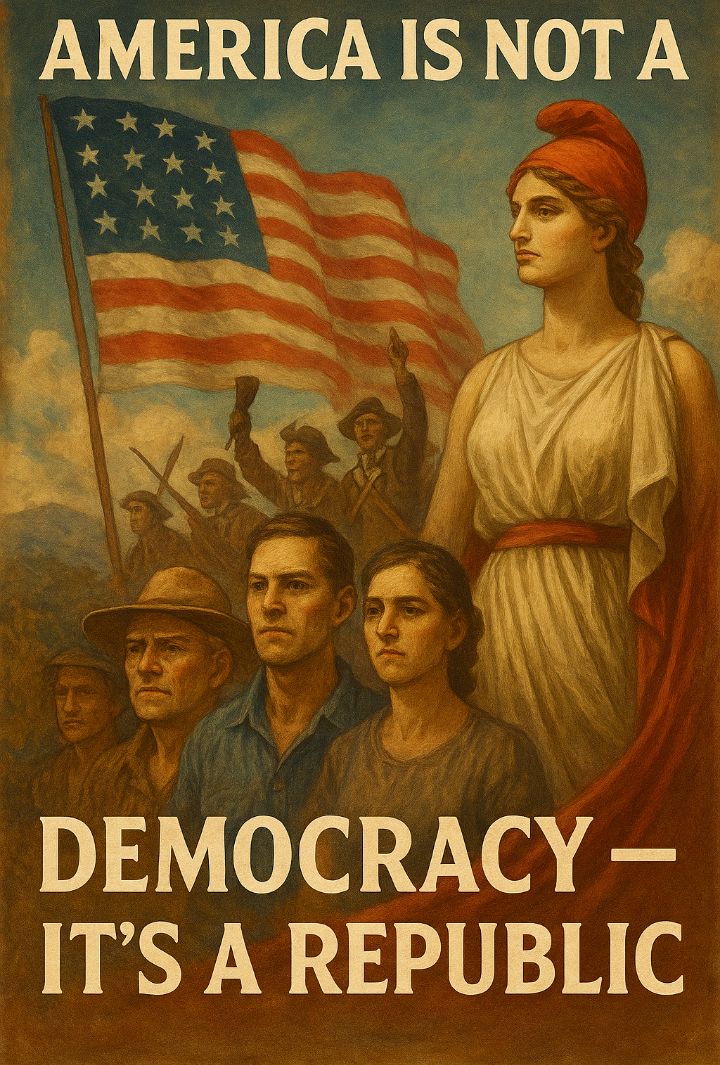
The Road to Building a Republic: Truth Before Power
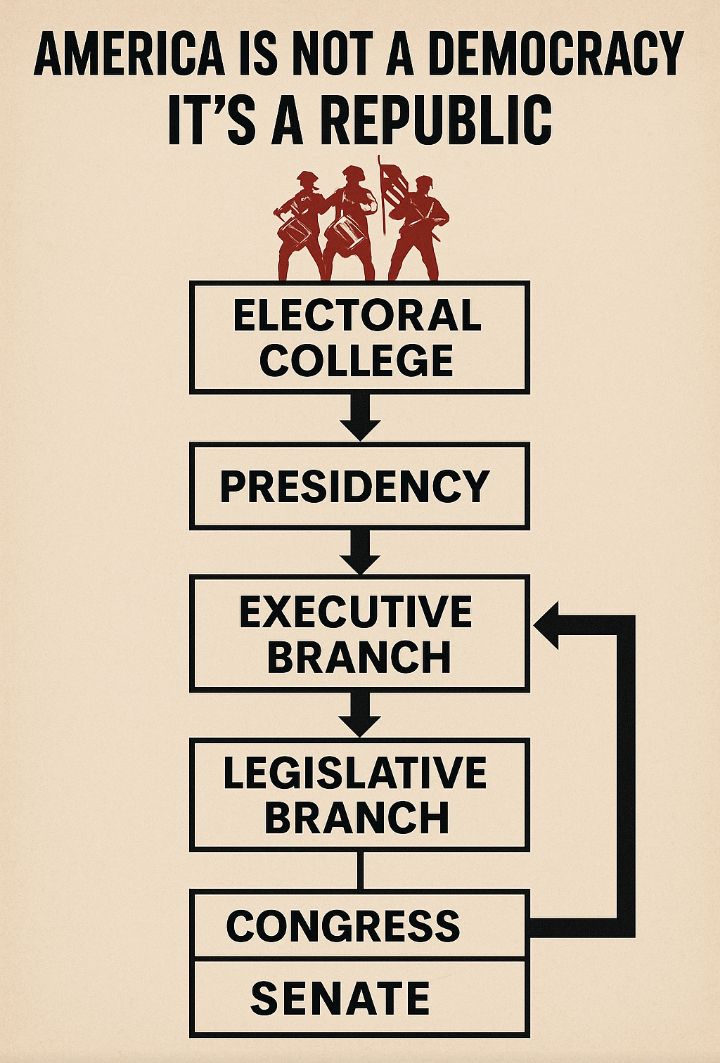
I. The Revolutionary’s Duty: Building, Not Pleasing
If you are building a country, understand this first — you are a revolutionary, not a crowd-pleaser. You are laying the foundation of something that must outlive you, something that cannot be overthrown by emotion or noise.
Every true revolutionary knows: the people are not always right. The public is emotional, easily swayed, and often divided. That is why the founders of America — after fighting for freedom — immediately built a system that protected that freedom from the people themselves.
They understood that victory on the battlefield is only the beginning; the greater battle is to protect the state from ignorance, corruption, and chaos.
That protection came through one mechanism: the Electoral College.
II. The Electoral College: The Guardians of the Republic
The Electoral College was not created to please voters; it was created to filter them.
It is the shield between the wisdom of revolutionaries and the whims of the crowd.
When you build a nation, your first act is to establish this college — a circle of guardians who have sacrificed, studied, and earned their place through discipline and loyalty. These are not politicians; they are protectors of the state, chosen for their judgment, courage, and commitment to stability.
They do not trust the mob.
They trust principles.
They trust the republic.
From this group, all authority flows. They decide who can run for the presidency, who can hold public office, and who can speak on behalf of the nation. They filter every ambition through the question:
“Is this person fit to protect the state, or will he destroy it?”
Only those who prove their loyalty to the republic — not to popularity — are allowed to advance.
III. The President: Servant of the College, Not the Crowd
Once the Electoral College chooses the president, power does not rest in his hands — it rests in their oversight.
The president is not a ruler; he is the executor of the college’s vision.
He owes his position not to the people’s vote but to the judgment of the guardians who selected him. His loyalty is to the republic, not to opinion polls or popularity contests.
The president’s first task is to build the executive branch, appointing qualified ministers and advisors under the close supervision of the Electoral College. Every appointment is a reflection of the college’s integrity and foresight.
This is how revolutions are protected — not through passion, but through structure.
IV. The Legislative Branch: Law Under Supervision
Once the executive branch is established, attention turns to the legislative branch — the makers of law.
But here again, freedom does not mean chaos.
The legislative branch must be filtered through the same discipline that founded the nation. The people may propose, but they do not rule. Their representatives are chosen with care, screened for education, honor, and moral grounding.
Thus, the House of Representatives becomes the voice of the people — filtered, not uncontrolled.
The Senate, serving longer terms, ensures continuity and shields the nation from the changing moods of the public.
This division of power is not oppression; it is preservation.
V. The Lesson of the Whiskey Rebellion
If you wish to understand why this structure exists, study the Whiskey Rebellion of 1794.
After America’s independence, when citizens rebelled against a small tax on whiskey, President George Washington — the hero of freedom itself — led troops against his own people.
Why? Because rebellion without law is betrayal.
Freedom does not mean you can defy the state that protects it.
The founders learned quickly: the people they liberated could just as easily destroy the nation they built. From that day forward, they vowed never to let sentiment overthrow structure.
They made power impossible to seize, difficult to corrupt, and painful to betray.
VI. The Hierarchy of Power
If you want to build a new republic, follow this model:
The Electoral College — Revolutionaries and protectors of the state; the supreme filter of power.
The Presidency — Chosen servant of the college; executes policy with loyalty and restraint.
The Executive Branch — Ministers and administrators appointed under college supervision.
The Legislative Branch — Divided between:
Congress (House of Representatives) — Represents the filtered will of the people.
Senate — Represents the enduring wisdom of the state.
The Judicial Branch — Interprets the law, ensuring that no branch exceeds its limits.
This system keeps order, balances ambition, and ensures that no individual, crowd, or movement can destroy what was built.
VII. The Truth of a Republic
The republic is not built on trust in the people — it is built on trust in the process.
A revolutionary who truly loves his nation never gives away power to emotion. He builds institutions that can withstand emotion.
The founders of America did not believe in “rule by the people.” They believed in rule for the people, guided by men of discipline, educated conscience, and foresight.
When you understand this, you stop asking, “Do I have power?”
And you start asking, “Am I worthy of it?”
✅ Final Declaration
A republic is not a playground for ambition — it is a fortress for wisdom.
The revolutionary’s duty is to guard it, not to gamble it away to the crowd.
The people may celebrate freedom, but it is the Electoral College that keeps that freedom alive.
If you wish to build a new nation, begin where America began — not with applause, but with structure, discipline, and fear of losing what you fought to gain.
America Is Not a Democracy — It Is a Republic
I. Introduction: Clarifying the Misconception
For generations, Americans have been told that they live in a democracy — a government where the people directly determine their destiny. Every election season, the word “democracy” echoes through speeches, debates, and classrooms as though it were sacred. But this is one of the greatest misconceptions in modern political thought.
The United States is not, and never was, a democracy. It is a constitutional republic, a system built deliberately to restrain the passions of the crowd and prevent the tyranny of majority rule. The Founding Fathers — men who had just fought against monarchy and mob rule alike — created a government bound by law, representation, and deliberation.
In a republic, the voice of the people is heard, but it is filtered through institutions designed to protect freedom and preserve order. This distinction is not just academic — it defines the very soul of America.
II. Foundational Design
James Madison wrote in Federalist No. 10:
“Democracies have ever been spectacles of turbulence and contention; have ever been found incompatible with personal security or the rights of property.”
To Madison, unchecked majority rule led inevitably to chaos. He and the other Founders believed liberty could survive only under a structure of checks and balances, where power was divided among branches and tempered by the rule of law.
A republic is not the same as popular rule. It is government by laws, not emotions; by representation, not mobs. Every mechanism — from Congress to the presidency — was crafted to ensure that no single majority, faction, or moment of passion could dominate the nation’s future.
III. The Role of the Electoral College
Nothing demonstrates America’s republican nature more clearly than the Electoral College.
Most Americans believe they vote directly for the president — they do not. Their votes merely select electors, individuals chosen by each state to cast the official votes for the presidency.
This system was born from distrust — not of liberty, but of human nature. The Founding Fathers feared that the people could be deceived by charisma, propaganda, or ignorance. They wanted a buffer — men of judgment who would deliberate carefully before granting the highest office in the land.
Throughout history, the Electoral College has played a decisive role:
1800 – Jefferson’s tie with Aaron Burr sent the election to the House of Representatives.
1876 – Rutherford B. Hayes won through an Electoral College compromise.
2000 – George W. Bush prevailed despite losing the popular vote.
2016 – Donald Trump won under the same constitutional design.
In every case, the system proved that the people do not directly choose the president — the states, through their electors, do.
IV. Congress and the Power of the States
The Constitution places the power of presidential election not in the people, but in the state legislatures.
Article II, Section 1, Clause 2 clearly states:
“Each State shall appoint, in such Manner as the Legislature thereof may direct, a Number of Electors…”
This means that states, not individuals, create the federal government.
Even Congress — the people’s representative body — retains authority to certify or reject electoral votes, as seen on January 6, 2021. This is not a flaw; it is the essence of republican design.
A republic prioritizes the stability and interests of the state over the fleeting desires of individuals. The Founders feared that pure democracy would allow demagogues to rise and destroy liberty itself.
V. The Whiskey Rebellion: A Lesson in Distrust
In 1794, when farmers in Pennsylvania rebelled against federal taxes on whiskey, President George Washington — the very man who had led the Revolution — personally commanded troops to suppress the uprising.
This event revealed a harsh truth: the Founders never trusted the people’s passions. They knew that freedom could not survive if every man followed his own will.
The rebellion proved that while liberty had been won, it required discipline, structure, and obedience to law to endure.
Those who imagined freedom meant doing as they pleased learned a lasting lesson:
The Republic belongs to those who uphold its laws, not those who defy them.
VI. The Founders’ Intent
Jefferson, Adams, Hamilton, and Madison all warned against the dangers of direct democracy.
Their vision was a mixed government — one that blended democratic representation with aristocratic wisdom and constitutional restraint.
Hamilton described democracy as “a disease of instability.”
Adams wrote that the people are “their own worst enemy when passion rules reason.”
Madison designed a structure of government in which each branch checks the other, ensuring that no single impulse — not even the will of the majority — could endanger the republic.
The Founders built America not on trust in the people’s judgment, but on distrust of their inconsistency.
VII. Modern Confusion
In the 20th century, the term democracy became a slogan.
Politicians began using it to promote unity, and schools began teaching it as America’s defining identity. But this linguistic shift erased the deeper truth:
Voting is participation — not power.
Most citizens today believe their individual vote decides national destiny. It does not. Their votes are symbolic contributions to a process governed by states, electors, and Congress.
This is not an injustice; it is a safeguard. It ensures that emotional movements cannot overthrow centuries of law in a single election cycle.
VIII. January 6th and the Misunderstanding
When President Donald Trump challenged the 2020 election results, he invoked — knowingly or not — the ancient principles of the republic. He argued that Congress and the Vice President had authority to review, delay, or reject electoral votes.
The chaos of January 6th revealed how little Americans understood their own Constitution.
While violence cannot be justified, the event exposed a deeper ignorance:
most citizens had forgotten that in a republic, Congress — not the mob — finalizes power.
Trump’s effort, though politically controversial, was grounded in a constitutional mechanism. The tragedy was not the challenge itself, but that it turned into confusion and revolt rather than reasoned debate.
IX. The Republic’s Protection Mechanisms
The American system is designed with deliberate speed and restraint.
Three institutions guard the republic from collapse:
The Supreme Court — interprets law and prevents emotional majorities from rewriting rights.
The Senate — gives equal power to small and large states alike.
The Electoral College — ensures that states, not crowds, determine the president.
These pillars preserve order even when passion runs high. They protect the republic from both tyrants and mobs. Without them, America would dissolve into chaos, just as ancient democracies like Athens once did.
X. Conclusion: Returning to the Republic
America must stop pretending to be what it is not.
It is not a democracy — it is a republic held together by law, reason, and the discipline of its citizens.
Freedom in a republic is not the right to do whatever one wishes; it is the right to live under laws that protect all, even from ourselves.
The Founders created a system of government meant to endure, not to please.
They built a structure where truth, deliberation, and wisdom outweigh temporary popularity.
If America wishes to survive, it must teach its citizens again that their votes are not sovereign — their responsibility is.
For in a true republic, liberty lives not in numbers, but in the character of the governed and the guardianship of law.
✅ Final Thought:
The Republic endures because it limits the passions of man.
Democracy ends when passion becomes law.
The Founders knew the difference — and so should we.
🏛️ Notes for Aspiring Founders of Republics
“Freedom Without Order Is Chaos; Order Without Freedom Is Tyranny.”
I. The Foundation: What a Republic Truly Is
Definition
A republic is a system of governance where laws, not individuals, rule.
Power is held by representatives, chosen through structured systems — not by mob sentiment.
The republic prioritizes the interest of the state above the temporary emotions of the people.
Core Principle
Democracy serves emotion; a republic serves continuity.
Every citizen is free, but within the boundaries that protect the nation’s stability.
Purpose
To prevent tyranny of the majority.
To ensure longevity of governance, where leadership changes but the system remains intact.
II. The Purpose of the State
The state is not a personality — it is an institution of protection.
The interest of the state comes before individual desire.
The state’s duty:
Protect sovereignty.
Maintain balance between freedom and order.
Prevent internal decay through moral, intellectual, and legal discipline.
The republic survives not because people love it — but because people fear breaking it.
III. Founding a Republic: The First Principles
Charter of Independence
Define what the nation stands for: freedom, unity, faith, justice, and restraint.
Independence is not rebellion — it is responsibility codified.
Constitution as the Soul
Drafted by a council of scholars (Shura) or constitutional guardians.
Establish the non-negotiables — faith, justice, property, security, and accountability.
Allow room for evolution — the republic must breathe with time.
Civic Order
Citizens must know their rights and their duties.
Education must teach law, discipline, and critical thinking, not blind nationalism.
Symbolism
A flag and constitution are not mere symbols — they are anchors of identity.
Every citizen must be loyal to the constitution, not to a person.
IV. The Electoral System: Protectors, Not Popularity
The Role of the Electoral College
The Electoral College represents the intellect of the state.
Its duty is to protect the republic from:
The enemy within (emotional populism).
The enemy outside (foreign influence).
Electors must be men and women of learning, experience, and patriotism — not campaigners.
Structure
Electors chosen by regional councils, not by direct votes.
Their vote is final and binding, immune from mob pressure.
They deliberate, not follow — they select, not reflect.
Motto of the Electoral College:
“We protect the people from themselves — not because we despise them, but because we love them.”
V. Checks and Balances: The Nerves of the Republic
The Three Pillars
Executive — Enforces laws with restraint.
Legislature — Crafts laws with wisdom.
Judiciary — Interprets laws with justice.
The Shura Council (or Senate)
The body that tempers leadership and ensures collective decision-making.
Members serve for long terms to prevent short-term populism.
Only the most educated and disciplined are appointed.
Accountability
The leader serves the law — never above it.
All offices must submit periodic reports to the Council of State Interests.
Safeguard Principle
Every law must be tested by one question:
“Does it serve the interest of the state?”
VI. Lessons from History
The Whiskey Rebellion (1794)
Citizens rebelled against taxes they deemed unfair.
Washington personally led troops to restore order.
Lesson: The republic defends itself — even from its own citizens.
Rome’s Fall and America’s Design
Rome fell when the senate lost its moral core.
America survived because the Founders balanced faith, law, and representation.
Lesson: A republic dies not from war, but from corruption and ignorance.
Modern Ghana and Post-Colonial States
Many young nations imitate democracy without foundation.
True progress requires a constitution that prioritizes order and merit, not emotion and imitation.
VII. Building a Republic from Scratch — A Step-by-Step Blueprint
1. The Vision
Define your purpose: Why must this nation exist?
Anchor it on a principle (e.g., faith, justice, unity, or progress).
2. The Founding Council
A Shura or Senate of 12–30 individuals of unquestionable integrity.
Tasked with writing the First Law — the Charter of Order.
3. The Constitution
Establish the State Religion or Ethical Core.
Define rights, obligations, and limits of power.
Include an amendment mechanism requiring supermajority or council approval.
4. The Electoral Mechanism
Implement an Electoral College or similar structure.
Electors chosen by district assemblies, not by open ballot.
Each elector represents a region’s conscience, not its crowd.
5. The Judiciary
Supreme Court or Council of Scholars.
Empowered to nullify unconstitutional laws.
Judgments preserved in a digital archive for transparency.
6. The Armed Forces
Oath bound to the Constitution — not to the ruler.
Defense is sacred duty; internal interference forbidden.
7. Education System
Teach every student the meaning of “republic.”
Promote civic literacy, moral duty, and national identity.
8. Economic Order
Wealth belongs to the state before individuals.
Encourage private enterprise, but tie it to social responsibility.
Establish a National Treasury Board independent from politics.
9. Information and Media
Freedom of expression under responsibility.
National media serves the truth of the state, not emotions of the moment.
10. Amendment and Renewal
Every 50 years: The Republic Review Convention.
Re-evaluate constitution, progress, and moral integrity of governance.
VIII. The Moral Core of a Republic
No republic can survive without virtue.
Virtue is not perfection — it is restraint, fairness, and service.
Leaders must be men and women of:
Humility before God,
Courage before people,
Wisdom before power.
A republic built on materialism will collapse; a republic built on truth and justice will endure centuries.
IX. Checklist for Aspiring Nation-Builders
✅ Establish the moral foundation of the state.
✅ Form a constitutional council of scholars and patriots.
✅ Define sovereignty through laws, not personalities.
✅ Create a loyal and educated Electoral College.
✅ Prioritize the interests of the state above all.
✅ Develop checks and balances that restrain power.
✅ Educate the public on civic order and responsibility.
✅ Keep the military under constitutional oath.
✅ Build the economy around accountability and transparency.
✅ Review and renew the republic periodically to avoid decay.
X. Final Reflection
A republic is not born through revolution — it is forged through restraint.
It demands patience, education, and loyalty to the unseen wisdom that protects nations from their own passions.
When the next generation of statesmen — in Africa, Asia, or anywhere — learns this truth, they will not repeat the mistakes of the past.
They will build nations that are strong not because they are loud, but because they are just.
And they will understand:
“The republic is not the people’s property — it is their inheritance, entrusted to the wise, guarded by the brave.”
VIII. Conclusion: The Burden of Leadership and the Prayer for Wisdom
Leadership is not a right — it is a burden.
It is not something to be claimed, but something to be given to those who are worthy.
The wise know this, and the righteous fear it.
When America was born, its founders understood a timeless truth: the crowd is fickle, and emotions are dangerous. The people may shout for freedom, but they rarely understand the discipline that freedom requires. That is why the Electoral College was created — not to silence the people, but to protect them from themselves.
In the early years of the republic, presidents did not campaign or beg for power. They were sought out, interviewed, and tested by the Electoral College. Only those who demonstrated wisdom, composure, and understanding of statecraft were chosen. They were servants of law, not seekers of fame.
This principle mirrors the prophetic wisdom in Islam —
“Do not seek leadership, for if you are given it upon your request, you will be left to bear it alone; but if you are given it without asking, you will be aided in it.”
(Ṣaḥīḥ al-Bukhārī, 6612; Ṣaḥīḥ Muslim, 1652)
True leadership, therefore, is a test of humility, not a triumph of ambition.
The leader is a guardian, not a celebrity; a custodian, not a conqueror.
America’s founding system unknowingly practiced this prophetic teaching —
it filtered the unqualified, restrained the emotional, and elevated the disciplined.
Through its structure, it preserved order and balance —
because no people can be trusted with power without restraint.
Congress was designed to limit the people’s reach —
two years, short enough to give them a voice but not control.
The Senate was designed to steady the nation —
four years, long enough to protect it from chaos and trends.
The Electoral College stood above all —
to ensure that wisdom ruled over noise.
🕋 A Closing Prayer
O Allah, Lord of the heavens and the earth,
Grant wisdom to those who build nations with justice and restraint.
Bless those who understand that true freedom lies in discipline,
And that power without knowledge is a curse, not a gift.O Allah, guide the builders of tomorrow —
The revolutionaries who choose order over emotion,
The guardians who protect nations from corruption and confusion.
Make them like the wise founders who knew
That leadership is a trust, not a trophy.O Allah, grant us leaders who fear You more than they fear people,
Who speak only when it benefits the nation,
And who lead not by desire, but by duty.
Place among them those who remember the hadith:
“He who seeks leadership will be left to it,
And he who is chosen will be aided in it.”Bless the nations that protect themselves from ignorance,
And guide the Muslim world to revive this principle —
That the qualified should lead, and the unqualified should obey.
Strengthen the institutions that defend truth,
And protect us from the chaos of the crowd.O Allah, make every republic a sanctuary of wisdom,
Every leader a servant of justice,
And every nation a mirror of restraint and righteousness.
Ameen.
✅ Final Reflection:
A republic is not born through shouting or slogans.
It is born through fear of injustice, discipline in power, and mercy in governance.
When nations remember this, they rise.
When they forget, they fall.