
بِسْمِ اللهِ الرَّحْمٰنِ الرَّحِيْم
Bismillah ar-Rahman ar-Rahim
In the Name of God, Most Gracious, Most Merciful
🕋

Special Prayer for the Departed Presidents
Ali Mahdi Mohamed (1940 – 2021)
Abdullahi Yusuf Ahmed (1934 – 2012)
بِسْمِ اللّٰهِ الرَّحْمٰنِ الرَّحِيمِ
O Allah, Lord of the heavens and the earth, the Turner of hearts and the Giver of power — we raise our hands in remembrance of the men who once carried Somalia’s name upon their shoulders.
Ya Rab, forgive Ali Mahdi Mohamed and Abdullahi Yusuf Ahmed.
Forgive their mistakes, expand their graves, and illuminate their resting places with Your mercy.
Reward them for the moments they stood when others fled, for the decisions they made when their nation had no shield, and for every intention they carried for the good of their people.
They led in hardship, they governed amid absence, and they did not abandon their country when there was nothing left but dust and memory.
Their years of struggle are written in the book of the nation.
O Allah, bless their descendants. Let their children and grandchildren walk with honor, guided by humility and remembrance.
Forgive them for what they knew and what they did not know, for what they spoke and what they remained silent about.
Accept from them their service, their courage, and their endurance.
O Merciful One, gather them among the righteous.
Make their errors light, their faith heavy, and their legacy a reminder to every leader who rises after them.
Grant Somalia wisdom from their stories — not pride, not hatred, but understanding.
Let every Somali who reads this say:
“Al-Fātiḥah.”
May Allah forgive them, bless them, and forgive the ummah they left behind.
Ameen.
The Departed Leaders: Lessons from the Past
1. Ali Mahdi Mohamed (1940 – 2021)
Title: The Transitional Claimant
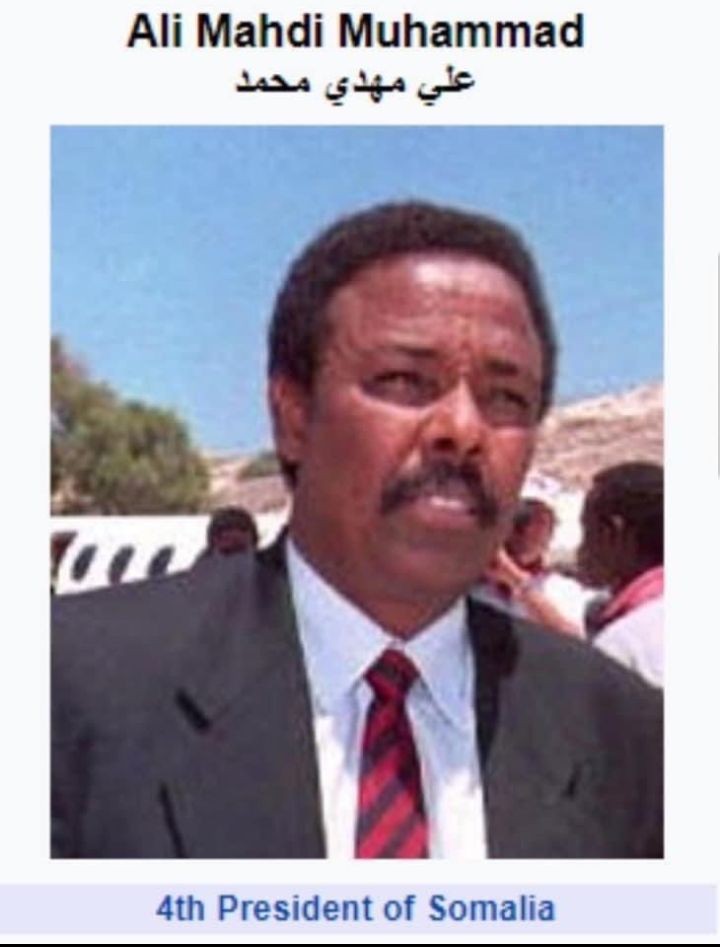
Ali Mahdi Mohamed emerged at Somalia’s most chaotic hour — the moment the nation fractured. Declaring himself president in 1991, he inherited no state, no treasury, no army — only ashes and expectations. His presidency existed largely within Mogadishu’s ruins, yet his persistence symbolized the Somali refusal to vanish.
Legacy:
He embodied the spirit of survival, proving that leadership can exist even when the structure collapses. His era was marked by humanitarian struggle, fragmented authority, and the absence of peace. Still, his attempt to preserve the notion of a Somali state kept the dream alive for others to rebuild.
Lesson:
Even when authority is broken, identity must not be lost. He was not a president of power — but a president of endurance.
2. Abdullahi Yusuf Ahmed (1934 – 2012)
Title: The Enforcer of Stability at All Costs
A soldier to the core, Abdullahi Yusuf Ahmed ruled through the lens of discipline and force. Former president of Puntland, he brought a military realist’s mind to the national stage. As head of the Transitional Federal Government (TFG), he worked to restore order by any means — often at the expense of public trust.
Legacy:
He rebuilt fragments of the national army and invited Ethiopia’s intervention to secure the capital. For many, that move was betrayal; for others, it was necessity. He sought to stabilize Somalia through control, yet his resignation in 2008 marked the end of an era where muscle could replace consensus.
Lesson:
Security without legitimacy is a fire that burns both protector and protected. His story warns that the sword can bring order, but never unity.
Reflection
These two men — one a claimant of chaos, the other a commander of control — represent Somalia’s hardest years between collapse and recovery.
They remind us that leadership is not about immortality; it’s about what remains when you are gone.
Their graves rest in foreign lands, but their lessons live on Somali soil.
“Do not curse the dead, for they have already reached what they sent forth.”
— Prophet Muhammad ﷺ
Conclusion: The Weight of Leadership and the Mercy of Allah
We end this chapter not with judgment, but with prayer. Two men once stood before a nation without walls. They carried titles heavier than crowns, and bore responsibilities that few could survive. Ali Mahdi Mohamed and Abdullahi Yusuf Ahmed both lived through Somalia’s most fragile years — when leadership was not reward, but sacrifice.
Let us remember: when there is no army, no treasury, no functioning state, leadership becomes a lonely act of courage. They ruled amid ruin, tried to restore order amid silence, and refused to give up when most would have fled. For that alone, they earned a place in the nation’s book of endurance.
They were not perfect men — no leader is. Their records bear both light and shadow. But those who lead in broken times face tests that no citizen can fully measure.
Ali Mahdi Mohamed — The Transitional Claimant
He stepped forward at the moment of collapse. There were no institutions, no allies, only dust and disbelief. He tried to hold the word “Somalia” together when the map itself was bleeding.
His presidency was symbolic — fragile, fragmented, and desperate — yet it preserved the idea that there was still a Somalia to return to.
Superuser Grade: B+ for endurance, C+ for effectiveness — Overall B–.
Legacy Index: 6.5 / 10.
Lesson: Even a powerless leader can keep hope alive.
Abdullahi Yusuf Ahmed — The Enforcer of Stability
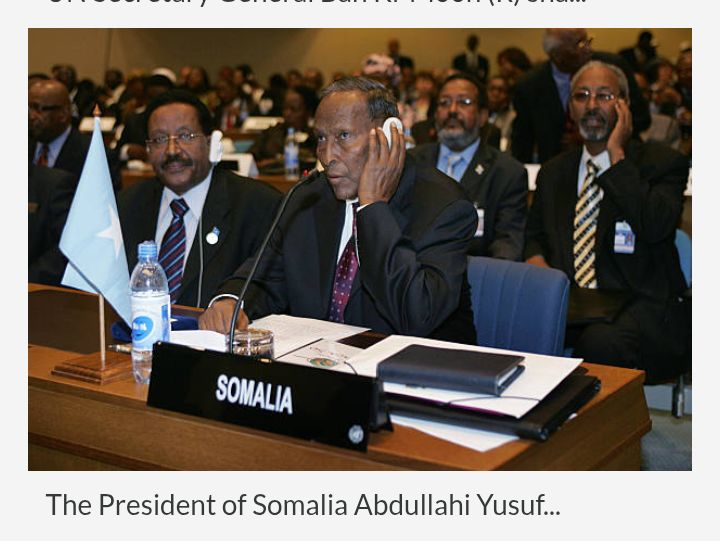
at All Costs
A soldier, a founder of Puntland, and a man of iron will. He believed that strength could rebuild a country torn by militias. His presidency restored a measure of order and diplomacy but leaned too heavily on force. The intervention that saved the capital also deepened divisions.
Yet, through him, Somalia re-entered the world stage, and institutions began to reappear.
Superuser Grade: A for courage, C– for reconciliation — Overall B.
Legacy Index: 7 / 10.
Lesson: Security without compassion cannot endure, but compassion without security cannot begin.
The Final Reflection
These two men are no longer among us. Their voices have returned to their Creator. As we record their history, let us remember that leadership is a trust — a heavy one. The Qur’an says:
“Indeed, We offered the Trust to the heavens and the earth and the mountains, and they declined to bear it and feared it; but man undertook it. Indeed, he was unjust and ignorant.”
— Surah Al-Ahzab (33:72)
May Allah forgive them both.
May He bless their descendants.
May He allow their mistakes to be lessons, and their efforts to be light in the balance of their deeds.
May their service not be forgotten, and may their intentions be rewarded with mercy.
To all who read these words — recite Al-Fātiḥah for them.
Pray for your nation. Pray for your leaders.
Because the same test that weighed upon them will one day weigh upon those who follow.
“And say: ‘My Lord, forgive and have mercy; for You are the best of those who show mercy.’” — (Qur’an 23:118)