

بِسْمِ اللهِ الرَّحْمٰنِ الرَّحِيْم
Al-Ghaniyy: The Self-Sufficient One
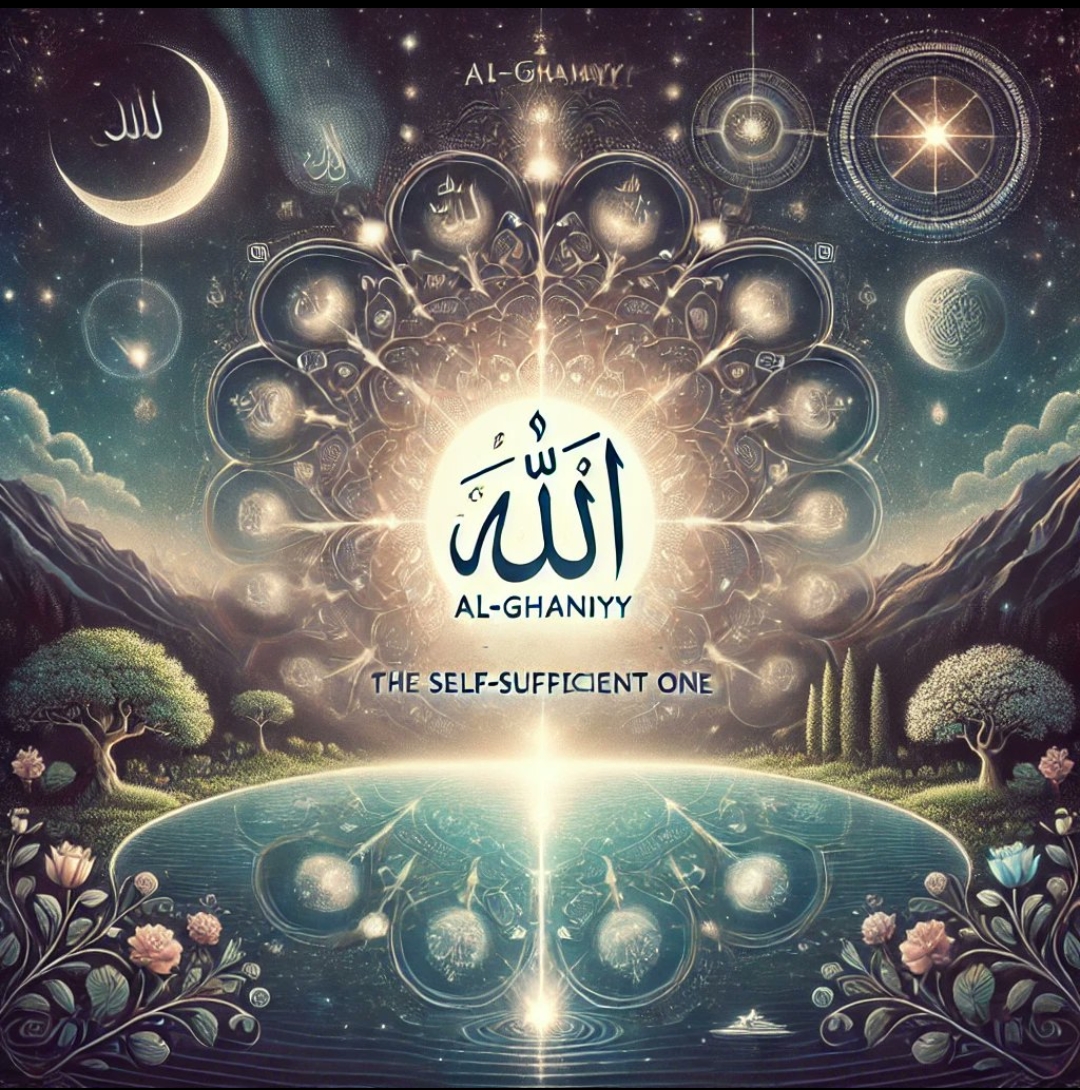
Al-Ghaniyy (الغني) is one of Allah’s 99 names, meaning “The Self-Sufficient One” or “The Independent”. This attribute signifies that Allah is completely independent of all creation, while all of creation is entirely dependent on Him. Allah’s self-sufficiency emphasizes His perfection—He is free from any needs, desires, or limitations. His divine nature stands in stark contrast to human beings, who require sustenance, companionship, and countless provisions for survival.
The Meaning of Al-Ghaniyy
The name Al-Ghaniyy reflects the reality that Allah has no need for anything. He does not need the worship of His creation, nor does He depend on any external resources to sustain Himself. In contrast, all creation is utterly reliant on Allah for existence, provision, and guidance.
In Surah Al-Baqarah (2:263), Allah says:
> كَلِمَةٌ طَيِّبَةٌ وَمَغْفِرَةٌ خَيْرٌ مِّن صَدَقَةٍ يَتْبَعُهَا أَذًى ۗ وَاللَّهُ غَنِيٌّ حَلِيمٌ
"Kind words and the covering of faults are better than charity followed by injury. Allah is free of all wants, and He is Most-Forbearing."
This verse highlights Allah’s self-sufficiency, emphasizing that He does not need our charity or worship. Instead, it is humanity that benefits from acts of goodness and kindness. This independence makes Allah’s generosity even more remarkable because His provisions are given out of pure grace rather than out of need for anything in return.
Allah’s Self-Sufficiency in the Quran
The concept of Allah being self-sufficient appears frequently in the Quran, often to remind humanity of their dependence on Him and the need to turn to Him for all provisions. In Surah Al-Ankabut (29:6):
> وَمَن جَاهَدَ فَإِنَّمَا يُجَاهِدُ لِنَفْسِهِ ۚ إِنَّ اللَّهَ لَغَنِيٌّ عَنِ الْعَالَمِينَ
"And whoever strives only strives for [the benefit of] himself. Indeed, Allah is free from need of the worlds."
This verse reminds believers that their acts of worship and striving are for their own benefit. Allah is in no need of their devotion, as He is free from all dependency. The good that one does in worship and obedience ultimately returns to benefit the individual.
In Surah Fatir (35:15), Allah says:
> يَا أَيُّهَا النَّاسُ أَنتُمُ الْفُقَرَاءُ إِلَى اللَّهِ ۖ وَاللَّهُ هُوَ الْغَنِيُّ الْحَمِيدُ
"O mankind, you are those in need of Allah, while Allah is the Free of need, the Praiseworthy."
This verse serves as a reminder that all people, regardless of status, are in constant need of Allah, whereas Allah remains free from any dependency. Whether it is sustenance, health, or guidance, humanity is always in need, while Allah is above all want.
The Spiritual Component of Al-Ghaniyy
Understanding Allah as Al-Ghaniyy has profound spiritual implications for believers. It serves as a reminder that everything we have—our wealth, health, intellect, and even our very existence—is provided by Allah. Therefore, arrogance and pride over any worldly possession are misplaced. Recognizing Allah’s self-sufficiency fosters humility, gratitude, and reliance on Him.
The Prophet Muhammad (peace be upon him) emphasized this concept in a hadith recorded in Sahih Muslim:
> "O My servants, you will not attain harming Me so as to harm Me, and you will not attain benefiting Me so as to benefit Me. O My servants, were the first of you and the last of you, the human of you and the jinn of you to be as pious as the most pious heart of any one man of you, that would not increase My Kingdom in anything."
This hadith highlights that Allah’s sovereignty and self-sufficiency are not affected by the actions of His creation, whether good or bad. His kingdom remains untouched by the deeds of humanity.
Reflections on Allah’s Self-Sufficiency in Daily Life
Reflecting on Allah’s attribute as Al-Ghaniyy can transform a believer's perspective on wealth and material possessions. It teaches us that worldly resources are not ends in themselves but are tools provided by Allah to test our gratitude and conduct. The understanding that Allah is the ultimate owner and provider encourages believers to share their blessings with others, knowing that their wealth is, in reality, a trust from Allah.
Surah Al-Lail (92:18-21) provides insight into this:
> وَسَيُجَنَّبُهَا الْأَتْقَى - الَّذِي يُؤْتِي مَالَهُ يَتَزَكَّى - وَمَا لِأَحَدٍ عِندَهُ مِن نِّعْمَةٍ تُجْزَى - إِلَّا ابْتِغَاءَ وَجْهِ رَبِّهِ الْأَعْلَى
"But the righteous one will avoid it—[He] who gives from his wealth to purify himself and not [giving] for anyone who has [done him] a favor to be rewarded, but only seeking the countenance of his Lord, Most High."
These verses show that true righteousness lies in giving for the sake of Allah alone, without expecting anything in return, recognizing that Allah alone is self-sufficient and the ultimate provider of rewards.
Conclusion
The name Al-Ghaniyy reflects Allah’s complete independence from His creation. He is free from need, whereas all creation is entirely reliant upon Him. This understanding fosters humility and gratitude in the hearts of believers, reminding them that their existence, provisions, and well-being are gifts from Allah. By acknowledging Allah’s self-sufficiency, we learn to place our trust solely in Him, share our blessings with others, and strive for His pleasure without expecting anything in return.