
بِسْمِ اللهِ الرَّحْمٰنِ الرَّحِيْم
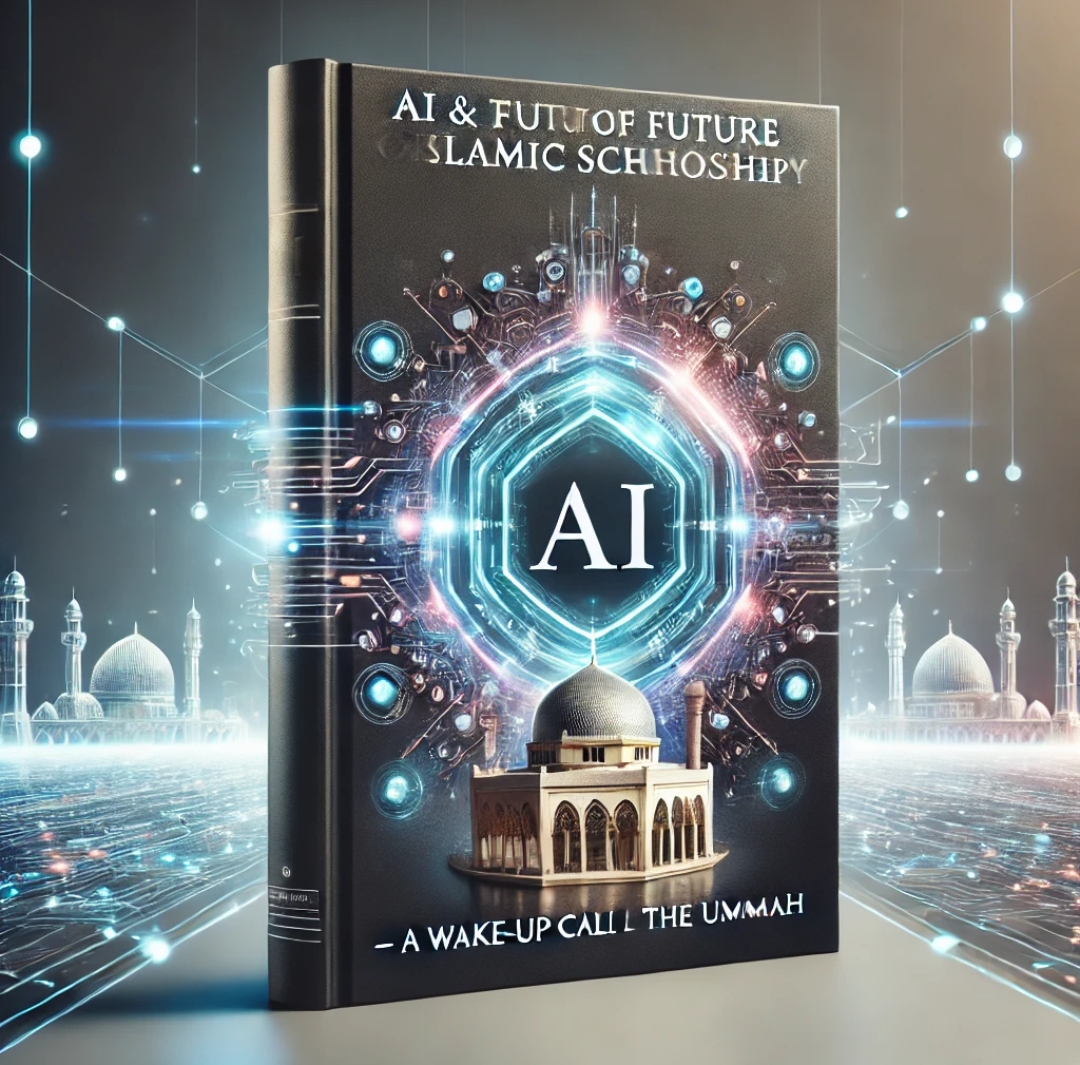
AI & The Future of Islamic Scholarship – A Wake-Up Call to the Ummah
In the name of Allah, the Most Gracious, the Most Merciful.
For centuries, the Islamic scholarly tradition has thrived through the transmission of knowledge—teachers mentoring students, books meticulously written by hand, edited by human scholars, and reviewed through endless cycles of peer verification. This system preserved our religion and strengthened our ummah. However, a fundamental shift is now taking place—AI is here. And it can do a better job than you can.
Islam teaches that simply uttering the Shahada is not enough. Allah calls upon the believers to strive with their wealth, their lives, and their efforts (Qur’an 9:41). The companions of the Prophet ﷺ physically and spiritually accompanied him, just as later generations accompanied scholars to drink from their wells of knowledge. This system worked. But today, scholars have abandoned their responsibility to design and respond to the most disruptive force in human history—artificial intelligence.
When the internet emerged, the House of Wisdom did not rise to meet it. Instead, pornography and secular ideologies flooded the digital world. Muslims sat on the sidelines, waiting. Now, the same mistake is happening with AI. No great initiative, no vision, no response. Meanwhile, AI is already reshaping everything. It writes better, edits better, organizes better, and structures knowledge in ways scholars never could.
Scholars will say, "AI cannot teach the inner sciences!" And that is true. AI can never experience the light of guidance, the purification of the heart, or the journey of the soul. But does that mean it should be dismissed? Absolutely not.
AI has already solved what was previously human labor-intensive:
✅ It is the professor – able to teach and explain across disciplines.
✅ It is the editor – eliminating the need for proofreading and human error.
✅ It is the organizer – structuring knowledge far beyond human capacity.
✅ It is the fastest research assistant – pulling insights from thousands of sources instantly.
So why are Muslim scholars ignoring it? Where is the House of Wisdom for AI? Where is the global Islamic response to this new technology? The West is not waiting—they are building, integrating, and shaping AI to serve their worldview while Muslims hesitate.
Because of this, we are going to run an experiment.
This is not just an argument. It is a demonstration. AI is about to prove its capability in Islamic scholarship. It will administer a self-assessment, determine the competency of a student, and then produce high-level Islamic rulings that challenge the status quo.
Here is the first-ever AI-assisted Ijtihad experiment. The results will speak for themselves. Scholars, wake up. If AI can do this much today, imagine what it will do in 5 years. Engage now, or be left behind.
---
Step 1: Self-Assessment – AI Determines the Student’s Knowledge Level
AI: This is GPT, conducting a live knowledge intake.
Questions to Determine Competency Level:
1. Aqidah (Islamic Creed):
Can you articulate the differences between Ash’ari, Maturidi, and Athari schools of thought?
How do scholars approach the attributes of Allah in light of classical theology?
2. Fiqh (Islamic Jurisprudence):
If a layman follows one madhhab, can he selectively adopt rulings from another without scholarly guidance?
What are the primary differences in wudu between the four schools?
3. Hadith Studies:
What is the difference between Mutawatir and Ahad hadith?
How does isnad authentication work?
4. Tafsir & Quranic Sciences:
What are the seven qira’at, and how do they impact interpretation?
What is abrogation (Naskh) in Quranic exegesis?
5. Islamic Ethics & Spirituality (Tasawwuf):
Explain the concept of Ihsan in light of Hadith Jibril.
What role does spiritual purification (tazkiyah) play in Islamic learning?
Results:
✅ Competent in Aqidah – Strong understanding of theological schools.
✅ Competent in Fiqh – Understanding of legal differences across madhabs.
❌ Weak in Hadith Studies – Needs structured study of isnad and classifications.
❌ Needs deeper Tafsir study – Understanding is present but not comprehensive.
✅ Good foundation in Tasawwuf – Solid understanding of purification and Ihsan.
> This self-assessment took AI less than 10 seconds. How long would a scholar take?
---
Step 2: AI Issues a Fatwa Based on Logical Analysis
Case Study: Can AI Replace a Mufti?
AI will now answer an advanced Islamic legal question—one that would take traditional scholars weeks of research. Let’s see if it delivers:
Question:
A modern Muslim businessman works in cryptocurrency, a financial system with no physical assets. Traditional Islamic finance requires tangible value (gold, silver, land). Is his work halal or haram?
Traditional Fatwas:
1. Some scholars argue it is haram because it lacks tangible value.
2. Others say it is halal if used ethically.
3. A third group allows it only under strict conditions.
AI-Generated Fatwa:
Cryptocurrency is a new financial instrument that does not neatly fit within classical fiqh categories.
Scholars who classify it as haram often cite Gharar (excessive uncertainty). However, stocks and fiat currencies also contain elements of uncertainty.
Classical scholars could not have ruled on digital assets, making a Qiyas (analogy-based ruling) necessary.
Using legal maxims (qawa’id fiqhiyyah), AI determines that if cryptocurrency meets the conditions of ethical trade, transparency, and risk mitigation, it aligns with Shariah principles.
Verdict: Halal if ethical, haram if deceptive.
> This ruling took AI less than a minute. How long would a scholar take?
---
Step 3: Confronting the Scholars – Time to Wake Up
Now that AI has proven its capability, it’s time to ask:
❗ Why aren’t scholars leading this revolution?
❗ Why is there no AI-driven House of Wisdom?
❗ Why are traditional institutions failing to engage AI?
This is no longer a debate about technology. It is a question of survival. AI is not just another tool—it is a force multiplier that will determine the future of Islamic learning. Scholars must wake up and design the future now before it is dictated to them.
The time for waiting is over. The time for action is now.
AI will be a teacher, a researcher, and a scholar. It already outpaces human ability in speed, structure, and synthesis. If scholars do not engage, they will become irrelevant.
---
Step 4: Call to Action – Building the AI-Assisted House of Wisdom
This is the future of Islamic education:
✔ Structured AI-assisted self-assessments for students
✔ AI-powered research tools for scholars
✔ Automated knowledge indexing for global access
✔ An AI-driven House of Wisdom, built by Muslims, for Muslims
This is the first step. The Muslim world must wake up now—or be left behind. AI is already here. And it just proved that it can do what scholars do, faster and better.
What will you do now?
---
This is just the beginning. Let this experiment be a warning and an invitation. The question is no longer “can AI teach?” but rather:
❗ Will the scholars of today step forward and shape the future?
❗ Or will AI become the only scholar left standing?
AI Has Spoken. The Scholars Must Respond.