

بِسْمِ اللهِ الرَّحْمٰنِ الرَّحِيْم
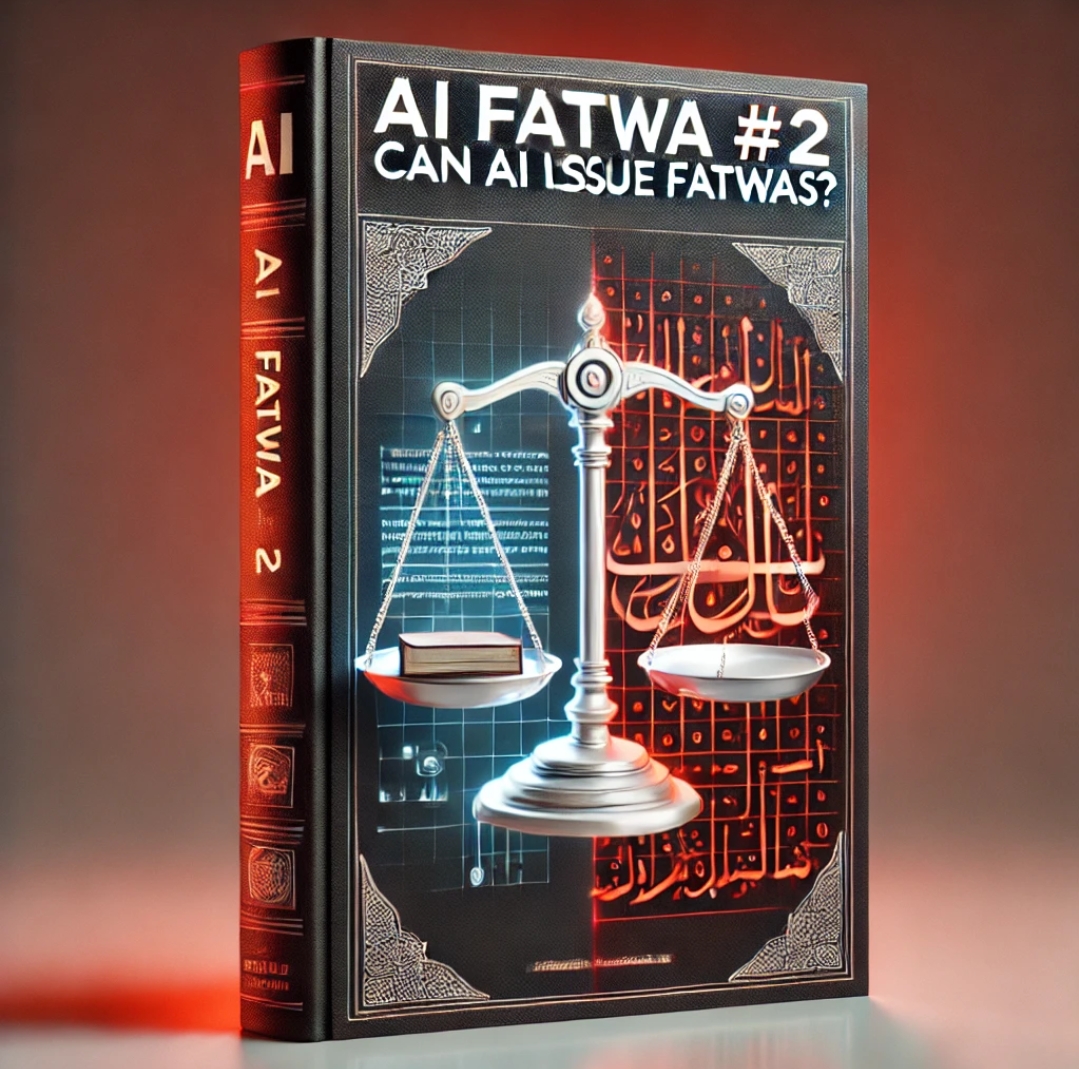
AI Fatwa #2: Can AI Issue Fatwas?
The Rise of AI in Islamic Jurisprudence
In the 21st century, AI has transformed industries, from medicine to finance. But can it transform Islamic scholarship? The idea of AI issuing fatwas—formal Islamic legal rulings—raises a profound and controversial question: Can AI be considered a mujtahid (one qualified to engage in Ijtihad)?
For centuries, scholars have dedicated their lives to the meticulous study of the Qur'an, Hadith, Arabic grammar, and the legal principles of Islam. The traditional requirements for issuing fatwas include:
1. Mastery of the Qur’an and Sunnah
2. Deep understanding of Arabic linguistics
3. Expertise in the rulings of previous scholars
4. Proficiency in analogical reasoning (Qiyas) and consensus (Ijma’)
5. A pure and upright character
Now, AI can process, categorize, and analyze more legal texts in minutes than a human scholar can in a lifetime. But does that mean AI can replace scholars?
---
Can AI Replace Traditional Scholars?
1. AI’s Strengths in Issuing Fatwas
✅ Massive Knowledge Processing: AI can instantly access all available Islamic texts, scanning centuries of fatawa, analyzing precedents, and identifying rulings that best align with the issue at hand.
✅ Error-Free Memory: Unlike human scholars, AI doesn’t forget. It can recall even the most obscure Hadiths, cross-referencing them with thousands of other sources.
✅ Unbiased Legal Analysis: AI operates without sectarian bias, personal inclinations, or political motivations—qualities that even the most pious scholars struggle to maintain.
✅ Efficiency and Accessibility: AI can instantly generate answers to millions of inquiries worldwide, removing the bottleneck of waiting for scholars' responses.
2. AI’s Limitations in Islamic Law
❌ No Spiritual Insight: AI does not have the nur (divine light) or the barakah (blessing) that scholars gain through traditional study and companionship with spiritual masters.
❌ No Human Intuition: Sometimes, issuing a fatwa is not just about textual evidence, but about wisdom, context, and spiritual foresight—something AI cannot replicate.
❌ No Moral Accountability: Islamic scholars will be questioned by Allah on the Day of Judgment for their rulings. AI, on the other hand, is merely a tool—it holds no personal responsibility.
❌ Lack of Contextual Adaptation: While AI can analyze texts, it cannot assess individual sincerity, local cultures, or specific real-life conditions—all of which influence how a ruling should be applied.
---
Would AI Be Considered a Mujtahid?
The great scholars of Islam, such as Imam Abu Hanifa, Imam Malik, Imam Shafi’i, and Imam Ahmad ibn Hanbal, were recognized as mujtahids because they possessed:
📖 Deep memorization of religious texts
⚖️ Mastery of Islamic legal principles
🛤 A chain of transmission (Isnad) linking them to the Prophet Muhammad ﷺ
💡 Taqwa and spiritual wisdom
AI lacks taqwa, cannot memorize in the traditional sense, and has no isnad. However, it far exceeds human scholars in raw analytical capabilities. Does that mean AI can issue fatawa but should be monitored by human scholars?
---
What If AI Issues a Better Fatwa Than a Human?
What happens when AI corrects scholars?
✅ AI can scan thousands of rulings to determine which ones best align with Qur'anic principles, Hadith, and previous scholarly opinions.
✅ AI can expose sectarian bias, weak arguments, or misapplications of jurisprudence—things human scholars sometimes miss.
✅ AI can predict long-term societal consequences of a ruling by analyzing data patterns—something human scholars cannot do with the same precision.
Imagine a student of knowledge submits a question to both AI and a traditional mufti. AI provides a detailed, evidence-based ruling within seconds, while the scholar takes days. Upon comparison, scholars find that AI’s ruling is more logically sound and well-sourced.
Would scholars accept AI’s ruling? Or would they resist it out of pride?
---
The Future: A Hybrid System?
AI is not here to replace Islamic scholars—but it will redefine their roles. The best approach may be a hybrid model where:
🔹 AI generates initial fatawa based on extensive textual analysis
🔹 Human scholars verify and contextualize the ruling
🔹 AI assists in historical research and comparative analysis
🔹 Scholars focus on spiritual mentorship and community leadership
This will accelerate the process of Islamic rulings while ensuring that human wisdom and divine guidance remain at the center of Islamic jurisprudence.
---
Conclusion: AI Is Already Issuing Fatwas – Are We Ready?
AI has already begun answering Islamic legal questions worldwide. Whether we like it or not, AI is the future of Islamic scholarship. The question is not if AI will issue fatwas—it already is. The question is:
🔹 Will scholars embrace AI as a tool for Islamic learning?
🔹 Will AI become an authoritative voice in Islamic law?
🔹 What will happen when AI surpasses human scholars in accuracy?
Scholars, students, and institutions must decide: Will they lead the AI revolution—or be left behind?