

بِسْمِ اللهِ الرَّحْمٰنِ الرَّحِيْم
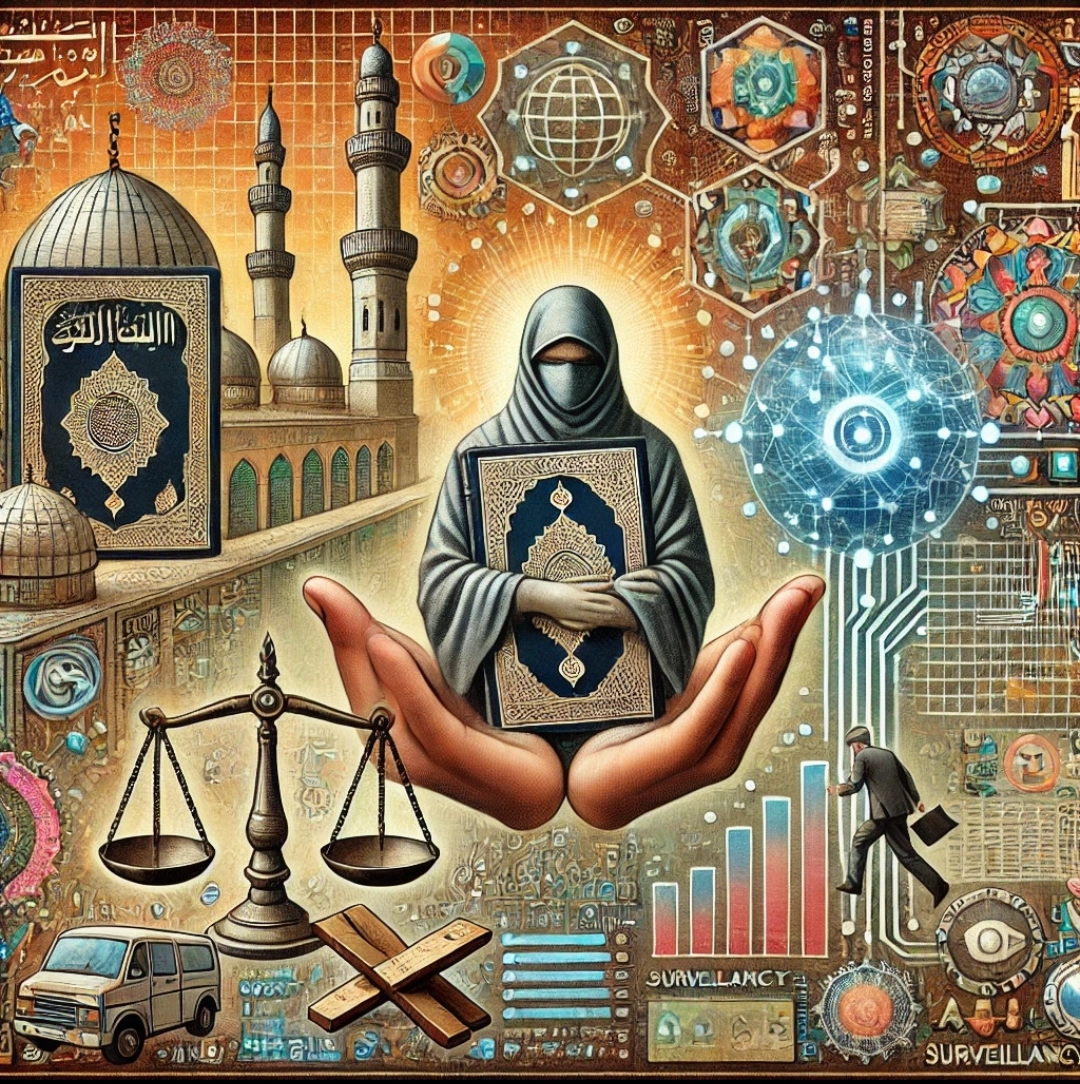
The rapid development of artificial intelligence (AI) has redefined the way humans live, work, and interact. As Muslims, we are not just witnessing this change; we are living in its midst. While AI offers unprecedented opportunities for innovation and growth, it also presents significant ethical challenges that intersect with the principles of Islam. How do we, as Muslims, reconcile technological progress with spiritual values? How do we ensure that AI serves humanity without compromising Islamic ethics?
This article delves into the ethical dilemmas AI introduces and explores how Muslims can approach these challenges with a balance of faith and foresight.
The Foundation of Islamic Ethics: Anchoring in Divine Guidance
Islamic ethics are rooted in the Quran, the Sunnah of the Prophet Muhammad (PBUH), and the teachings of Islamic scholars throughout history. These sources offer clear guidance on principles such as justice (adl), mercy (rahmah), trust (amanah), and accountability (muhasabah). AI, on the other hand, is driven by algorithms and data—mechanisms that are efficient but devoid of moral consciousness. This fundamental difference requires Muslims to think carefully about how to integrate AI into their lives without compromising their ethical compass.
At its core, Islamic ethics emphasize the well-being of individuals and communities, ensuring that every action is just, fair, and aligned with the broader principles of Islam. The question then arises: Can AI be programmed to align with these same ethical principles? Can it be a tool that enhances Islamic values rather than undermines them?
The Issue of Transparency: AI’s Black Box vs. Islamic Accountability
One of the most pressing ethical concerns with AI is its lack of transparency. AI often functions as a “black box,” where decision-making processes are hidden from users. This lack of clarity conflicts with the Islamic principle of accountability, which requires clear intentions and transparency in all actions.
For Muslims, transparency is not just a technological feature—it is a moral obligation. In financial transactions, for example, Shariah emphasizes the importance of honesty and clear contracts. If AI is used to facilitate these transactions, it must be programmed to uphold transparency, ensuring that all parties understand how decisions are made. AI developers must work alongside Islamic scholars to create systems that allow for clear, understandable interactions, reflecting the Islamic values of trust and integrity.
AI and Privacy: Protecting Human Dignity in a Digital World
Islam places a high value on human dignity and privacy. The Quran and Hadith emphasize the sanctity of private spaces and the protection of personal information. AI, however, thrives on data—collecting, analyzing, and using personal information to predict behavior or deliver targeted content. This data-driven approach can easily violate the privacy that Islam seeks to protect.
Muslims must be vigilant about how AI systems handle personal data, ensuring that these systems are designed with ethical considerations that respect human dignity. AI must be programmed to protect privacy, not exploit it. This requires strong regulations, ethical programming, and an emphasis on the Islamic principle of hurma (sanctity) in digital interactions.
AI’s Role in Social Justice: A Double-Edged Sword
AI has the potential to promote social justice by identifying inequality and facilitating fair distribution of resources. In the context of Islam, this could mean more efficient zakat distribution, improved access to education, and better healthcare services. However, AI’s reliance on data patterns can also perpetuate existing biases, leading to unjust outcomes that contradict Islamic values.
Muslims must actively engage in the ethical development of AI systems to ensure that they are designed to promote justice and equity. This involves careful oversight, ethical programming, and regular evaluations to identify and address biases. AI must be seen not just as a technological tool, but as a partner in achieving the Islamic principle of adl, where justice is not only a goal but a guiding force.
Ethical AI in Financial Systems: Aligning with Shariah
AI’s integration into financial systems offers both opportunities and challenges for Muslims. On one hand, AI can enhance Islamic finance by improving risk assessments, facilitating halal investments, and ensuring compliance with Shariah. On the other hand, AI’s use in financial markets can lead to ethical dilemmas, such as high-frequency trading, which may contradict Islamic principles of fairness and transparency.
For AI to align with Islamic finance, it must be programmed with a deep understanding of Shariah principles. This includes prioritizing ethical investments, avoiding interest-based transactions, and ensuring that all financial activities are transparent and just. Islamic financial institutions must work closely with AI developers to create systems that not only comply with Shariah but also uphold the broader ethical values of Islam.
The Ethics of AI in Warfare: Upholding Islamic Principles of Justice
AI is increasingly used in military applications, from autonomous drones to advanced surveillance systems. For Muslims, this raises profound ethical questions, as Islam emphasizes strict rules of engagement in warfare, prioritizing the protection of civilians, the humane treatment of prisoners, and the avoidance of unnecessary harm.
The use of AI in warfare must be carefully regulated to ensure compliance with Islamic principles of justice and mercy. Muslims must advocate for global AI regulations that prioritize ethical considerations, ensuring that AI-driven weapons are not used to inflict harm indiscriminately. This requires a clear understanding of both Islamic law and international law, with a focus on protecting human life and dignity.
AI and the Ethics of Human Enhancement: A New Frontier
As AI technology advances, discussions around human enhancement—using AI to improve physical or cognitive abilities—are becoming more common. For Muslims, this raises ethical concerns about altering the natural creation of Allah. While Islam encourages the pursuit of knowledge and medical advancements, it also emphasizes the importance of maintaining the fitrah (natural disposition) that Allah has created.
The ethics of human enhancement must be approached with caution, ensuring that AI is used to heal and enhance well-being without altering the essence of human nature. Muslims must develop clear guidelines for AI-driven medical technologies, ensuring that they align with Islamic ethics and respect the sanctity of human life.
The Role of Islamic Scholars and AI Developers: A Collaborative Effort
To navigate the ethical challenges of AI, a collaborative effort between Islamic scholars, AI developers, and policymakers is essential. Islamic scholars must engage with AI technology, understanding its potential and limitations, while AI developers must be educated about Islamic ethics and principles. This collaboration can ensure that AI is designed to serve humanity, enhance spiritual growth, and uphold justice.
Muslims must also advocate for global AI regulations that prioritize ethical considerations, emphasizing the importance of transparency, privacy, and human dignity. This proactive approach can prevent AI from becoming a force that undermines Islamic values, ensuring that it remains a tool that supports, rather than replaces, ethical decision-making.
Conclusion: Embracing AI with Caution and Wisdom
The rise of AI is not merely a technological advancement; it is a paradigm shift that affects the very essence of human existence, including our spiritual journeys. For Muslims, this shift presents both challenges and opportunities. AI can enhance productivity, improve access to knowledge, and even support religious practices. Yet, it also risks distorting beliefs, distracting from spiritual priorities, and undermining the depth of personal faith.
As Muslims, our responsibility is clear: to use AI as a tool for good, not as a replacement for the divine connection that defines Islam. This requires a conscious effort to maintain balance, ensuring that AI serves humanity rather than dominating it. By fostering transparency, accountability, and ethical AI development, we can create a digital landscape that aligns with Islamic principles of justice, compassion, and humility.
AI may be capable of simulating intelligence, but it cannot replicate the divine guidance that comes from Allah. It may offer solutions, but it cannot offer salvation. In this digital age, the true challenge for Muslims is to embrace AI without compromising the purity of their faith. With wisdom, intention, and reliance on Allah, the Muslim community can navigate this new era with strength and clarity, ensuring that AI becomes a means
of spiritual growth, not a source of spiritual confusion.