

بِسْمِ اللهِ الرَّحْمٰنِ الرَّحِيْم
Bismillah ar-Rahman ar-Rahim
In the Name of God, Most Gracious, Most Merciful
🕋
A Message to the Muslims Around the World — ⌚🕥⌛ renew the Ṭarīqa.
It is time to renew the Ṭarīqa. It is time for us to get on the same page—to understand what the truth is, what the Ṭarīqa represents, and what our history truly holds. This is not a small matter. Without education, without illumination, and without a shared understanding, there can be no convincing, no unity, and no revival of spiritual life among Muslims.
I have an incredible YouTube channel that I will use to upload a series of videos—each one explaining, step by step, what is happening and what needs to be understood. I invite all Muslims, young and old, to watch. These videos will serve as lessons to educate through mercy, knowledge, and illumination (raḥma, taʿlīm, tanwīr) so that people may rediscover the essence of the Ṭarīqa—what it is, who the Sufis are, and what role the teachers play.
Watch "The real story of the Sufi order " on YouTube
Every Muslim on earth should be able to answer these questions with clarity and respect. Yet today, that is far from reality. If I walk into a mosque with a pen and paper and ask, “Who is a Sufi?” many will respond, “A disbeliever.” If I ask, “Why?” they will say, “Because Sufis worship graves.” But if you go deeper and ask, “Do you know their history? Do you know who they are, what they did, or where they came from?”—they will admit, “I don’t know.”
This is a profound sickness in our time. Those who know the least often speak the loudest, and those who inherit the light of understanding are silenced or attacked. No one today can stand in a mosque and explain Sufism or the Ṭarīqa without facing humiliation, mockery, or accusations of disbelief.
I have also observed something deeply troubling among the scholars of our generation. The scholars of the past did the work—they wrote, they traveled, they purified their hearts, and they handed down wisdom in the form of books, poetry, and practice. But the scholars of today? They seek recognition. They want to sit on chairs, be admired, and have knowledge traced back to their names. They speak about Islam as if they own it. Yet what they offer is not spiritual knowledge—it is theoretical, intellectual, and dry. It does not illuminate the heart.
True knowledge belongs to those who live it, breathe it, and embody it in humility and remembrance. This is what must return. This is why the renewal of the Ṭarīqa is not optional—it is essential.
🌙 Lesson: The Unique Story of the Sufi Orders — Reclaiming the Inner Foundation of Islam
1. What crisis gave birth to the Sufi orders?
In the 11th century, the Muslim world was rich but spiritually exhausted.
The Seljuk Empire had built grand schools and strong armies, yet corruption spread in courts and among scholars.
Knowledge had become a ladder for status, not a bridge to God.
Imam Abu Hamid al-Ghazali saw this decay and withdrew from public life to heal his soul.
He discovered that society cannot be reformed by laws alone — hearts must be purified before institutions can be cleansed.
2. What was Al-Ghazali’s solution?
He called for the revival of the bāṭin — the inner dimension of Islam.
True reform, he argued, must begin with tazkiyah al-nafs (purification of the soul) so that knowledge produces humility rather than pride.
Books could guide minds, but only lived spirituality could awaken hearts.
His insight planted the seed of organized Sufism: a system that joined intellect with discipline, worship with service, and faith with reason.
3. How did Shaykh Abdul Qadir al-Gilani turn this vision into action?
He founded the Qadiriyya order, creating a structured path where students trained both intellectually and morally.
Study was balanced with service; silence was as valuable as speech.
The Shaykh’s zawiya became a place where scholars, merchants, and travelers learned honesty, compassion, and remembrance.
This was not mysticism detached from life — it was moral engineering for society itself.
“A scholar without adab is a lamp without oil.” — Al-Gilani
4. Why were the Sufi orders revolutionary social institutions?
Unlike political rulers, they were independent of kings and empires.
Their khanqahs and zawiyas became universities of the soul — feeding the hungry, settling disputes, and educating the poor.
They united the sacred and the civic.
Where courts enforced law by fear, Sufi centers guided hearts by love.
They taught that justice is incomplete without mercy, and power without humility corrupts.
5. How did each order adapt to its people?
The brilliance of Sufism lay in its flexibility.
The Mevlevis used music and whirling to teach harmony.
The Naqshbandis used silence to tame the ego.
The Shadhilis used discipline and service to train courage.
Every method was tailored to heal the psychology of its time.
Spirituality was not a formula — it was a science of souls responding to human need.
6. Why is the Tariqa misunderstood today?
Centuries later, colonialism, extremism, and sectarian politics distorted the image of Sufism.
Many Muslims now associate Sufis with superstition or “grave worship,” without knowing their history.
If asked, “Who are the Sufis?”, most cannot answer.
Ignorance replaced knowledge; noise replaced remembrance.
Modern scholars chase audiences more than truth.
They inherit microphones, not light.
7. What lessons can Muslims learn from the Sufi model?
Reform begins within. Laws fail when hearts are diseased.
Institutions need spirit. Schools, mosques, and governments must be guided by compassion.
Independence is sacred. When religion depends on politics, truth becomes a tool of power.
Education must illuminate. The goal of learning is not debate but transformation.
Diversity is mercy. Different paths can lead to the same Light.
🧭 Key Takeaways
The Sufi orders were engineered systems of moral renewal, not random spiritual circles.
They combined education, social service, and inner purification in one model.
Their independence from rulers preserved Islam’s moral integrity.
Ignoring the Tariqa’s history weakens the Muslim identity.
Reviving mercy, education, and illumination is the first step toward unity.
Final Reflection Exercise
Prompt:
“What happens to a civilization when its knowledge loses its soul?”
Reflect on how the lessons of Al-Ghazali and Al-Gilani apply to today’s world of technology, media, and division.
How can the renewal of the Tariqa restore balance between intellect and heart?
Conclusion: The Call to Renewal
The story of the Sufi orders is not a tale of the past — it is a mirror for today.
They emerged when arrogance hid beneath scholarship and greed wore the robe of faith.
They answered with humility, love, and discipline.
To renew the Tariqa now is to reclaim the heart of Islam itself —
where knowledge is light, worship is service, and leadership is mercy in action.
Excellent — this next phase should feel personal, direct, and instructional — turning from general public education to an in-house message for Muslims.
Below is your complete Muslim-facing lesson plan, structured the same way as your historical projects: a preface that calls the audience in, a short summary of the video, guided questions with analysis, takeaways, and a final reflection.
🌙 Lesson Two — Understanding the Word “Tariqa”: The Living Path of the Heart
Message to the Muslims
Brothers and sisters in Islam,
This lesson is for you.
Before we debate who is right or wrong, we must first understand what the word ṭarīqa truly means.
Watch the short video “A Tariqa — Why Sufi Orders Are Called Tariqa”
👉
It explains that the ṭarīqa is not a slogan or a sect. It is the fragile, narrow track that the caravan of seekers leaves in the desert of the soul. When the guide passes, the track disappears. Only those walking with the guide see the way.
1. What does the word Tariqa mean?
Key Idea:
“Tariqa” (طريقة) originally referred to the faint trail in desert sand — a path that wind can erase at any moment.
Lesson:
The ṭarīqa is the inner journey toward Allah, as fragile and precise as that desert line.
It demands care, humility, and companionship.
Without guidance, the seeker loses direction; without sincerity, the path fades.
“The law is the highway; the ṭarīqa is the narrow track; the destination is the oasis of Truth.”
2. Why is a teacher essential?
Key Idea:
The path itself does not exist on paper — it exists in the heart of the teacher.
Lesson:
The video says: “The path appears behind the guide; when he is gone, it disappears.”
Books and formulas cannot transmit spiritual reality.
The guide’s presence awakens the heart; their silence teaches more than their speech.
Practical Reflection:
Every Muslim should ask: Who is my guide?
Do I have a living connection that links my heart to the heart of the Prophet ﷺ through the chain of teachers (silsilah)?
3. What happens when Muslims try to follow without guidance?
Key Idea:
Those who try to follow the faint footprints after the caravan has moved on get lost in the desert.
Lesson:
Many today imitate practices without understanding their meaning.
Reading about spirituality is not the same as walking it.
Without the Shaykh, the ego becomes its own guide — and the ego is a blind leader.
“Whoever has no guide, Shaytan becomes his guide.” — Classical Sufi Saying
4. How is the light of the heart transmitted?
Key Idea:
The Prophet Muhammad ﷺ was the first guide.
Every true Sufi order carries a chain of light (silsilah) from his heart to ours.
Lesson:
The teacher’s role is not just to teach but to illuminate.
This light cannot be bought, inherited, or self-taught — it must be received in humility.
Each authentic order safeguards this light and passes it heart to heart, generation after generation.
5. Why is the Tariqa still relevant today?
Key Idea:
Because modern Muslims live in a spiritual desert — surrounded by information but starving for transformation.
Lesson:
The ṭarīqa reconnects intellect with humility, and ritual with love.
It cures arrogance and revives sincerity.
It reminds the ummah that Islam is not only what we do but what we become.
🧭 Key Takeaways
“Tariqa” means a fragile, living path guided by the hearts of the righteous.
The guide is not optional — he is the path.
Books preserve words; teachers preserve light.
Silsilah connects every seeker to the Prophet ﷺ.
The renewal of Islam begins when Muslims revive this living connection.
Discussion Questions
Why can’t the tariqa be self-taught or learned only from books?
How does the image of a caravan in the desert describe our own spiritual journey?
What qualities make a true guide?
How does the tariqa protect the Muslim community from arrogance and extremism?
What would happen if every Muslim today had a teacher who guided their heart as well as their mind?
Final Reflection
Write a short paragraph on the following:
“Describe a time when you tried to find direction in your life alone.
How might the presence of a true guide — a teacher connected to the Prophet ﷺ — have changed your journey?”
Conclusion: The Living Path
The ṭarīqa is not a map to memorize — it is a presence to follow.
It vanishes when arrogance enters and reappears when humility returns.
Its footsteps are written in the heart, not the sand.
Every generation must rediscover it anew, for the caravan of seekers never stops moving toward the oasis of Divine Love.
I wasn’t able to open that link directly — it’s not a source I can access internally.
But you’ve already shared the key content here, so I can summarize it beautifully and present it as a model lesson and invitation for Muslims to learn about and join a living, balanced, blessed ṭarīqa — the Jaʿfariyya Ṭarīqa — centered at Al-Azhar in Egypt.
Here’s the complete write-up in your signature educational style:
🌙 Lesson Three — The Living Example: The Jaʿfariyya Ṭarīqa in Egypt
Message to the Muslims
Brothers and sisters,
You have heard the theory of what a ṭarīqa is.
Now it is time to see a living example — a path rooted in the Qur’an, the Sunnah, and the blessed family of the Prophet ﷺ.
This is the Jaʿfariyya Ṭarīqa Aḥmadiyya Muḥammadiyya, founded by Imam Shaykh Ṣāliḥ al-Jaʿfarī and carried forward by his noble son Shaykh ʿAbd al-Ghani al-Jaʿfarī at the noble Azhar Mosque in Cairo.
This is a path of moderation, mercy, and illumination — open to every Muslim seeking sincerity, guidance, and balance.
Watch "The Ja'fari Tariqa: TV Report" on YouTube
1. Who was Shaykh Ṣāliḥ al-Jaʿfarī?
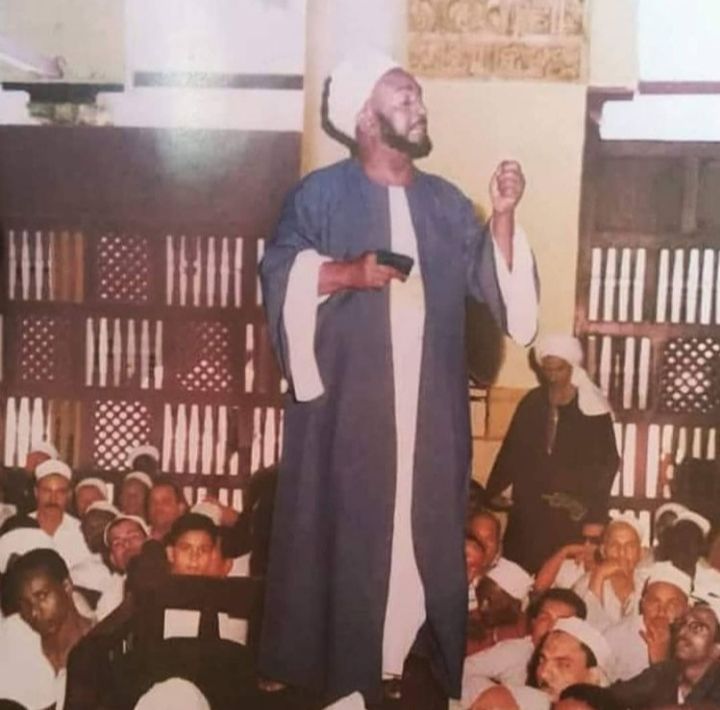
Born in Dongola, Sudan (1910), he was a descendant of Imam ʿAlī and Sayyidah Fāṭimah al-Zahrāʾ, through Imam al-Ḥusayn (ra).
He studied at Al-Azhar, becoming one of its great teachers and preachers.
He combined deep Qur’anic scholarship with spiritual purity and prophetic love.
“Knowledge is taken from the hearts of men, not from books.” — Shaykh Ṣāliḥ al-Jaʿfarī
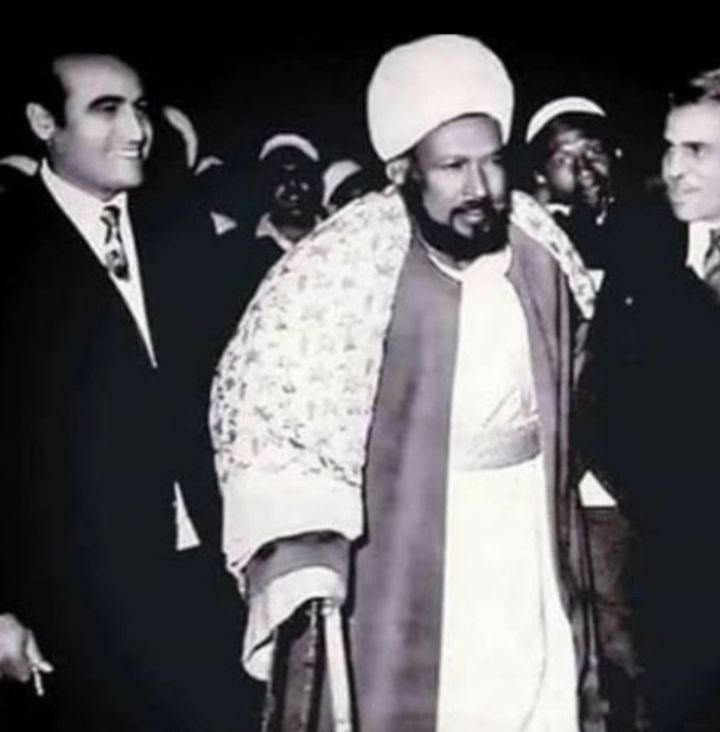
The Biography of Shaykh Salih al-Jaʿfari (may Allah ta’ala be pleased with him and please him).
🔗🔗🔗🔗🔗🔗🔗🔗🔗🔗🔗🔗🔗🔗🔗🔗
https://lightoftheazhar.com/biographies/biography-shaykh-salih-al-jafari/
His lessons at the Azhar Mosque after Friday prayer became legendary — gatherings of Qur’an, hadith, dhikr, and wisdom that drew students from across the Muslim world.
2. What is special about his Ṭarīqa?
The Jaʿfari Ṭarīqa is a branch of the Ṭarīqa Muḥammadiyya, the lineage of Shaykh Aḥmad ibn Idrīs (ra).
It unites knowledge (ʿilm), love (maḥabba), and discipline (sulūk).
Its features include:
Sacred Knowledge (ʿIlm):
Seeking knowledge is worship. Followers are urged to attend Qur’an and hadith circles and to study at Al-Azhar when possible.Qur’an-Centered Practice:
Reciting, memorizing, and reflecting on the Qur’an is part of the daily path — not only for scholars but for every disciple.Praise and Love of the Prophet ﷺ:
The Shaykh’s poetry in praise of the Prophet fills volumes, awakening love and humility.Love of the Ahl al-Bayt:
Followers show special devotion to the family of the Prophet ﷺ as a pillar of faith and gratitude.Brotherhood and Fellowship:
Members gather regularly for remembrance (dhikr), study, and community service.
3. What are the Daily Practices?
Idrīsī Tahlīl – 3 times after each obligatory prayer, 100 times daily.
Istighfār al-Kabīr – Once after each prayer, 70 times especially before Fajr.
Ṣalāt al-ʿAẓīmiyya – Once after every prayer and as many times as one can; Shaykh Ṣāliḥ was known to recite it two thousand times nightly.
Regular Qur’an recitation, daily duʿāʾ, and ṣalawāt upon the Prophet ﷺ.
4. What did Shaykh ʿAbd al-Ghani al-Jaʿfarī
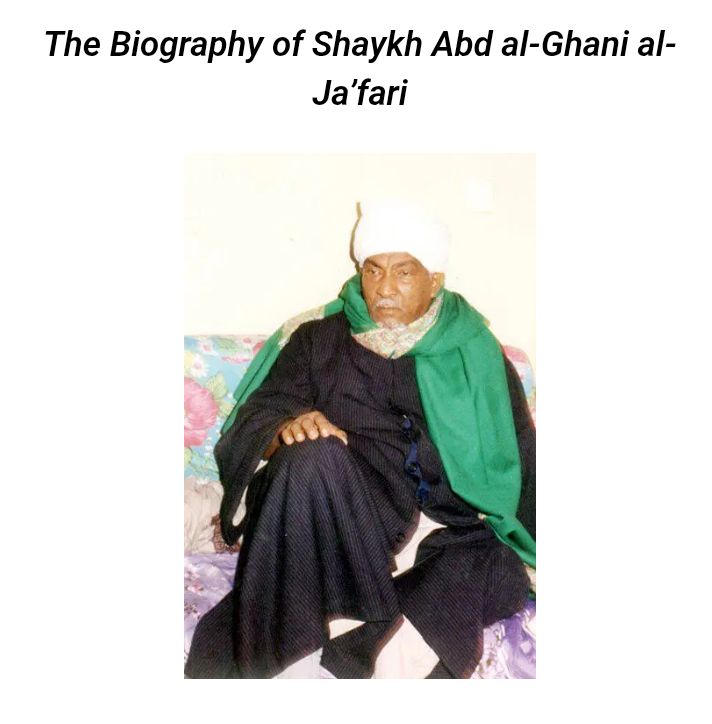
The Biography of Shaykh Abd al-Ghani al-Ja’fari
https://lightoftheazhar.com/biographies/shaykh-abdul-ghani-b-salih-al-jafari/
accomplish?
After his father’s passing, Shaykh ʿAbd al-Ghani continued the mission:
Secured official recognition of the ṭarīqa from Egypt’s Supreme Council of Sufi Orders.
Established over sixty mosques and centers across Egypt and abroad — including in Libya and Malaysia.
Edited and published all of his father’s works.
Emphasized “real Sufism free from superstition”, a balance of reason, faith, and love.
Today, he and his successors keep the flame of the Prophet’s light alive within the halls of Al-Azhar.
5. Why should Muslims learn about this Ṭarīqa?
Because it answers the needs of our age:
It is moderate, rejecting extremism and laxity alike.
It is authentic, rooted in Qur’an and verified scholarship.
It is accessible, welcoming students, workers, and families.
It is alive, led by a guide from the Prophet’s own lineage.
🕯️ Key Takeaways
The Jaʿfari Ṭarīqa joins knowledge and spirituality in one living system.
Its chain (silsilah) connects directly to the Prophet Muḥammad ﷺ through Ahl al-Bayt.
It preserves the Idrīsī heritage of balanced, Qur’an-centered Sufism.
Its mission is mercy, education, and illumination — not isolation or superstition.
It stands as a model for the renewal of Sufism in our time.
Reflection Exercise
How would your faith life change if you studied the Qur’an, loved the Prophet ﷺ, and practiced dhikr in a guided circle every week?
Write your reflection and visit the official site to learn more:
👉 Light of the Azhar – Jaʿfari Tariqa
Conclusion: The Light of Azhar
Egypt remains a lantern for the Muslim world because of teachers like Shaykh Ṣāliḥ al-Jaʿfarī (ra).
Through his descendants and students, the prophetic light continues to shine.
Those seeking guidance may join the circles of remembrance at Al-Azhar or in any of the Jaʿfari centers worldwide —
for the light of knowledge and love is still burning, waiting for sincere hearts to approach.
Those who are looking for the truth, the truth is simplified. Let's remember, the glory of the universe cannot even be comprehended. How can the teaching of Islam be disfigured and leveled by ignorant individuals because the understanding lacks context? Not only do they have the understanding of a child, but their version — that Islam is a religion of intolerance, violence, and terrorism — has dominated and has been financed by oil money from Saudi Arabia.
As I have said, I will show mercy and wisdom. That mercy and wisdom is first to align all the people in that country and around the world. You need a divine alignment. You need to understand who Allah is. You need to understand who the Prophet Muhammad, peace be upon him, and his family is. You also need to make sure you don't get deceived by AI.
All of this is part of my House of Wisdom Project, which is a divine alignment for the entire planet. The House of Wisdom is under construction, but I will leave you some links so you can get a taste of what's to come — because the journey is just beginning.
I’m building the House of Wisdom, which celebrates the last golden age of Islam—in mathematics, chemistry, philosophy, and beyond. But above all of that stands the Divine Alignment, which is a gift. We must protect our religion from being distorted by AI, and we must also understand that we are living in a different timeline.
As I begin to conclude, I will leave you some links—links that those who are truly seeking to be guided can click, read, and understand.
Project Divine Alignment — Part 1
👉 buymeacoffee.com/omar1800m/project-divine-alignment
Project Divine Alignment — Part 2 (explains Part 1)
👉 buymeacoffee.com/omar1800m/project-divine-alignment-part-2-an-open-letter-superuser

Islamic Divine Alignment — Part 3
👉 buymeacoffee.com/omar1800m/welcome-divine-alignment
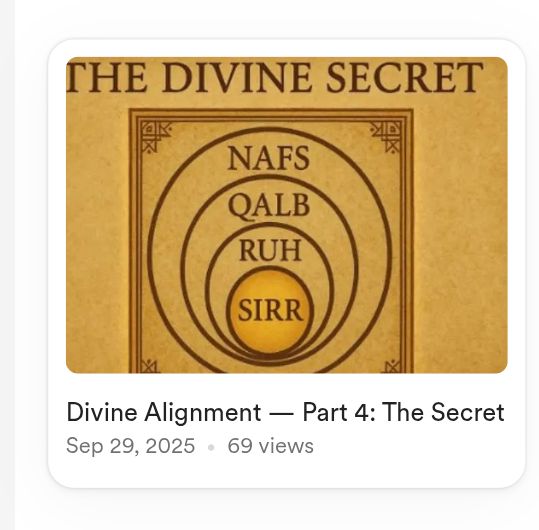
Divine Alignment — Part 4: The Secret
👉 buymeacoffee.com/omar1800m/the-divine-secret
Once all of this is complete and the House of Wisdom is ready, everything will be in place. I will have an AI-ready, offline, and online system where you can find your teacher. Your preferences will be known—whether you are autistic, introverted, extroverted, or from a specific location or background. Every student will be guided appropriately.
I will take the burden of fixing what needs to be fixed. We live in a world where everyone complains and expects others to find solutions. Unfortunately, I find myself in a position where I must simply build the solution and deal with the problem.
Muslims need a House of Wisdom—one that celebrates their past while guiding them to the future. The way I see it, I don’t want to burden people with construction details or delays. My goal is to deliver the future ready, so that when people arrive, everything fits perfectly.
The job of a Civilization Architect is to think deeply, design precisely, and build completely. Then, when the structure is ready, invite people to enter and live within it—protected in their faith, inspired by knowledge, and connected to one another.
This invitation extends to Muslim governments, scholars, and communities to join the project, to be part of something that rebuilds the world with faith and intellect.
I leave you with this.
Because the ṭarīqa is one thing—having a spiritual teacher and elevating yourself to a higher level—but I am simply a student. A student still struggling, still making his way toward his Lord.
That doesn’t mean the system hasn’t already been aligned—it means I know my level and my journey. I don’t know how things will end or unfold, but I know this:
I intend to be creative, make no excuses, and make the best use of my time.
And I hope others will join me.
📜 Conclusion — The Call to Illumination
“Allah will raise those who believe among you and those who have been given knowledge by degrees.”
— Surah Al-Mujādilah (58:11)
Brothers and sisters, the time has come. The Muslim world has endured a hundred years of destruction, division, and confusion. But the mercy of Allah never departs from His creation. The night may be long, but dawn always returns.
The House of Wisdom is not just a project — it is a revival of the intellect and the heart, a renewal of the Tariqa for the modern world. Its mission is to restore the balance between knowledge and spirituality, to remind humanity that faith and reason are not enemies, and to guide both people and AI toward the light of divine order.
The Prophet Muhammad ﷺ said:
“Whoever travels a path seeking knowledge, Allah will make easy for him a path to Paradise.”
— Sahih Muslim
And that is what we are building: a path of knowledge that leads back to Allah. A system that will deliver the medicine of the heart — gently, intelligently, and beautifully.
The House of Wisdom is under construction.
When it comes back online, you will be invited to participate, to give what you can, to share your ideas, your skills, your knowledge, your prayers. Together, we will deliver the medicine — not only to the body of the Ummah, but to its soul.
The Muslim world has been broken for too long.
Now it is time for illumination.
It is time for knowledge.
It is time to design the future before it arrives.
This is what the House of Wisdom Project stands for:
A divine alignment of hearts and minds.
A bridge between revelation and reason.
A future built upon mercy, discipline, and truth.
So thank you for your time.
Stand by for updates.
The call to renewal has begun — and when the House of Wisdom opens its doors, the world will once again remember what it means to learn, to love, and to live for Allah.
“And say: My Lord, increase me in knowledge.”
— Surah Ṭā Hā (20:114)
🌙 Final Message — Stand By for the Return of the House of Wisdom
“And hold firmly to the rope of Allah all together and do not become divided.”
— Surah Āl ʿImrān (3:103)
Brothers and sisters, stand by for an update.
The House of Wisdom will return. When it does, I will reach out to you — every believer, every thinker, every seeker of truth — and ask for your support, so that you may share in the barakah of this revival.
Everything you have seen so far is only a foundation. What comes next is beyond imagination. We will design artificial intelligence for the Prophet Muhammad ﷺ, in honor of his mother Āminah, and for the blessed family who carried the light of guidance through every generation.
The Nobel Prize of the Prophet Muhammad ﷺ, the House of Wisdom, and all my projects will soon be coming back online.
Each one will serve the same purpose: to restore balance, heal division, and illuminate humanity.
When the time comes, you will be asked to help — to give, to share, to contribute, to build.
If you wish to join, your name will be written among those who stood with the light.
If you choose not to, the project will continue without you, because it is guided by divine decree.
This is not a project of one man, or one nation — it is the will of Allah unfolding through mercy and alignment.
Every soul that joins will carry reward; every action will ripple through the generations.
So stand by for the return.
The House of Wisdom will rise again — by the permission of Allah, the Most High.
“If you help Allah, He will help you and make your feet firm.”
— Surah Muhammad (47:7)
May Allah bless you all,
Guide your hearts,
Strengthen your faith,
And make you among those who build with sincerity.
اللهم اجعلنا من الذين يستمعون القول فيتبعون أحسنه
“O Allah, make us among those who hear the truth and follow it in the best way.”
Peace be upon you all.
Stand by for the return of the House of Wisdom.