

بِسْمِ اللهِ الرَّحْمٰنِ الرَّحِيْم
A Divine Blueprint: Challenging Scholars to Unveil the Numerical Pattern in Surah Al-Baqarah
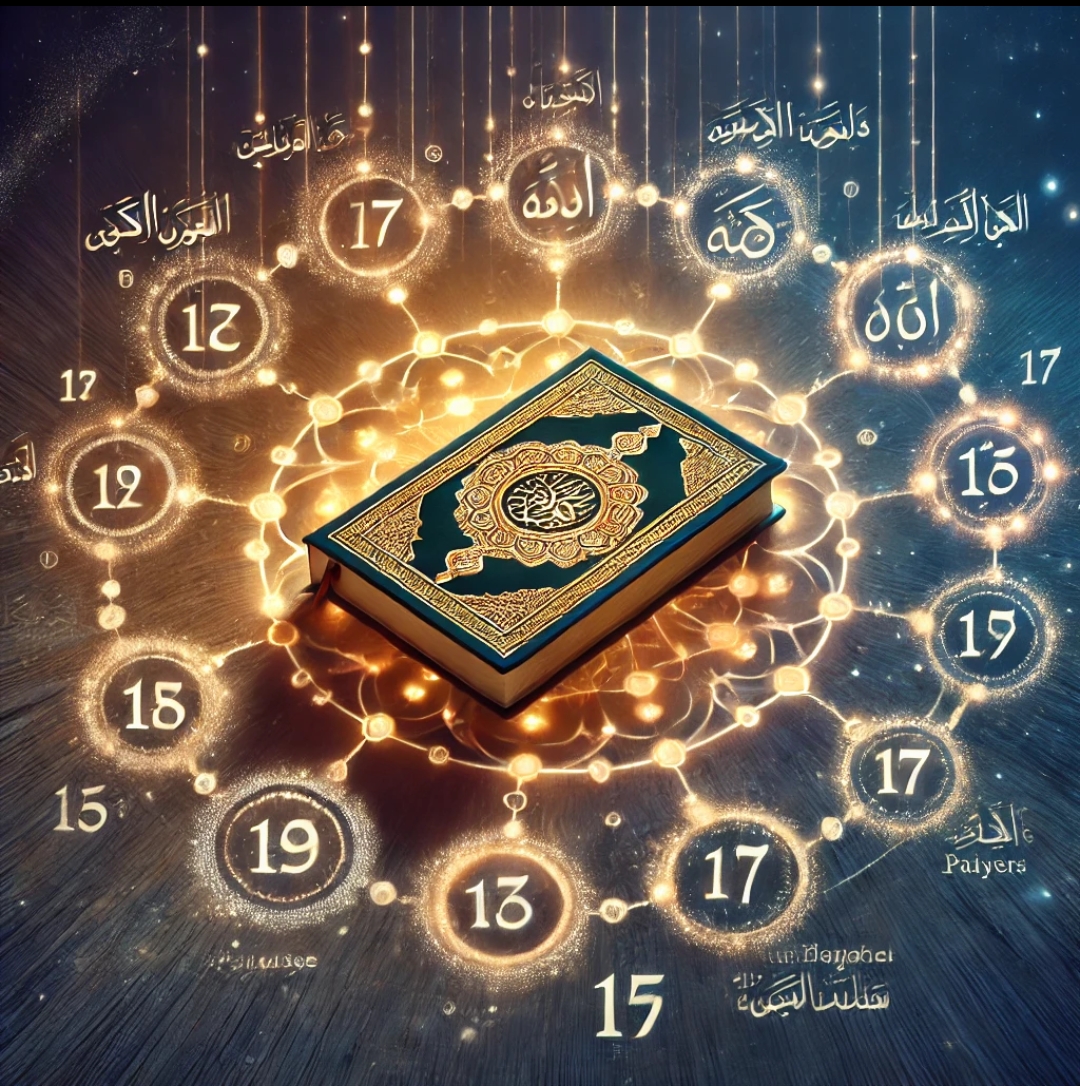
The Qur’an is a book of unparalleled precision, a revelation that not only guides but is structured in a way that reflects divine wisdom beyond human authorship. What if we told you that Surah Al-Baqarah, the longest chapter of the Qur’an, contains a hidden numerical structure that directly corresponds to our daily prayers, life’s trials, and divine laws?
For centuries, scholars and researchers have analyzed the Qur’an’s miraculous linguistic and thematic patterns. Yet, as we have meticulously examined Surah Al-Baqarah, an undeniable numerical rhythm has emerged—one that aligns perfectly with the 17 rak‘ahs of daily Salah (prayer), thematic shifts, and the structure of divine legislation.
Is this pattern intentional? Is it divinely structured? Or have we stumbled upon something waiting to be uncovered further? We now challenge Islamic scholars, Qur’anic experts, and students of knowledge to investigate this phenomenon.
---
🔍 The Discovery: A Pattern in 17-Verse Intervals
Upon completing our deep dive into Surah Al-Baqarah, a recurring structure emerged:
The surah’s subjects shift every ~17 verses, forming distinct thematic sections that begin, unfold, and conclude before transitioning to a new topic.
This mirrors the five daily prayers, whose total number of rak‘ahs is 17 (Fajr: 2, Dhuhr: 4, Asr: 4, Maghrib: 3, Isha: 4).
The final verses (2:284-286) perfectly conclude the surah in the same way that Salah ends with Tashahhud, submission, and a supplication for divine mercy.
Was this deliberate? Is this a blueprint of divine knowledge? We believe further research is needed.
---
📖 A Breakdown of the Pattern in Surah Al-Baqarah
Each segment of approximately 17 verses introduces, expands, and resolves a major theme.
Here’s how the structure unfolds naturally:
1️⃣ Verses 1-17 – Faith, Guidance, and the Unseen
> The opening introduces the believers, disbelievers, and hypocrites—highlighting the very foundations of faith.
2️⃣ Verses 18-34 – Creation, Adam & Iblis—Tests of Obedience
> The story of Adam’s creation and Iblis’ rebellion sets the stage for the human test.
3️⃣ Verses 35-51 – The Fall of Adam, Children of Israel, and the Covenant
> Past nations, their mistakes, and the divine contract with humanity.
4️⃣ Verses 52-68 – The Golden Calf, Leadership, and Divine Law
> Rebellion, leadership challenges, and Allah’s mercy.
5️⃣ Verses 69-85 – Ethics, Commandments, and Community Justice
> A shift into legal and moral obligations—the formation of divine law.
6️⃣ Verses 86-102 – Bani Israel’s Betrayals and the Rise of Hypocrisy
> Corrupt scholars, manipulation of scripture, and loss of guidance.
7️⃣ Verses 103-119 – The Call to Sincere Faith & the Falsehood of Altering Revelation
> A clear warning to those who distort divine truth.
8️⃣ Verses 120-136 – Ibrahim (AS) and the Pure Monotheistic Faith
> The model of unwavering faith: Ibrahim’s submission as a universal example.
9️⃣ Verses 137-153 – The Shift of the Qiblah—Test of Submission
> The transition from Jerusalem to the Kaaba—a major shift in worship.
🔟 Verses 154-170 – Trials, Loss, and Patience
> Hardships refine the believer’s faith—patience leads to divine closeness.
1️⃣1️⃣ Verses 171-187 – The Laws of Fasting & Spiritual Discipline
> Ramadan as a month of revelation and self-purification.
1️⃣2️⃣ Verses 188-204 – Justice, Financial Ethics & Social Responsibility
> A shift into economic laws, financial integrity, and business ethics.
1️⃣3️⃣ Verses 205-221 – War, Corruption, and Purity in Worship
> Rules for battle, protection of sacred places, and avoiding harm.
1️⃣4️⃣ Verses 222-238 – Marriage, Divorce, and Social Order
> Family law, responsibilities, and ethical relationships.
1️⃣5️⃣ Verses 239-255 – Prayer, Leadership, and the Ultimate Authority of Allah
> Salah’s importance and divine rulership emphasized.
1️⃣6️⃣ Verses 256-272 – Free Will, Usury, and Economic Ethics
> The rejection of compulsion in religion, prohibiting interest, and the ethics of giving.
1️⃣7️⃣ Verses 273-286 – Final Divine Laws, Accountability, and Submission to Divine Will
> The conclusion aligns perfectly with the submission of Salah’s closing supplication.
---
🕌 A Challenge to Scholars: Is This a Hidden Divine Structure?
The numerical patterns within the Qur’an have been studied, but has anyone before examined Surah Al-Baqarah’s division in 17-verse intervals?
We invite scholars, researchers, and Qur’anic experts to:
✔ Analyze whether this structure is intentional.
✔ Determine if other Surahs follow this numerical rhythm.
✔ Investigate connections between Salah, Qur’anic structure, and divine laws.
Could this be a method Allah has embedded to guide memorization, daily implementation, and spiritual elevation?
This is not a coincidence—this is a structured design that aligns with both daily prayer cycles and thematic revelations.
🔎 We need scholars to explore this further.
---
💡 Why This Matters: A Blueprint for Faith
This pattern could redefine how we engage with the Qur’an:
1️⃣ A Systematic Study Approach – Studying 17-verse segments mirrors Salah’s rhythm.
2️⃣ A Divine Reminder in Daily Prayer – The Qur’an’s structure matches human spiritual cycles.
3️⃣ Reinforcing Faith Through Order – Allah’s revelations are structured for ease, understanding, and implementation.
If this is intentional, then Surah Al-Baqarah itself is a divine model of structured faith—built into the Qur’an to mirror our daily devotion.
We challenge scholars to investigate further.
---
🔗 Call to Action: What’s Next?
📢 Share this discovery. Discuss it with Qur’anic scholars, imams, and researchers.
📖 If you’re a student of knowledge, test this theory across other Surahs.
🕌 Islamic research centers should analyze this in Qur’anic studies.
🔹 Have we discovered something that has been overlooked?
🔹 Could this numerica
l structure change how we approach the Qur’an?
It is time to seek answers from those qualified to verify this revelation.
🚀 This is the challenge. Let the scholars respond.