
بِسْمِ اللهِ الرَّحْمٰنِ الرَّحِيْم
In the Name of God, Most Gracious, Most Merciful
♥️🤲🕋♥️🕋🌹🌹🥀🤲🌹🕋♥️🤲
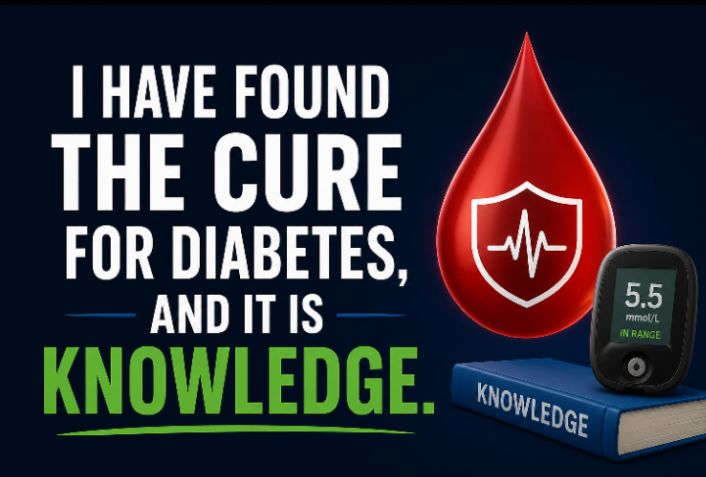
I HAVE FOUND THE CURE FOR DIABETES, AND IT IS KNOWLEDGE.
Millions of people may not be cured by knowledge alone, but millions can absolutely be changed by it. Because when people understand what glucose is, what insulin does, what the liver stores, what the pancreas releases, what A1C is measuring, what is normal, what is high, what is low, and what repeated blood sugar spikes are doing silently inside the body, they stop living blind. They begin to drink when hydration matters, fast when medically appropriate, monitor their blood, understand patterns, and recognize the difference between danger, control, and neglect. Ignorance keeps people trapped in confusion. Knowledge gives people a map.
For much of my life, I did not understand this system in a way that was digestible. But over these last hours, with a monitor in my hand, real-time data, and hard questions asked through AI, I began connecting the dots. I began to see that if we can teach people how blood sugar works, what the liver does, what the pancreas does, how insulin helps move glucose, how organs work together like a symphony, then we can help people manage diabetes with clarity instead of fear. That is what I am attempting to do. By the time you finish this blog, my hope is that you are educated, illuminated, and able to carry this knowledge forward—so others can better understand diabetes, make stronger decisions, and protect their bodies before damage becomes the lesson.
WHY IS DIABETES A DISEASE?
What does diabetes have to do with blood sugar? What does it have to do with glucose? What does it have to do with insulin, the pancreas, the liver, and the silent chemistry moving through your blood every second of your life? What does it have to do with you—as a human being who wants energy, clarity, strength, stable vision, healthy organs, and the simple blessing of not feeling like life is being drained out of you by something you cannot see? The answer is: everything. Because diabetes is not just about sugar. It is about a system. A system of fuel, storage, hormones, organs, and signals that must work together with balance.
And if that system begins to break, the body begins to show it. Fatigue. Thirst. Nerve damage. Eye disease. Kidney strain. Blood vessel damage. Confusion. Slow healing. This is why understanding matters. In this journey, we are going to walk through glucose, insulin, the pancreas, the liver, A1C, blood sugar ranges, and why this system matters to every person—not just those already diagnosed. By the time we are done, my goal is simple: that you have a comprehensive understanding of diabetes in a way that is digestible, practical, and clear enough to carry forward. Because what is often missing is not concern—it is understanding presented in a way people can truly absorb, apply, and use to make better decisions.
BEFORE WE BEGIN, YOU NEED TO UNDERSTAND THE CONSEQUENCES OF NOT HAVING THIS KNOWLEDGE.
Every time you eat, every time you drink, every time fuel enters your body, a system is activated. Glucose rises. Hormones respond. Insulin is released. Nutrients are absorbed. Organs go to work. Your body is intelligent beyond what most people ever stop to consider. The liver stores. The pancreas signals. The kidneys filter. The muscles use fuel. The blood carries life. Even when you sleep, your body is managing energy, releasing stored glucose, protecting vital functions, and keeping you alive without your conscious effort. This is not random. This is biology. And if you do not understand the system residing within you, you can ignore warning signs while damage quietly builds.
That is why this knowledge matters. Because poor glucose control over time can lead to exhaustion, nerve damage, kidney disease, vision loss, blood vessel damage, heart disease, and in severe cases, ulcers or amputations. Many people are not lacking concern—they are lacking understanding in a form they can truly digest. I know this because I lived in confusion, asked hard questions, doubted, struggled, and had to begin learning what I should have understood much earlier. This is not me telling you knowledge alone cures disease. This is me telling you knowledge can change decisions, and decisions can change outcomes. By the time we walk through glucose, insulin, A1C, the liver, the pancreas, and the hidden chemistry moving through your blood, my hope is simple: that you take blood sugar seriously, understand your body more deeply, and carry this knowledge forward for yourself and the people you love. With that said, we begin.
IT BEGAN WITH THIRST.
I remember not having health insurance. I was a professional truck driver, and one day I found myself overwhelmed by thirst. Not normal thirst. A deep, relentless thirst. No matter how much water I drank, no matter how much ice I chewed, it felt like my body was asking for more. I was urinating constantly. I could barely do my job properly. I was exhausted, distracted, and beginning to realize something deeper was happening inside me. That is when I came to a conclusion: I am sick. I do not know what this is, but I better figure it out quickly.
With no healthcare, no easy access to answers, and fear sitting in the passenger seat beside me, I started searching. I went to YouTube, asking the same question many people ask when their body begins sending warning signs: Why am I so thirsty? Through videos, research, and voices like Dr. Berg, I began learning about blood sugar, insulin resistance, and what uncontrolled glucose can do to the body. I came to understand that thirst was not the disease itself—it was a warning sign. Something deeper was happening in my system, and I needed knowledge fast. That became my starting point. Not certainty. Not diagnosis. Knowledge. Because when you have no money, no coverage, and no roadmap, sometimes the first lifeline is understanding what questions to ask before you can find the help you need.
Watch "Excessive Thirst Causes and Remedies – Dr.Berg" on YouTube
THANK YOU FOR WATCHING THE VIDEO. NOW LET ME GIVE YOU THE KNOWLEDGE THAT COMES WITH IT.
This was one of my starting points. This was part of my hospital before the hospital—questions, urgency, and understanding what my body was trying to tell me. You watched the video. Now here are the notes you need to carry forward.
EXCESSIVE THIRST IS NOT ALWAYS A WATER PROBLEM
If you are constantly thirsty, it may not simply mean “drink more water.” Sometimes thirst is a signal that something deeper is happening in the body.
1. HIGH BLOOD SUGAR / DIABETES / INSULIN RESISTANCE
One of the biggest causes of excessive thirst.
What happens:
Blood sugar rises too high
Kidneys try to remove excess glucose
Water follows glucose
You urinate more
You lose fluid
Brain triggers thirst
Pattern: High sugar → more urination → dehydration → more thirst
This was one of my biggest warning signs.
2. TOO MUCH WATER CAN ALSO BE A PROBLEM
Drinking huge amounts of water without need can dilute sodium.
This can contribute to:
weakness
confusion
electrolyte imbalance
Key idea: Hydration is balance—not just volume.
3. THE KIDNEYS ARE PART OF THIS STORY
Kidneys help:
filter blood
remove waste
regulate fluid
help manage electrolytes
When glucose is high, kidneys work harder to clear excess sugar.
4. THE LIVER IS PART OF BLOOD SUGAR CONTROL
The liver:
stores glucose as glycogen
releases glucose between meals
makes glucose during fasting
The liver is a fuel manager.
5. THE PANCREAS IS PART OF THE SYSTEM
The pancreas makes insulin.
Insulin helps:
move glucose into cells
reduce excess glucose in blood
If insulin is low, absent, or not working well, glucose can stay elevated.
6. ELECTROLYTES MATTER
Sodium and potassium help regulate fluid balance.
But important: Do not assume thirst = “I just need salt.” Causes can be broader.
7. EXCESSIVE THIRST CAN HAVE OTHER CAUSES
Can include:
diabetes mellitus
dehydration
some medications
electrolyte problems
rare hormonal disorders (like diabetes insipidus)
high calcium
illness
WHAT I LEARNED
Thirst was not just thirst.
Frequent urination was not random.
My body was sending signals.
Knowledge helped me ask:
What is glucose?
What is insulin?
What does the pancreas do?
What does the liver do?
Why do kidneys matter?
What is A1C?
What is normal?
What is high?
That was my starting point.
THE BIG LESSON
Knowledge is where better decisions begin.
If your body is sending signals—thirst, fatigue, frequent urination, blurry vision, unexplained weight changes—pay attention. Learn the system. Ask questions. Measure. Understand. Then act. That is how confusion begins to turn into clarity.
THE HEALTHCARE SYSTEM, MY DISTRUST, AND THE MISTAKES I MADE
Before we can manage disease, especially something tied to blood sugar, metabolism, and the hidden systems inside our body, we need education. We need to understand symptoms. We need to understand what thirst means, what fatigue means, what blood sugar means, and what questions to ask before fear begins making decisions for us. My story took me into the American healthcare system. When I finally got health insurance, I chose Kaiser. They ran my blood, and they told me I was diabetic. I wanted to disagree. Not because I had proof—but because I did not yet have understanding. I was trying to enter a world of appointments, lab work, specialists, and rushed conversations without a real foundation of knowledge.
By the time I found my appointment and sat with a doctor, I felt like I had stepped into a fast-moving system where time was limited and the education I needed did not fully happen in the way I hoped. The doctor had many patients. I felt rushed. I left with information, recommendations, and medication like metformin—but also confusion, distrust, and fear. And because I lacked understanding, I made decisions from that fear. I told myself I would eat better, exercise, and avoid medication because I did not yet understand the difference between management, treatment, insulin, Type 1, Type 2, and what uncontrolled diabetes could actually do. Looking back, the deeper issue was not just healthcare—it was that I did not yet have enough education to separate frustration from facts. That is why I am telling this story: not to tell people to ignore doctors, not to reject medicine, but to show how dangerous it can be when confusion makes decisions for you. My goal is to use my personal journey—my questions, my mistakes, and my growth—to help others enter healthcare with better understanding, stronger questions, and enough knowledge to avoid the mistakes I made. And that begins now.
THE IMAGE I WISH I SAW BEFORE I WALKED AWAY from the healthcare system.
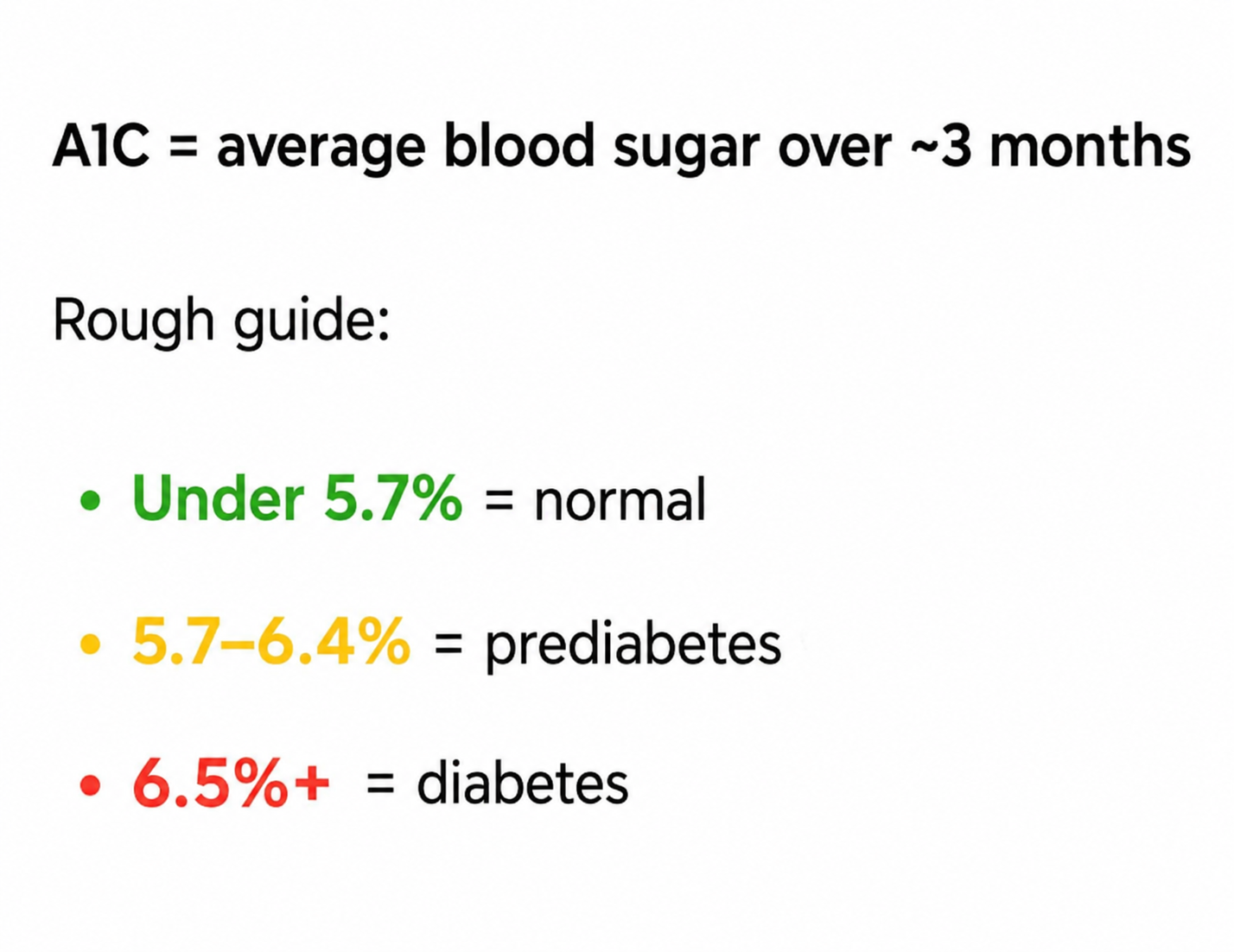
I am introducing an image that, in my mind, should hang in hospitals, clinics, classrooms, and anywhere people are being told they have diabetes or prediabetes. Not because one image can explain everything, but because sometimes one simple visual can open the door to understanding. Before medication, before fear, before confusion, people deserve to understand what A1C is measuring and what blood sugar control means. If someone had shown me something this simple when my A1C was in the 12-range, I may have understood that I was not just being handed a pill—I was being shown a warning sign that my blood sugar was dangerously high and that treatment was meant to help lower that risk.
At that time, I was thinking with the knowledge I had: I’m eating better. I’m exercising. I’m not understanding why I need medication. What I lacked was not concern—it was comprehension. I did not yet understand what A1C meant, what uncontrolled glucose could do, or how medication like metformin could fit into treatment. So I asked questions, debated, hesitated, and had to slowly educate myself. That is why this image matters to me. Not as “the history of medicine changed,” but as a simple contribution to communication: if people understand earlier, they may ask better questions, make better decisions, and enter treatment with less fear and more clarity. That was the education I wish I had.
UNDERSTANDING A1C: THE NUMBER THAT SHOWS YOUR STORY
Most people think blood sugar is just what is happening right now. It is not. A glucose reading is a moment. A1C is the pattern. It is the average picture of what your blood sugar has been doing over roughly three months. That means your body is keeping score, even when you are sleeping, eating, fasting, stressing, healing, or ignoring the warning signs. If you understand A1C, you begin to understand whether your system is running balanced, slipping into danger, or already carrying the burden of diabetes.
Simple visual understanding:
Under 5.7% → Normal range
5.7–6.4% → Prediabetes
6.5% and above → Diabetes
The reason this matters: one glucose reading is a snapshot. A1C is the long-term story. That is why this should be page one—because once people understand that the body is keeping a three-month record, the puzzle starts to make sense.
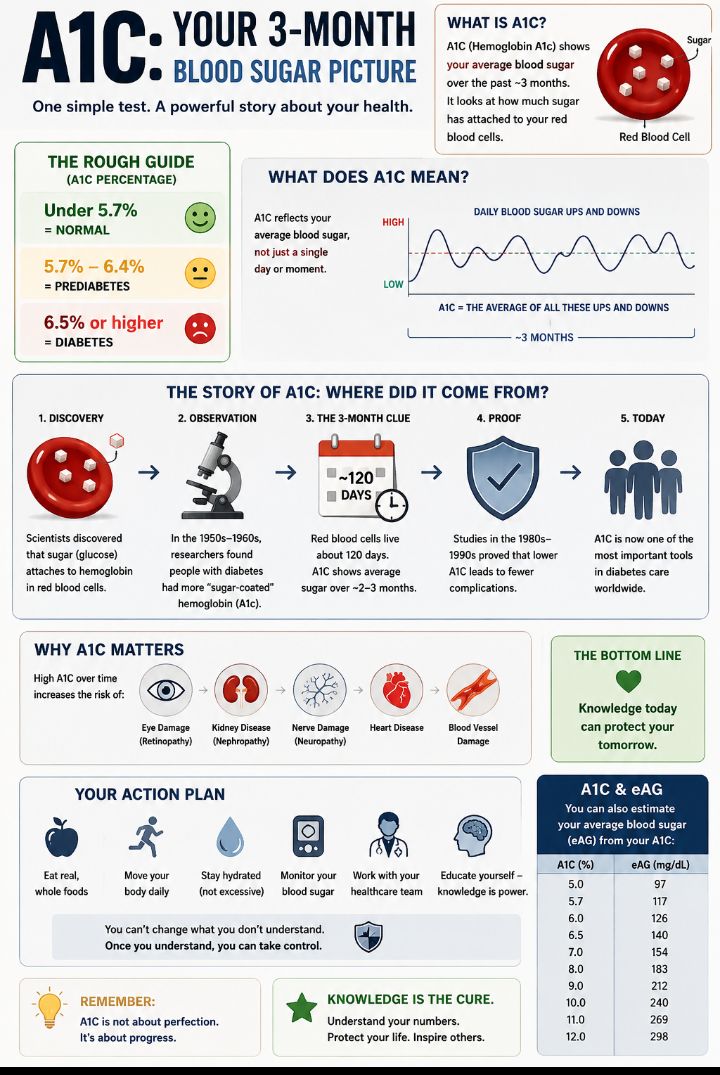
THE STORY OF A1C: THE NUMBER THAT WAS QUIETLY WATCHING YOU
Before most people ever heard the word A1C, blood sugar was often treated like a moment. A finger prick. A random test. A number for today. But science discovered something deeper: the body was keeping a longer record. Hidden inside your blood was a story being written over time. Scientists studying hemoglobin—the protein in red blood cells that carries oxygen—found that sugar does not just move through the bloodstream and disappear. It leaves fingerprints. Glucose attaches itself to hemoglobin, slowly marking the blood itself. That process became one of the greatest clues in understanding diabetes.
Then came the breakthrough. Researchers realized that people with higher blood sugar had more of this “sugar-coated” hemoglobin, later called Hemoglobin A1C (HbA1c). And because red blood cells live for about 120 days, this test was no longer showing just a moment—it was showing a pattern, an average, a three-month picture of what your blood had been carrying. That changed medicine. Suddenly, doctors could see beyond one meal, one morning, one good day, or one bad day. They could see whether glucose had been controlled or whether damage may have been building quietly.
Why does this matter to you? Because A1C is not just a lab number. It is a mirror. It tells you whether your system has been balanced, slipping into danger, or carrying the burden of diabetes. Under 5.7%, the system is generally normal. 5.7–6.4%, the warning signs begin. 6.5% and above, diabetes enters the conversation. For me, I did not understand this when I first entered healthcare. If someone had slowed down and shown me this story—not just handed me a prescription—I may have understood the urgency sooner. That is why this image matters. Because sometimes one simple visual and one simple explanation can turn fear into comprehension.
So when you look at A1C, do not just see a percentage. See history. See science. See your blood keeping record. And see knowledge becoming the first step toward better decisions.
IF YOU ARE IN THE DIABETIC STAGE, DO NOT LET CONFUSION MAKE THE DECISION FOR YOU
If you are in the United States—or anywhere—and you were diagnosed with diabetes, but chose to educate yourself only through YouTube, healthy eating, exercise, sleep, and cutting sugar while delaying treatment because you did not fully understand what was happening, I understand that fear. I understand that hesitation. I lived it. I believed that if I just ate better, exercised harder, and avoided sugar, maybe I could outwork the disease. But what I did not fully understand was that once blood sugar stays uncontrolled for long periods, damage can begin quietly. Eyes can be affected. Nerves can be affected. Kidneys, blood vessels, and healing can all be affected. Lifestyle changes matter deeply—but they do not erase risk that has already built if glucose has remained high.
That is why my advice is simple: do the tests, see your doctor, understand your A1C, ask questions, and do not let confusion make the medical decision for you. If medication like metformin is prescribed, understand what it is for. It is not a punishment. It is one tool that may help control blood sugar while you work on food, movement, sleep, and long-term recovery. This blog is my journey—learning what I did not know, trying to understand what damage may have happened, and seeing how much I can improve by taking blood sugar seriously. My goal is not fear. My goal is education. Because once you understand the system, you can begin asking the right questions: How do I protect what remains? How do I improve? How do I move closer to healthier numbers? That is the next chapter.
NOW THE FIGHT BEGINS
Now the fight begins—not only to educate people, but to share my journey. And I want to share that journey with you. I will be blogging a lot, because this disease forced me to stop, reflect, and confront what I did not understand. I purchased a Dexcom G7, paid cash, and put it on my arm because I knew something was happening again. I recognized old warning signs—frequent urination, weakness, fatigue, patterns that felt familiar. Then I began watching my glucose in real time. Rising. Falling. Stable. Spiking. Dropping. And I realized something humbling: I had never truly comprehended this subject. I had lived with assumptions, fragments of knowledge, and fear—but not a full understanding of what blood sugar was doing inside me.
That device became more than a monitor. It became a mirror. For the first time, I could see patterns instead of guessing. I began asking deeper questions: What do I actually understand about glucose? What did I ignore? What will I do differently now? This is where recovery begins—not with pretending I know everything, but with choosing to learn. I will be sharing what I am doing, what I am measuring, what changes help, what questions matter, and how I hope to move toward healthier numbers. This is a serious disease, and education must be presented in a way that is comprehensive, practical, and human. My goal is not to replace doctors, not to reject medicine, and not to speak from fear. My goal is to contribute understanding—using my journey, my mistakes, my data, and my growth—so that others may better understand diabetes, ask stronger questions, and take this disease seriously before confusion becomes the decision-maker. That is where the fight begins.
ON THE NEXT BLOG, THE FIGHT BEGINS
On the next blog, we go deeper into the journey—the fight, the questions, and what made me stop and rethink everything after I placed a patch on my arm and began watching my glucose in real time. I watched it go up. I watched it go down. But above all, I watched it stay steady at times in ways I did not fully understand. That is what made me question everything. That is what pushed me to fast, observe, reflect, and begin looking at glucose very differently. For the first time, I was no longer guessing. I was watching a silent system reveal itself.
And that is where the real education begins. Because this is not just about numbers—it is about understanding the machine Allah placed within us. What does the pancreas do? What does the liver do? Why does glucose rise? Why does it fall? Why does the body store, release, protect, and respond the way it does? Just like opening the hood of a car, if you want to understand how it runs, you must understand the parts, what they do, and how they work together. I have my own questions, my own perspective, and now a deeper spect for this biology. On the next blog, we open the engine. And my hope is simple: that this education illuminates us, humbles us, and helps us understand the body with greater clarity than before.
BEFORE WE LEAVE YOU, WATCH THIS.
Watch "A Dexcom Warrior Story – Mason Miller" on YouTube
There are more than 8 billion people on earth. Of those, hundreds of millions are already living with diabetes, and many more are prediabetic, insulin resistant, or walking through symptoms they do not yet fully understand. Some have doctors. Some have hospitals. Some have medication. Some have insurance. And still, confusion remains. That tells us something important: sometimes treatment alone is not enough if understanding is missing. We need doctors. We need medicine. But we also need education that is practical, digestible, and human.
That is why stories matter. Mason Miller showed that diabetes does not automatically define the ceiling of your life. With knowledge, tools, discipline, and support, he learned how to understand his body and continue performing at the highest level. That does not mean every journey is the same—Type 1 and Type 2 are different diseases—but it shows that data, awareness, and consistency can change outcomes.
And for me, this is personal. I know what it feels like to live with confusion, to question treatment, to not fully understand what blood sugar, A1C, insulin, or even a rising and falling glucose pattern really meant. That gap in comprehension happened to me. That is why I am building this journey publicly.
So I leave you with this video, not as the answer—but as a reminder that this disease is serious, and understanding matters.
And now, get ready for the next chapter.
Because I will be sharing my sensor data, my questions, my mistakes, my patterns, and my recovery journey as we begin this fight with more honesty, more knowledge, and more clarity than before. If education helped me stop guessing, maybe it can help someone else begin asking the right questions. This is only the beginning.
A PRAYER FOR KNOWLEDGE, HEALING, AND THE NEXT CHAPTER
In this blessed season of Hajj, I ask Allah, the Lord of all creation, to bless this effort and make it a form of benefit and Khidma. O Allah, place barakah in knowledge that helps people understand the bodies You created, the blood that flows by Your command, the pancreas that signals, the liver that stores and releases, and the hidden systems that sustain life while we sleep, wake, eat, fast, and struggle. O Allah, guide us toward healthier bodies, wiser decisions, and hearts that are grateful for the miracle of being alive. For among Your greatest signs is that You created us with balance, and when we understand ourselves, we begin to reflect more deeply on the One who created us.
Allah says: “And on the earth are signs for those of assured faith, and in yourselves—then will you not see?” (Qur’an 51:20–21). And the Prophet ﷺ taught: “Seek knowledge.” This journey is part of that seeking—not to claim perfection, but to seek understanding, humility, and benefit. O Allah, help bring people toward healthier ranges, stronger discipline, and better choices. Bless those living with diabetes, those who are struggling in silence, those who are confused, and those trying to recover. Make knowledge a means of mercy, not arrogance. Make this work sincere. If there is any good in this effort, let it be a service to families, communities, and those who need clarity. And as we move into the next chapter—sharing the journey, the data, the lessons, and the growth—may it be done with sincerity, wisdom, and service. With blessed people, with Khidma, and with hearts seeking what is good. And Allah knows best.
WHAT TO EXPECT ON THE NEXT BLOG
On the next blog, I will be sharing the Dexcom G7—the small patch that became a window into a silent system I never fully understood. We will talk about the technology behind it, the needle, how it works, what it measures, and why seeing glucose rise, fall, and stabilize in real time changed the way I think about diabetes. This next chapter will not just be about knowledge in theory—it will be about practice, patterns, tools, and what happens when technology helps you stop guessing and start observing.
We begin the real journey: the fight to understand, the discipline to improve, and the work of trying to make it back toward healthier numbers—the green. I will be sharing what I learn, what surprises me, what challenges me, and how this device is helping me rethink blood sugar, habits, and recovery. This is where technology meets reflection, and where questions begin turning into practice. So get ready for the next chapter. We open the patch, we open the process, and we begin. See you there.
And before I close, I want to sincerely thank every person who has supported me on Buy Me a Coffee. If you found this blog, then you truly found a needle in a haystack. In a world full of noise, algorithms, and endless content, quality work does not always rise to the top, and meaningful ideas are not always easy to find. So if you are here reading this, supporting this, reflecting with me, then I appreciate you more than you know.
Right now, I do not have a studio. I do not have investors. I do not have a big machine behind me. But I have something greater: vision, struggle, questions, and the willingness to learn publicly. My goal is not just to talk about diabetes, health, and recovery—it is to build something creative, something useful, something that may one day reshape how education, health awareness, storytelling, and even advertisement itself are presented to people. If this journey helps even one person ask the right question, take their health seriously, or understand their body better, then this work has meaning.
So thank you for walking with me. Thank you for reading. Thank you for supporting independent work, independent thought, and a journey built step by step. This is only the beginning. And with patience, knowledge, and consistency, we move to the next chapter.