
 World White Cane Day is celebrated on October 15.
The celebration of this day aims to draw public attention to the problems of people with visual impairments and thus reduce the social and cultural exclusion they experience.
Today, blind and partially sighted people still face many problems in their daily lives: urban infrastructure is not well adapted for them, social and cultural life is not very accessible, and it is difficult to get a quality education or get a job.
However, important positive changes have also occurred over the last decade - new technical assistance devices and navigation programs have appeared that facilitate the movement of the blind. Public attitudes are also changing, and the number of services or entertainment adapted to people with visual impairments is increasing.
The invention of Braille was of particular importance to the blind. It was invented in 1829 by the blind French educator Louis Braille. Various combinations of six raised dots are printed on sheets of paper, through which the blind can read by moving their hands.
Modern computer technology can help the blind both read and communicate. Special software can convert text visible on the screen into sound. Using such programs, the blind can also browse the Internet. Special Braille screens have also been created that allow them to "see" text. Using scanners, the necessary information can be entered, and Braille printers can print the text in Braille.
The white cane is a means of orientation for the blind, a warning to others and, especially, drivers.
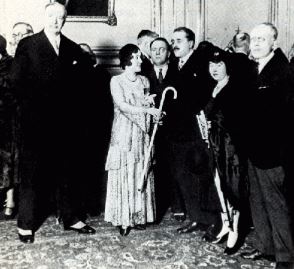
1920s: Safety First
In 1921, James Biggs, a photographer from Bristol, England, became blind following an accident.
Because he was feeling uncomfortable with the amount of traffic around his home, he painted his walking stick white to be more easily visible.
In 1930, Lion George A. Bonham, President of the Peoria Lions Club from Illinois introduced the idea of using the white cane with a red band as a means of assisting the blind in independent mobility. The Peoria Lions approved the idea, white canes were made and distributed, and the Peoria City Council adopted an ordinance giving the bearers the right-of-way to cross the street. News of the club’s activity spread quickly to other Lions clubs throughout the United States, and their visually handicapped friends experimented with the white canes. Overwhelming acceptance of the white cane idea by the blind and sighted alike quickly gave cane users a unique method of identifying their special need for travel consideration among their sighted counterparts.
Also in 1931, in France, Guilly d’Herbemont recognized the danger to blind people in traffic and launched a national “white stick movement” for blind people. She donated 5,000 white canes to people in Paris.
Today white cane laws are on the books of every state in the US and in a few other countries, providing persons who are blind a legal status in traffic. The white cane universally acknowledges that the bearer is blind.
1960s: White Cane Day is Here!
In the 1960s many state organizations and rehabilitation agencies serving blind and low vision citizens of the US urged Congress to proclaim October 15 as White Cane Safety Day in all states. On October 6, 1964, it was signed into law to authorize the President Lyndon B. Johnson to claim October 15 as White Cane Safety Day. In the proclamation President Johnson said, “A white cane in our society has become one of the symbols of a blind person’s ability to come and go on his own. Its use has promoted courtesy and opportunity for mobility of the blind on our streets and highways.”
Modern Times: Moving with Ease

White Canes can be rigid, folding or telescoping. They are often made from materials such as graphite, aluminum, carbon fiber and fiberglass. The standard white cane is used to preview the environment tactually in order to travel independently. The identification (ID) cane is a small, foldable cane used only for identification, not travel.
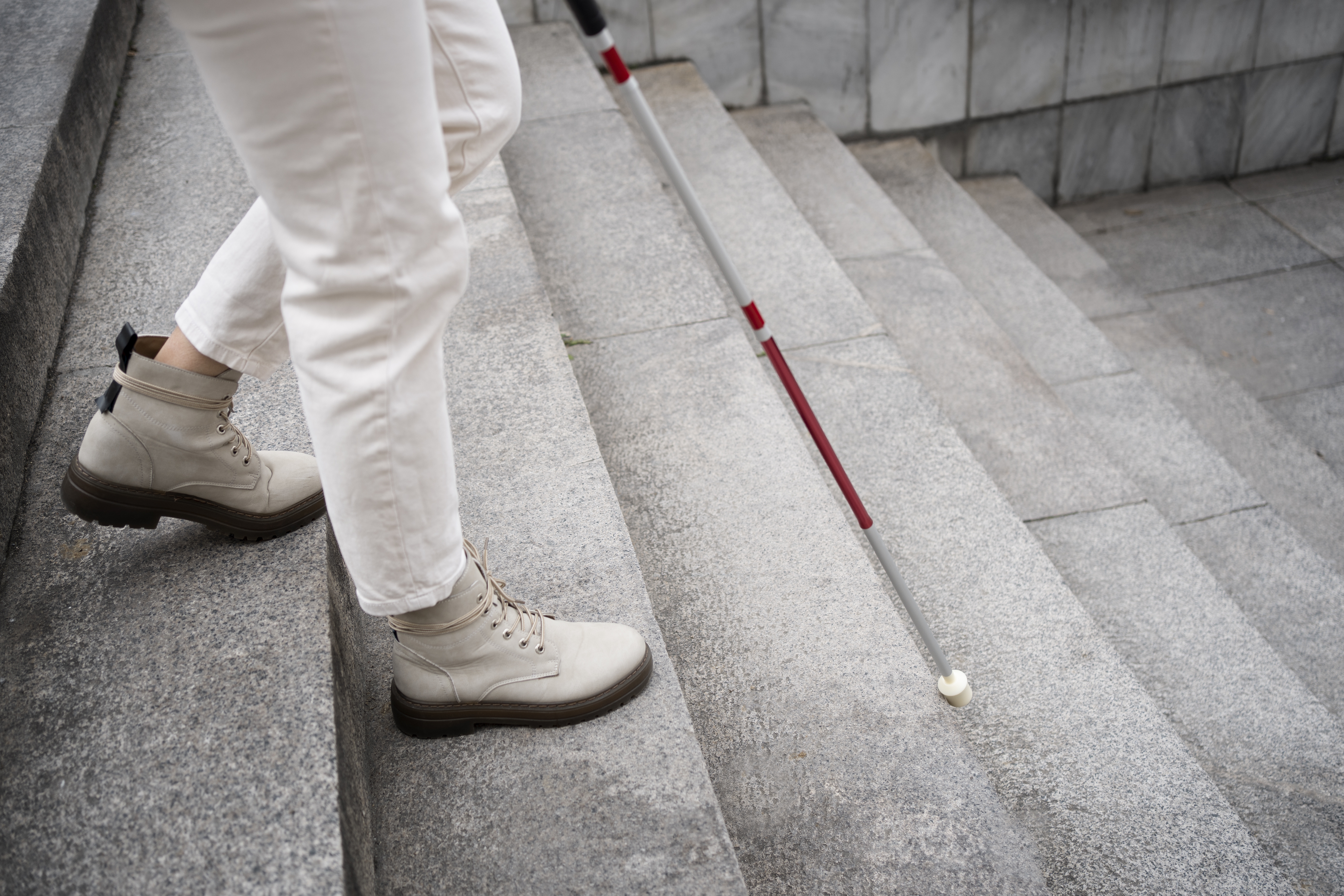
Safety Tips When Seeing Someone Use a White Cane
If you are driving, cycling, or just seeing someone using a white cane, stop to give that person the right of way. Provide them with adequate space on a sidewalk if walking.
If appropriate, ask if the traveler needs assistance. Ask how you can help them. Never push, pull or drag but instead offer your elbow as a first step. When a traveler holds onto you they maintain control of their travel situation.
Never touch or manipulate someone’s cane without their consent, as it can be terrifying, dangerous and disorienting.
Let's think about people with visual impairments, about the need to help them by creating more comfortable living conditions, the opportunity to receive necessary services and communicate with each other. Our help to these people is very important. This is the human duty of each of us - let's warm them with our care and support.