

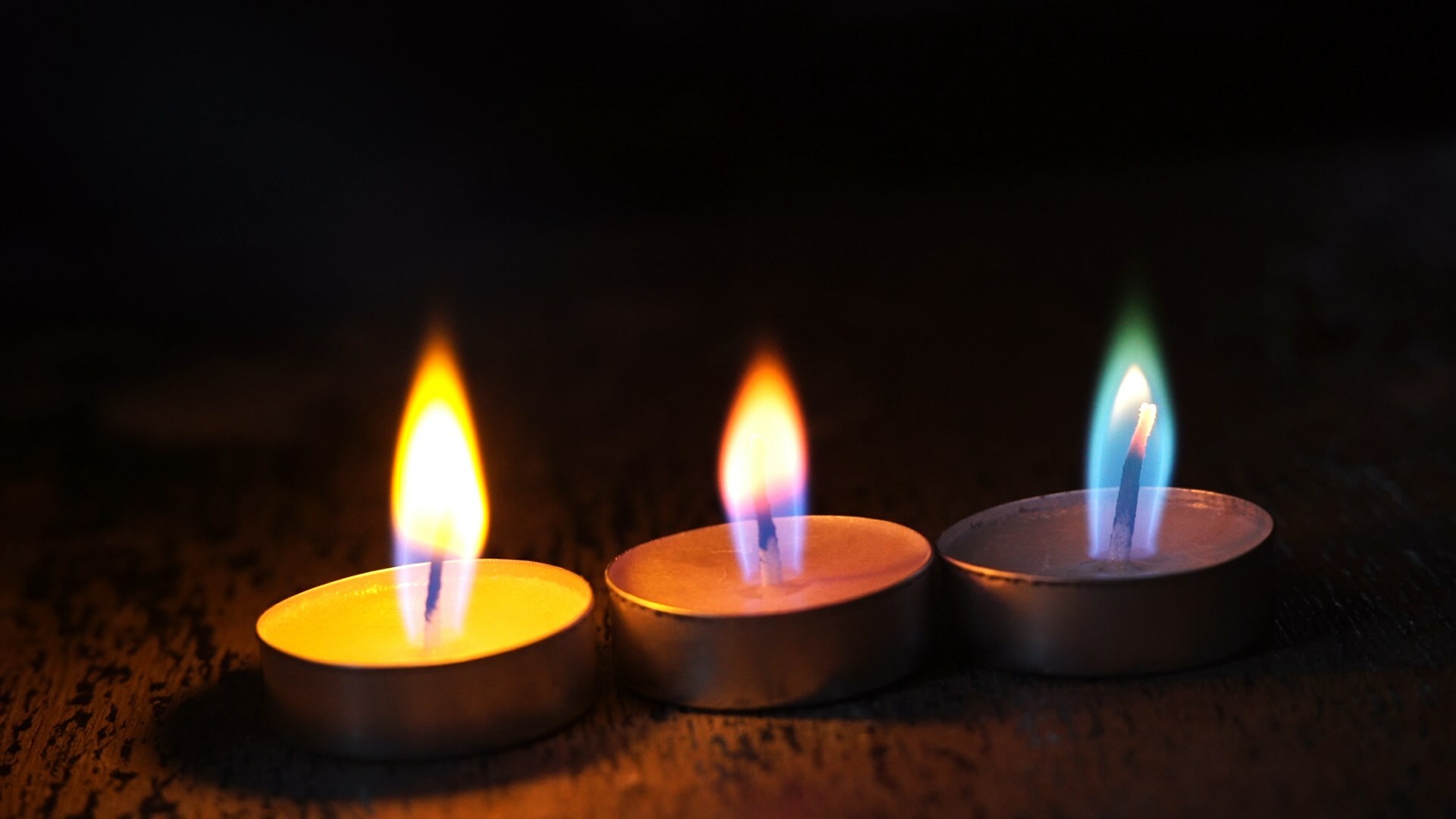
Experiments in making colored flame candles.
Forget about parrafine and candle waxes, they all dont work. At first their flame is bright yellow which masks the color from salt, at second their flame is too cold to activate most flame colorizing agents.
Here is an incomplete list of fuels that can be used for creating colored flame candles:
dibutylthiourea, diethylurea, ethylthiourea, dimethylurea, ethyl carbamate (urethane), dimethyl oxalate, trimethyl citrate, trioxane, ethyl oxamate
I chose dimethyl oxalate because of very simple synthesis, no distillation is required
I mostly followed this procedure:
https://www.orgsyn.org/demo.aspx?prep=CV2P0414
but I used oxalic acid dihydrate instead of anhydrous oxalic acid.
I took 252g of oxalic acid (dihydrate) added 200ml of methanol, then slowly added 80ml of concentrated sulfuric acid.
The mixture was heated almost to boiling point. Then chilled in the fridge for 1 day. Dimethyl oxalate was filtered and washed 1 time with cold methanol.
The product was air-dried for half an hour. Do not dry too long in the open air because it sublimates at room temperature, use a desiccator bag instead.
I got 120-135g of crude product slightly contaminated with sulfuric acid, yeild 50-57%
Some batches of the product I recrystallized from methanol(150 -200ml depending on your yield) cause I like to work with pure substances. Methanol after recrystallization can be reused in the first stage of the synthesis.
dimethyl oxalate by Dougs Lab:
https://www.youtube.com/watch?v=imtSH3OAdKE
Doug washed his crude dimethyl oxalate with water, this is not a bad idea but to get rid of water you need a desiccator bag with calcium chloride and approx. a week.
Here is my version of desiccator bag. Dimethyl oxalate at the left, a dish with calcium chloride at the top.
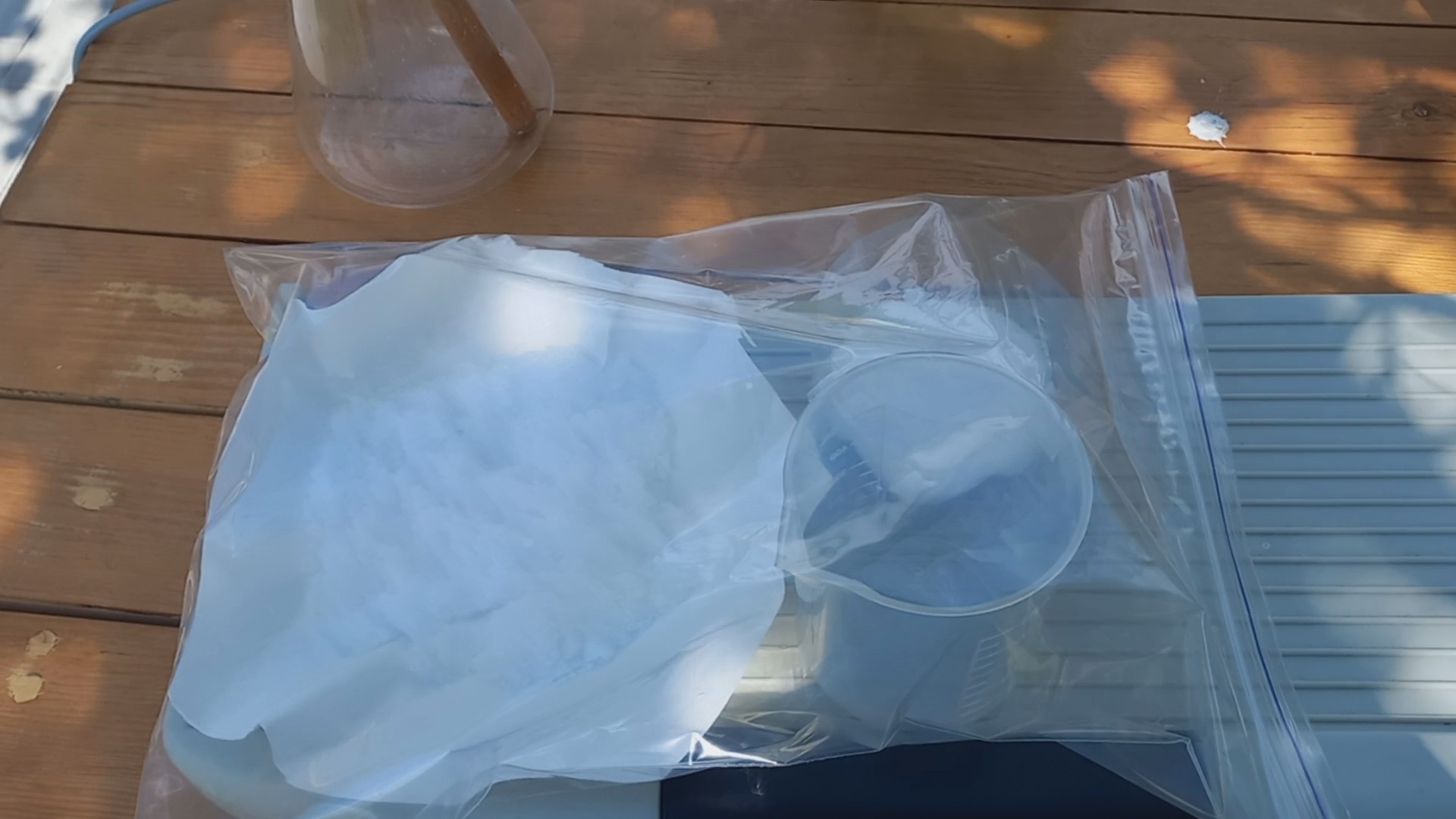
Do not dry it in open air or dimethyl oxalate will evaporate. Do not use sodium hydroxide in a desiccator bag because it reacts with dimethyl oxalate.
Also, it's possible to prepare dimethyl oxalate without sulfuric acid. This method includes boiling and distilling and gives lower yields.
Later I started to dry my oxalic acid. This is not hard, heat it to 95-110C until it loses 27-28% of the weight.
If you have a dean-stark apparatus you can dry it as NileRed:
https://www.youtube.com/watch?v=oAt9lO82s-0
with anhydrous oxalic acid, you can get yields up to 80-90%
If you have a distillation apparatus you can try trimethyl citrate for the candle body:
https://patents.google.com/patent/CN1222503A/en
candles from this patent are made of trimethyl citrate: US20100310999A1
Also, ethyl carbamate is very often used for candle body but I don't know a simple way to make it.
UPD: I know, this can be done through a reaction of urea nitrate with sodium nitrite in absolute alcohol, yield is high up to 80%, Ping me if you need a procedure, and I'll provide you a scan of a book and a translation.
For the candle body at first, I used pure dimethyl oxalate, it works but it solidifies not like wax, it tends to form large crystals, to suppress it I added 5-7% stearic acid. Stearic acid also suppresses its sublimation.
Colored fire wicks.
I used a 10% concentration of each salt: lithium citrate, sodium chloride, and boric acid (hot solution)
Here are an incomplete list of salts that can be introduced into a wick:
barium salts(green or white flame): barium chloride, barium chlorate, barium carbonate, barium nitrate, and barium oxalate
copper salts(green or blue-green flame): copper carbonate, copper chloride, copper oxides, copper oxychloride, and copper sulfate
strontium salts(red flame): strontium carbonate, strontium sulfate, strontium chloride, strontium oxalate, and strontium nitrate.
calcium salts(red flame): calcium carbonate, calcium oxalate, calcium chloride, calcium sulfate, calcium gluconate
sodium salts(yellow flame): sodium bicarbonate, sodium carbonate, sodium chloride, sodium oxalate, sodium nitrate, and cryolite
potassium salts(purple flame): potassium chloride.
zinc salts(green flame): zinc chloride.
lithium salts(red flame): lithium carbonate and lithium chloride.
the concentration of salt in a wick does matter:
From patent US4386904A:
When the amount of color former added is below 0.1 g/m, the coloring is insufficient, while when it exceeds 5 g/m the combustibility is lowered; either is undesirable.
Results:
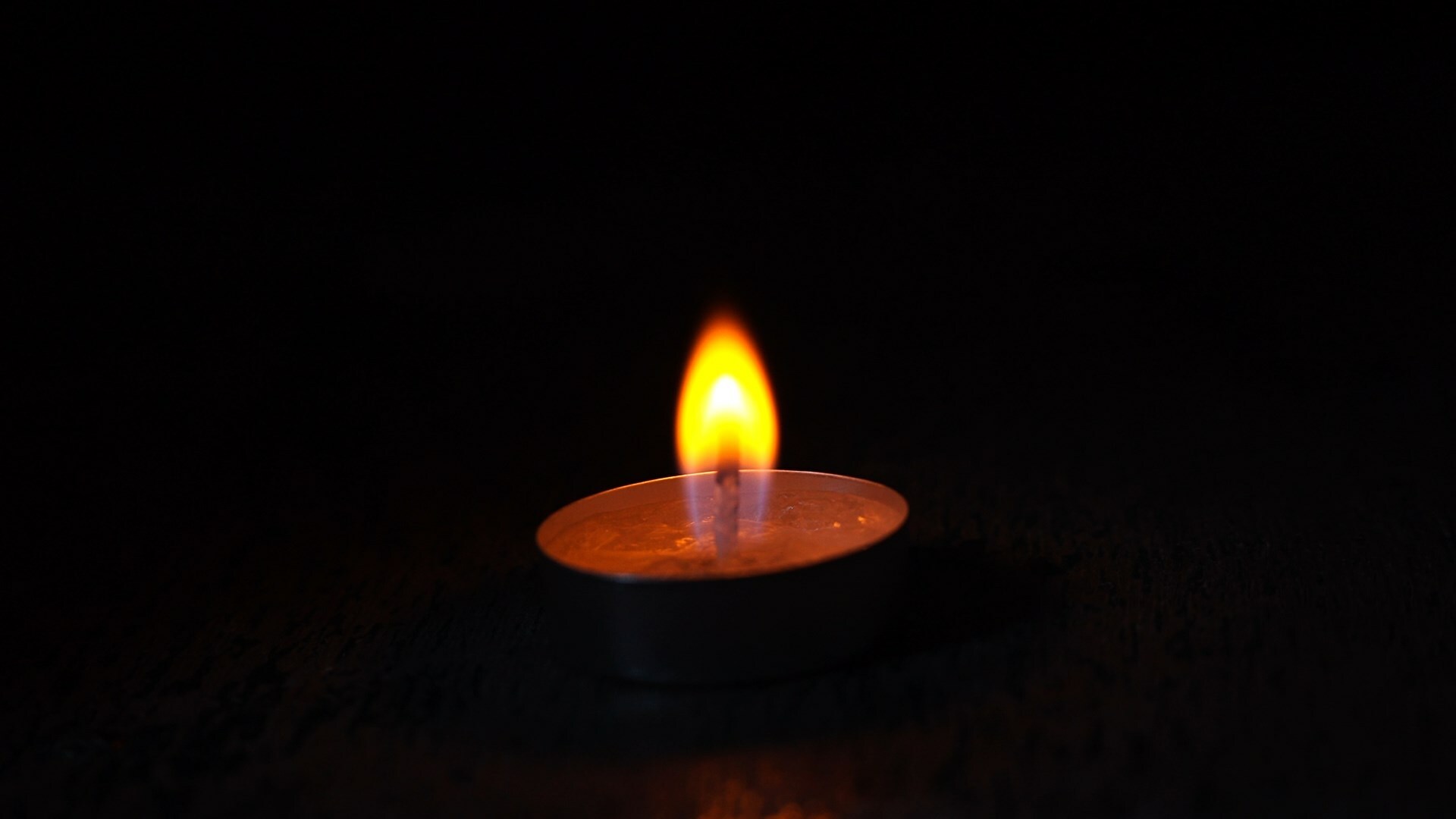
yellow flame candle was ok, but it's the least interesting one
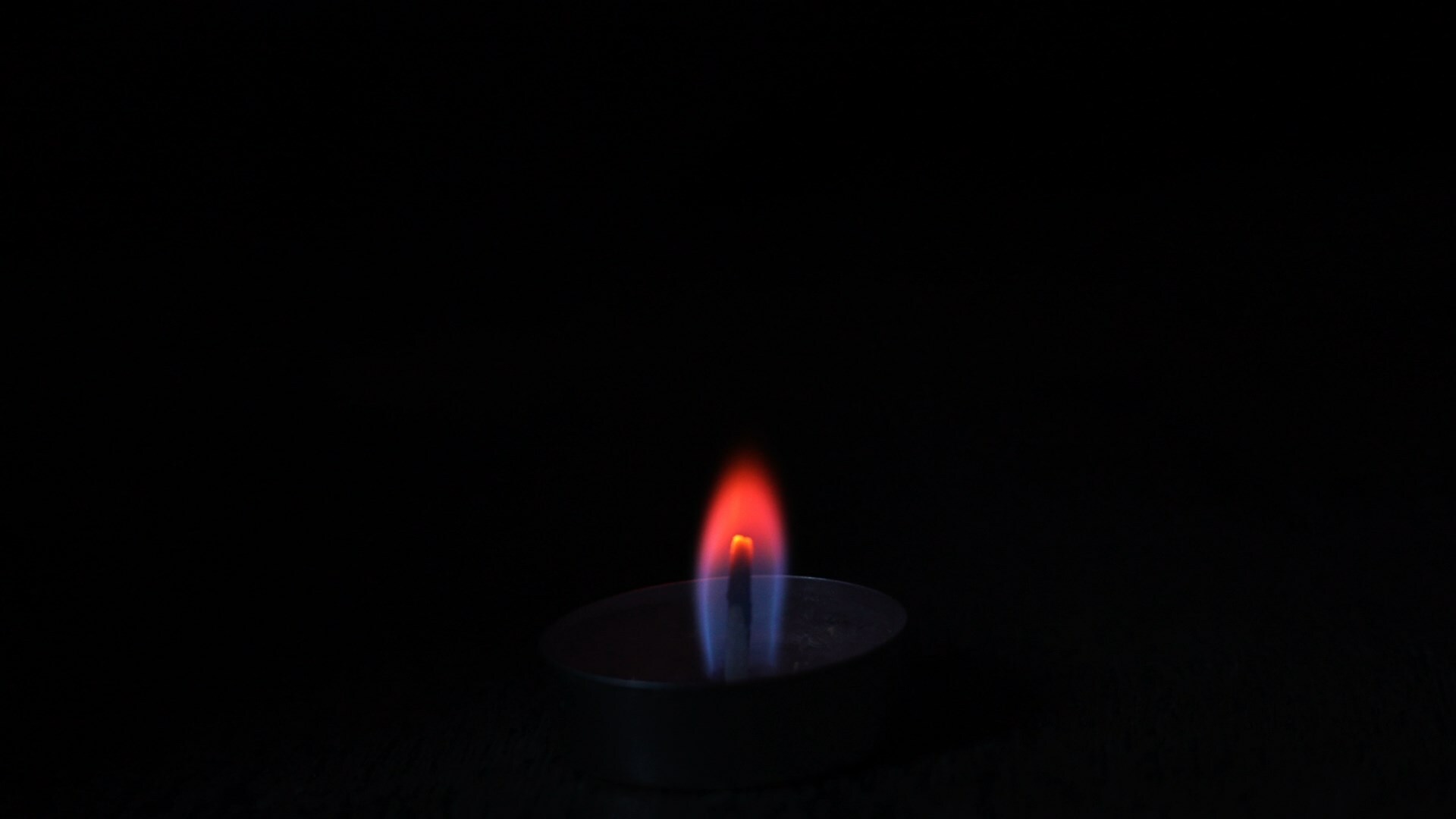
red flame candle is sort of ok although it starts to burn orange after some time. In my early experiments, I used a slurry of lithium carbonate to cover the wick, and looks like it works better than citrate. I want to try lithium chloride for a wick, it should give more red flame.
green flame candle very soon starts to fade, leaving only slight greenish color at the top.
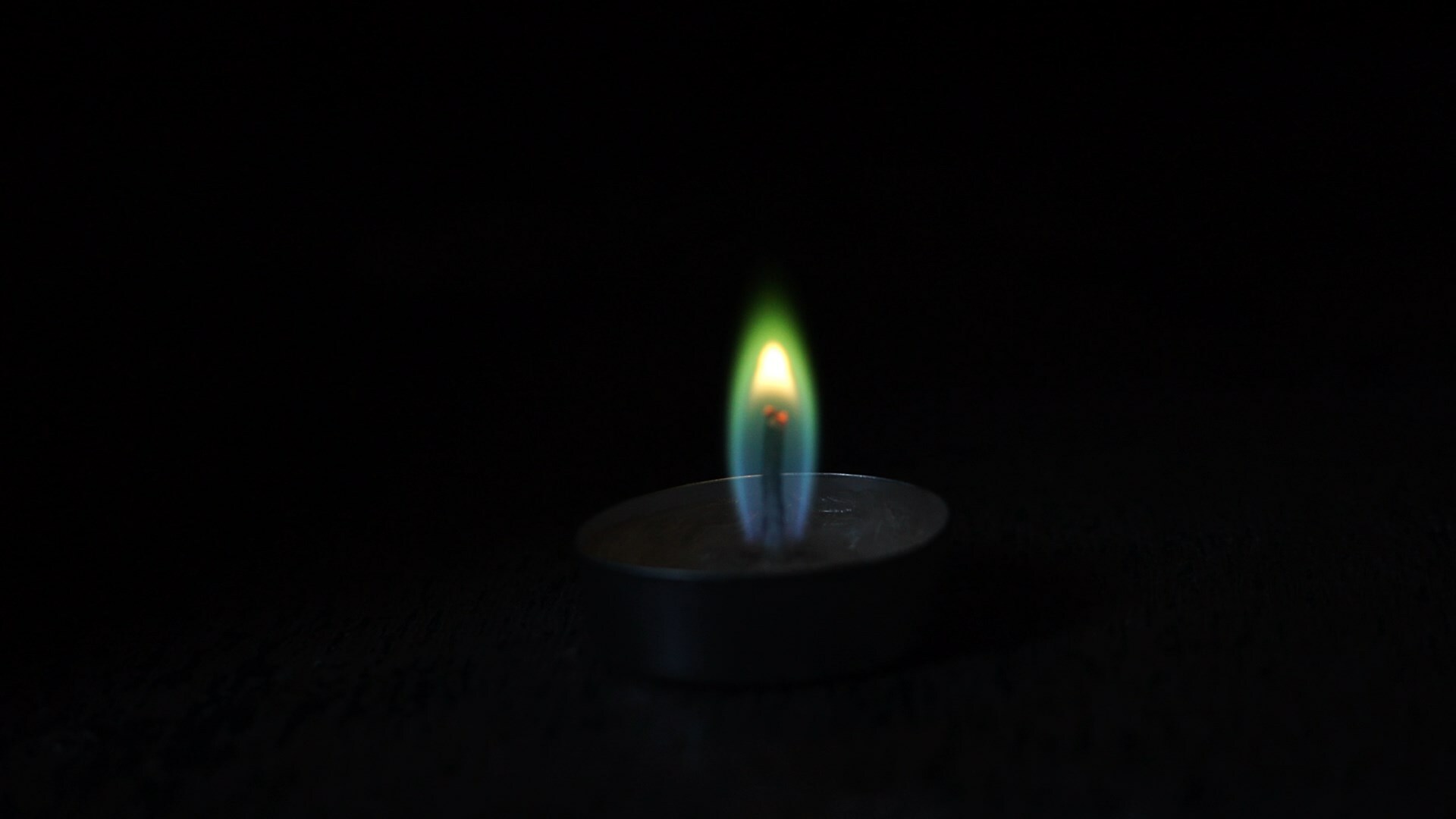
I think this may be avoided by changing the form of a candle, maybe making thin and long candles will help UPD: introducing 2-3% boric acid in candle body helps, also borate esters in candle body give same effect.
Look to US3150510A for making good green candle.
All candles work only when the hot tip of the wick sticks out of the flame, it gives the color.
Blue candle
I received very interesting results with copper bromide.
I soaked the wick in copper bromide solution (concentration is unknown but pretty concentrated)
then I dried it at 100C
then I dipped it into molded dimethyl oxalate.
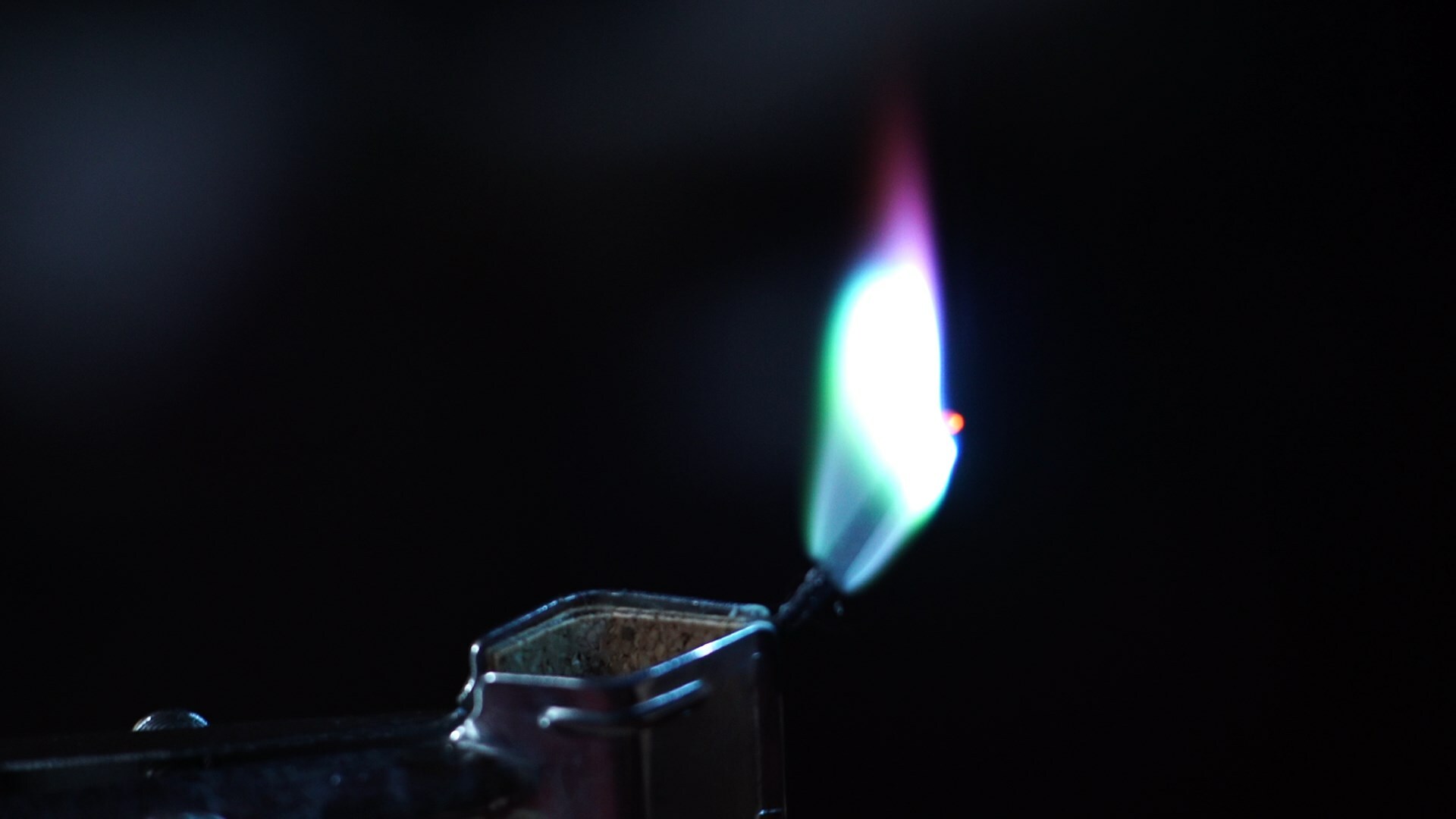
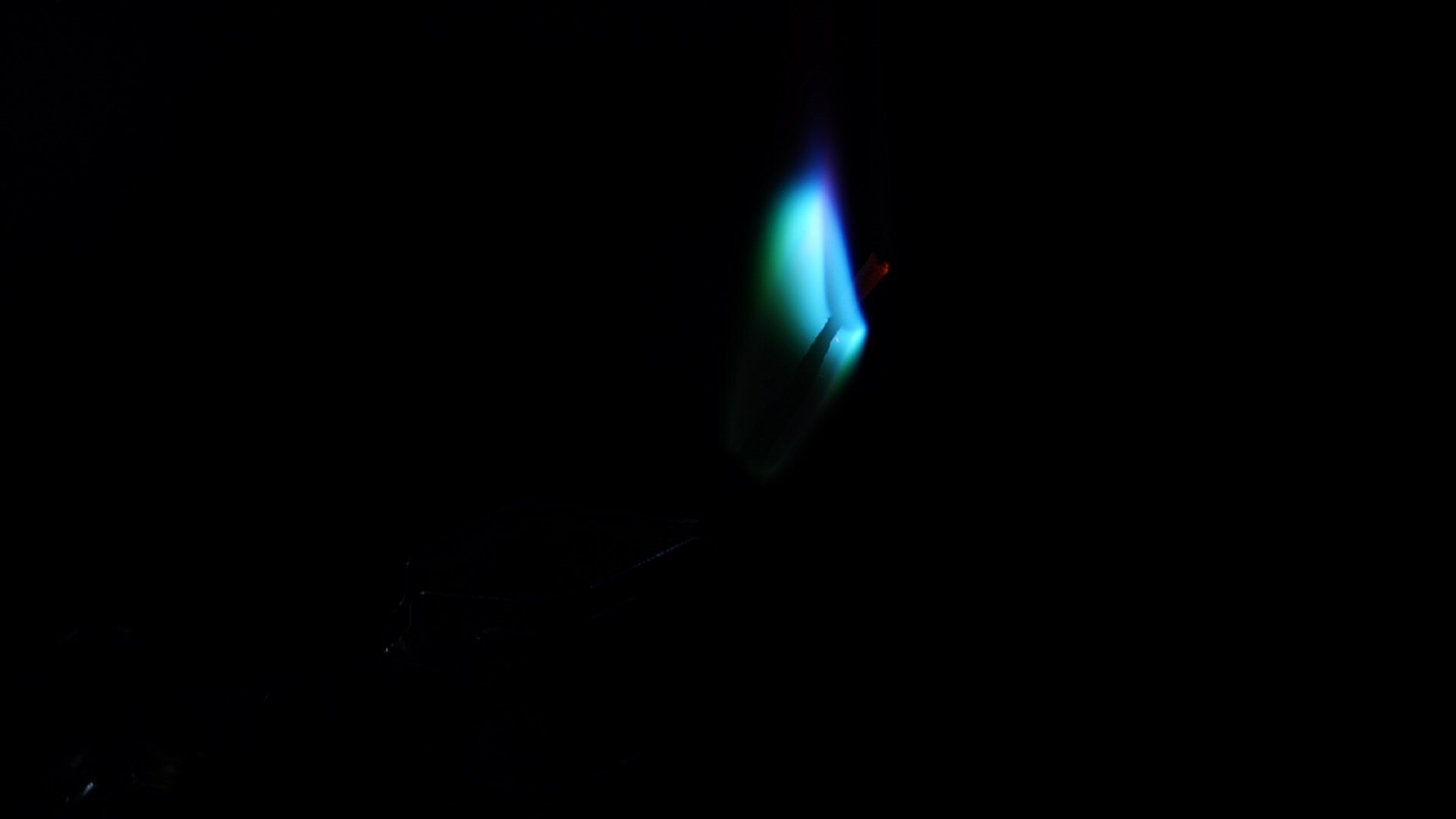
Such wick burns pale green at the bottom and bright blue at the top.
here it is, unfortunately, my camera thinks that bright blue is white:
here it is again, but with lowered sensitivity of the camera to confirm that the top of the flame is blue, the bottom of the flame here is invisible:
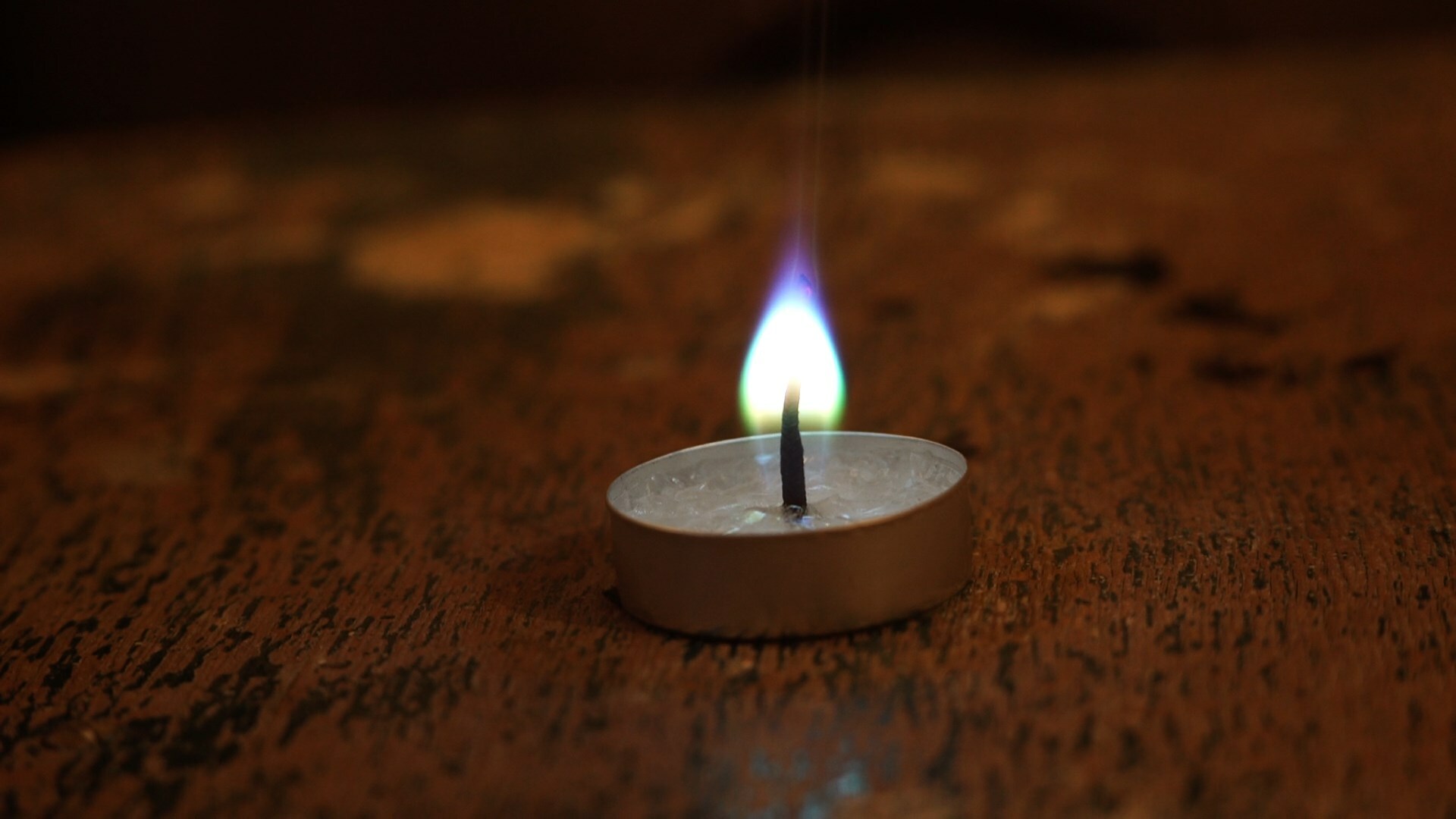
Unfortunately candle with this wick burned blue very short time then it turned orange. I have a hope that it may work in thin candle.
Experiments with blue candle postponed until I figure out how to make small silicon forms for candles.
Also, I tried to make candles using plastic form but failed, looks like molten dimethyl oxalate dissolves plastic, also it sticks too hard to plastic form, and its impossible to extract the candle, I'll try with silicon mold release or/and with silicon form.
For any additional information look into patents:
US4386904A, US3266272A, US3582251A, US8894409B1, US20100310999A1, US20040137392A1, US3150510A