

Who was the first—or, at least, one of the first—naturalized American citizens of Chinese descent?
His English name was Jimmy July.
Jimmy is believed to have arrived from China in California in the mid-19th century as a labor immigrant and initially worked as a miner, eventually ending up in Montana. There, he was described as a “celebrated Chinaman” and a “prominent citizen” of Last Chance Gulch—now, the state capital, Helena, where he ran a restaurant (an “eating house”). Thanks to the mining industry focused primarily on copper, certain cities in Montana, especially Butte, skyrocketed, with their populations growing from less than 300 in 1870 to more than 30,000 only three decades later. In this regard, business for Jimmy must have been quite good, at least for a while.
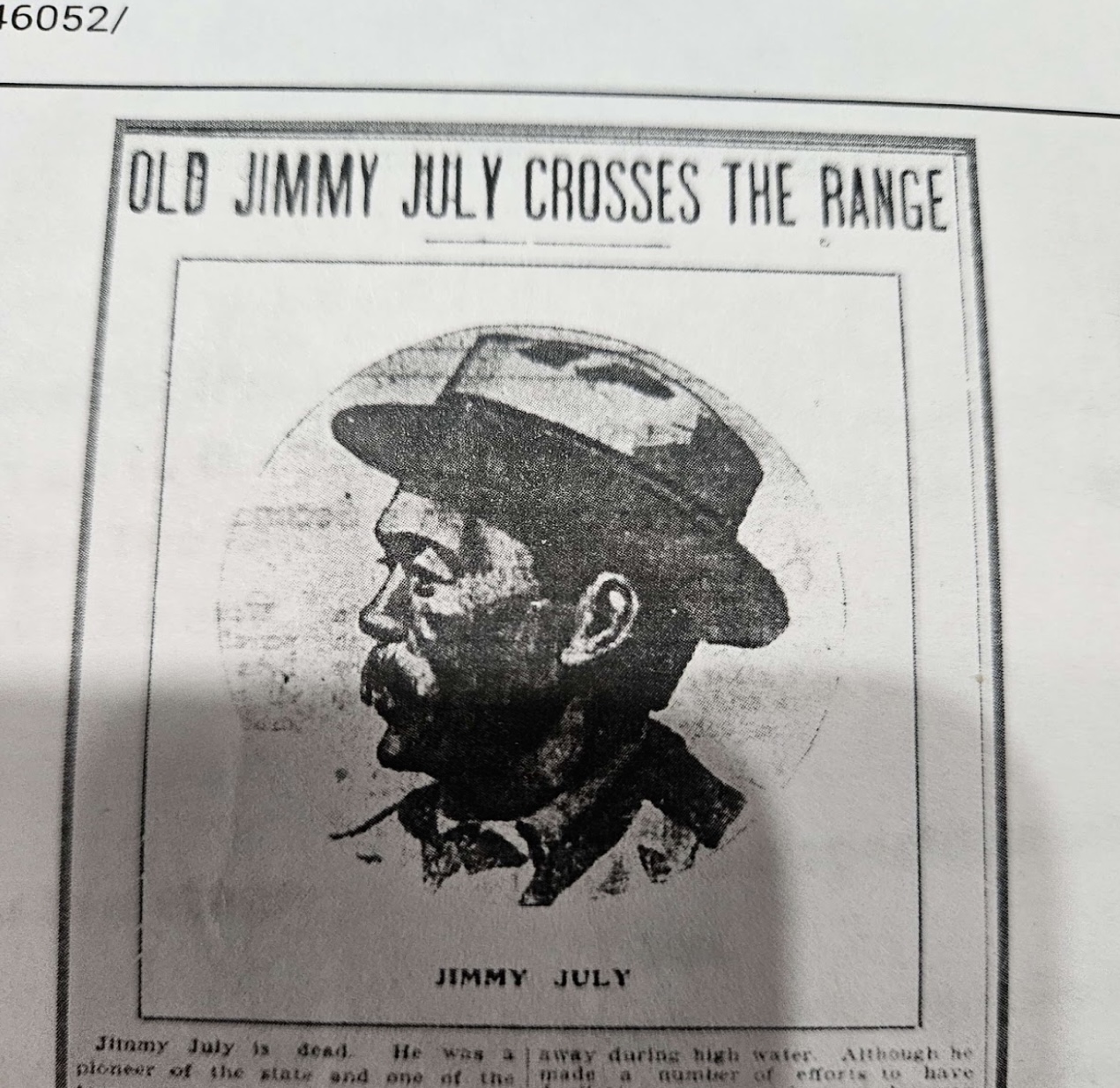 Jimmy July's obituary.
His case is exceptional because he seems to have gained U.S. citizenship sometime before 1866 and thus prior to the introduction of the Chinese Exclusion Act of 1882. This legislation suspended immigration (with some exceptions) from China and banned the Chinese from becoming U.S. citizens altogether. Most historians describe this, and other similar legislation, as being sourced in economic concerns and racial prejudice, serving as a major change in the U.S. immigration policy.
Jimmy’s exact date of birth is unknown. In 1901, he believed himself to be about 90 years of age. Some sources, like the Montana Independent (January 1, 1937), claim that Jimmy had lost his naturalization papers in 1866 in Rock Creek during high water, along with his equipment and guns. So, it was impossible to verify his claim of citizenship. Another source, historian and journalist Carl Burgess Glasscock (1884–1942), however, describes how Jimmy had used his citizenship papers to vote in an election in Butte. He was turned away at first, but was reluctantly given a ballot after showing his paperwork.
“He is an American citizen because he wanted to be, and took the necessary trouble."
-One of his defenders, W.I. Lippincott, challenged the naysayers.
“That’s more than a lot of these bums who are voting today can say.”
Remarkably, it was Jimmy’s vote that decided the result of the election by a majority of one, electing Milo French.
(The source, G.B. Glasscock, does not list the date or the government office in question. However, this was likely an election for the role of the police magistrate in the early 1880s, which Milo French won. Thus, the date seems to dispute the claim of lost citizenship papers two decades earlier.)
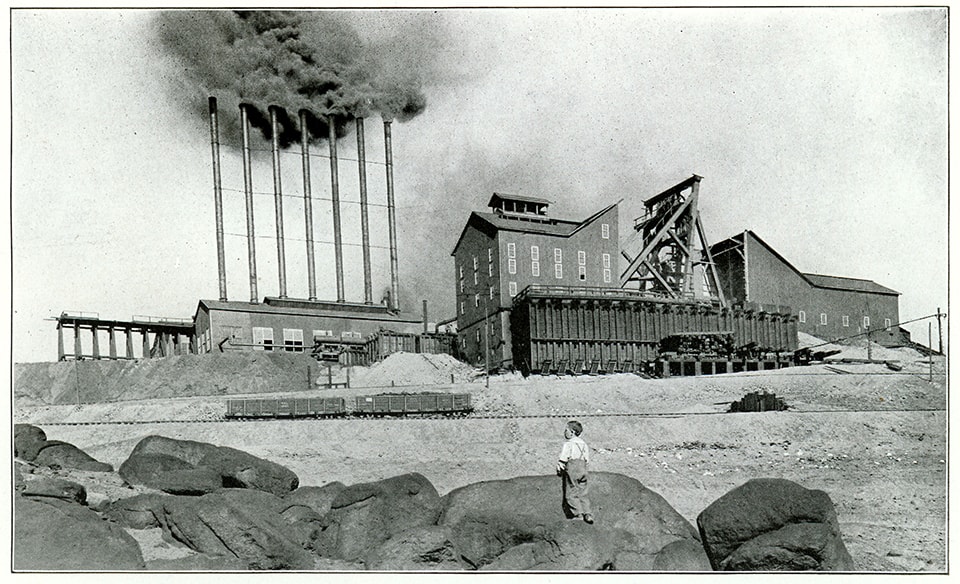 Butte, Montana, 1900.
According to the Mai Wa Museum in Butte, Jimmy remained a popular and respected citizen. In 1896, he recited the Declaration of Independence from start to finish during the July 4th festivities.
As for his own views, the Montana Independent described him as follows:
“He favored the Chinese Exclusion Act, disliked his own countrymen, and thought there were too many foreigners in the United States.“
But was this actually true? It is possible that, having spent most of his life in the United States, Jimmy was indeed assimilated and skeptical of newer immigrants, including those from his own country of origin, due to perceived fear of competition, for instance. It is also possible that, after the introduction of the Chinese Exclusion Act, Jimmy was fearful of his status (especially if his citizenship paperwork was indeed lost, as some sources claim) and publicly voiced the opinions expected of him. And the media did what the media still does today: described Jimmy as a “good immigrant” exemplar used for contrast with the other, less assimilated newcomers.
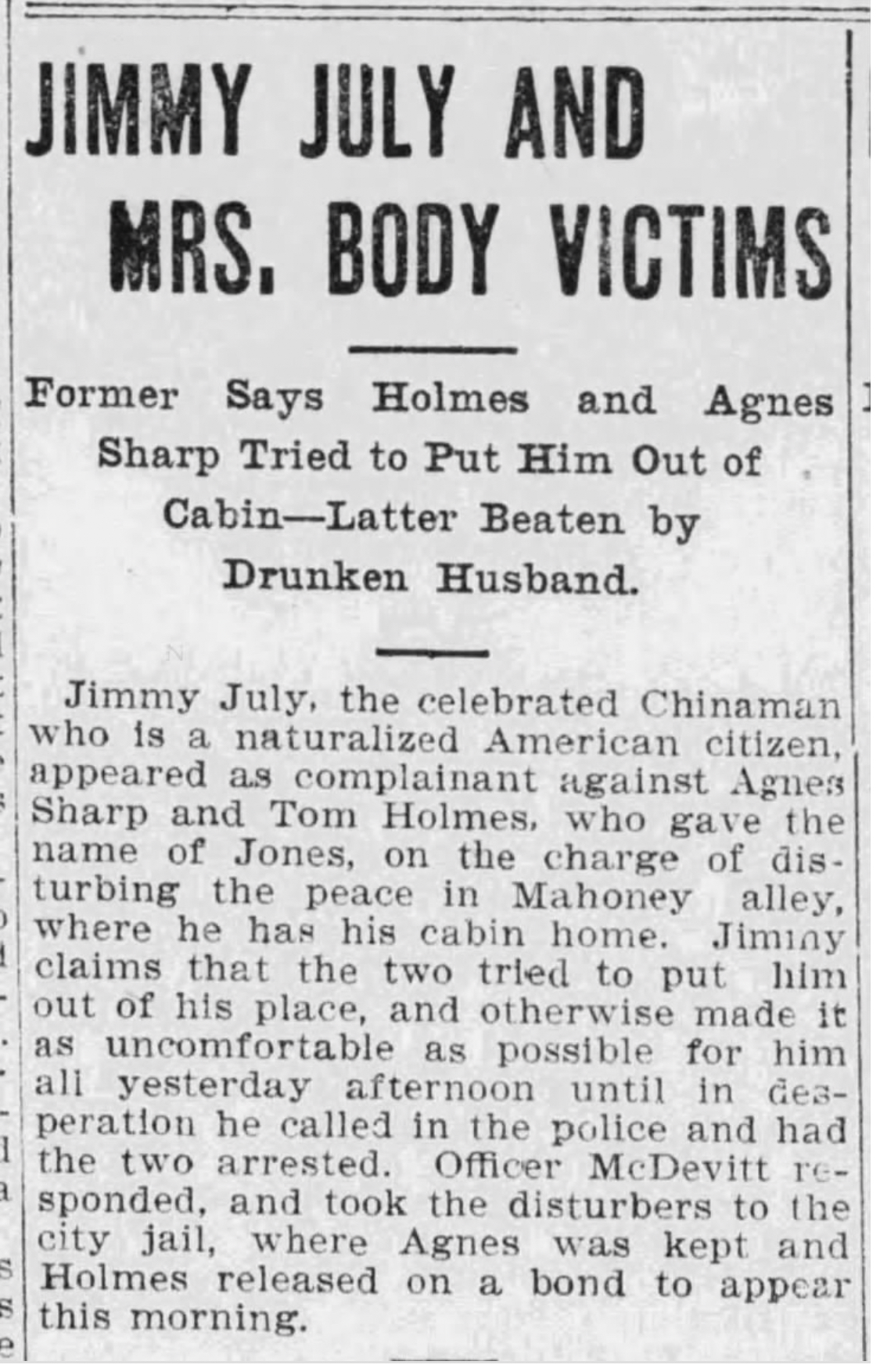 A newspaper clipping about a domestic disturbance shows that Jimmy July was described as a "celebrated Chinaman" and a "naturalized American citizen."
Sadly, Jimmy died in poverty. Toward the end of his life, it was the Silver Bowl County authorities who financially supported him. In this regard, Jimmy was indeed just like many ordinary Americans who hoped to make a fortune from the booming 19th-century mining industry, some ending up with millions, and others, destitute.