

The first ever parade of unmanned vehicles outlines a profound evolution of warfare.
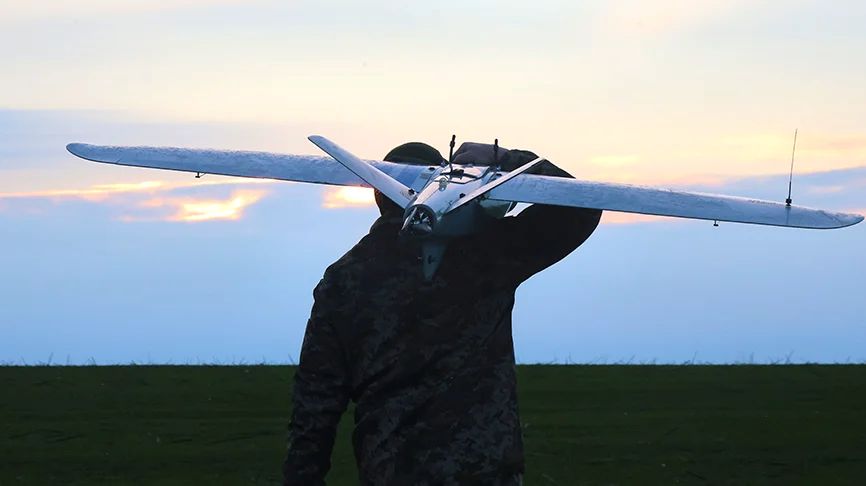 An unidentified soldier preparing to launch a drone. IISS
On 24 August 2026, Ukraine marked its Independence Day with a military parade unlike any it had held before. Instead of rolling out the traditional symbols of military power — soldiers, armored vehicles, tanks, artillery and aircraft — Kyiv showed its rapidly evolving arsenal of unmanned systems.
Ground robots moved along the Khreschatik avenue, naval strike drones cut the waves in the Dniepro River, and sways of reconnaissance, bomber, interceptor and long-range strike drones flew above a packed podium of Ukrainian officials, diplomats and foreign leaders attending the ceremony.
Nearly 100 Ukrainian-made unmanned systems were featured across the three major domains of warfare during the first ever parade without human marchers.
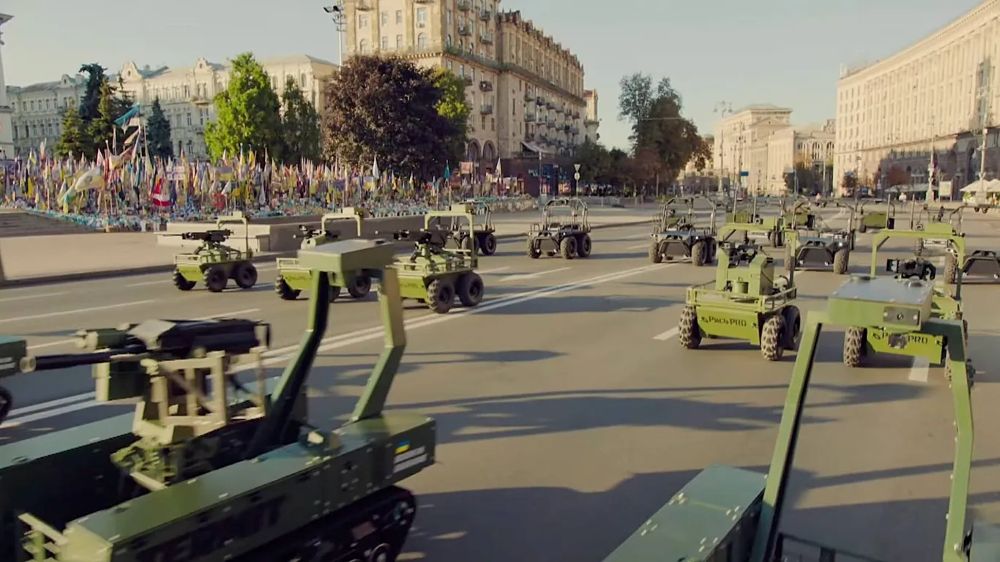 The military parade in Kyiv on 24 August.
The guests who gathered in Kyiv for the celebration were given a glimpse of what Ukraine has built during more than four years of war: a rapidly expanding ecosystem of machines, which are designed, modified and produced to meet the immediate demands of the battlefield.
For the European leaders particularly, the display was also an uncomfortable demonstration of a widening gap. Ukraine, despite fighting for its survival and possessing a far smaller industrial base than Europe's major powers, has become one of the world's most innovative environments for unmanned warfare. Its advantage comes from the speed with which battlefield experience is converted into new models, new software and new production.
Europe, on the other hand, faces a very different problem. It doesn’t lack the money, engineers, aerospace companies and technological expertise needed to build sophisticated unmanned systems. Yet European efforts to develop competitive indigenous UAVs have repeatedly been slowed by a number of factors.
***
According to a new analytical report by the International Institute for Strategic Studies (IISS), among the main factors are the continent’s political fragmentation, industrial wrangling, lengthy procurement procedures and changing military requirements.
The contrast is particularly striking in the field of medium-altitude, long-endurance (MALE) drones.
 While the United States has produced and operated hundreds of Reapers and SkyGuardians, Europe's flagship Eurodrone program is planned around a much smaller production and has endured years of delays. In the meantime, many European countries have purchased American systems to fill their immediate capability gaps and don’t feel the pressure to develop their own systems.
France, the United Kingdom, Italy, the Netherlands, Spain and Poland, for example, have opted for MQ-9A Reaper, while Belgium, Denmark and Germany have chosen MQ-9B SkyGuardian, the report says.
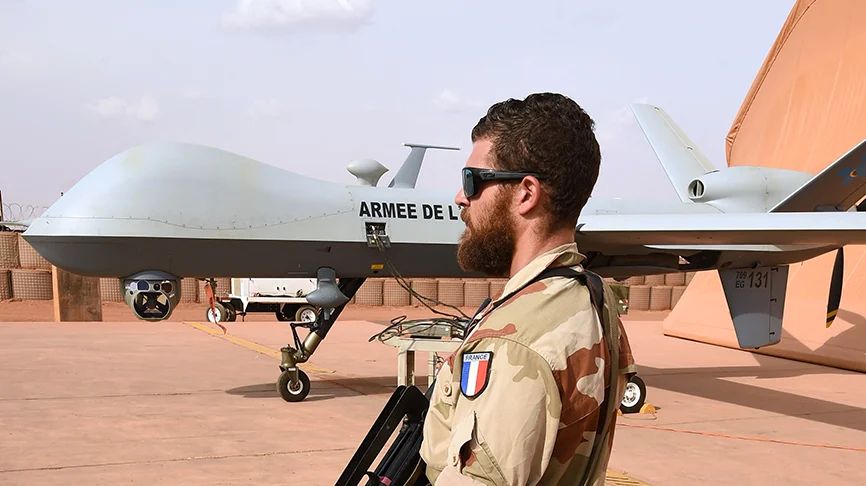 A U.S.-manufactured Reaper in the French armed forces.
The explanation for this choice is quite rational: when a proven aircraft is available today, governments have little incentive to wait a decade or more for a domestic alternative. But every such purchase also reinforces Europe's dependence on foreign suppliers and makes it harder for the European industry to achieve the production scale and operational experience it needs to become competitive.
***
This is the paradox at the very heart of Europe's drone problem. The continent does not lack the technological capacity to build advanced UAVs. It struggles to organize that capacity into a defense industry capable of producing affordable systems quickly, in sufficient numbers and adaptable enough to keep pace with warfare.
The longer the delay, the more outdated are the domestic developments, the more expensive is to start all over again, the less motivation to continue – a loop Europe has found it hard to overcome.
By contrast, Ukraine is demonstrating what happens when the battlefield becomes the procurement department: requirements change rapidly, manufacturers respond, soldiers provide immediate feedback, and the next generation of equipment can emerge within months rather than decades.
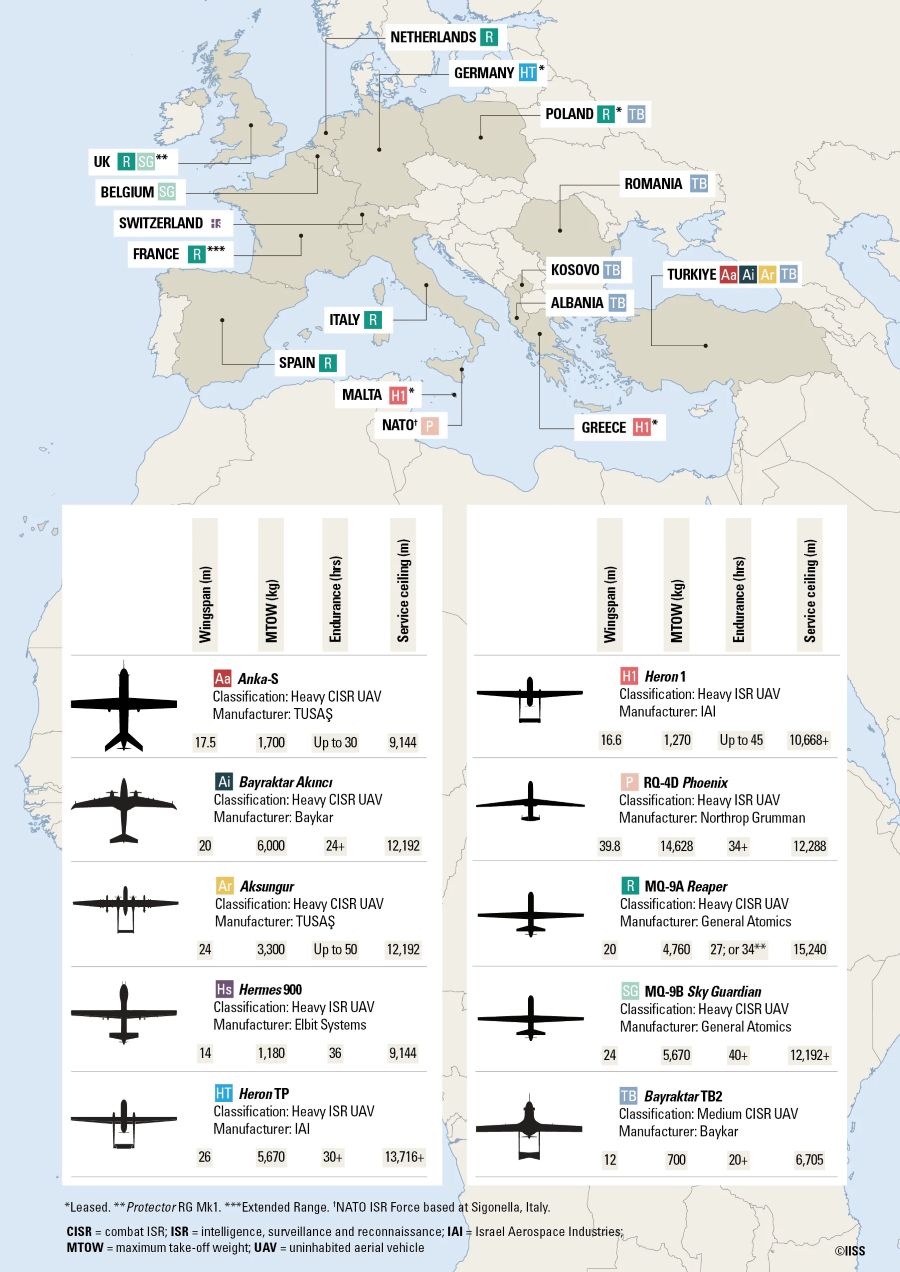 Bases where European UAV units are located.
Europe, meanwhile, is still trying to reconcile the requirements of multiple governments, military services and defense companies before production can even begin.
So, what should be done? Europe could standardize military requirements across countries, simplify and shorten procurement procedures, and create stronger economic incentives for companies willing to invest in high-volume drone production. It could also accept that not every project needs to produce a perfect, all-purpose platform from the outset; speed, adaptability and the ability to scale production may matter more.
None of these solutions requires Europe to invent fundamentally new technology. What they require is political will to change the way Europe makes defense decisions.
The question when Europe will build a drone ecosystem of its own is, therefore, of political nature, not military or industrial.