

Ukrainian Defense Ministry urges users to flood a new popular gas-finding app in Russia with misinformation.
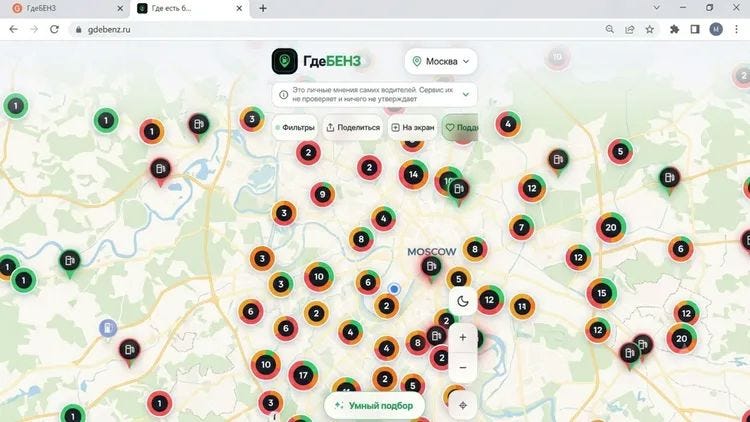 As Russia's fuel crisis deepens, the war between Moscow and Kyiv is spilling into an unlikely new arena: the smartphone apps ordinary Russians now depend on to find a working gas pump.
What began as a battlefield campaign against oil refineries has evolved into a quieter digital front, where Ukrainians have been urged to flood Russian fuel-tracking apps and maps with false information — planting fake notes of empty filling stations, or hiding real shortages — in an effort to compound the chaos facing Russian drivers.
It's another sign of how modern warfare extends beyond missiles and drones to include the everyday digital tools civilians rely on during a crisis.
Where’s gasoline?
A new smartphone app called GdeBENZ has reportedly become the most-downloaded fuel-finder in Russia, attracting around 800,000 daily users as the country grapples with a worsening gasoline shortage.
Its developer, speaking on condition of anonymity in an interview with Meduza that the app, available on the App Store, Google Play and RuStore, doesn't rely solely on its own users. Instead, it aggregates data from T-Bank, Yandex Zapravki, Sberbank's gas station finder and other services, using automated bots that regularly check those platforms the way an ordinary user would.
According to the developer, who in AppStore is identified as Kirill Konishchev, the app gives greater weight to banking data because those companies determine fuel availability from actual payment transactions rather than user-submitted reports, which are considered less reliable.
Ukrainian sabotage
The developer says the platform has had to build defenses against deliberate misinformation after Ukraine's Defense Ministry adviser Serhii Sternenko publicly urged supporters to post false information on Russian fuel-tracking maps — marking filling stations as empty when they have fuel, or vice versa.
To counter this, the app assigns each device an anonymous identifier. If the same device submits reports from filling stations scattered across distant regions in patterns inconsistent with normal travel, its reports are automatically treated as unreliable.
Location is also checked. According to the developer, reports from users located more than 1,000 kilometers from the station they are rating are ignored. He also described suspicious voting activity targeting stations in occupied Crimea from users located elsewhere in Russia.
Digital warfare
The Ukrainian misinformation campaign relies on several simple tactics.
One is to report stations as empty when they still have fuel. The reverse tactic is to mark empty stations as having fuel. Users also connect through VPNs to submit fake updates to crowdsourced map services while posing as customers inside Russia.
Because many of these apps rely partly on user feedback, they are relatively easy to manipulate. This is why crowdsourced fuel information used by services such as Yandex Zapravki and platforms operated by T-Bank and Sberbank has become less reliable, creating an opportunity for GdeBENZ, which cross-checks multiple sources before displaying results.
Volunteers supporting Ukraine reportedly coordinated some of these efforts through Reddit, Telegram and communities associated with NAFO, dividing Russian cities among themselves to avoid duplicating work.
This digital campaign complements Ukraine's sustained drone strikes on Russian oil refineries, which have created genuine fuel shortages. According to analysts, the attacks have disrupted more than 20% of Russia's refining capacity. By mid-2026, more than 53 regions in Russia and occupied Ukraine had introduced fuel purchase restrictions, while long queues at filling stations became increasingly common.
Apps as targets
Using civilian apps as part of the war is not entirely new.
Shortly after Russia launched its full-scale invasion in 2022, thousands of Ukrainians and their supporters posted reviews on Google Maps for Russian restaurants, museums and shops — not to rate the businesses, but to tell Russians about the war, civilian casualties and the bombing of Ukrainian cities.
For many Russians, those reviews became one of the first uncensored sources of information before Google removed them.
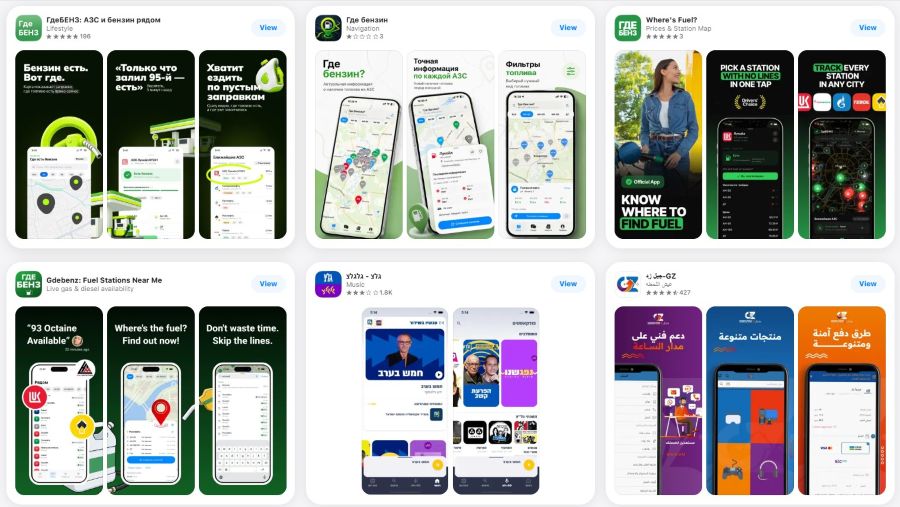 A screenshot from AppStore depicting Russian apps for motorists looking for fuel.
Russia's own navigation platform, Yandex Maps, has also become part of the information war. Earlier in the conflict, users monitored live traffic around military facilities, while analysts warned that congestion data could unintentionally reveal troop movements. As concerns grew that the service might be exposing sensitive information, Yandex reduced or removed some real-time features, making the platform less informative for ordinary users as well.
The digital misinformation campaign surrounding fuel apps builds on the same idea: everyday software can become a strategic asset during wartime.
Unlike traditional cyberattacks that disable servers or steal data, these campaigns target something less tangible — public trust. Navigation apps, fuel finders, restaurant reviews and crowdsourced maps all depend on users believing that the information they see is broadly accurate. Once that trust is undermined, the software may continue working perfectly while becoming far less useful.