

The work challenges the long-held view that Alzheimer’s is solely a brain-centered disorder.
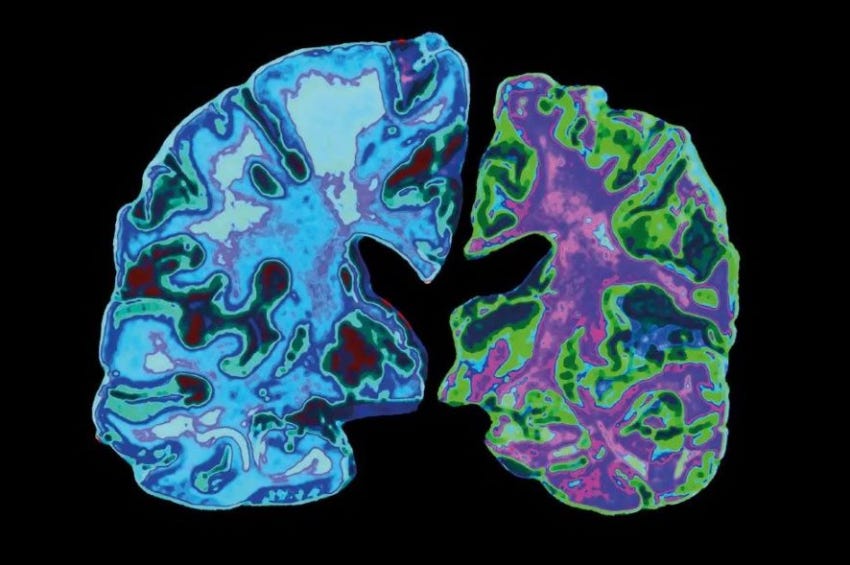 Researchers at the University of British Columbia have discovered that familial Alzheimer’s disease may be transmissible through bone marrow transplants, based on experiments in mice involving stem cell transfers. Their findings were published in the journal Stem Cell Reports.
In the study, healthy lab mice received bone marrow stem cells from donor mice that carried a hereditary form of Alzheimer’s. The recipients went on to develop Alzheimer’s at an accelerated pace, suggesting the disease could be passed on through cellular material.
The work challenges the long-held view that Alzheimer’s is solely a brain-centered disorder, highlighting instead the role of amyloid proteins produced outside the central nervous system. In light of the results, the researchers advise that blood, tissue, organ, and stem cell donors be screened for Alzheimer’s to help prevent unintended transmission via transfusions and cell-based therapies.
As the senior author and UBC immunologist Wilfred Jefferies noted in a press release: “This supports the idea that Alzheimer’s is a systemic disease where amyloids expressed outside the brain contribute to central nervous system pathology… We need more rigorous controls and screening of donors used in blood, organ, and tissue transplants, as well as in human-derived stem cell or blood product transfers.”
To investigate whether peripherally derived amyloid could trigger Alzheimer’s in the brain, the team transplanted bone marrow containing stem cells from mice with a familial version of the disease into two types of recipients: APP-knockout mice, which completely lack the APP gene, and mice with a normal APP gene.
Typically, mice with inheritable Alzheimer’s start developing amyloid plaques at 9–10 months of age, with cognitive decline appearing by 11–12 months. In contrast, transplant recipients showed signs of impairment much sooner — at 6 months post-transplant in APP-knockout mice and at 9 months in normal-APP mice. In rodents, cognitive decline is marked by loss of normal fear responses and memory deficits. Both recipient groups displayed clear molecular and cellular signs of Alzheimer’s, including amyloid accumulation in the brain and leaky blood-brain barriers.
The study concluded that the mutated gene in donor cells is sufficient to transmit the disease, as evidenced by its transfer to APP-knockout mice, which lacked the native gene, and the susceptibility of normal-APP mice.
Since hematopoietic stem cells give rise to blood and immune cells rather than neurons, the presence of amyloid in the brains of APP-knockout recipients provides definitive proof that Alzheimer’s pathology can stem from amyloid produced outside the central nervous system. Moreover, the use of donor cells expressing a human APP gene showed that the mutated human gene could cross species barriers and induce disease in mice.
Looking ahead, the team plans to investigate whether transplanting tissues from healthy mice into those with familial Alzheimer’s could slow or reverse the disease, whether other transplant or transfusion types carry similar risks, and whether cross-species transmission occurs more broadly.
The research was enabled thanks to support from the Canadian Institutes of Health Research, the W. Garfield Weston Foundation/Weston Brain Institute, the Centre for Blood Research, the University of British Columbia, the Austrian Academy of Science, and the Sullivan Urology Foundation at Vancouver General Hospital.