
Romanian prosecutors may be playing the suspects’ game.
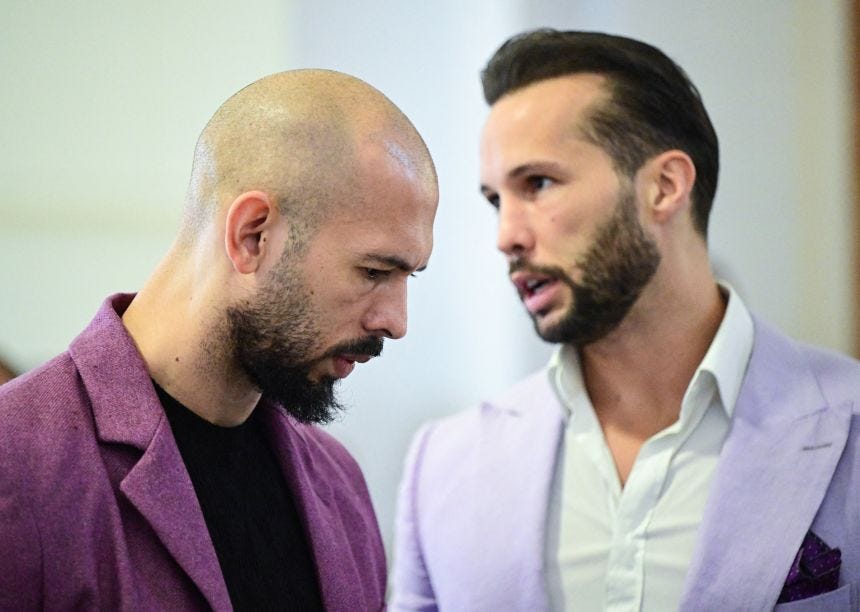 Andrew and Tristan Tate. Getty Images
After almost four years of investigation, the country's anti-organized-crime prosecutors have brought a new set of trafficking and sexual-offence charges against the two Tate brothers. Andrew Tate is accused of trafficking a minor, having sex with a minor and money laundering. Tristan Tate is accused of complicity in trafficking a minor and money laundering.
This is the second time the Romanian authorities have indicted British-U.S. citizens Andrew and Tristan Tate, former kickboxers and social media influencers. This time, I suspect, they acted to save face rather than to genuinely do the job they are paid for – and the timing is difficult to ignore.
The new indictment comes while Britain is pursuing the brothers through an extradition case in the United States. British prosecutors have authorized dozens of charges against them, and the brothers were arrested in Miami last month after the U.K. requested their extradition.
Suddenly, Romania has produced an indictment too. Why not earlier, why now?
Perhaps it is about finally delivering justice to the victims. But as a permanent resident in Romania, I suspect that it could be about something else: keeping the Tate brothers in Romania rather than allowing Britain to take them.
That distinction could matter enormously.
If the brothers are tried in Romania, there is at least a possibility that the same justice system that has already struggled to bring the case against the Tates to trial could once again fail to produce a convincing prosecution.
They could receive relatively mild sentences or they could be acquitted. Or the case could collapse again on procedural grounds.
It is precisely Romania's previous handling of the Tate case that makes me skeptical.
The country's anti-organized-crime prosecutors, DIICOT, already had a chance. And it did not go particularly well.
Let me explain what is DIICOT.
DIICOT is Romania's Directorate for Investigating Organized Crime and Terrorism.
This is not some inexperienced provincial police department. DIICOT was once regarded as one of Romania's most powerful and respected law-enforcement institutions, along with its sister DNA, or the National Anticorruption Department. DIICOT and DNA prosecutors have taken on organized-crime networks and cases involving some of the country's most powerful politicians, including former prime ministers and cabinet members.
Those were not easy cases, but somehow many powerful politicians ended up behind bars, including former prime minister Adrian Nastase, former Chamber of Deputies chairman Liviu Dragnea, former regional development minister Elena Udrea, former senator Dan Sova, former transportation minister Miron Mitrea.
Those were heavy names in Romanian politics.
Neither Andrew Tate nor Tristan Tate is anywhere close.
So how did an institution with that level of experience manage to build a case against two internationally notorious brothers and then see its indictment sent back because of serious procedural and evidentiary problems?
The circumstances make the explanation of simple incompetence difficult to swallow.
The alleged crimes were relatively recent. The alleged victims are alive. Witnesses exist. The suspects are known. Their properties, businesses and online activities were hardly hidden from investigators. The brothers themselves had built an enormous public record through their social-media presence.
This was not an investigation into a crime committed thirty years ago by an unidentified perpetrator.
And yet key evidence was excluded and the indictment failed to proceed to trial. The Bucharest Court of Appeal sent the case back to prosecutors after finding serious legal and evidentiary problems.
There is, of course, no public evidence proving that DIICOT prosecutors deliberately sabotaged their own case. I wouldn’t present such a conclusion as established fact. And perhaps they have gathered sufficient evidence for a new attempt to bring the suspects before a judge. But something tells me that if the Tates are extradited to Romania, justice will not be served.
After all, Andrew Tate said in 2023 that he moved to Romania because law enforcement there was “more lax” and the possibility of avoiding rape allegations more easily was “probably 40 percent.”
I agree with him over this estimate.