

Our closest celestial neighbor isn’t a static, silent rock we once thought.
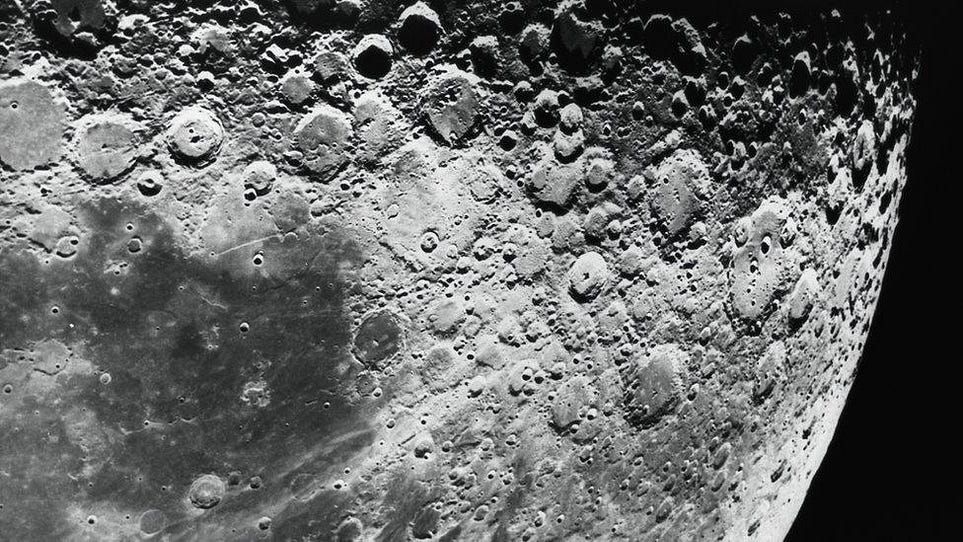 Over the past few hundred million years, the Moon has lost more than 150 feet (nearly 46 meters) off its circumference.
This is the result of a slow, relentless contraction driven by the cooling of its deep interior.
Think of a grape wrinkling into a raisin. That same process is now fracturing the Moon’s brittle crust, as colliding sections of its surface create thrust faults — geological scars that hint at a surprisingly active world.
The first clues emerged in 2010, when scientists reexamined half-century-old seismic data from the Apollo missions. But it wasn’t until 2019 that they realized the Moon wasn’t just shrinking in the distant past — it was still trembling with quakes. The Apollo Passive Seismic Network recorded one of the strongest moonquakes yet, centered near the Moon’s south pole — a region now known to be prone to landslides and instability.
Now, a study published this month in the Planetary Science Journal delivers a sobering update. While researchers haven’t pinpointed the exact epicenter, they’ve confirmed that fault formation and seismic activity are intimately linked. And that poses a direct threat to human presence.
Modeling suggests that shallow moonquakes capable of producing strong ground shaking in the south polar region are possible from slip events on existing faults or the formation of new thrust faults, according to lead author Thomas R. Watters, senior scientist emeritus at the National Air and Space Museum’s Center for Earth and Planetary Studies.
But here’s more.
The simulations don’t stop at shaking. They also reveal that certain slopes near the pole are dangerously unstable — ripe for landslides triggered by even moderate tremors. These shallow moonquakes, originating only about a hundred miles beneath the surface, pack enough punch to damage equipment and structures.
But here’s the twist: unlike Earth’s quakes, which fade in seconds or minutes, lunar quakes can drag on for hours. One magnitude 5 event recorded by the Apollo network in the 1970s — later linked to a fault system spotted by NASA’s Lunar Reconnaissance Orbiter — shook the surface for an entire afternoon.
Until now, these seismic hazards have been largely overlooked in plans for lunar bases and habitats. That oversight has suddenly become urgent — especially for NASA’s Artemis 3 mission, slated for 2027. The plan: land two astronauts on the Moon for a week-long stay, conducting infrastructure tests and drilling for water ice. But with the ground beneath them potentially shifting — and shaking — for hours at a time, the mission’s blueprint may need a serious rethinking.
The Moon Is Also Leaving Us
Every year, the Moon moves about 3.8 centimeters (1.5 inches) farther from Earth. That’s roughly the same rate your fingernails grow. It sounds tiny, but over geological timescales, it adds up dramatically.
This separation, it turns out, is driven by tidal forces. As Earth spins, its oceans bulge toward the Moon — and because our planet rotates faster than the Moon orbits, those bulges get pulled slightly ahead of the Moon’s position. That extra mass tugs on the Moon, effectively giving it a gravitational “slingshot” that pushes it into a higher, slower orbit. In return, the Moon’s gravity pulls back on Earth, gradually slowing our planet’s rotation — lengthening our days by about 1.7 milliseconds per century.
So the same Moon that’s wrinkling like a raisin and rattling with shallow quakes is also, imperceptibly but inexorably, receding into the distance. Billions of years from now, it will be so far away that total solar eclipses will no longer be possible — the Moon will appear too small to fully cover the Sun.
And here’s where it connects back to the new study: recession isn’t static. As the Moon moves outward, its internal cooling and contraction continue, and the stress on its crust evolves. Some scientists suspect that tidal forces from Earth — though weakening over time — may still influence the Moon’s seismic activity, possibly even triggering some of the quakes detected near the south pole.
So the Moon is not a frozen relic. It’s shrinking, shaking, and it’s slipping away from us — all at once.