

Avian flu, warming oceans and industrial fishing are pushing Peru’s Humboldt penguins to the brink of extinction.
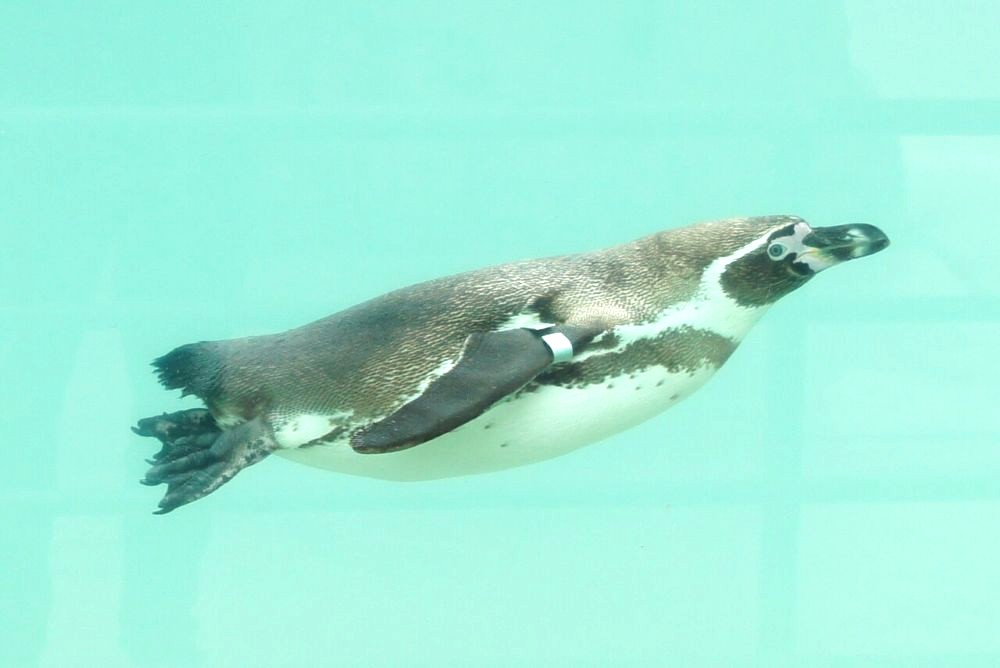 A Humboldt penguin swimming underwater, at Las Leyendas Park in Peru. Wikipedia
In 2012, Punta San Juan, a rocky peninsula on Peru’s arid Pacific coast, was alive with seabirds. Among the thousands of cormorants and pelicans, around 3,000 Humboldt penguins waddled between their nests and the cold waters where they hunted for fish.
It was a thriving ecosystem where different species coexisted and competed for livelihood.
When science journalists and environment activists returned to the reserve in July 2026, they saw just five penguins.
Several nests had been abandoned, leaving eggs to grow cold without their parents – a terrifying view. Across the reserve, the remains of dead birds told another part of the story. Whether the colony died out or its survivors moved elsewhere was unclear.
Punta San Juan once hosted Peru’s largest Humboldt penguin colony. By 2025, fewer than 500 penguins remained there, according to several science sources. A combination of bird flu, unusually warm ocean waters and presence of industrial fisheries had devastated the colony.
Now, another powerful El Niño threatens to make an already desperate situation worse.
The Humboldt penguin (Spheniscus humboldti) is the only penguin species that breeds along Peru’s coast. Its fate is closely tied to the cold, nutrient-rich waters of the Humboldt Current, one of the most productive marine ecosystems on Earth.
If that ecosystem can no longer sustain the birds, and they find no appropriate place to go, the entire Peru population may disappear.
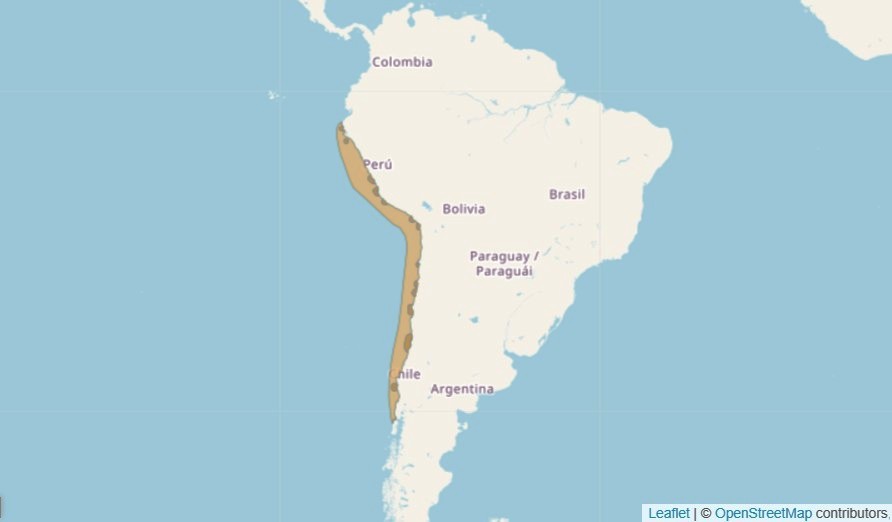 The areas of Humboldt penguin populations. IUCN Red List
A century and a half of decline
The Humboldt penguin’s problems began long before the latest climate crisis, to be fair. In the mid-19th century, its population may have numbered hundreds of thousands or even more than a million birds across its range along the coasts of Peru and Chile.
Commercial harvesting of guano — seabird droppings used as fertilizer — destroyed much of the nesting habitat on which penguins depended. The decline was already evident by the 1930s.
Then came a succession of damaging El Niño events, which periodically transform the eastern Pacific by raising sea temperatures and disrupting marine food chains. Here’s a conventional, overgeneralized timeline of Humboldt penguins’ troubles:
1982–1983: A major El Niño event caused widespread mortality and breeding failures. A scientific study published in Biological Conservation estimated that the penguin population in Peru fell by around 65%, down to approximately 2,100–3,000 adults in 1984.
1997–1998: Another strong El Niño brought further losses. At Pachacamac Island, off central Peru, researchers recorded a decline from 535 penguins in June 1997 to just 92 in December as food availability deteriorated.
2014–2015: Around this period, Penguin numbers at numerous Peruvian sites recovered somewhat, but the apparent recovery proved fragile. Subsequent surveys recorded substantial declines, although changes in distribution and counting methods complicate direct comparisons.
2022: A survey of 34 Peruvian islands and coastal sites counted 15,663 Humboldt penguins. This provided a useful benchmark for researchers before the next major crisis, the avian influenza.
2022–2023: Highly pathogenic avian influenza spread through seabird colonies and also affected marine mammals. The outbreak coincided with El Niño conditions, compounding the pressure on already vulnerable populations.
2025: Peru’s national census recorded approximately 5,465 Humboldt penguins, according to researchers at the Universidad Científica del Sur. That was a decline of about 60% compared with historical figures from the preceding three decades.
July 2026: Researchers found colonies with few birds, abandoned eggs and chicks, and dead adults along the Peruvian coast. At Punta San Juan, the potential arrival of another extreme El Niño raised fears that the surviving population might suffer further losses or even be driven to extinction.
The figures describe different surveys, locations and periods – all documented in the sources given at the end of this piece. They should not be treated therefore as a perfectly comparable annual series. Nevertheless, their overall message is unmistakable: Peru’s penguins are in serious trouble.
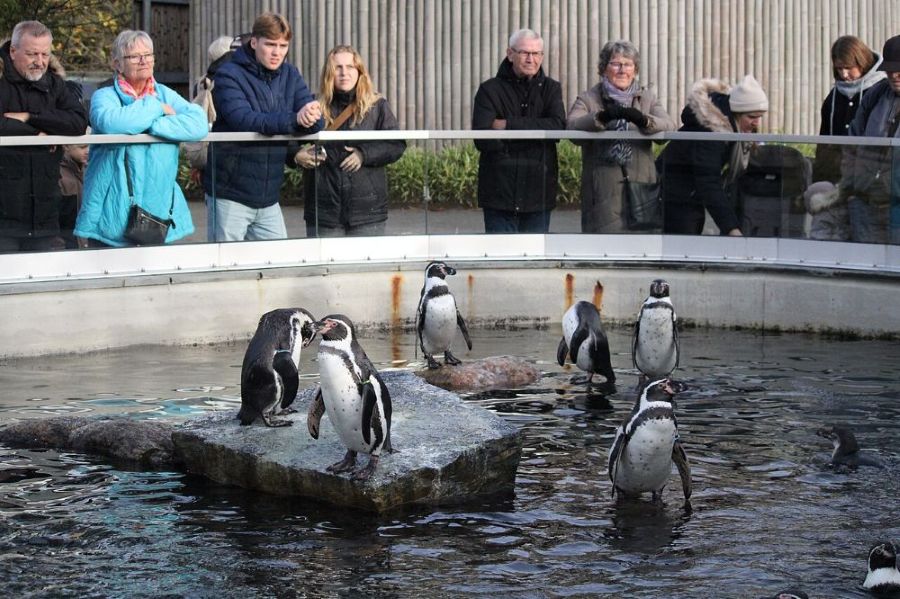 Humboldt penguins in Copenhagen Zoo, 2025. Wikipedia
The ocean stops feeding
Some details about Humboldt penguins. They are medium-sized penguins, growing to 56–70 centimeters long and a weight of 2.9 to 6 kilograms.
The gender of Humboldt penguins cannot be recognized via differences in plumage, as they are monomorphic. The male is usually heavier and larger than the female. The Humboldt penguins have also developed a communication system with different calls for different circumstances.
They have adapted to life in a cold desert. They nest in burrows dug into guano deposits or in small caves along rocky cliffs, then travel to the sea to hunt.
The Humboldt penguins are visual hunters. The foraging range is between 2 and 92 kilometers, with 90% of the foraging being from a range of 5 to 35 kilometers (22 miles); the maximum depth reached during a dive is 54 meters. Their survival depends on anchovies and other small fish supported by the cold Humboldt Current.
The Humboldt penguin feeds predominantly on pelagic schooling fish. The consumption of cephalopods (namely Antarctic flying squid) and crustaceans vary between populations. Northern colonies consume primarily Atlantic saury and garfish, whilst southern populations primarily consume anchovy, Araucanian herring, silver-side, pilchard and squid.
 CLICK ON IMAGE TO OPEN THIS STORY
Climate change
There are seasonal differences in the Humboldt penguin's diet that reflect the changes in availability of fish species across seasons.
El Niño disrupts this relationship. As ocean temperatures rise, anchovies move deeper, farther offshore or into other areas. Penguins must travel longer distances to find food, expending energy they cannot easily replace.
Adults may abandon their nests to search for prey. Eggs and chicks are left exposed, while hungry adults risk dying at sea or along the coast.
Bird flu adds another danger, killing birds directly and weakening populations already struggling to reproduce.
Industrial fishing places additional pressure on the food supply. Fishing nets can also entangle penguins, while human disturbance, marine pollution and introduced predators threaten their breeding grounds.
These threats reinforce one another. A population might recover after an isolated El Niño event, provided enough birds survive and reproduce. Repeated climatic shocks, disease outbreaks and persistent human pressures leave less time for that recovery.
Climate change adds another layer of uncertainty by altering ocean temperatures and potentially increasing the risks associated with extreme conditions. However, individual El Niño events are natural climate phenomena, and the precise contribution of long-term human-caused warming to this particular crisis remains a separate scientific question for which I could not find credible data.
 CLICK ON IMAGE TO OPEN THIS STORY
What can still be done?
The word “extinction” is used in this text only in the case of Peruvian Humboldt penguins; their cousins in Chile are better off, although the species is generally rated as “vulnerable.”
The question what can possibly be done to rescue them is complicated. Scientists cannot simply rescue every starving penguin or incubate every abandoned egg. The scale of the problem, combined with limited infrastructure and resources, makes direct intervention difficult.
Researchers at the Universidad Científica del Sur, for example, have proposed emergency restrictions on fishing around major penguin colonies during 2027–2028. They recommend excluding industrial and artisanal fishing within at least 20 kilometers of key colonies, helping secure food supplies and reducing the risk of entanglement.
Temporary restrictions on penguin-watching tourism could also reduce disturbance during this critical period.
Other measures include protecting guano deposits used for nesting, improving safeguards during guano harvesting, eradicating introduced rodents from breeding sites and creating safer nesting areas with artificial nests and decoys.
Better monitoring is essential to determine whether populations are recovering or merely moving elsewhere.
These measures require cooperation among government agencies, researchers, conservation organizations and fishing businesses. They also require money, enforcement and the willingness to place the long-term survival of a species ahead of short-term economic interests.
Even if – by miracle – these efforts are materialized, the penguin population won’t grow overnight. The best we can do is to give them enough time, space and food to remain.
***
Sources and references:
Wikipedia
https://en.wikipedia.org/wiki/Humboldt_penguin
Science News
https://www.sciencenews.org/article/desert-penguins-climate-el-nino
Universidad Científica del Sur
https://divulga.cientifica.edu.pe/nuestra-ciencia/poblacion-de-pinguino-de-humboldt-en-riesgo-cientificos-reportan-abandono-masivo-de-colonias-reproductivas-debido-al-nino/
Sphenisco — Census of Humboldt Penguins
https://sphenisco.org/en/projekte-aktivitaeten-en/projekte-in-peru-en/zaehlung-der-humboldt-pinguine-an-wichtigen-standorten-in-peru-2022-en
Biological Conservation
https://www.sciencedirect.com/science/article/pii/0006320786900054
IUCN Red List
https://doi.org/10.2305/IUCN.UK.2020-3.RLTS.T22697817A182714418.en