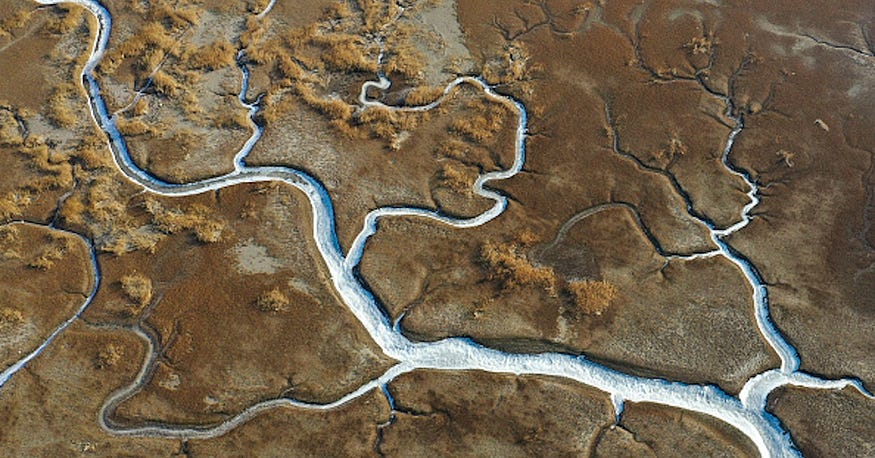
Human history has been forged by geography, climate, and animals around us.
 Differences between Eastern and Western cultures. Credit: Migratontranslators.com
For all the complexity of human history, one truth lies beneath every empire, tribe, nation, and identity: the path that shaped human cultures and peoples was carved not by destiny or blood, but by climate, geography, and the animals that shared the land with us.
I always wondered: why are the English English and why are the Russians Russians? What might have happened if Mongolians’ ancestors had traded places with the forefathers of Scandinavians? Would that have changed the outcome?
The answer does not lie in the people themselves or mythic destinies, but in the places that formed them. In this piece, I explore a theory suggesting that had any ancient population lived for centuries under the same winds, seasons, soils, and among the same mountains and rivers, they would have evolved into cultures remarkably similar to whoever historically inhabited that territory.
Human identity is not a story rooted in fixed biological divides or predestined lineage — it is the cumulative imprint of the environments people inhabit.
Climate and geography: The silent architects
If one seeks to understand why peoples differ, the first place to look is the physical world around them rather than their myths or rulers. Climate and geography act together as silent, persistent architects, shaping culture in ways so subtle we often overlook them.
Cold climates — like those of Scandinavia, Siberia, or northern Canada — demand foresight and communal effort. Winters impose a strict discipline: storage, sturdy housing, careful planning, and tools capable of withstanding hardship. Over generations, such environments instill habits of resilience, cooperation, and meticulous preparation. Traditions take on the rhythms of survival.
Warm, fertile climates tell a different story. In the valleys of the Nile, Tigris, Indus, or Yellow River, nature offered abundant sunlight, predictable flooding, and endless agricultural potential. Here, early humans were invited to gather, settle, irrigate, and build. Cities arose not because one people were destined for greatness, but because the land gave them the surplus necessary for innovation, trade, and governance.
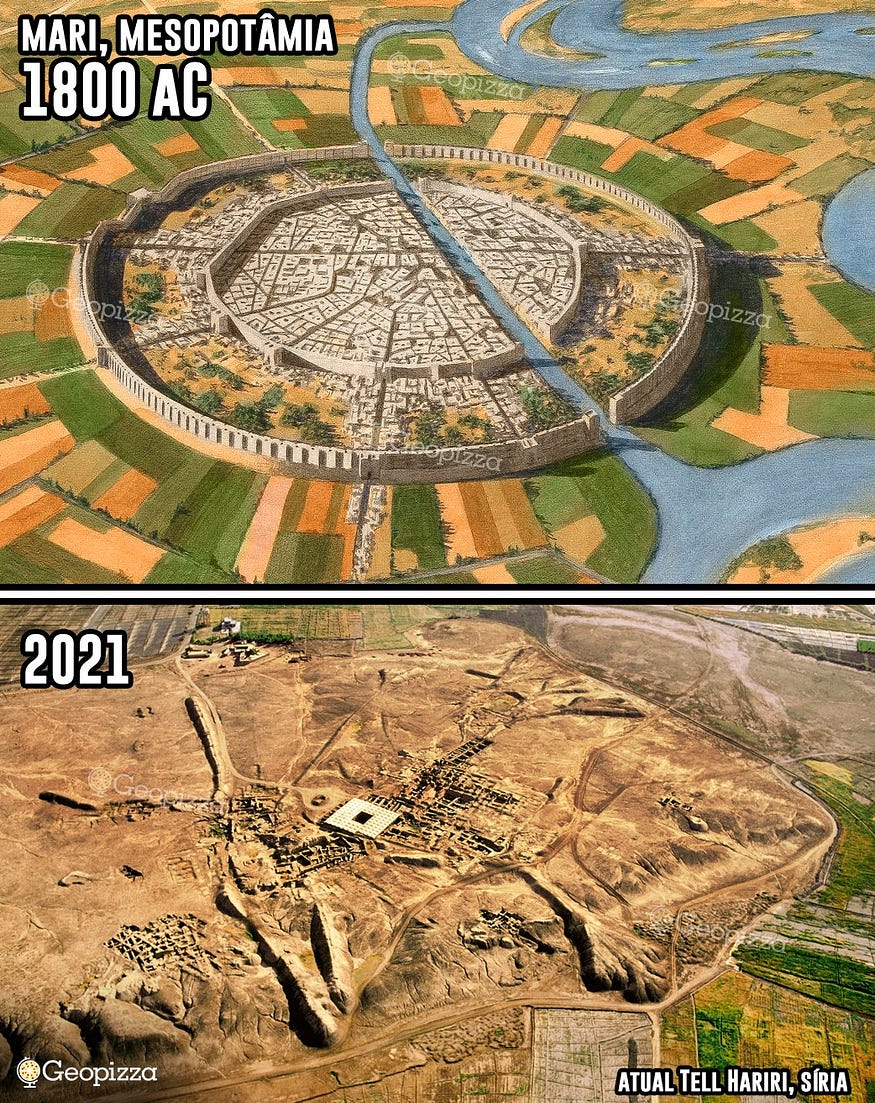 The ancient city of Mari used to benefit from abundant water and fertile land.
Geography then paints the finer details: mountains, for example, foster isolation and distinct cultural development; plains create mobility, herding lifestyles, and expansionist tendencies; coastlines encourage curiosity, trade, and seafaring skills.
Islands like Great Britain or Honshu produce unique identities — connected yet protected, influenced yet intact. England’s mild rains, navigable rivers, and surrounding seas shaped a maritime, trade-oriented society. Japan’s mountains and isolation produced cohesion and discipline.
On the other hand, Russia’s vast plains forged a culture molded by distance, invasion, and endurance. The Mongolian steppe, with its endless grasslands, created the perfect cradle for horse-based nomadism.
Swap the populations, and each land would still guide its inhabitants along the same general trajectory. People adapt to geographic patterns and specific climate, and over centuries they become products of their environments.
Through generations, geography doesn’t just shape how people survive — it dictates how they organize, what they value, how they build, trade, worship, fight, cooperate, migrate, and imagine their place in the world.
Coastal societies tend to look outward and become maritime powers; continental plains favor expansionist land empires; isolated mountain valleys preserve tight-knit traditions; fertile river basins nurture bureaucracy and surplus-driven cities.
Climate amplifies these patterns: harsh winters reward planning and storage; monsoon cycles structure agriculture and ritual; desert heat fosters mobility and trade routes rather than dense settlement.
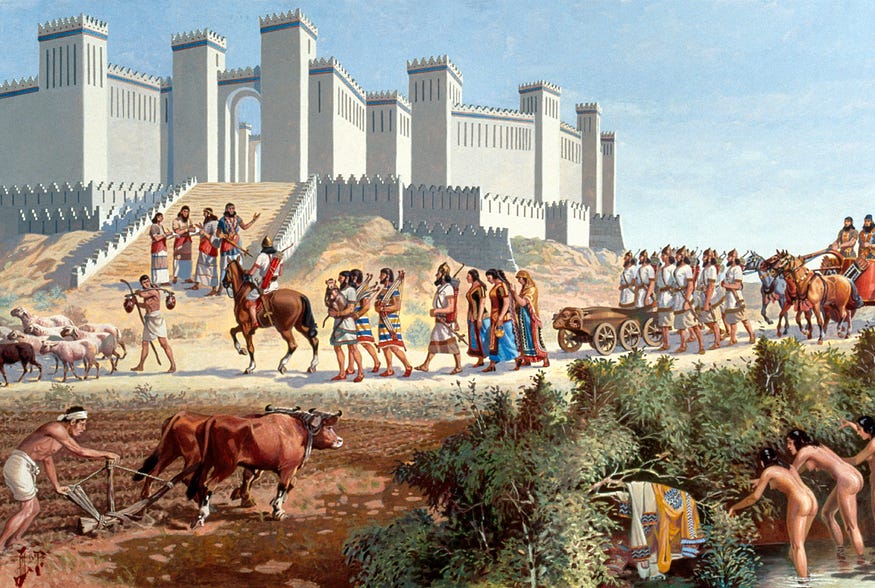 The Babylonian civilization thrived thanks to mild climate and plenty of water resources. Credit: History Channel
Thus, whether Englishmen, Russians, Mongolians, or any other group, distinct peoples emerge not because they were destined to be different, but because their landscapes continually nudged them in different directions — toward different technologies, mythologies, social structures, and everyday habits.
The beasts who carried civilization forward
While climate and geography formed the frame, domesticated animals provided the engine that powered human development at different speeds. Civilization is, to a surprising degree, built on the backs of animals — especially large ones.
Where Eurasia had cattle, horses, sheep, goats, donkeys, and camels, societies acquired enormous advantages. Large animals multiply human energy: they plow, carry, pull, transport, and fertilize. They provide milk, hides, warmth, and mobility. They create surplus. And surplus creates specialization — artisans, soldiers, priests, builders, thinkers.
Consider this: a horse turns grass into speed and reach, an ox turns soil into harvest, a camel turns desert into a trade route, a cow turns grasslands into food and fuel. These were not luxuries; they were force multipliers.
In contrast, the Americas had only llamas, alpacas, guinea pigs, and turkeys; Australia had none of the large mammals; much of sub-Saharan Africa had wild species that resisted interaction with humans and abundant numbers of predators that discouraged domestication.
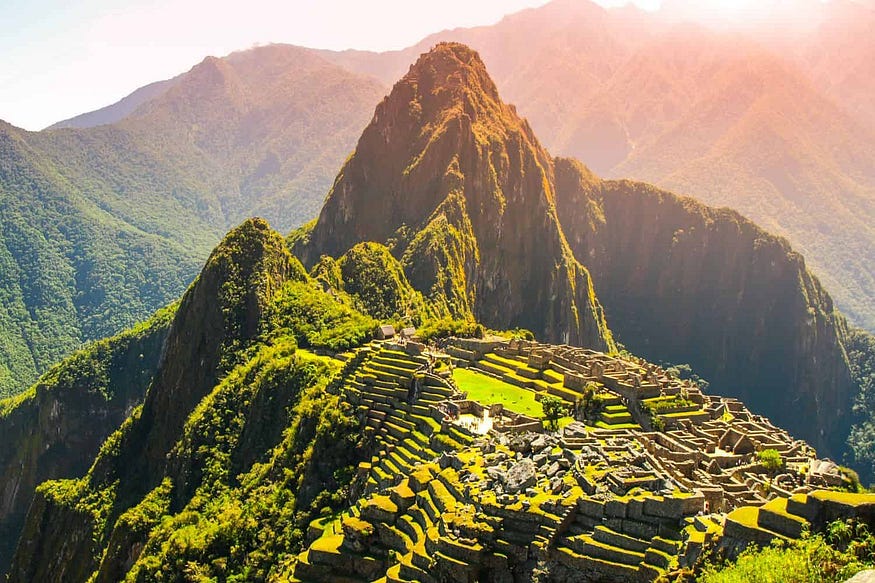 Machu Picchu, an ancient city of the Inca in nowadays Peru, was built on a mountain. Credit: National Geographic
These societies were no less capable intellectually, not at all — they simply lacked the biological partners that made large-scale agriculture, transport, and warfare easier elsewhere.
Without horses or oxen, fields were smaller, roads fewer, distances greater, and military mobility limited. Without cattle and sheep, societies were less able to store wealth in animal form or cultivate extensive farmland. Without camels, desert trade was impossible.
In other words, animals did not determine the character of peoples, but they defined the range of possibilities available to them. In this sense, the animals of a given region were quiet co-authors of its history.
So, geography contours identity, climate molds tradition, and animals empower or restrict the rise of civilization.
The land creates the culture
Let me wrap up the whole idea. When all these forces — climate, geography, and animals — are viewed together, a simple but profound conclusion emerges: human cultures are environmental adaptations as much as they are inventions of the mind.
Give any people England’s rolling hills, mild rains, and coastal winds, or Mongolia’s open steppe, far horizons, and hardy grazing animals, or Egypt’s annual Nile floods and sun-drenched valleys, or Scandinavia’s fjords and long winters, and after centuries, you would find cultures shaped not by ancestry, but by place: by the demands, opportunities, challenges, and conditions provided by a specific geographic area.
Geography and climate have set limits and incentives, to put it plainly.
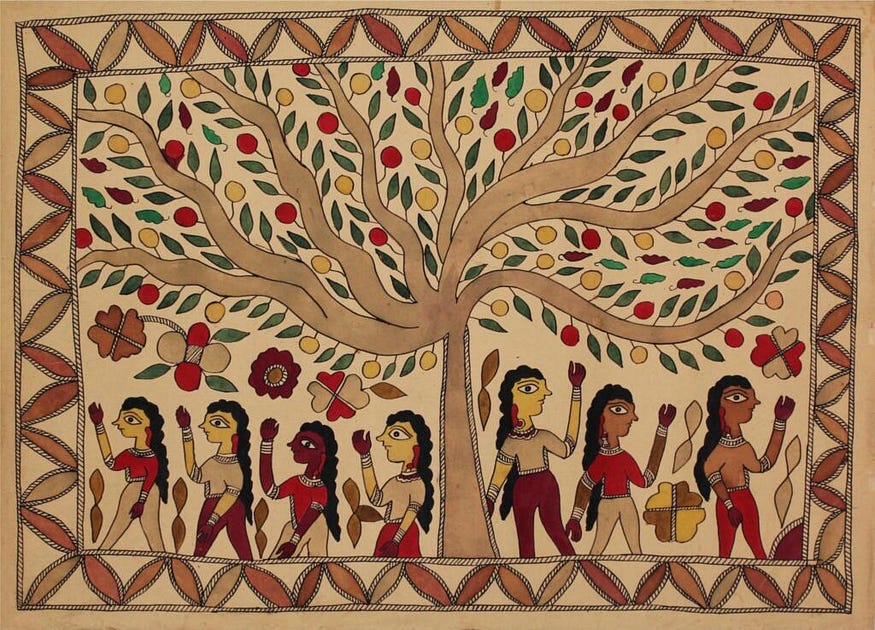 The human species evolved different paths due to different living conditions. Credit: Sarmaya.in
The English became English not because of who their ancestors were, but because England configured them so. The Russians became Russians because the Russian landscape demanded a certain endurance. The Mongolians became Mongolians because the steppe shaped a horse-bound people. The Scandinavians became Scandinavians because the cold sculpted them.
The Earth, our Father and Teacher
Human history is not a tale of chosen peoples or predetermined destinies. It is the story of one species adapting, innovating, and transforming under the guidance of climate, geography, and the animals around them.
The Earth’s winds and rivers, mountains and plains, creatures and climates — these are the building blocks of humanity.
In understanding this, we can figure out not only where we come from, but why humanity looks the way it does today: a tapestry woven by the hands of nature, embroidered by time, and animated by the ceaseless creativity of adaptation.
While it may seem that this story conveys a sense of inevitability, it doesn’t. Think of these factors as strong shapers, not absolute rulers. They indeed create pressures, opportunities, and recurring patterns that tend to nudge cultures in certain directions over long periods.
However, there are other factors to take into account and multiple outcomes are always possible. Without doubt, human agency matters: innovations can break environmental constraints (e.g., irrigation, ships, metallurgy), and cultures influence each other through contact, trade, migration, exchange, and conquest.
The diversity of peoples is the diversity of landscapes. Swap the people but keep the land, and cultures largely converge. Change the land but keep the people, and cultures transform.