

Trapped in volcanic mud and debris, Omayra Sánchez — and hundreds of rescuers — fought hard for her life during 60 hours.
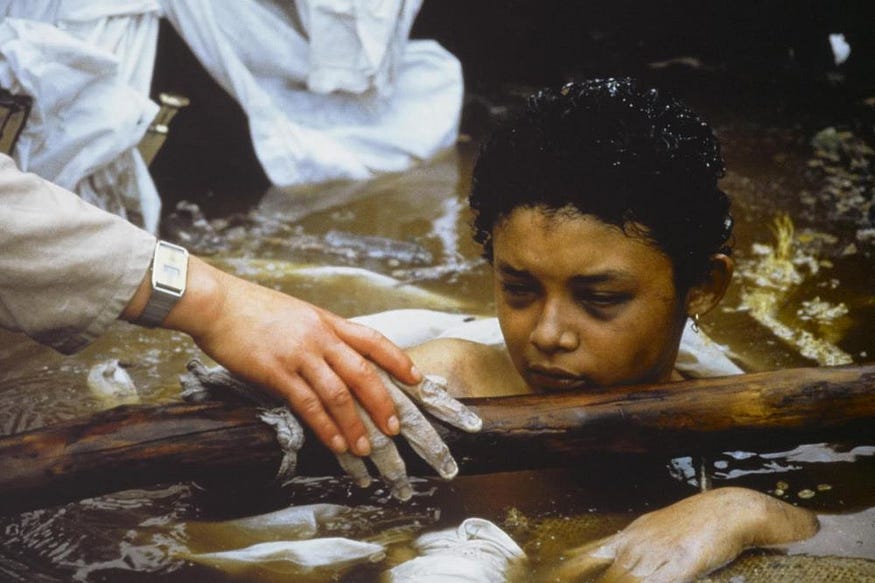 This is one of the saddest stories I’ve ever learned during hours of reading in documents about natural disasters. The eruption of the Nevado del Ruiz volcano in Colombia on 13 November 1985 destroyed the town of Armero and 13 adjacent villages. Within days, lahars — volcanically induced mudflows composed of water, ash, landslides, and debris — killed around 25,000 people.
One of them was Omayra Sánchez Garzón, a 13-year-old girl trapped beneath the remains of her home, with most of her body submerged in cold water. Her ordeal, documented by journalists and rescuers, became one of the most haunting symbols of the disaster, highlighting both the authorities’ disregard for scientific warnings and their inability to respond effectively to a natural catastrophe.
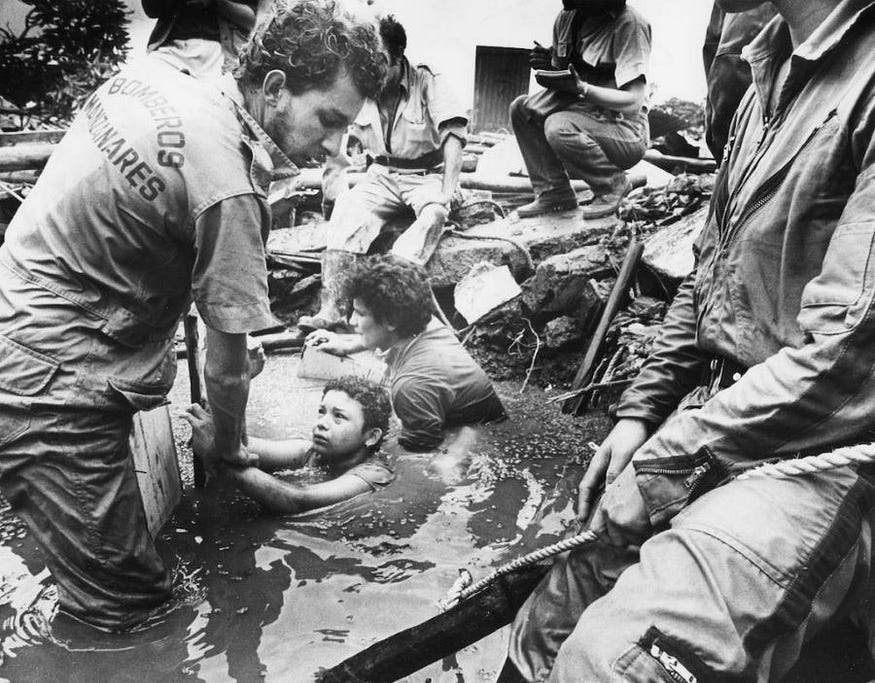 Military trying to release Omayra from debris.
Omayra miraculously survived the initial lahar that destroyed her house and killed her father and aunt. When rescue teams reached her, they discovered that her legs were firmly pinned beneath the collapsed concrete roof.
After the mudflow struck, she initially found herself encased in concrete. She managed to extend one hand through a narrow fissure in the debris, drawing the attention of rescuers. For an entire day, they worked to clear away tiles and pieces of wood surrounding her.
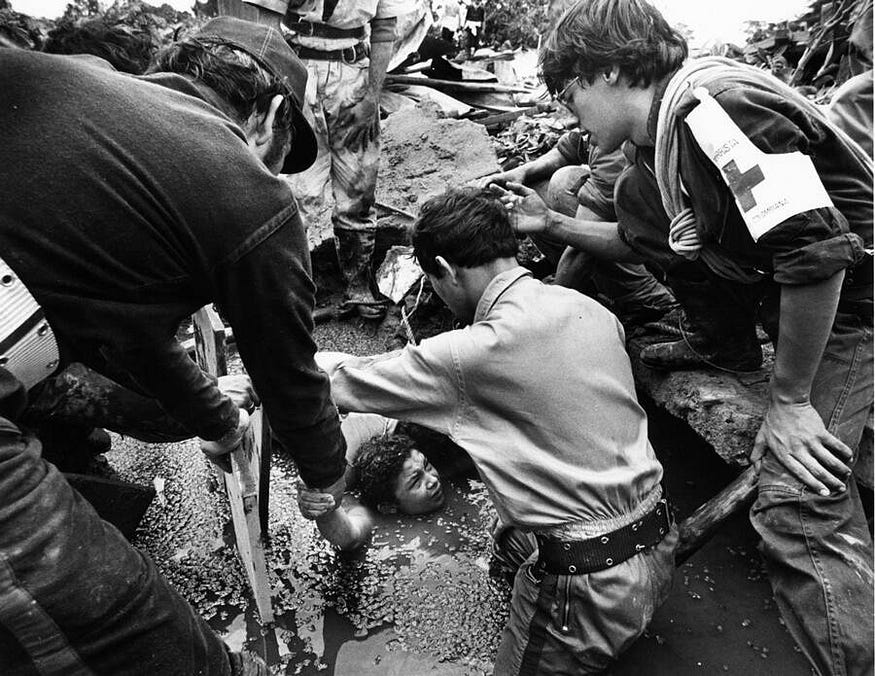 Rescuers attempting to prevent Omayra from sinking.
As they freed her from the waist up, attempts to extract her completely proved dangerous. Pulling her risked causing severe injury to her legs, while shifting debris caused water to rise around her body, raising fears of drowning. To keep her afloat, rescuers placed a tire around her to provide buoyancy.
Divers later located Sánchez’s lower body. Her legs were trapped beneath a brick door and entangled in the rigid embrace of her deceased aunt. Despite repeated efforts, rescuers were unable to free her without risking catastrophic harm.
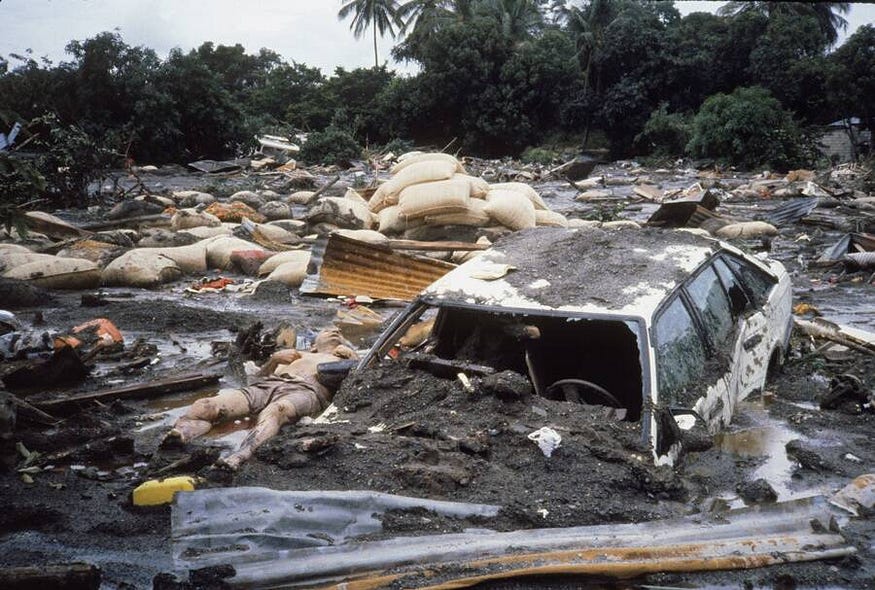 A scene from Armero after the eruption.
Throughout the ordeal, Omayra displayed moments of remarkable composure. She sang to a journalist volunteering at the site and asked for sweet food, cooperating calmly during interviews. At times, however, fear and despair overcame her, leading to prayers and tears.
As the hours passed, her condition worsened. Her eyes became bloodshot, her face swelled, and her hands turned pale. Despite their persistence, rescuers were forced to confront a devastating reality.
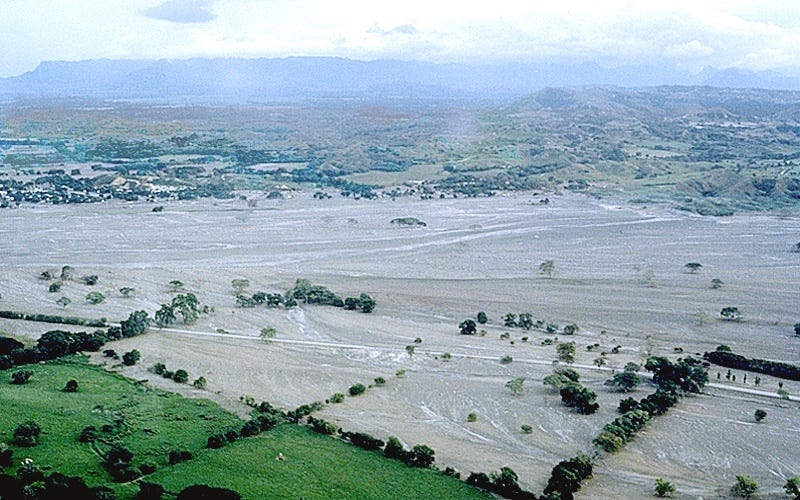 The town of Armero a week after the volcanic eruption.
Omayra’s legs were trapped in a way that made rescue impossible without amputation. Lacking the necessary surgical equipment and aware of the extreme risks, the rescuers ultimately concluded that there was no viable way to save her life.
The girl died on 16 November 1985, most likely from gangrene or hypothermia, surrounded by devastated rescuers and volunteers. Her mother, María Aleida Garzón, and her brother, Álvaro Enrique, survived the disaster.
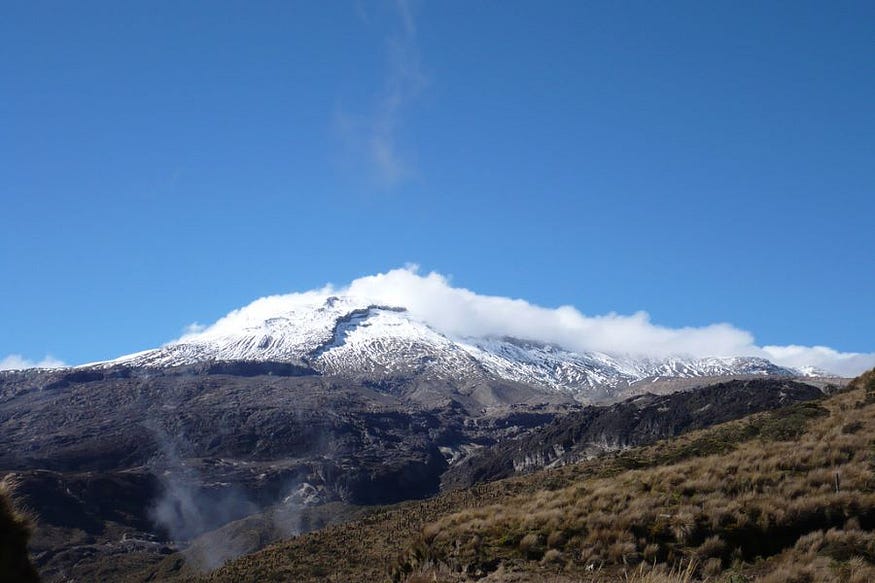 The volcano Nevado del Ruiz.
In the aftermath of Omayra Sánchez’s death, the Colombian government faced intense criticism for its inaction and apparent indifference to warning signs from scientists prior to the eruption. In response, authorities later established the National Office for Disaster Preparedness to prevent similar tragedies in the future.
Nevado del Ruiz remains an active volcano, and climate change is increasing the risks. A 10% reduction in its ice cap could generate mudflows of up to 200 million cubic meters — comparable to the lahar that destroyed Armero in 1985. Such flows can travel up to 100 kilometers along river valleys in just a few hours.
The town of Armero was never rebuilt.
Sources: Wikipedia, HistoryDefined.net, Smithsonian Institution, Colombia statistical office, Wikipedia.