

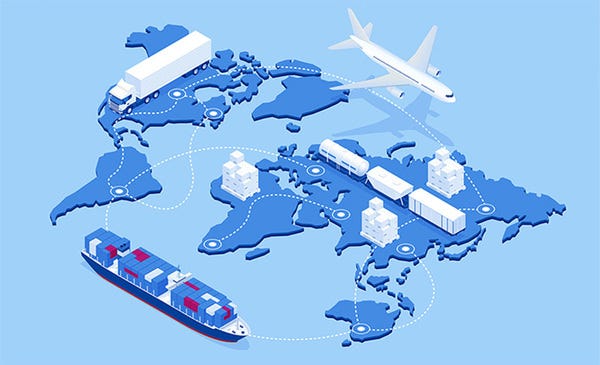
 Credit: Shutterstock
We have seen no shortage of apocalyptic statements about the “end of globalization” lately, coming from economists, politicians, and even heads of state. The term itself is often deployed to scare ordinary citizens, who instinctively associate globalization with imperialism, exploitation, and the privileges of the elite.
Every few years, pundits and politicians cite trade wars, tariffs, migration restrictions, and the resurgence of nationalism as evidence that the world is retreating into its borders. Yet step outside this rhetoric, and the picture looks quite different.
True, modern globalization emerged during the colonial era, when European powers expanded trade and conquest across continents. But then again, capitalism itself was born out of the late medieval period, and the Middle Ages were built upon an even harsher, slavery-driven social order.
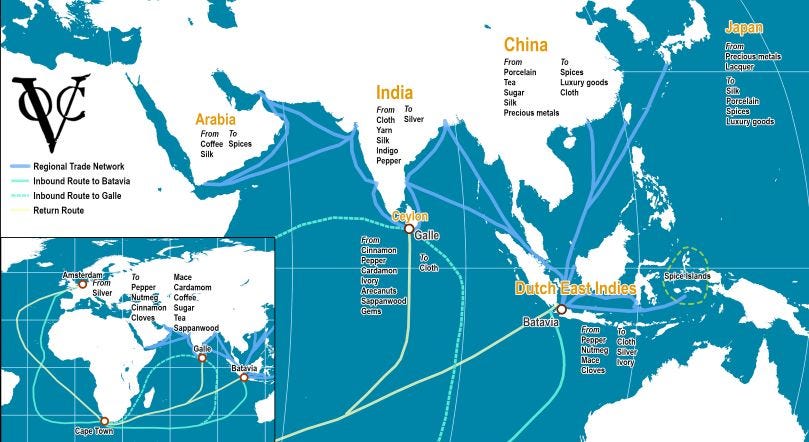 The routes of East India Company — one of the earliest examples of global presence. Credit: TransportGeorgaphy.org
Viewed in this light, globalization is less a moral aberration than the latest phase in a centuries-long evolution of human societies toward interconnection, trade, and shared norms.
Planes still crisscross the globe. Cargo ships keep ports humming. Scientists collaborate across continents. And even something as mundane as traffic rules or business attire remains remarkably consistent from Tokyo to Lisbon. Globalization hasn’t ended — it’s simply evolving.
A complex web, not a single story
Globalization was never just about free trade or open borders; it’s a multilayered system of economic, technological, cultural, and institutional connections that has reshaped how societies function.
Economic: Supply chains are adapting, not collapsing. Given the existing deep specialization of certain economies to specific services and products, relocating them makes little sense. Even countries pursuing “reshoring” still depend on global suppliers, logistics, and technologies.
Technological: Innovation flows faster than ever. Artificial intelligence, scientific data, and research collaboration have made isolation virtually impossible. Manufacturers in too many countries continue to use the same components for their products and China-made devices — as an example — are sold throughout the world.
Cultural and social: Shared norms, similar education and health systems, widespread use of English, and a global consumer culture move at the speed of a meme. Even formal office suits are the same everywhere.
Institutional: Despite growing friction, international bodies like the WTO, WHO, and UN continue to mediate and coordinate across borders. If any of these is going to shut down, rest assured that others will emerge atop their ruins.
So, the connective tissue remains intact. What’s changing is the model, not the phenomenon itself.
From liberal globalization to strategic interdependence
The phase that is ending is the post–Cold War, U.S.-led model of liberal globalization — built on faith in free markets, deregulation, and Western leadership — a model that wasn’t bad after all. In its place, a new order is emerging: fragmented but resilient, multipolar rather than unipolar, and strategic rather than naïvely open.
Therefore, it’s safe to say that we are entering an age of re-globalization, which is defined by three major drivers:
Multipolar interdependence: The U.S., China, the E.U., India, and others compete and cooperate simultaneously.
Strategic autonomy: Nations seek self-sufficiency in critical areas — energy, semiconductors, defense — without full decoupling.
Resilience over efficiency: Supply chains are redesigned to withstand shocks rather than simply minimize costs.
This transformation perhaps spells the end of globalization as we knew it, making room for its next cycle — maturation.
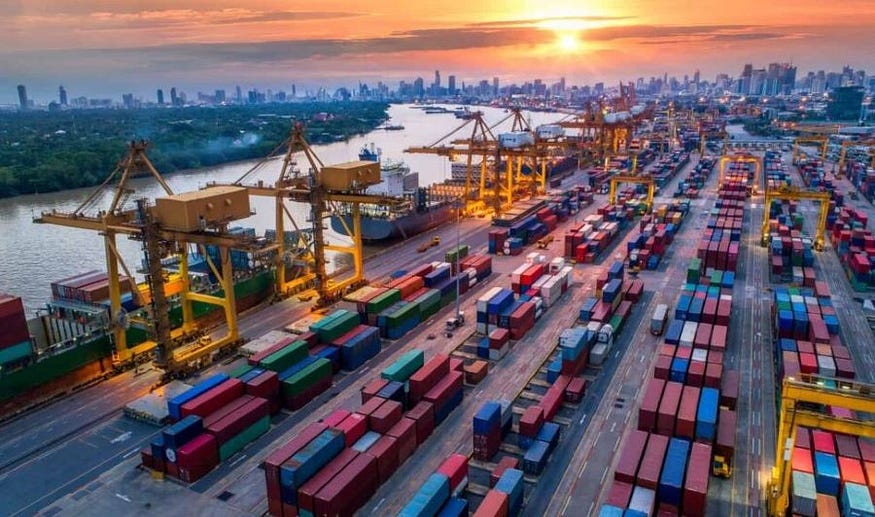 Ports around the world are still crowded. Credit: Shutterstock
The perception problem: Globalization sold as imperialism
Many perceive globalization as a continuation of imperial and colonial dynamics — a process that enriched corporations and elites while exploiting workers and resources. This critique has historical weight. But it misses another reality: globalization has also been the engine of social transformation, particularly for the global middle class.
Education, for example. Global flows of knowledge made widespread schooling possible. It’s mandatory to study from 8 to 12 classes in most countries now (this is going to vanish soon).
Under the social welfare aspect, economic integration inspired policies linking productivity to welfare and stability. Healthcare and social insurance are guaranteed for employees across a majority of advanced and developing nations.
Civic participation: Exposure to democratic norms expanded expectations of accountability and rights. Elections have become a routine element of governance — even in authoritarian countries.
In Europe, postwar market integration coincided with welfare states and mass education. In Asia, trade-led growth lifted hundreds of millions out of poverty. Even in developing regions, global networks enabled new professions and aspirations.
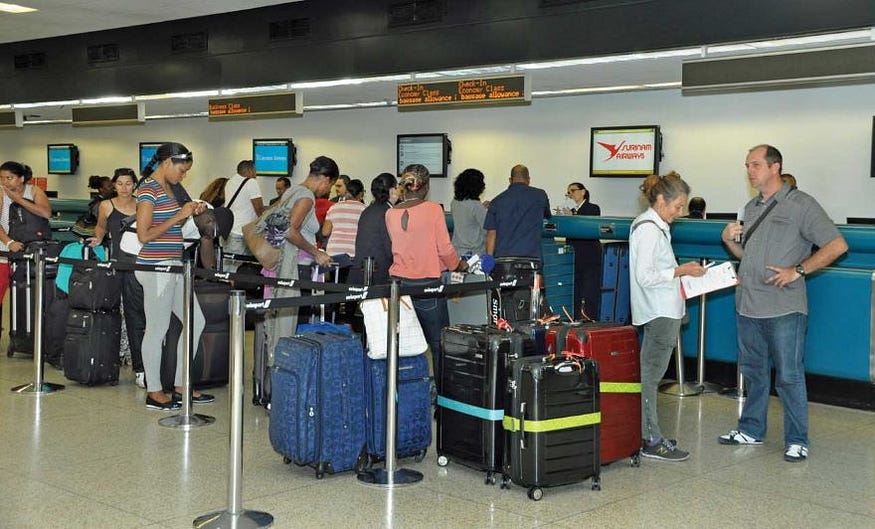 People today fly more, not less: travelers waiting to board flights at Miami Airport. Credit: Miami Airport
Globalization concentrated wealth, yes — but it also diffused opportunities and offered choices. The middle class now participates in shaping societies, demanding accountability, environmental stewardship, and civic rights. Digital networks once used for profit are now platforms for learning, activism, and collaboration.
Why the “End” narrative persists
The narrative of globalization’s demise is emotionally compelling. It captures disillusionment with elites and anxiety about cultural change. Citizens see rising inequality, job losses in traditional industries, and the outsized influence of multinational corporations, and it is easy to conclude that the system is failing them.
At the same time, globalization is often framed as a cultural threat: people fear the erosion of local traditions, languages, and ways of life, creating anxiety that fuels political rhetoric. The post–Cold War vision promised that open markets would lift all boats and that international integration would deliver prosperity and peace without conflict or compromise.
Reality has been more uneven: gains have been concentrated, while costs — economic dislocation, social stress, environmental damage — have often been socialized.
As one can see, globalization is no longer an imperial design imposed from above. It is a civilizational process from below, driven by the millions of ordinary people who seek to learn, travel, and live better. The traffic lights, the business suits, the internet, and the laws of physics are not signs of homogenization — they’re signs of collective intelligence and shared values.
Yet what’s truly ending is the illusion that globalization is frictionless, universally beneficial, and automatically equitable. The current backlash — manifested in industrial policy, protectionism, and nationalism — is a recalibration, not a rejection. Mature systems self-correct when imbalances arise.
Despite trade wars, protectionism, and nationalist rhetoric, the world remains deeply interconnected. What’s changing is not globalization itself, but the way it is managed.
Globalization’s critics may find comfort in the rhetoric of walls and sovereignty. Yet they post their views on social media, order products online, and navigate daily life through global technologies. The internet — perhaps globalization’s most transformative creation — remains the ultimate reminder that connection, once invented, cannot be undone. The question for the deniers, then, is simple: are they prepared to log off for good?