

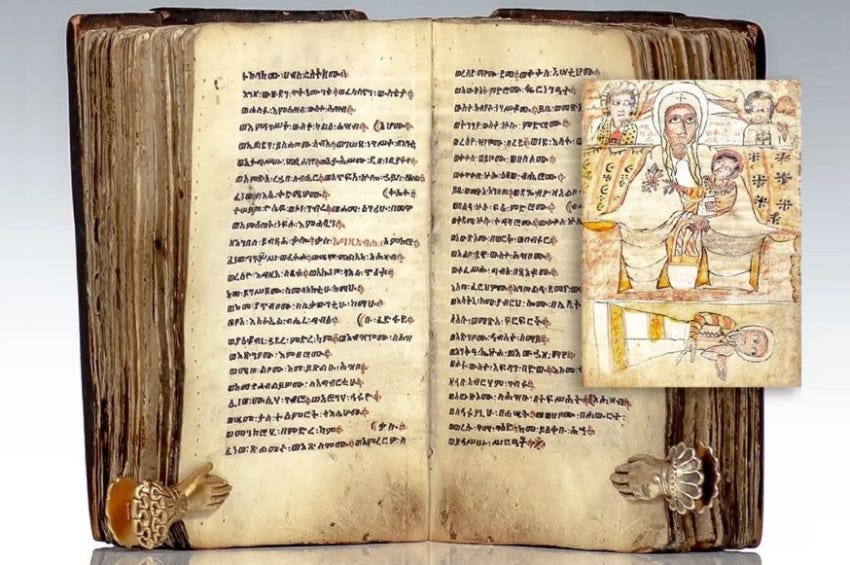
 The Ethiopian Bible.
It is widely accepted that Christianity — born in the Middle East — is the native religion of Europe. When most people think of the Bible, they picture the King James Version or the Latin Vulgate, widely circulated in Europe during and after the medieval period.
Few people know, however, that long before Christianity took firm root in Europe, it had already established deep foundations in Ethiopia, an African country. An ancient Ethiopian Bible reveals the true African heritage of the Christian roots.
The Ethiopian Bible, often referred to as the Garima Gospels or simply the Ge’ez Bible, not only predates the European Christian tradition but also contains books that are missing from the modern Western canon. For scholars, theologians, and history lovers alike, the Ethiopian Bible offers a fascinating glimpse into a form of Christianity that has survived, almost untouched, for over 1,600 years.
Christianity in Ethiopia: Older than you think
Ethiopia is one of the oldest Christian nations in the world, adopting Christianity as a state religion in the 4th century, around the same time as the Roman Empire under Constantine. But Christianity had already reached the region even earlier — according to the Book of Acts (8:26–40), a court official from Ethiopia was among the first non-Jews to be baptized into the faith.
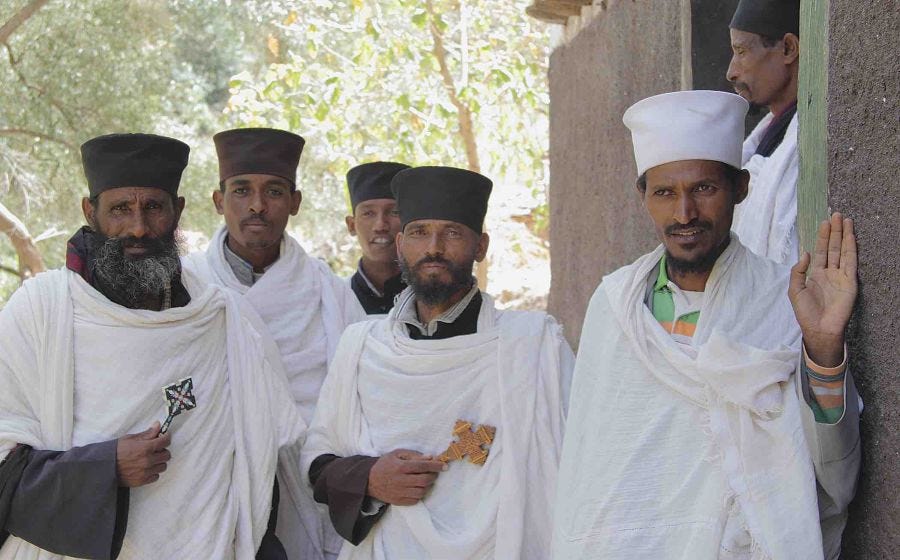 Ethiopian Christian priests and monks.
This early Christian presence in the Horn of Africa laid the groundwork for the development of a distinctively Ethiopian Christian tradition, centred around the Ethiopian Orthodox Tewahedo Church. Unlike the Catholic or Eastern Orthodox Churches, the Ethiopian Church maintained its own canon, liturgical language (Ge’ez), and religious customs, many of which closely resemble Jewish practices — such as observing dietary laws and circumcision.
The Ethiopian Bible offers a richer and more complex theological perspective and provides insight into early Jewish-Christian thought that was largely erased from European Christianity after the Councils of Nicaea — first convened by Emperor Constantine I in 325 AD in Nicaea (modern-day İznik, Türkiye) to resolve the Arian controversy (debate over the nature of Christ’s divinity) and promote unity in the early Christian Church.
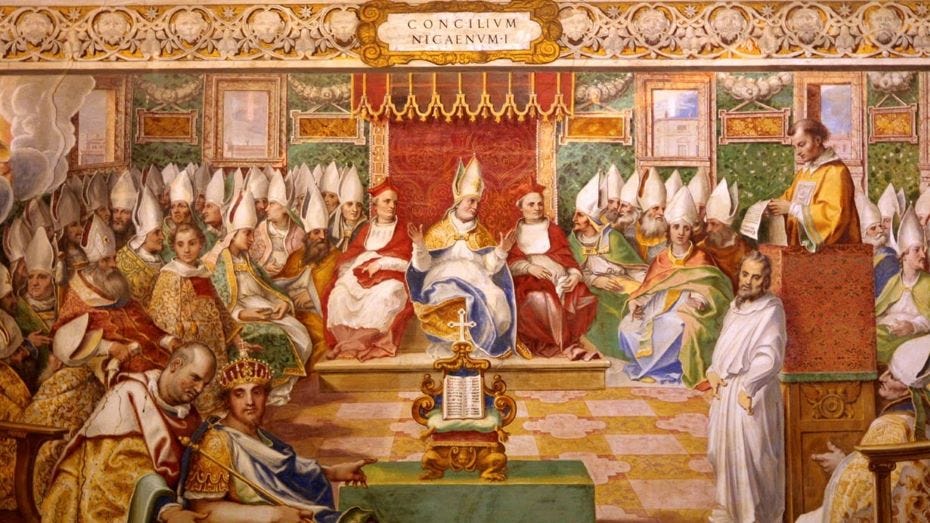 A medieval painting depicting the first Nicaea Council meeting.
The second Council of Nicaea was called in 787 AD by Eastern Roman Empress Irene to address the Iconoclast Controversy — whether or not the use of religious icons was acceptable.
The most complete Bible
The Ethiopian Bible is not only ancient — it’s longer and more inclusive than most Western versions. While the Protestant Bible contains 66 books and the Catholic Bible 73, the Ethiopian Bible includes more than 80 books, many of which are apocryphal or pseudepigraphal texts rejected by the councils that shaped the European canon.
Notable Books only in the Ethiopian Bible:
• 1 Enoch (also known as the Book of Enoch)
• Jubilees (Little Genesis)
• 1, 2, and 3 Meqabyan (not the same as the Western Maccabees)
• The Book of the Covenant
• The Book of the Mysteries in the Heavens and the Earth
• The Shepherd of Hermas
• The Ascension of Isaiah
• Didascalia Apostolorum (an early church order text)
The Garima Gospels, housed at the Abba Garima Monastery in northern Ethiopia in the possession of the Ethiopian Orthodox Church, are believed to be the oldest illustrated Christian manuscripts still in existence. Radiocarbon dating places them between the 5th and 7th centuries, though local tradition holds that they were written by Abba Garima, a Byzantine monk who arrived in Ethiopia around 494 AD, in just a single day through divine intervention.
Written in Ge’ez using Amharic script, the Garima Gospels are beautifully illuminated and still preserved in their original binding — making them a rare surviving example of early Christian bookmaking.
Ge’ez, the ancient liturgical language of Ethiopia, is a Semitic language with ancient scriptural, poetic, and liturgical roles, similar in status to Latin in Catholicism.
 The Abba Garima Monastery.
Differences from Western Bibles
The Ethiopian Bible and the European (Western) Bibles differ significantly in canon, content, language, theology, and tradition.
The Ethiopian Church retains many Jewish traditions such as circumcision, Kosher dietary laws, Sabbath observance (Saturday, in addition to Sunday), use of the Ark of the Covenant as a central liturgical object, among others. Their Old Testament is heavily emphasized and includes many texts removed from the Septuagint or Masoretic traditions followed by the Western churches.
The Ethiopian Bible is richly illustrated, especially the Garima Gospels, which contain some of the oldest surviving Christian art. These works were handwritten and preserved in monasteries, bound with metal covers, and remain among the best-preserved early Christian manuscripts.
Western medieval Bibles were also illuminated but were influenced by Romanesque and Gothic art rather than African or Byzantine styles.
The Ethiopian Church is Miaphysite, meaning it believes in the single unified nature of Christ (divine and human together), unlike Western Chalcedonian doctrine, which affirms two natures. It has its own liturgical calendar, saints, and feasts that do not align entirely with Roman or Eastern Orthodox traditions. It heavily emphasizes monasticism, fasting, and apocalyptic literature.
The Ethiopian Orthodox Church became officially Christian in the 4th century under King Ezana — around the same time as Constantine in Rome — but developed independently afterward. It was not influenced by European Church Councils, the Reformation, or the Roman Catholic papacy.
Why was this Bible “forgotten”?
The Ethiopian Bible was “forgotten” not because it is largely unknown in scholarly circles, but because it has been largely overlooked by mainstream Christian narratives, especially those shaped by Europe and the Americas.
For centuries, African Christianity was excluded or minimized in theological studies and church history, often framed as a later product of European missionary work, when in fact, it was foundational to Christianity itself.
The Vatican and Orthodox Patriarchates have long neglected the Ethiopian Orthodox Church for fear that it could claim primacy and therefore the supreme truth in the Christian faith.
Moreover, the Ethiopian Church’s independence from the Roman and Eastern Orthodox churches and later resistance to European colonialism contributed to its isolation in Western Christian discourse.
Despite its marginalization in global religious studies, the Ethiopian Bible is far from obsolete. The Ethiopian Orthodox Church remains vibrant and influential, with millions of followers in Ethiopia and in diaspora communities around the world. Its ancient texts continue to shape the spiritual lives of believers and stand as a testament to a branch of Christianity that developed parallel to, not beneath, European tradition.
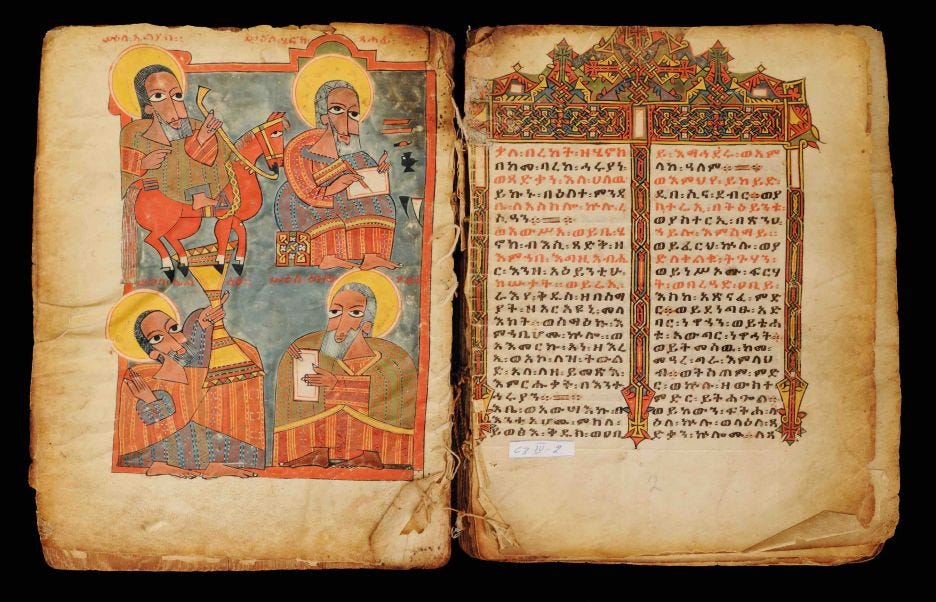 A Gunda Gunde chapter.
The Ethiopian Bible is more than just a religious artefact — it is a living link to early Christianity, a reminder that Africa was not merely a recipient of the Christian faith, but one of its earliest and most enduring custodians.
As scholars and spiritual seekers alike continue to rediscover these ancient texts, the Ethiopian Bible challenges us to reconsider our assumptions about where Christianity began, how it evolved, and who has the right to claim its legacy.
Sources: Ethiopian Heritage Fund, OpenEdition Journals, Wikipedia, Bible Hub, University of Oxford, New Lines Magazine, Eastern Christian Manuscripts