
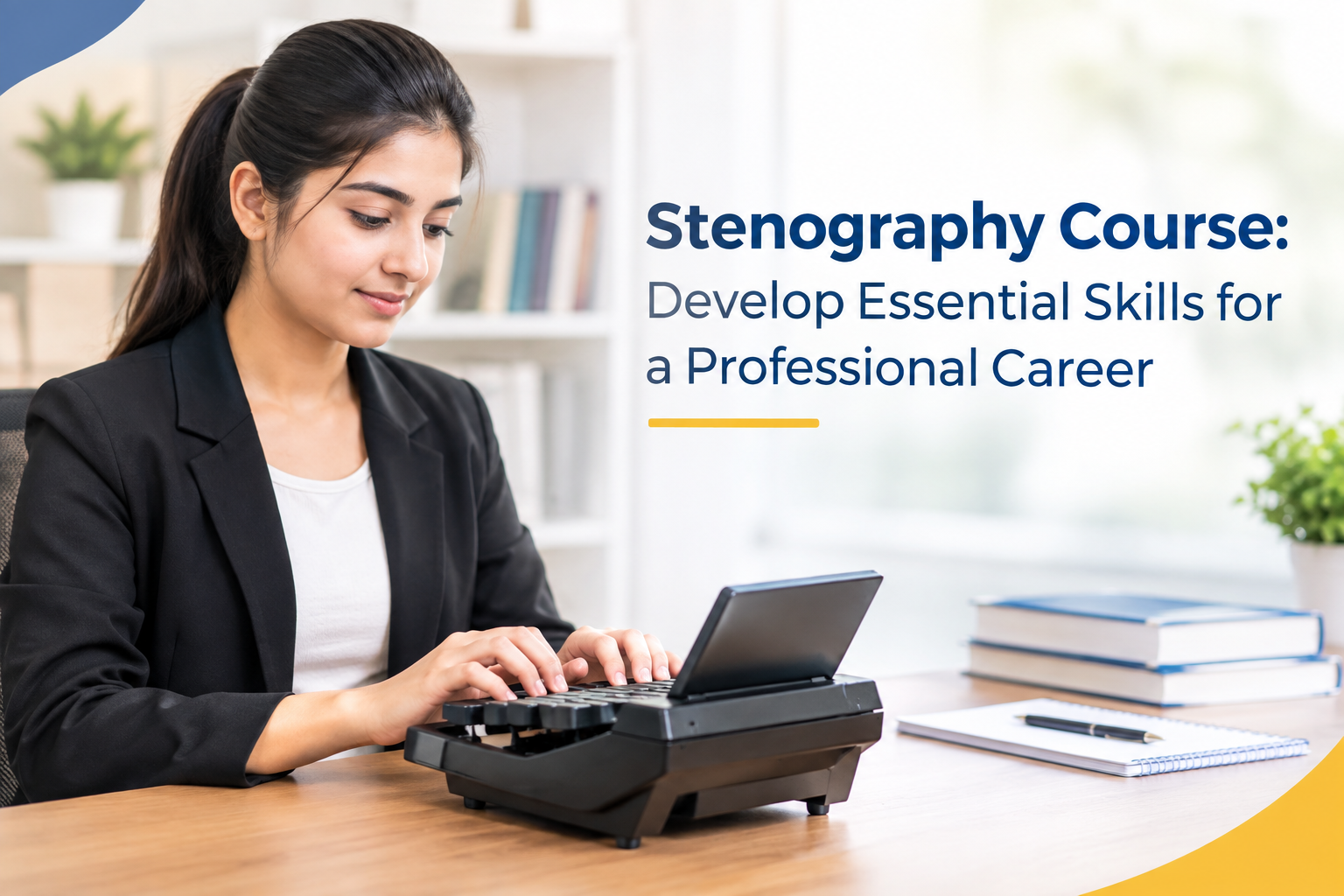
Stenography is a specialized skill that combines shorthand writing, typing, listening, and accurate transcription. It continues to be useful in government offices, courts, corporate organizations, and administrative workplaces where spoken information needs to be recorded quickly and accurately. For students and job seekers interested in office-based careers, learning stenography can provide a practical foundation for developing professional skills.
A course for stenographer is designed to help learners understand shorthand techniques and improve their typing and transcription abilities. Regular practice can help students increase writing speed while maintaining accuracy. Along with technical skills, training may also focus on communication, office procedures, computer applications, and professional etiquette.
Why Learn Stenography?
Stenography is particularly useful for individuals interested in administrative and secretarial professions. Stenographers may be required to record meetings, prepare transcripts, manage correspondence, and assist senior officials with documentation.
The skill also requires concentration and attention to detail. With consistent practice, learners can improve their ability to listen carefully, write quickly, and convert shorthand notes into accurate documents.
What Do You Learn During Training?
A professional course for stenographer generally covers shorthand writing, dictation practice, transcription, typing, grammar, vocabulary, and office communication. Students may learn shorthand systems in English or other languages depending on the course structure and their career requirements.
Practical exercises are an important part of learning. Regular dictation sessions help learners gradually increase their speed, while transcription practice improves accuracy and familiarity with professional documentation.
Importance of Typing and Computer Skills
Modern stenographers often work with digital documents and computer-based office systems. Therefore, typing proficiency and basic computer knowledge can complement traditional shorthand skills.
Learners may develop skills in word processing, document formatting, email communication, file management, and other common office applications. These abilities can make them more comfortable handling administrative responsibilities in modern workplaces.
Career Opportunities
After completing a stenography course, learners can explore opportunities in government departments, courts, offices, educational institutions, businesses, and other organizations. Potential roles include Stenographer, Personal Assistant, Secretary, Executive Assistant, Court Reporter, Office Assistant, and Administrative Support Professional.
With experience and continued skill development, professionals can take on greater responsibilities and progress toward senior administrative positions.
Conclusion
A stenography course can help students and job seekers develop valuable shorthand, typing, transcription, and office administration skills. A well-structured course for stenographer combines regular practice with practical knowledge to prepare learners for professional responsibilities. With dedication and consistent improvement in speed and accuracy, stenography can provide a useful foundation for a long-term career in administrative and office-based roles.