

 High Country Homestead with Susan H Shaw
For many years, I have relied on an incubator to hatch my chicks. It has served me reasonably well, although our relationship has been tested on more than one occasion by those wonderfully timed power cuts that always seem to happen just when I am trying to hatch a batch of eggs. And then, of course, there are always so many boys!
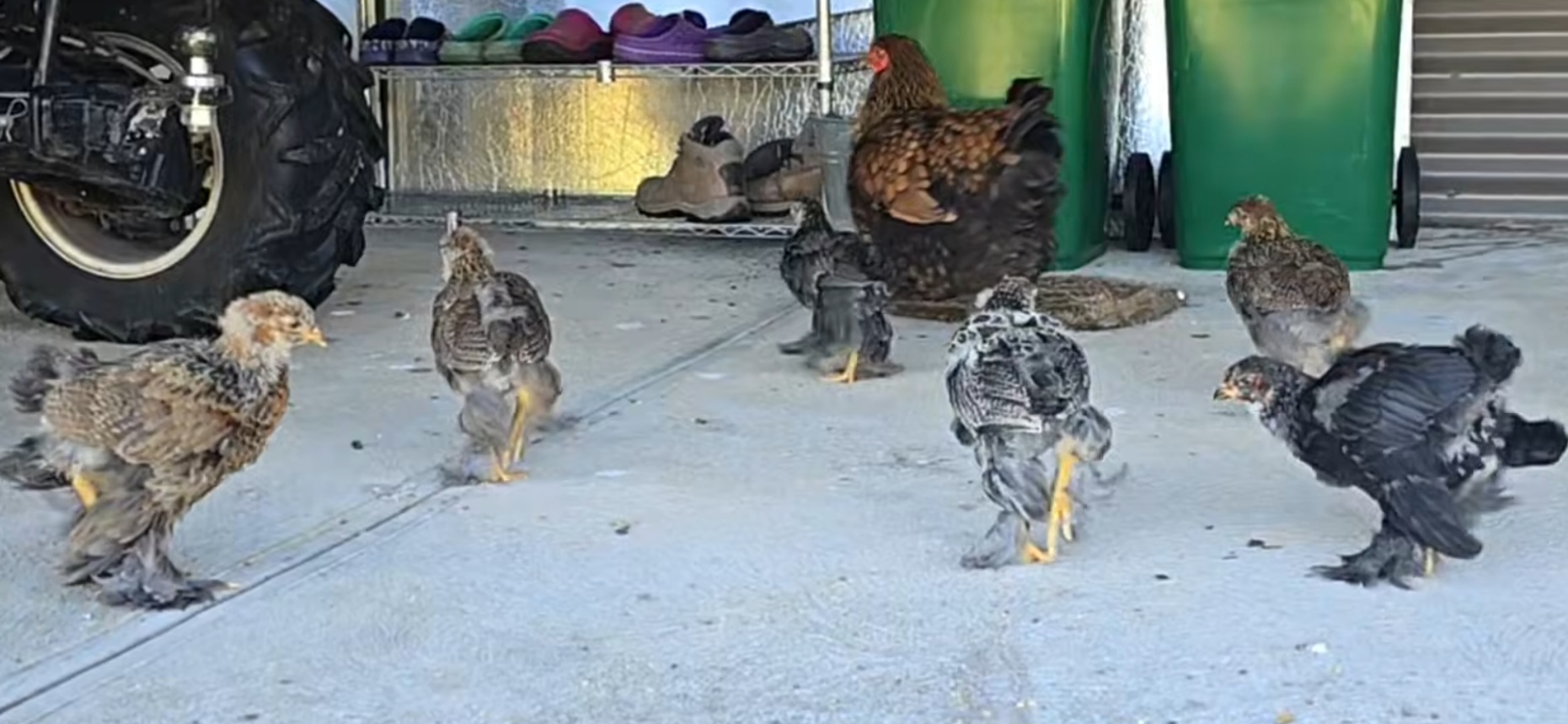
For my latest hatch, I decided to try a more natural approach and put my friends broody Wyandotte hen to work. Bluebell was more than happy to oblige, and by the time this article goes to print, her Brahma chicks will be two weeks old.
They are loud, active little creatures, as chicks tend to be, and I can easily while away enormous slabs of time simply watching them. There is something wonderfully absorbing about their busy little lives. Every scratch, peck, stumble and discovery seems worthy of attention, and apparently I have an endless capacity for watching them do absolutely everything.
Bluebell, meanwhile, is immensely proud of her brood. I sit down in front of them and she immediately ushers her chicks away to safety, convinced that I am some enormous and potentially dangerous intruder. The little ones disappear beneath her feathers, where they seem to have an extraordinary amount of room for such a small hen.
Every now and then, curious little faces appear from beneath her plumage. They peer out cautiously, trying to establish the source of the danger, before deciding the world is far too interesting to remain hidden. One by one, they venture out again, scratching, pecking and exploring until Bluebell decides it is time to gather them in once more.
It is a lovely sight, and one that has made me appreciate just how much a mother hen does for her chicks.
Incubator-hatched chicks require rather more work once they emerge from their shells. They need feeding and watering, a heater must be set up in their brooder box to keep them warm, and the box needs regular cleaning. Naturally, Bluebell's chicks still need food and water, and their accommodation doesn't magically clean itself. Some housekeeping is still required, even with a capable mother on duty.
However, Bluebell takes care of their warmth, gathering them beneath her feathers whenever they need it. She also provides something an incubator cannot: practical lessons in how to be a chicken.
Watching her teach them to forage has been one of the most fascinating parts of this experiment. Teaching chicks to forage is not quite in my skill set, so it is rather a relief to leave that particular job to someone who knows what she is doing.
Under Bluebell's watchful eye, the chicks are learning to investigate the ground, scratch about and discover things worth pecking at. They follow Mum around, watching what she does and gradually learning to fend for themselves. It is remarkable to see how much they learn, and how their confidence and behaviour change with each passing day.
My previous incubator hatchlings certainly weren't doing this at the same stage of life. They depended on me for their warmth, their food and their carefully managed little environment. Bluebell's brood, on the other hand, are learning some important life skills from the very beginning.
I had also been told that hatching chicks under a real hen might improve my chances of getting more pullets. Whether this proves true remains to be seen. Perhaps Bluebell has some influence over the gender balance, although I suspect even the most capable mother hen has her limitations. I shall have to wait and see whether this natural approach solves my perennial problem of ending up with so many young roosters.
For now, I am enjoying the experiment immensely. Allowing nature to take its course has certainly made hatching chicks less complicated, with fewer worries about power supplies, temperature settings and all the little details involved in incubating eggs.
Of course, I still have to provide some food, water and a regular cleaning service. Bluebell hasn't taken over the entire operation, much as that would suit me. But she is doing a remarkable job, and her chicks are thriving.
Homestead life is full of jobs that never seem to end, so it is a pleasure to have a task that requires little more of me than sitting quietly and watching.
Bluebell has her brood in hand, the chicks are learning something new every day, and I am discovering that sometimes the best way to get things done is to let someone else take charge.
Especially when that someone else is a very proud Wyandotte hen.