
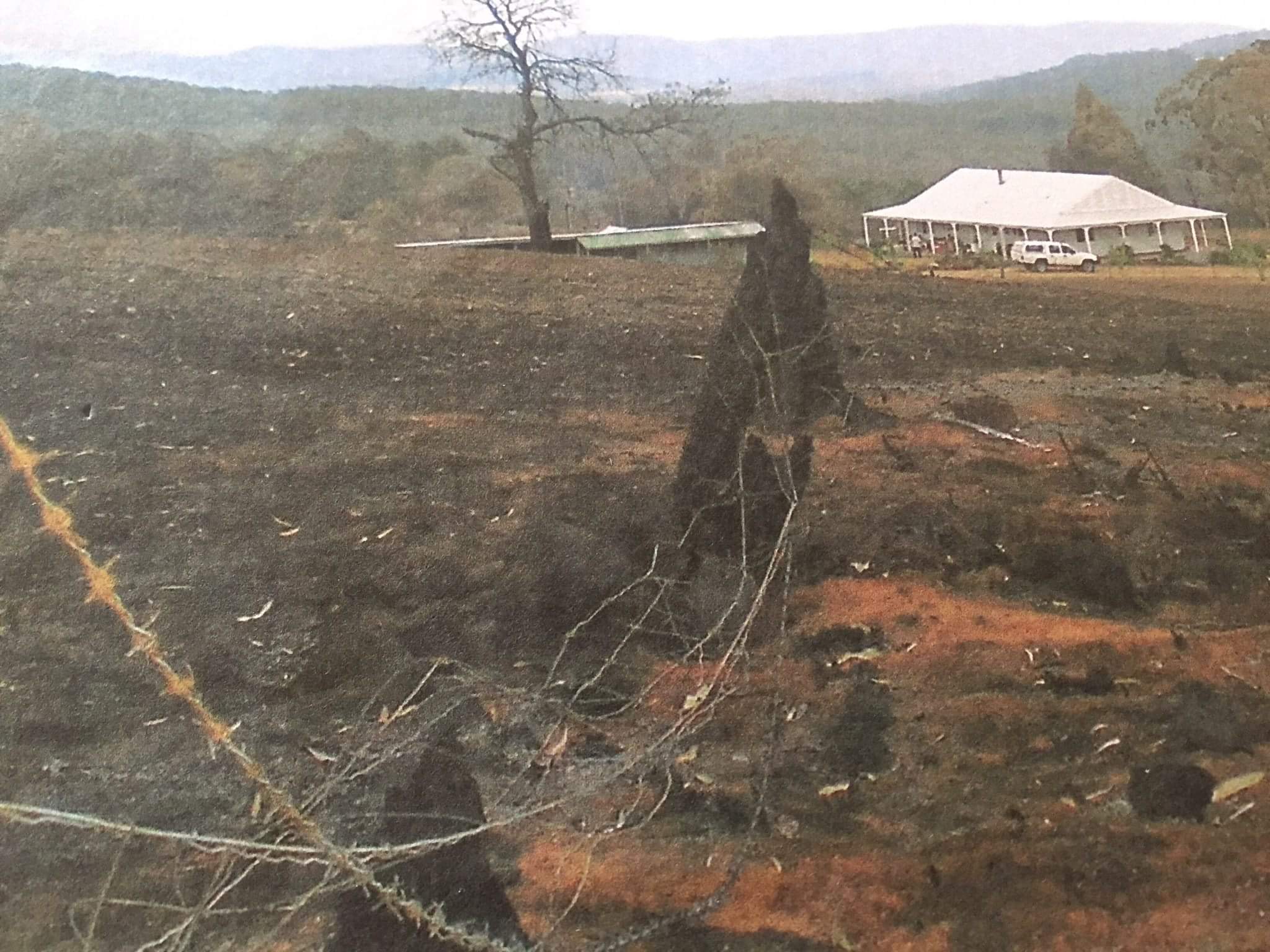
 Our property after the last fires went through. Good preparation may not stop a fire, but it can give us more options.
A month or two ago, I discovered that our driveway may not be quite as fire-truck friendly as I had imagined.
If you have ever driven our long, winding, bushy driveway, you will understand exactly what I mean. Even our car struggles at times, and an emergency vehicle is a very different proposition again. There are sections where the vegetation has grown in close to the track, things can get pretty overgrown and, at certain times of the year, the whole thing can become a bit of a challenge.
Which brings us nicely to spring.
Spring has arrived. Daylight saving has begun, the days are getting longer and, despite the recent rain, the weather is warming up ever so slightly.
It is hard to imagine that before too long we will be complaining about endless heat, flies, hay harvests, dry paddocks and, somehow, Christmas.
But between now and then, there is work to be done.
There is fencing, mowing, hay, machinery maintenance, weeds and all the usual jobs that come with living on a farm. You finish one job and more appear, generally before you have even put the tools away.
But there is another job we should probably add to the list: getting our properties fire ready. Starting with access.
I walked our driveway recently and, looking at it properly, realised there were a few things I needed to address. Look at your driveway from the perspective of a fire truck rather than your ute or car. Are branches hanging too low? Is vegetation narrowing the track? Are there gates that could cause problems? Are there places where a large vehicle might struggle to turn or pass?
Then look around the house and other buildings.
Around our place, there are always jobs that could be done to make things safer, and I suspect we are not alone in that. Keep grass and long vegetation under control, particularly around buildings, and clear away leaves, fallen branches and other dry material that could provide fuel for a fire. Clean out gutters, check around sheds and machinery, and think about where you have stored things that could become a problem in extreme conditions.
It is also worth looking at the property with your animals in mind. We have cows, sheep and chickens to think about, so a fire plan can't just be about getting ourselves safely out. Where would the animals go? Which paddocks offer the best options? Are the gates accessible? Where is the water? Could you actually move them if you had to?
And then there is the part that perhaps gets talked about more than anything else: having a fire plan.
We have all heard it. Every summer the television ads start reminding us that we need to know when we will leave, where we will go and what we will do if a fire starts nearby. And yet, like many things that are repeated often enough, it can become background noise.
But having a plan really does matter.
It doesn't need to be complicated. Who is going? What happens to the animals? Where are you heading? Which roads will you use? What will you take with you? And, importantly, what is the point at which you stop thinking about it and actually leave?
For those of us on farms, the animals add another layer to the plan. Moving cows, sheep and chickens is not something you want to be working out for the first time while watching smoke roll across the paddock.
And then there are those really bad fire days. The ones when the Fire Danger Rating reaches Extreme or Catastrophic. The advice is very clear: leaving early is the safest option, and on those days it should be part of the plan, not something we decide at the last minute.
The other simple thing we can all do is stay informed. Download the Vic.Emergency app, set up your location and make sure you know how to receive warnings. It is much easier to make a sensible decision when you know what is happening than when you are relying on the neighbour's Facebook post, or standing outside trying to work out whether that distant cloud is smoke.
And this brings us back to the question: do all these little jobs really make a difference?
Mowing one paddock won't stop a bushfire. Clearing one section of driveway won't guarantee a fire truck can get through. Cleaning the gutters won't make a house fireproof.
But, each small job can reduce the fuel available, improve access, make things easier for emergency services, or give us more choices, should we need them.
Personally, if it comes to it, I know I’d rather have more time and a few more options available.