

High Country Homestead with Susan H Shaw
There are some stories that seem to take on a life of their own, and this is one of them. This piece originally went to print about a month ago now, or thereabouts, and tells the tale of several wombats and their rather inconveniently located dwellings...
On the personal front, I’m finally emerging from almost a couple of months of being unwell and am beginning to feel considerably more like myself again. The cough still likes to make an occasional appearance, just to remind me that it hasn’t quite surrendered yet, but thankfully things are improving.
And today is officially the first day of Spring here in Australia, which feels rather appropriate. We’ve had copious quantities of rain over the past couple of weeks, and the 20,000-litre tank that was looking decidedly sorry for itself is now around three-quarters full, a much more comfortable position to be in as the warmer days slowly inch their way towards us. So, with Spring arriving, the tank filling and the wombats apparently continuing to rearrange the landscape to suit themselves, I shall leave you to read, and hopefully enjoy my latest offering...
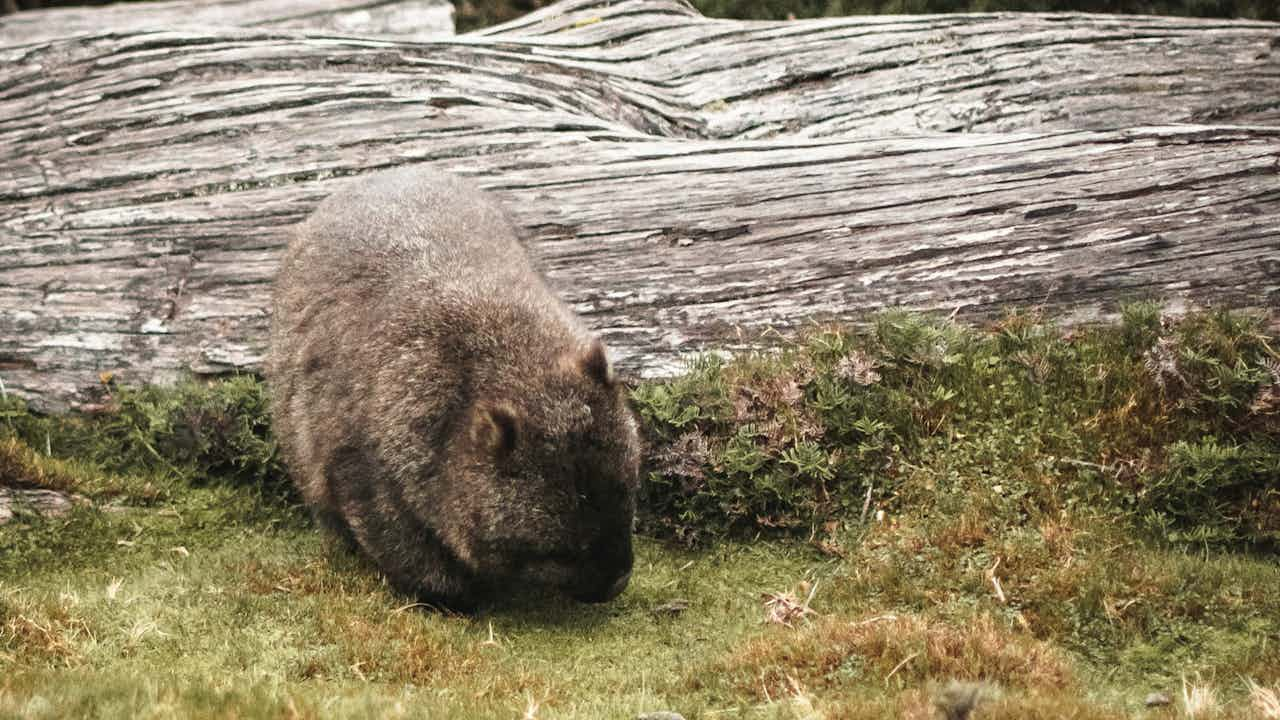 This morning, when I woke, I wandered out onto the verandah with my usual cuppa. Winter mornings have always been my favourite. I love the crispness in the air, the smell of woodsmoke drifting through the valley and the white frost sparkling across the paddocks as the first rays of sunlight creep over the treetops beside the house. Out here, before the day begins, there is a silence you simply don't find anywhere else. Not an empty silence, but one filled with the distant call of a currawong, the chatter of rosellas and the occasional thump of a kangaroo disappearing through the bush. Then I caught the smell of freshly turned earth.
And it came mixed with the unmistakable scent of lavender.
I have several large lavender bushes scattered through the garden. They thrive in our dry summers, survive the winter snows and frosts, attract every bee for miles around and fill the air with perfume when you brush past them.
Apparently, however, there is a wombat out there who has decided that one particular lavender has outlived its usefulness.
As I wandered over for a closer look, I spied a freshly excavated burrow disappearing straight underneath the middle of the bush. Not beside it. Not behind it. Directly underneath it.
Now, I'm no wombat, but on 168 acres of bush and paddocks I'd have hoped there might have been somewhere else to establish a residence. Yet this furry little engineer had inspected the entire property and concluded that the prime piece of real estate was directly beneath my favourite lavender.
It's a bit of a bugger really, because I'm rather fond of that bush.
The wombat, on the other hand, clearly has different priorities. While I admire the fragrant flowers above ground, he appears far more interested in the cool, well-drained soil underneath. I suppose, from his point of view, it's the perfect location. Sheltered, dry and with a sturdy roof held together by an extensive network of roots.
Then there is another old fellow who is particularly intent on relocating one of my 20,000-litre rainwater tanks. We've been engaged in this battle of wills for nearly ten years.
He digs. I fill the hole in.
He waits until I'm feeling quietly satisfied with my handiwork before returning the following night to excavate it all over again. And after a decade, I'm beginning to suspect this is personal.
Nothing appears to be off limits. Sheds, water tanks, and even the house itself have all attracted their attention at some point. One memorable year, before reliable mobile coverage and wi-fi, a wombat remodelled the Telstra pit out the front of the house and we lost the landline and internet for weeks.
No bulldozer on earth works with quite the same determination.
They never ask permission. They don't consult fencing plans or engineering drawings. They simply arrive under the cover of darkness, inspect the landscape and begin excavating wherever they consider suitable.
Scientists describe wombats as Australia's largest burrowing mammal. Their front legs are built like hydraulic excavators, with broad feet and long claws designed solely for digging. A single burrow can stretch for thirty metres or more and have several different entrances, while one hardworking wombat may shift several tonnes of soil over the course of a year.
Farmers, of course, don't require a scientific paper to appreciate those statistics.
We simply wake up and discover another hole or leaning fence post.
Or, if you're particularly fortunate, a rainwater tank that suddenly appears to be relying more on optimism than engineering.
The funny thing is, despite the occasional colourful language directed in their general vicinity, they're remarkably hard to dislike.
They're quiet neighbours. They don't raid the chook yard, chase the cattle or make a nuisance of themselves during the day. As dusk settles over the hills, they'll emerge from their burrows with all the urgency of someone wandering to the fridge for a late-night snack, ambling off to graze as though they haven't spent the previous evening redesigning half the property.
What many people don't realise is that their burrows aren't just homes for wombats. During bushfires and on scorching summer days, all sorts of native animals shelter inside them. Lizards, echidnas, wallabies and other small creatures have all been recorded taking refuge in wombat burrows. Rather unintentionally, our resident excavators become landlords for half the bush.
They're built like little armoured tanks too. Their rear is reinforced with thick cartilage, and if something follows them into a burrow, they'll simply wedge themselves across the entrance and use that remarkably solid bottom as a shield.
Imagine winning every argument simply by showing your backside..!!
Nature really does have an extraordinary sense of humour.