

Have you ever heard of Reed Creek? Well, it's a nature preserve that offers more than just the thrill of nature. It also offers many different programs to teach the community about local wildlife. It's an amazing place, yet it's not very well-known. So, in this blog, I'll share what Reed Creek is, why I love it, and why you should too.
Why Should You Care?
You probably live far away from Reed Creek and may never get the chance to visit it in person, so why should you care? Reed Creek is an example of how a nature reserve/educational resource can help impact people's lives by providing a source of environmental education so you can learn all about the local animals.
For example, without the help of the staff at Reed Creek, I wouldn't know the difference between a Cottonmouth (a very venomous snake) and a harmless water snake (exactly what the name implies, a harmless snake that lives in water). Or, maybe I would still think that the frog I keep catching is a Greenhouse Frog, not a Northern Cricket Frog. This is what I've learned, and I'm sure you'll be able to learn many other interesting things.
If that's not enough for you, they're conservationists. Reed Creek's goal is to preserve nature by restoring the natural environment to an urban area. Changing the landscape back into its original form is a hard thing to do—that's an amazing accomplishment in my mind! Additionally, Reed Creek provides an amazing home for a diverse range of animals from river otters (yes, there are wild otters in Georgia) to Great Blue Herons.
So even if you might never get the chance to explore Reed Creek, you should still appreciate it for the example it sets and the ways it's helped both nature and environmental education.
That said, let's go learn more about Reed Creek!
A Brief History of Reed Creek
As I was doing research for this blog, I noticed that there was very little information about Reed Creek on the internet. I thought, "Wow! Why is there no information on this?" I decided I'd better go do an interview. So, I went to the park's interpretive center to interview an employee. I interviewed one of their environmental educators: Mary Pruitt. She was very accommodating and happily answered all my questions. Thank you, Mary! I asked a list of questions primarily about the history of Reed Creek and why there's no information on the internet about it. So, without further ado, here's a brief history of Reed Creek:
When the land of what is now Reed Creek park was first bought, the owners cemented over the wetland (which wasn't a good idea, everyone knows you shouldn't build on top of a swamp) and turned it into tennis courts. After a while of facing trouble with flooding and other similar problems, (can you imagine trying to play tennis with encroaching swamp and wildlife all over the courts?) they gave up and shut down the courts. The owners then removed the cement and allowed it to return to its natural swampy form. From there, the park slowly became a nature preserve, including six ecological zones: creek, floodplain, forest, pond, upland forest, field, and swamp. I thought, "This is super interesting, and I would never have guessed that there used to be tennis courts at Reed Creek! Why is none of this on the internet?"
According to Mary, the reason is that no one has truly cared or wanted to put in the effort.
I was sad to hear her say that because Reed Creek is such an amazing place. More people should know about it and be inspired by the park's story! However, if I want to help with this, I need to first understand the purpose and goals of Reed Creek, so I decided to ask Mary about that as my next question.
Reed Creek’s Purpose
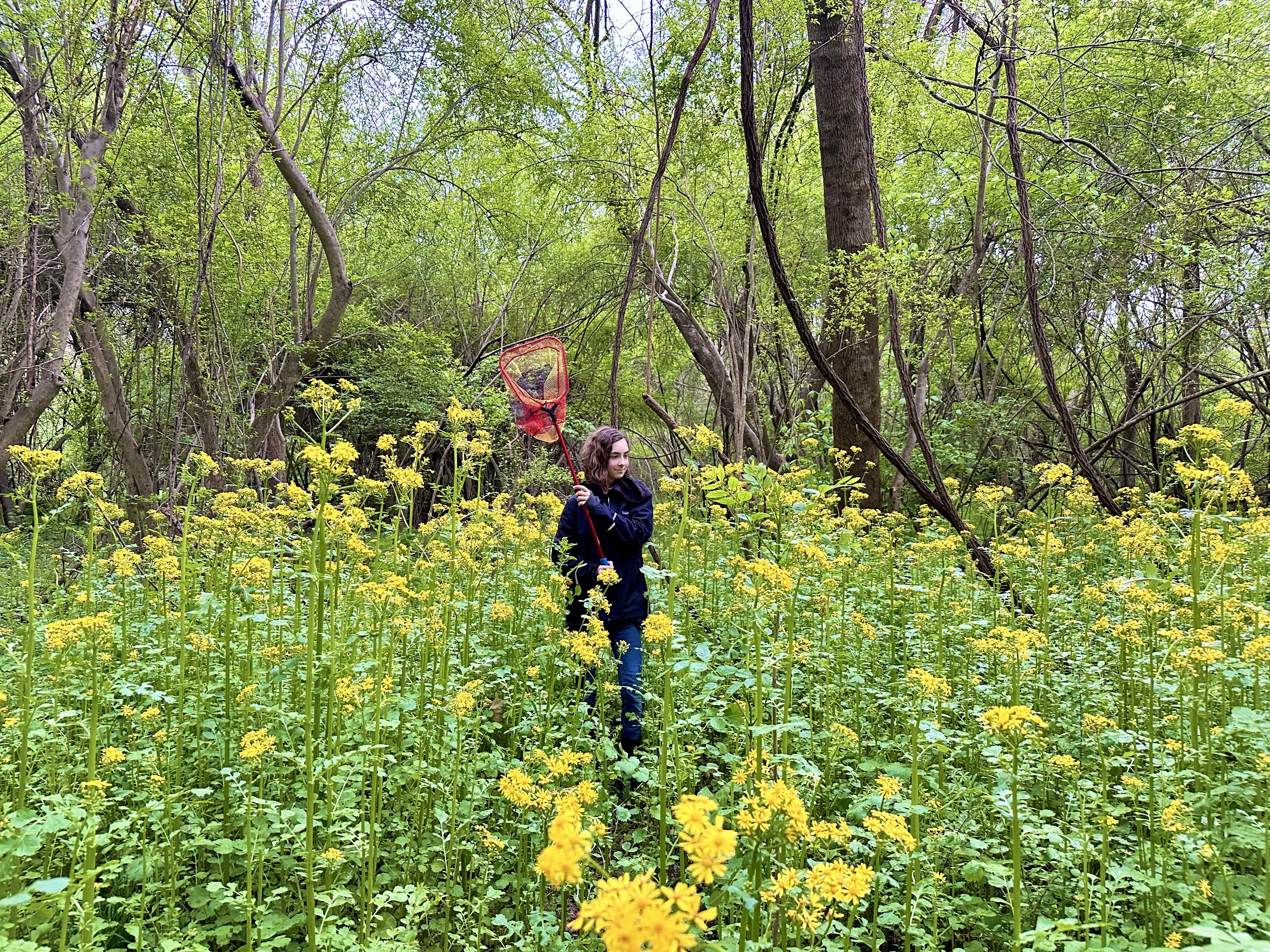
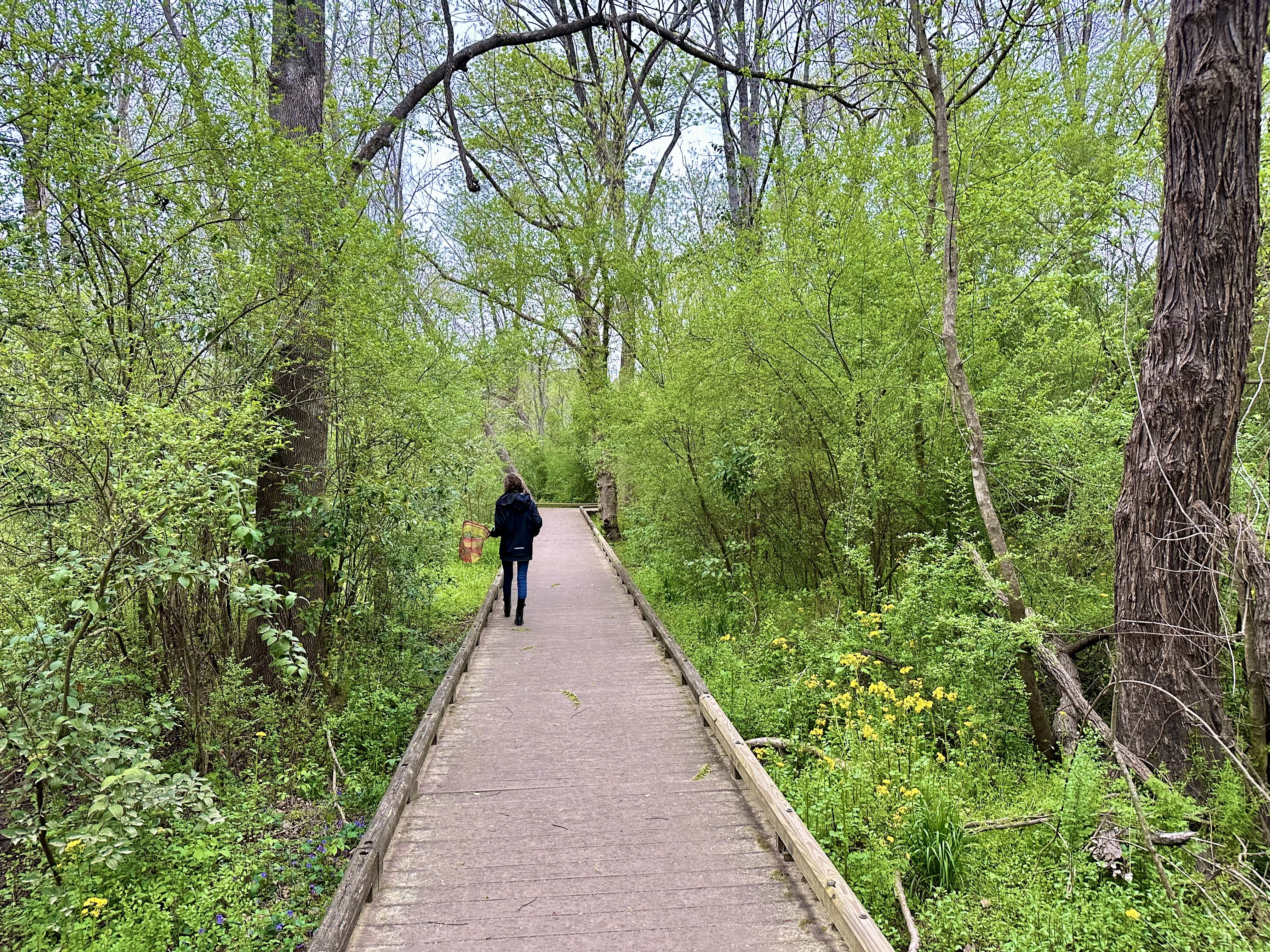
Mary, the employee I interviewed, said Reed Creek's two main goals are to preserve the nature located inside the park and to provide a source of education for the community to make an impact. They've done a fantastic job of preserving the wetland! Despite the park being surrounded by neighborhoods and other urban scenes, once you start walking on the boardwalk, it's like you've been transported to another world. It's beautiful and filled to the brim with life. In the spring, it's exploding with yellow flowers and wild strawberries, and if you're there at the right time, you can hear all the different frog and bird calls surrounding you. It's amazing!
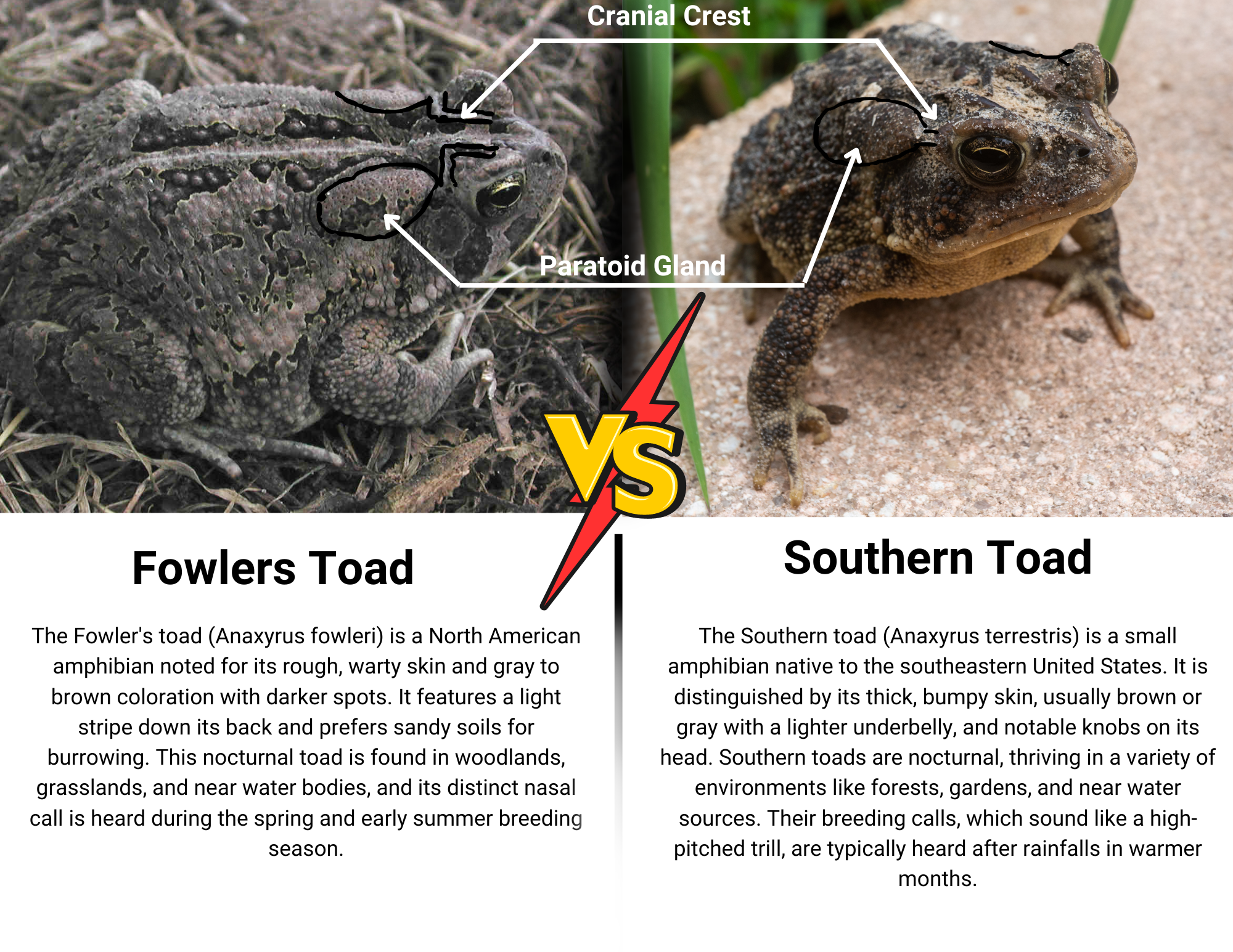
As for the educational side, they're funded by the county so that they can offer low-cost or even free classes for everyone. I've attended several of their programs, and they've all been a perfect mix of fun and education. Without these programs, I wouldn’t know the difference between a Southern Toad and a Fowler Toad (Southern toads have exactly one wart per colored spot and line shaped crest connecting to their parotid gland, whereas Fowler's Toad has more than one wart per colored spot and an 'L' shaped crest).
The classes are high-quality and well-structured, and the employees are always there to answer your questions, which is something I’ve had trouble finding so close to me. I would recommend these classes to everyone, but especially to nature enthusiasts like myself. In fact, I’m hoping to meet others with similar interests in future classes. Next, I’ll share information on how to register for the classes at Reed Creek.
How Can You Participate?
If you want to attend one of Reed Creek’s classes, you can find classes through Columbia County’s official site. The best thing you can do is try to bring a bit of nature to your own community, whether that be setting up a bird bath in your yard or by sharing this blog to inspire others to help preserve local nature as well. I’m sure it will make the employees of Reed Creek feel good knowing that they’ve inspired people to bring nature to their own communities!
I had so much fun writing this blog and researching the history behind it, and I hope you enjoyed reading it. I’d like to thank Mary Pruitt for answering all my questions as best as she could. Subscribe for more blogs like this!