

Have you ever wondered what it's like to dive into the world of marine biology and community science, especially if you're unexperienced in it like me? A few weeks ago, I attended the UGA Aquarium’s Coastal Guardians Camp, a summer camp dedicated to exploring marine biology and involving average citizens in scientific projects. This camp completely changed my perspective on the coast and marine life, and I can't wait to share my top four favorite activities with you.
But why should you care? The experiences I’m about to share are not just about personal adventure; they offer a glimpse into the fascinating and critical work of marine biologists. The health of our oceans affect everything from the climate to the seafood we eat. By understanding the methods and discoveries of marine biology, you’ll gain insights into how we can all contribute to preserving these vital ecosystems. Plus, these stories might inspire you to explore similar opportunities and make your own discoveries about the natural world.
The Thrill of Trawling: Discovering Marine Biodiversity
Let's start with a question: Have you ever wondered how marine biologists catch so many unique animals? One method is trawling. According to the Oxford English Dictionary, the noun trawl refers to a large, cone-shaped net dragged behind a boat to catch marine life. It can also be used as a verb (to trawl), meaning to pull a trawl net behind a boat.
Before this camp I had never done anything remotely close to trawling, so I was excited that it was one of the experiences offered during camp. And now I can tell you, there's nothing quite like the thrill of sifting through a tub full of unknown sea creatures that you've caught on your first trawl.
The Scientific Significance of Trawling Data
Trawling helps chart species diversity and population sizes in a given area. It provides crucial data for understanding the health of marine ecosystems and detecting the spread of diseases. Plus, it's a fun, hands-on way to spark interest in marine biology. My group at camp caught a lot of creatures during the trawl, but here are the one I was the most excited about:
363 Weakfish, which were just everywhere
2 Hog Chokers, who both looked as though they’d been run over by a car
An Atlantic Stingray (no explanation necessary, stingrays are just so cool!)
Sorting through these creatures and learning about their importance was an unforgettable experience. When we finished sorting and documenting our catch, most everything was released back into the water, except for several fish which were taken back to the aquarium to be compacted into gel cubes and fed to the aquarium inhabitants of the exhibits. I hope they found them tasty!
Marshland Adventures: The Art of Crabbing
I didn't expect to catch so many crabs! If you've been following my blog, you know I love catching things—crabs included! At this camp we were armed with buckets, and taken to the marsh to have a different sort of field experience.
It was muddy, really muddy. I had to be hosed-down before going back into the classroom.
We trekked through the marsh looking for tiny crabs, thrusting our hands over them and placing them in our buckets before they could pinch us. We were able to identify several different species, like hermit crabs, square-backed crabs, periwinkle snails and we even found an otter den. We also got to learn about crab holes, crab footprints and identifying crab shelters.
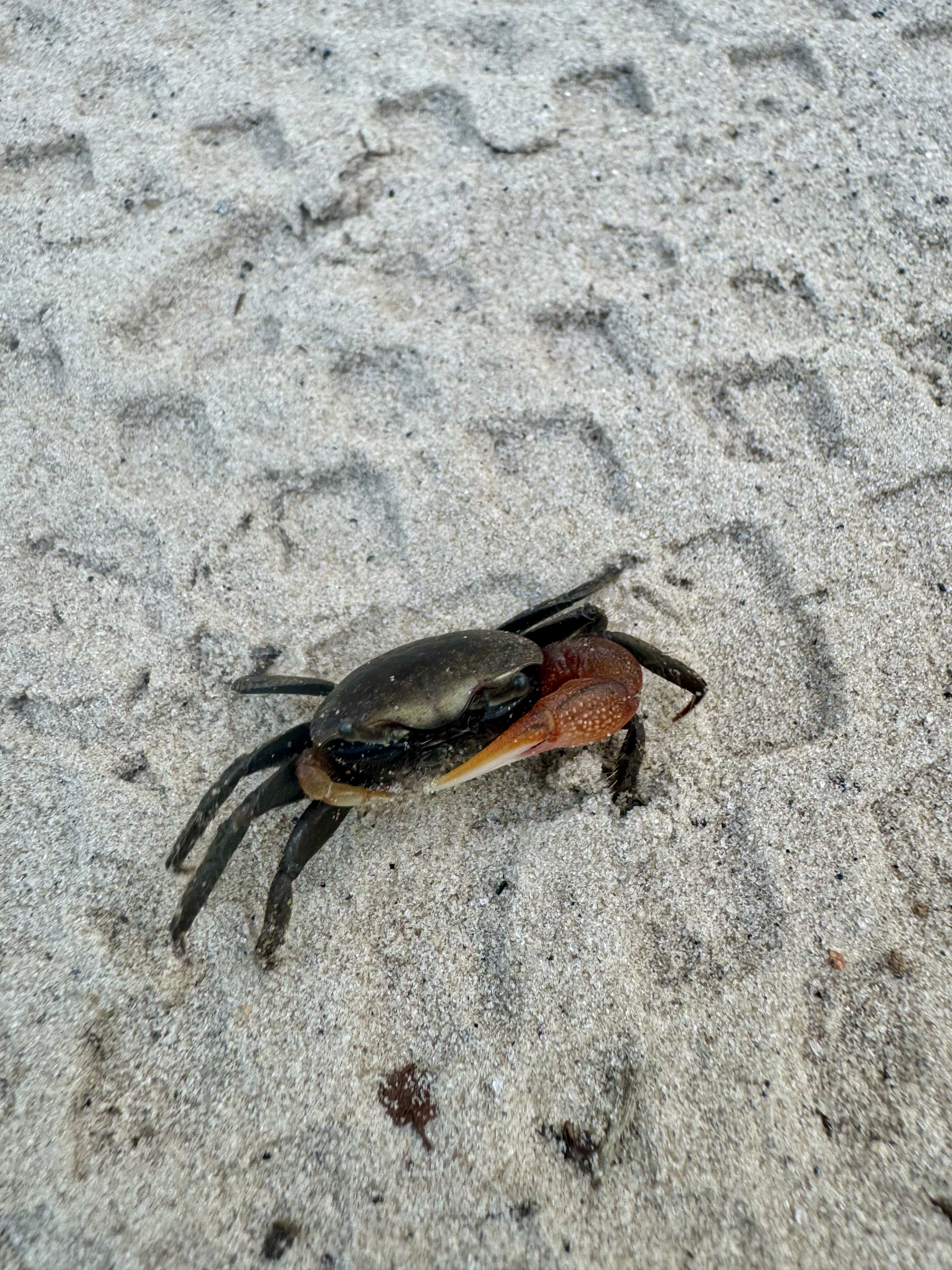
A male fiddler crab I saw with a big claw to awe the females with
The fun didn't stop there. We also used crab traps baited with raw chicken. While my partner and I didn’t catch anything in our trap, our class caught a 6-inch blue crab and two black sea bass (which we weren’t expecting to find in our traps). All of these were let go afterwards. I wish we had crabs to trap in my neighborhood.
Ecological Insights from Crabbing
Crabbing teaches us about crab behavior, population sizes, and potential threats like invasive species. It’s also crucial for monitoring the health of marine ecosystems and ensuring sustainable practices. Plus, it's fun.
Unveiling the Secrets of Wassaw Island
One of the most exciting days at camp was our trip to Wassaw Island, an uninhabited nature preserve.
This island was a lot bigger than I imagined. According to the U.S. Fish & Wildlife Service, it is about 10,053 acres and has seven miles of ‘undeveloped’ beach, only accessible by boat.
We explored the island, dragged nets along the beach, and practiced the stingray shuffle, (a Dune-like dancing walk the teachers showed us to avoid stepping on stingrays).
Catching a juvenile lemon shark and stingrays was a highlight, but discovering countless horseshoe crab exoskeletons was also fascinating. This adventure transformed my view of beaches from safe playgrounds to environments full of diverse and sometimes dangerous wildlife (particularly stingrays).
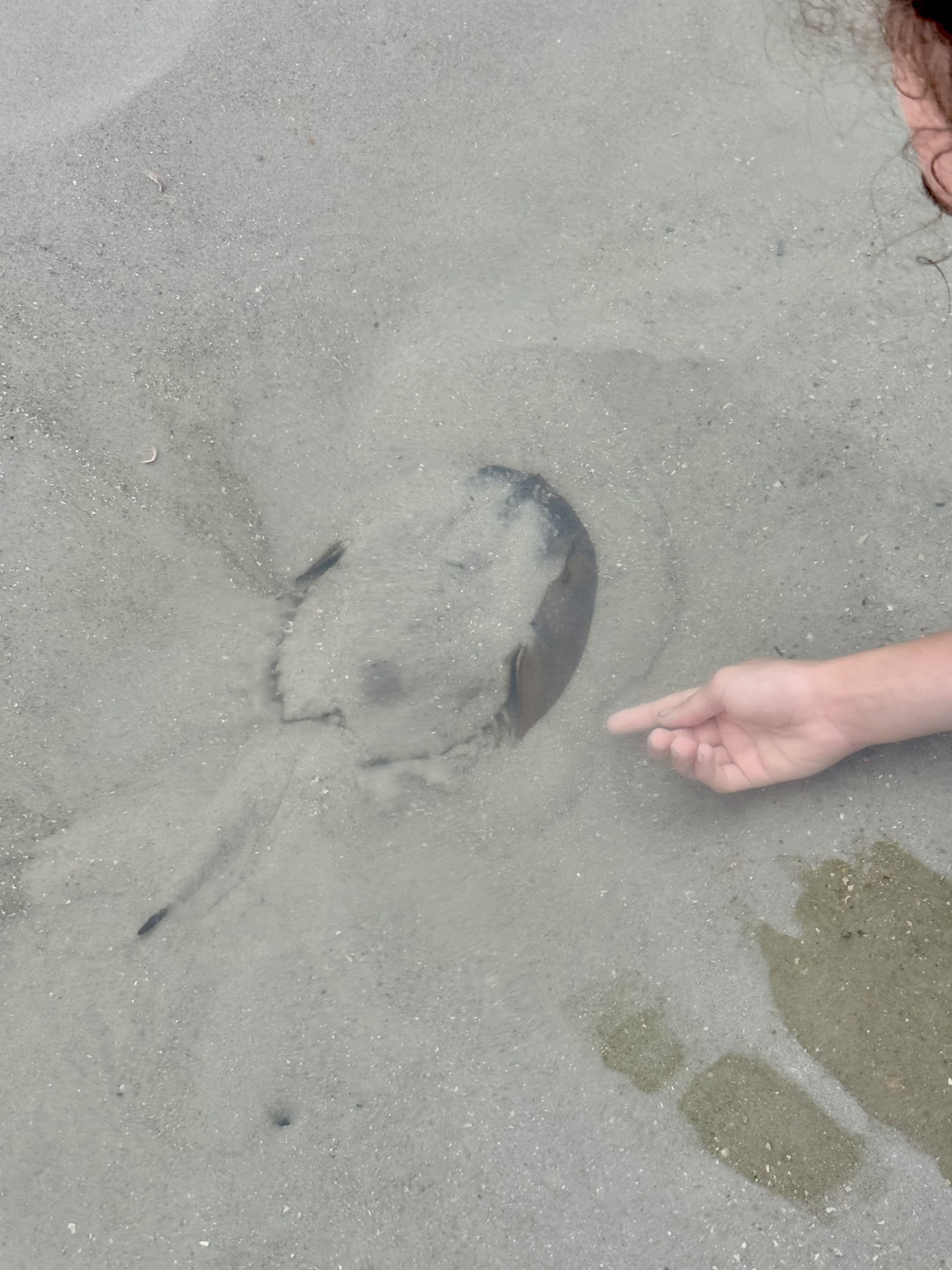
A wild horseshoe crab I found at a beach
The Conservation Importance of Wassaw Island
Wassaw Island is a crucial habitat for endangered species and a natural barrier protecting the Georgia coast from severe weather. It’s a paradise for wildlife and a key player in coastal conservation.
Learn more about Wassaw Island here.
Microscopic Marvels: Exploring the Plankton Lab
Twice during camp, we visited the plankton lab in the UGA to observe microscopic life. On the first day, we collected water samples from a nearby river and discovered many tiny organisms under the microscope, including copepods and an unidentifiable worm-like creature. On the last day, we examined bryozoan samples and found sea spiders, hydroids, and amphipods. I couldn't believe how many organisms exist in such a small amount of water.
This experience deepened my appreciation for the microscopic world and inspired me to explore similar environments in the future. I would love to do this with water samples from the lakes near my house. I'm currently accepting donations for microscopic water testing equipment!
The Vital Role of Plankton in Marine Ecosystems
Plankton play a fundamental role in marine ecosystems, serving as a primary food source for many animals. Monitoring plankton populations helps scientists understand environmental health and detect invasive species. Plus, it's a fascinating introduction to marine biology.
Conclusion: The Transformative Power of Marine Biology Camps
Attending the Coastal Guardians Camp was a transformative experience. I didn't even get to touch on so much of what we did and the wonderful friends and teachers I met. I not only learned about marine biology and participatory science but also shared my herpetology knowledge with my peers. The camp fostered new friendships and a deeper understanding of the interconnectedness of ecosystems.
This camp opened my eyes to the importance of stepping outside my comfort zone and exploring new fields. If you love biology, animals, and aren't afraid to get dirty, I highly recommend this camp.
Curious about my next blog? Wondering what the next topic will be? Well, at the end of this camp, I interviewed one of my teachers. You might be seeing a blog about that soon. 😉