

What’s more important: having good grades or a good portfolio? According to my latest interviewee, Kaelin Hooper, the answer is a good portfolio.
Kaelin is the co-founder of two companies: Recess (a platform for homeschoolers to make friends and learn together) and Ender (a startup meant to help kids build portfolios).
In this post, you’ll discover how I met Kaelin, why he thinks portfolios are so important, what to include in a portfolio, how to create projects worthy of showcasing, and which skills to highlight in your work.
Meet Kaelin
Kaelin is not only a co-founder of the platform hosting my writing class, he’s also an amazing coder and engineer.
While doing some background research, I learned that he’d recently been interviewed on The Recess Rundown, a podcast hosted by Maddie and Ella—fellow writers from Creative Genesis and some of my previous interviewees. In that conversation, Kaelin discussed his background as a homeschooler, so I’ll focus this post on his insights about building portfolios. (If you’re interested in his early background, check out the podcast below.)
Beyond Grades: Presenting Your Best Work
One of the main points Kaelin emphasized in our conversation is being able to present a strong digital portfolio—a place to showcase your creativity and practical knowledge through the projects you’ve completed. Here’s why he thinks portfolios are so essential:
“I think showing what you've done is more important than grades or any other measure because most companies hire people based on what they can do, not the titles or grades they’ve had in the past. Outside of getting a job, your portfolio embodies the things that you care enough about to spend tens or hundreds of hours creating. If you have an exceptional portfolio, it can change your life, economically and socially, in ways that nothing else can.”
— Kaelin Hooper
In a later conversation I had with my dad about this interview, he said something very similar to Kaelin: that if he were applying for a job, he would present a portfolio of his best work rather than his grades from years ago. He makes a good point. Grades summarize your past performance while portfolios can continuously be updated and improved.
Building on this idea, Kaelin offered some tips for creating an eye-catching portfolio:
Quality over Quantity
Ensure the projects you feature are your best work. You don’t need a huge number of projects—just a few that truly stand out.
Clarity in Presentation
No matter which platform you use, your portfolio should be easy to navigate and immediately communicate what the viewer is looking at.
Best Material Upfront
Place your best work at the beginning so it’s the first thing visitors see.
I consider my blog to be a writing portfolio, but I’ll definitely implement some of Kaelin’s tips if I decide to create a more professional showcase for my work. For now I write because I want to, not necessarily to get a job.
Now that you know how to design your portfolio, let’s talk about building projects that are truly portfolio-worthy.
Embracing the Creative Process
Before you can build a portfolio, you need projects to display. Here are Kaelin’s tips for starting a project and beginning your portfolio:
Start with a Spark
Every creative journey begins with an idea. Instead of waiting for perfection, Kaelin advises, “Start as quickly as you can.” Getting your initial thoughts down—even if they’re rough—helps you quickly identify what works and what needs improvement.
Share and Refine
Once you have a draft, don’t hesitate to share it with a trusted group of peers. This stage is all about collaboration. Honest feedback on your raw ideas can help you refine your concept, add new details, or even pivot your approach entirely.
Iterate and Improve
After incorporating feedback, move into a deeper critique phase. Tweak your prototype, fine-tune your design, and polish your work. Remember, the steps might vary depending on the project—whether you’re coding a game, writing a blog, filming a video, or engineering a new product.
Make sure you’re excited about the projects you choose, and don’t forget to have fun throughout the process.
While this differs from my own creative process (I spend a lot more time outlining and reflecting on my writing) Kaelin’s points are useful for other styles of projects to showcase.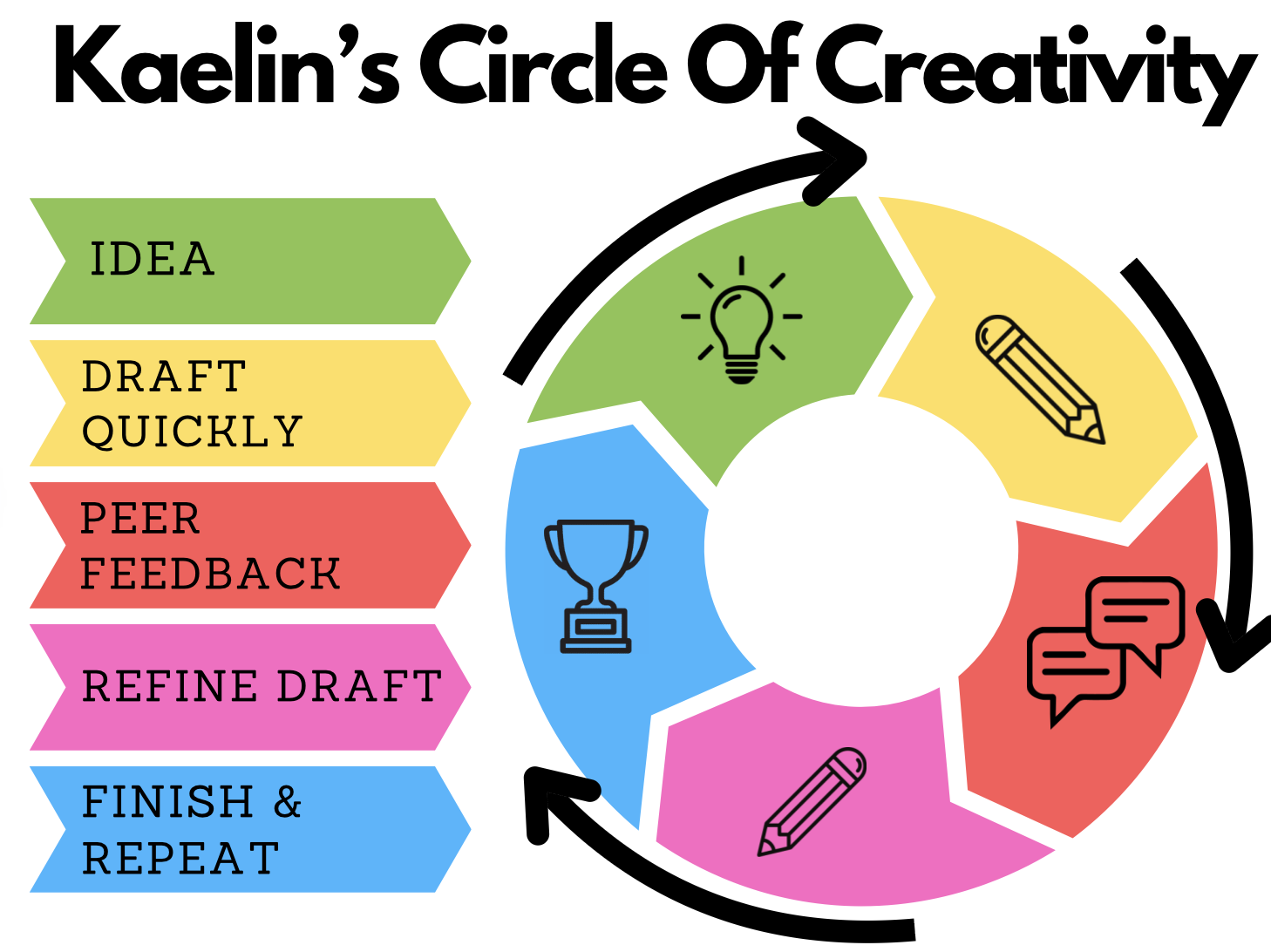
The steps above illustrate how Kaelin approaches a new idea. The key takeaway is to see a project through from start to finish—a concept we’ll explore more in the next section.
What Makes You Stand Out
Designing a clear portfolio and creating projects to showcase are both crucial, but what will truly make you stand out is your ability to demonstrate your skills through your work. According to Kaelin, here are some essential skills you should be able to showcase:
Reading and Writing: For effective communication and understanding.
Math and Tech Skills: To grasp and utilize emerging technologies.
Communication and Leadership: To articulate ideas clearly and lead a team.
In addition to these core skills, Kaelin emphasized:
“I think the most important thing is to get the itch to rapidly consume new information and try new stuff. You should have an action-oriented mindset where, instead of just reading about something and thinking you might do it, you find the absolute shortest path to it and get it out there as quickly as possible. Trying to do something will set you ahead of people who only think about doing it.”
— Kaelin Hooper
This insight reminds me of something Ivy Xu mentioned in a previous interview: success isn’t just about personal ambition—it’s about creating an environment that pushes you to take action. When you’re surrounded by people who are always trying new things, building projects, and challenging themselves, you’re more likely to do the same. Both Ivy and Kaelin highlight that success isn’t just about planning—it’s about putting yourself in situations where action becomes the natural next step.
Final Thoughts
So, which is more important—a good portfolio or good grades?
While this may seem like a straightforward question, the answer varies depending on whom you ask and what career they’re pursuing. Grades are important for getting academic opportunities (like scholarships, and other programs) while portfolios are useful when applying to jobs and offer proof of your real-world skills and abilities.
In my view, grades and portfolios go hand in hand. You can include your grades within your portfolio to boost your credibility and skills.
What do you think?
Do you believe in the importance of grades, or do you see the value in building a strong portfolio? Share your thoughts in the comments below!